Tag Archives: Genocide

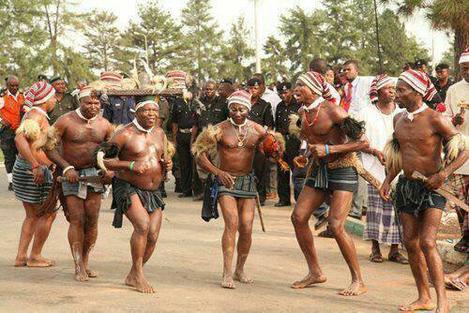
THE WAR DANCERS

I was born in Gusau but my earliest recollection of life was in Funtua. My father worked for Societe Commerciale d’Outer-Mer Automobile Nigeria (SCOA) as a District Manager responsible for trading and produce-buying, so we lived in different parts of northern Nigeria. He was a respected leader within the Igbo community, and recognized by the Emirate Council as the Igbo man to go to on matters that had to do with communal relations. At that time, the Igbo State Union was very strong in the north and once they took a resolution it was binding on all Igbos across the region.

About a year before the January 1966 coup, my father decided to take an early retirement because a friend of his in the Emirate Council informed him that a political crisis was brewing between Northern and Southern Nigeria which might boil over into violence. His friend advised him to leave because his name was top on the list of Igbos to be eliminated. My mother didn’t want to follow him immediately because she had a bakery, a chemist, and some other businesses, and was reluctant to start all over in an unfamiliar business terrain. However, they reached a compromise that she would move to Zaria, where he had a house, and where a lot more people from my hometown resided. Their thinking was that the large numbers of our people in Zaria would be able to defend themselves in the event of violence better than they would in Funtua.

In January 1966, I gained admission into St. John’s College, Kaduna. In July of the same year, the revenge coup took place, and the massacre of Igbo civilians started. As students, we lived within the relative security of the boarding house but as day students came with horrific stories of what was happening outside, I became deeply concerned about my mother and siblings in Zaria. I went to Father Canty, our Irish Principal, to obtain permission to travel to Zaria but he denied my request. Being a tenacious person, I went again but with a classmate of mine. This time, Father Canty agreed because he felt it was better to allow two people travel rather than one lone boy. He gave us one pound sterling from our pocket money to make the trip.

When we arrived Zaria, all seemed calm, so we set off on foot into Sabon Gari where our parents lived. On our way, an elderly Hausa man stopped us and asked us in Hausa, “My children, where are you going to?” We said we were going to Sabon Gari. He said, “No, no, no. Don’t go into Sabon Gari. What is happening in Sabon Gari is so much evil than I have ever seen in my entire lifetime.” He asked where we were coming from, and when we said Kaduna he said we should go back. My estimate of his age was about 70 years. He had a full white beard and might even have been an angel; I don’t know and may never know.

I wasn’t happy that we had come all the way and couldn’t accomplish our mission. I then suggested to Charles that rather than trek into Sabon Gari we should take a taxi. We boarded the first taxi that came by. As we drove into Sabon Gari, we could see a rowdy group of young men further up the road, armed with clubs, knives, cutlasses, axes, tyres, and other weapons. On sighting them, the taxi driver said he couldn’t continue the journey. I was furious and questioned why he would ask us to come down in the face of danger. He was adamant and said the violent mob will damage his vehicle. I told him he was fearful for his vehicle but not for our lives. When the mob noticed he was making a U-turn, some of them started running to catch up with the car. When we were out of danger, the driver asked us again to alight because he was heading to Kaduna. With great relief, we said we would follow him back.

On our way back to Kaduna, somewhere on the Zaria-Kaduna Road, an army truck was coming in the opposite direction from us. A hand was waving us down but our driver did not notice because he was talking with the man in the front seat with him. The army truck left its side of the road and headed towards us, in an attempt to force us off the road. Charles and I screamed, and our driver swerved into the bush. The army truck stopped, and the soldiers rushed at us. Seeing that the two people in front were northerners they spoke to them in Hausa, “Namu ne, kwo nasu ne—Are you one of us, or are you one of them?” The driver said he was one of them. They said they would have knocked us into the bush believing we were Igbos trying to escape. Then they cautioned the driver to be vigilant because the times were perilous. But before they got to our car, I had asked Charles not to answer any questions since his Hausa was not as fluent as mine. The primary school I attended from classes five to seven was Capital School, Kaduna, which the children of the northern elite and white expatriates also attended. This exposed me to the mannerisms of the children of the northern elite, so I could speak impeccable Hausa and act like them. As they turned to leave, one of the soldiers came back to us. His first question was, “Young boys, who are you?” I replied with a question as children of the elite are likely to do. “What is your problem with us? Are we disturbing you?” He replied that they just needed to know. I retorted, “You can see we are students.” The questioner mellowed down but insisted on knowing our names. I gave them the name of the man who had advised my father to leave the north, claiming he was my father. I reckoned that even if they decided to take us back to Funtua, the man would agree we were his sons, seeing that we were in trouble. My bluff worked because they let us go. Back in Kaduna, we again decided to trek back to our school. On our way, we found dead bodies littering the streets. The killings had taken place after we left Kaduna that morning. That was when it fully dawned on me that we took a very stupid risk.

A few days after this incident, the killer gangs started coming to our school, but our principal, Father Canty, and one Father Wolfe would tell them the Igbo boys had left. Still, they kept coming back. There may have been fellow students telling them we were still in school. This got the principal apprehensive, so he made arrangements for us to be airlifted from Kaduna to Enugu. Early one morning—I think it was in September 1966—at about 4.00 am, he went round the dormitories waking us up because army trucks were waiting to take us to the airport. Before this time, he had been smuggling the older Igbo boys in his 403 Peugeot pick-up van down to the east. He would squeeze many of them at a time into the pick-up, cover them with tarpaulin, and drive to Obollo Afor, the border town between current Enugu state and Benue state. There, he would leave them to find their way home. He did about four or five such runs, using different routes, until he made sure all of them were out of danger. For us younger boys, he bundled us into the waiting big army truck and took us to the airport. Those airlift operations were a tripartite arrangement between the federal government under Col. Yakubu Gowon, the northern regional government under Col. Hassan Katsina, and the Eastern regional government under Col. Chukwuemeka Odimegwu Ojukwu. The planes used were Airforce cargo planes that had no seats.

Back in Zaria, my mother was in her bakery when the killings started. My siblings were in school so she sent one of her workers to pick them up. But a bigger problem was how to move from the bakery to the army barracks, which was one of the safest places at the time. Eventually, they moved to the house of a Hausa family but word soon went out that a particular Hausa man was hiding Igbos in his house. One day, some young men came to search the house but the man of the house insisted that no such thing would happen, that no one would go into his purdah—kule—to search for anybody. They left. But that night, he moved my mother and siblings to another family and that’s how they kept moving from one family to another until they were able to get to the military barracks from where they were evacuated to the east by rail.

By the time I arrived Enugu there was no news of my mother and siblings. Notwithstanding, I had this insane confidence that they would come back safely. My father had the same confidence as I had. My mother’s relatives were crying and I was saying to them, “Don’t worry, she will come back safely.” Every day, I followed my Auntie Monica to the railway station to find out if a new train had arrived. Each day we went home, disappointed. But about a month after I came back, lo and behold, there was one of my siblings at the railway station. I screamed and said to Auntie Monica, “That’s my sister.” She was just five years old and when she realized it was me, she walked slowly to me and asked that I carry her. I asked her, “Where is Mummy?” She pointed in a certain direction and Auntie Monica followed me in disbelief. There was my mother and all my siblings in tattered clothing. They hadn’t taken their bath in more than two weeks. The emotional scene between my mother and her sister is one I will never forget.

My relatives soon put me in Colliery Secondary Technical School, on the hilltop in Ngwo. The shooting war had started at this time, and Eastern Nigeria was preparing for a war we believed would avenge the genocide committed against Ndi Igbo. Our school was the first to be closed in Biafra because it was on a high altitude and they needed it as a training camp for Biafran soldiers. We became idle and every morning I went with a few of my friends to Independence Layout where the Biafran army had converted some buildings to a Tactical Headquarters. We heard that Major Chukwuma Nzeogwu, our hero, operated from there so we went every day to catch a glimpse of him. Sometimes he came by helicopter which landed in an open space not far from the buildings. He usually looked serious but whenever we waved, he would wave back and that made our day. We were going there to stay in touch with what we believed was happening in Biafra because there were so many rumours flying around. There were also adults who came to hear the latest news and view our soldiers come and go.

One day, a 911 lorry arrived with Abiriba War Dancers. Immediately they came down, they started dancing, wielding their machetes and other paraphernalia this way and that. They were reputed to have invisible powers and would even cut off the heads of their enemies in battle. This boosted our morale and people started bragging that the northerners would see hell since the Abiriba war dancers had joined the battle. After dancing, the warriors went to eat. I remember this clearly because we ran after their lorry as it drove them to Okpara square, in front of the Parliament Building. After they were fed, they continued dancing. In the evening, they left for the war front.

About two days later, when we came back to the Tactical Headquarters, a Mercedes-Benz 911 lorry drove in. The driver and motor boys were looking solemn. As one of them was coming down from the back of the lorry, the tail board opened. My God! I saw what I had never seen in my life. Dead bodies were piled up in the lorry. From the way they were dressed we realized they were the Abiriba war dancers we had seen a few days earlier. They had been taken to the Nsukka war front with cutlasses as their only weapons. That sight affected me so much that, for many days, I couldn’t eat. I don’t know what happened to the bodies but they may have been taken back to Abiriba for burial. With the benefit of hindsight after the war, I questioned how any army commander, who is experienced in modern warfare, would allow defenseless people go to war without modern weaponry. Many crazy things happened during the war and this is why we must avoid the temptation of going into another one.

Ozoemena!

–Emma Onyilofo
LIVING IN SAINT-ANDRE REFUGEE CENTER, GABON – A FORMER CHILD REFUGEE’S ACCOUNT – PART ONE.

LEAVING BIAFRA

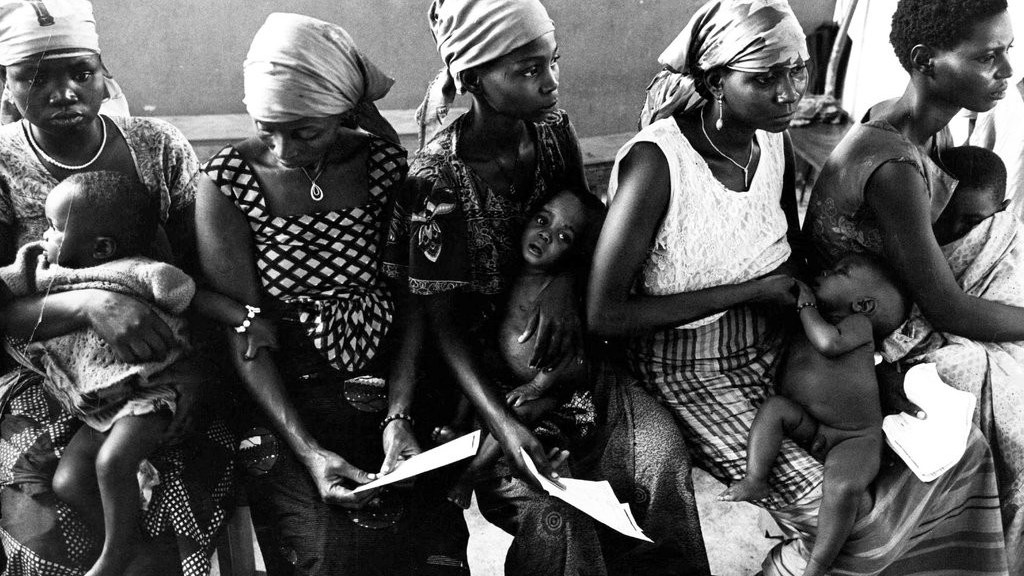
In 1968, just before Enugwu-Ukwu fell to the Nigerian troops, my family took refuge in my maternal grandparents’ home at Egbengwu, Nimo, a neighbouring town. When we got there, my grandparents’ house was teeming with refugees. The distribution center at Nimo was St Mary’s Primary School, and it was also completely occupied by refugees from surrounding towns like Enugwu-Ukwu, Nawfia, and Amawbia. One Irish priest, named Reverend Father Nolan, was in charge of relief distribution, assisted by other people such as Mr. Otie, the headmaster of the school. The Parish church was Assumpta Catholic Church but because of its location on the major road from Enugwu-Ukwu to Nimo it was close to the war front so it was not considered ideal as a relief distribution centre. It was on one of such visits to St Mary’s, in company of my younger sister, Rhoda, that Father Nolan announced that officials of CARITAS were coming to St Mary’s the next day to take sick children to Gabon. He told parents to bring their children who were ill the following day.

Although I was not suffering from kwashiorkor, I was frail and weak, so I made up my mind to present myself for consideration. I was just seven years old, but I saw it as a life-saving opportunity. My decision was not well received by my mother who reasoned that I was too young to be sprinted out to an unknown country beyond their care and reach. She broke down, saying, “Who is going to care and treat you like the mother who gave birth to you?” My dad, who was not known to give in easily to emotions, approved of my decision and offered to take me to St. Mary’s.

On arrival we saw babies, toddlers, and teenagers with bloated stomachs, swollen legs, and severely shrunken bodies, all looking like living ghosts. Many were too weak to stand, so they sat on the floor. Soon after, Father Nolan and Mr. Otie arrived with the CARITAS representatives. Mr. Igboka, the Catechist, was also there. When the selection started, all the kids in front of me were selected. I was rejected four times even though I buckled my feet on each occasion to create the impression that I was very ill. After my fourth rejection my father went into a tirade. This prompted the officials to call me forward, so I was the last kid to be selected that day.

The next stage was the documentation. The CARITAS officials wrote each child’s first name, surname, parents’ names, village and town, and the processing centre. Then they stuck an adhesive tape with identification number on our wrists. Mine was 492. This was the last documentation in Biafra.

As a green-coloured Austin lorry made its way towards us, my father came to me, shook my hands, and prayed that I would come back to meet them alive. My mother embraced me, sobbing. Other parents watched their children being loaded into the lorry, like cargo, and into an uncertain future. As our lorry slowly revved to drive off, I positioned myself to wave a final good bye to my parents. Years later, I learnt that my mother cried inconsolably for two days after my departure.

As soon as we departed Nimo, our chaperons informed us they were taking us to Ulli airport and from there to Gabon. On the way some children were crying. After some time our lorry stopped by the roadside so we could have lunch. It was either two small pieces of yam or one big piece placed on our palms.

When we got to Ulli airport, our lorry parked in an inconspicuous place waiting for the signal to approach the tarmac. I could see planes landing and taking off in the pitch darkness. After a long wait we drove up to the tarmac where a plane was waiting. For the first time, I saw an aircraft in a stationary position. The size was a far cry from the little bird-like thing we kids usually saw flying across the skies. We all came out of the lorry and a ladder was placed at the foot of the aircraft. Two big men positioned themselves, one at the foot of the ladder and the other at the top. One after the other, we were taken up the ladder into the aircraft. There were no chairs inside but there were blankets spread across the floor. We were given one or two cubes of sugar and asked to lie down. I could not remember when last I saw sugar in those terrible days, and I became excited again after the emotional separation from my parents. The door of the aircraft was shut, the engine started, the lights turned off, and I could sense a slow movement of the plane up to the time we became airborne.

We were woken up at Libreville International airport. My first impression was that this was real ‘obodo oyibo’ – a marvel. There were aircraft of different sizes and shapes, and that gave me the opportunity of seeing these planes at close quarters in broad daylight. Vans pulled up at the foot of our plane, and we all boarded. Those who were too weak to get into the vans were either helped in or carried inside. After a short drive our van pulled into a massive church complex. It was called St. Andre and the priest in charge was Monseigneur Camille.

———————–

The contributor, Johnny Abada, lives in the United States of America.

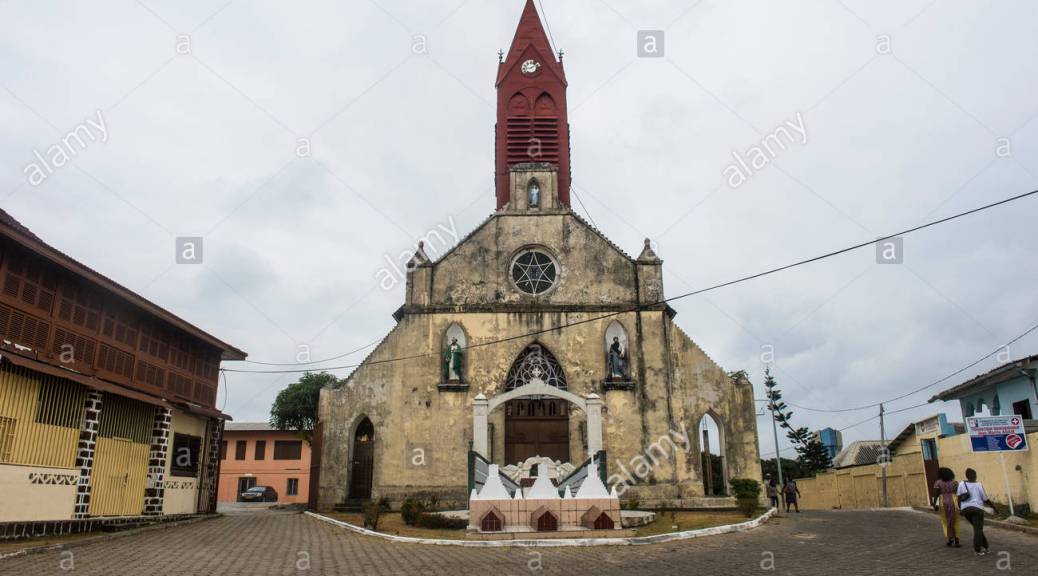
NB-The image on this post is taken from the internet. It shows St. Marie Cathedral, one of the centers used to house refugees during the Nigeria-Biafra war.


LOVE IN A TIME OF WAR 2


I was there, anya m wee fu zi kwa ife n’ine gaa nu because my husband was an Air Force man – Staff Sergeant Samuel Chukwu. M’ g’a si n’anyi n’abo so wee nu ya bu ogu. Because oge dii j’ano n’ihu aya gi nwa g’a no n’ihu aya – I will say that I fought that war with him. Because when your husband is at the war front, you will also be at the war front. If he doesn’t come back you will never have peace of mind.

He left me at home with his mother to go and fight the war. I was with her for one year and six months. Just imagine a young girl newly married. I hadn’t even conceived then. I couldn’t hold it again.

One day one army man came on raking to our place, to find out what the enemies were doing. I told him I would like to follow him to go and see my husband, that whatever is inside I will take it. He asked me if I would be able to. I said yes, I will. My husband was at Ihiala at the time. The man told me when he will leave and asked me to prepare. When I told my Mother in law she said as long as I have the heart to follow him, I should go.

We left our place around 6.00 pm. We went through Evbu. We went by foot, through forests, forests, forests. We got to a river. I can’t remember the name. The people who ferry people across said we have to wait, because there’s a time enemies walk about, and there’s also a time when everywhere will be safe for us to cross. They took us to a small house where we met other people who wanted to cross. We stayed there till around 2.00 o’clock. Then they asked us to come out. They brought the canoe and we entered. In fact it is God. It was only me and the man in that canoe. I don’t remember how much we paid. [She sighs] I have forgotten. A di a na m’ old now. A di ro m’ e lota zi ife n’ine – I am old now. I don’t remember everything.

We crossed to another town. I have forgotten the name. We rested there for two days because soldiers camped there. The man now arranged for a car to take us to Ihiala.

My husband was very, very happy to see me. He was living in a hostel. It was when I came that he got a house. And that is where we were until the war started raining – air raids, bombers, fighters, all of them.

What the army did is that they will dig bunkers, but sometimes when the bomber comes it will drop bombs on the bunker. So they told us that once we hear the sound of the bomber we should run inside the bush.

We were living in the Air Force quarters at Ihiala. When they are going to fight, they will pack all the Air Force wives and go and dump us in a students’ hostel, because the students were no longer in school. We were many o, including those who had children. That’s how they were carrying us about like people herding cattle. We went to Aguata. We went to Ikenanzizi. When we are going each person will carry her own cooking utensils because nobody will lend you her own. I was pregnant with my first son by then. There was nothing for us to do in the hostel other than cook. Those who didn’t have will go to the market. After that, we will gather together and start discussing our problems. That will be our work until it’s safe to move us back again. [She laughs] The Air Force tried.

Agha Biafra. I can’t remember all I saw in that war.

The day I was having my baby, around 9.00 in the night, it is by God’s grace. If you see air raid that day. I can’t remember the name of the hospital but it’s a general hospital. Everywhere was shaking. I was in labor. You can imagine how I was feeling. But God brought me out. [She chuckles] They didn’t bomb the hospital but the noise erh. If this air raid is in Manchester, the nose will cause your heart to jump. If it is bomber you won’t hear the noise when it’s coming. When it comes close it will start dropping what it is carrying, killing people. After I left the hospital, nobody did omugwo for me.

Both of us took care of the baby. In fact, he was the one who used to massage my body with hot water. He did everything. By God’s Grace, me and my baby were healthy.

When the war ended we went home to Isele Uku. The Nigerian government didn’t want to call back the people who crossed to Biafra. So everybody was waiting to hear news of what will happen. One day we were at home when they brought him a paper to resume work. He decided to go and tell his mother’s people the news, and also that they should keep an eye on me and our children. He went, and on his way back a car killed him. I asked myself, “Is it his destiny?” My happiness is that he didn’t die in that war. He survived. He got home. Because if he died in the war I am not sure I will be alive to come back. To God be the glory, we went home together after the war.

-Rose Chukwu


THE WOMEN FIGHTERS

I was working at Textile Mills Aba when they came and conscripted us. They just took us to Aba Sports Stadium, near Ngwa Road. The whole stadium was filled with people.

We had group pictures. The one I took with my group I can’t find it. I kept it all this time.

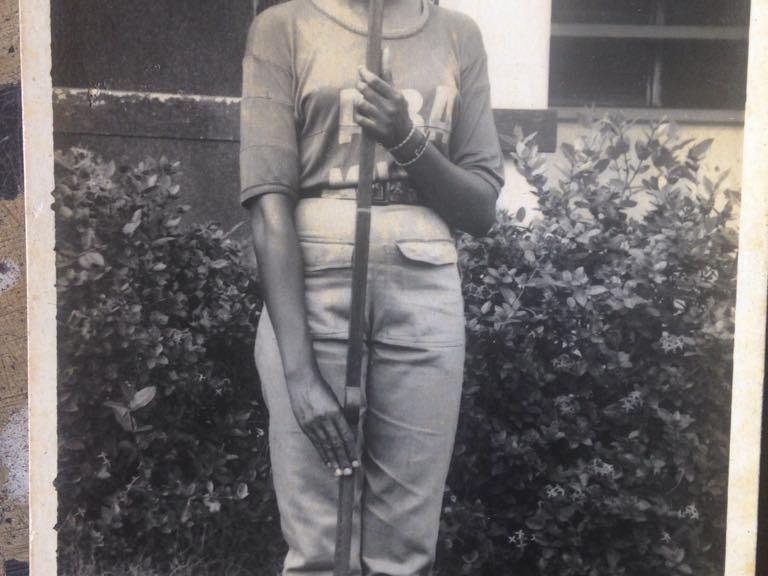
The military people used to come and train us. We did it for about three months. Male and female o. They didn’t train the girls separately o. There’s nothing like you are a girl. Your commander, whatever he says, that’s what you will do.  No going back. Whether you like it or not. When it’s time for us to take cover, everybody will lie down. They showed us how to handle a gun, how to lie down, how to… when they say… erh…what’s that their slang again? ‘Preseeeeent arm!’ You present your arm. ‘Preseeent arm!’ You raise it like this. [She lifts her arms]. When they ask you to shoot, you know that thing is not a real gun, then they’ll show you what to do. [She makes the sound of gun shots with her mouth] Kpa-kpa-kpa-kpa-kpa-kpa. They will shout, “Order!” You bring out your leg. So all that training is what they were doing. But, no, they didn’t allow us to use a real gun. I’m not sure they had it in mind.

We’ll go in the morning and come back in the evening. They gave us uniform. They didn’t camp us. We were coming from our houses.  Even then, my father and mum won’t allow me. They were so scared that we should…arh! [She claps her hands].

They just wanted the first batch to go and assist the real soldiers. We were not the real soldiers. They didn’t train us to that level. The real army was in the war front. This militia was just to go and support them. They sent some to Abagana, Port Harcourt, wherever they know the fight was fierce they sent them there. They were there, helping the casualties, like Red Cross. The women, they were using them in the refugee camps, but my parents refused. They say I won’t go, they won’t allow me to follow them out again. That was the end of my militia training.

In our own case it was this stick they gave us. But the people they were training to go to war front they gave them real gun and showed them what to do, how to use the trigger, how to do this and how to do that, take cover, lie down.

We were excited, yes, especially in the morning when our commander will start chanting ‘Hep! Hep! Hep! Hep!’ [She starts to march.] All of us, we were so excited carrying our guns. But we were scared o. They said all the people that went to the front didn’t come back. So when they conscript some people they will be pretending they are sick or something is wrong with them. They will say they have been in the psychiatric ward, yes. War is not something you wish to experience a second time. Very bad.

The war was not easy o. Not easy. Hei. The air raid will come in the morning from 10.00 o’clock to 12.00 o’clock. It will come again by 4.00 pm in the evening till around 5.00 pm. My mother dug a big bunker, so when the air raid starts all of us will go there and stay. In the morning my mother will disguise herself, paint her face with this black uri, then she will bring a basket with food to us. When she drops it she will quietly go back to the house. Throughout that day we’ll be there. Inside that bunker. Lying down. The little food she’ll bring to us that’s what we’ll eat until evening. After that second air raid all of us will then go back to the house.

There was one air raid at Aba. Look at me. You see this thing here. [She touches a scar on her leg.] It was some of the bullets from that air raid. One afternoon like this the air raid came. It killed so many people near our house. Some of it fell inside one of the rooms in our house. Number 3A Asa Road Aba.  That is where we were living. It shook the whole house. It was then Ojukwu came to our house. That was the first time we saw Ojukwu.  He came with his people. They came and removed the bomb. Big something like this. Come and see dead corpses everywhere. [She touches a scar on her hand]. A piece of that bullet was in me for more than one year before it came out. [She touches her hand again] See the marks. This one, this one. It was moving round my body before they brought it out.

After that air raid we started running. From Aba we ran to Umuahia. From Umuahia we ran to Mbano. From Mbano to Nkwerre. From Nkwerrre, myself, my sister and her husband, and the last born of my mother went to Umuchu. We were at Umuchu when the war ended. We came back to Nkwerre. My parents were at Nkwerre. From Nkwerre we all started coming back to Port Harcourt.

Our parrot from the war followed us till after the war. Pretty boy, that’s what we called the parrot. It followed us till after the war. It was very intelligent. Even when they bombed our house in Aba, the parrot was there. We were hearing they were forcing women into marriage so our mother used to rub uri on our faces. If you see how our faces looked. Pretty Boy will give us sign that the soldiers are coming. When they come close to the house he will start asking them questions, “What are you doing here? What are you doing here?” [She laughs.] Then my mother will start crying and speaking Hausa to the soldiers. My mother, she’s a linguist. If it is Hausa, she will speak. If it is Yoruba, she will speak. Many languages. The parrot knew all our names. Pretty Boy. Yees! If you put sugar in his water he will drink. If you do something wrong he will gossip about you, unless you give him that sugar then he won’t talk. If not, when mama comes he will tell her everything you did.

[Cover Photo shows the contributor. The photograph was taken by Gorgeous Studios, 42 St. Micheal’s Road, Aba.]

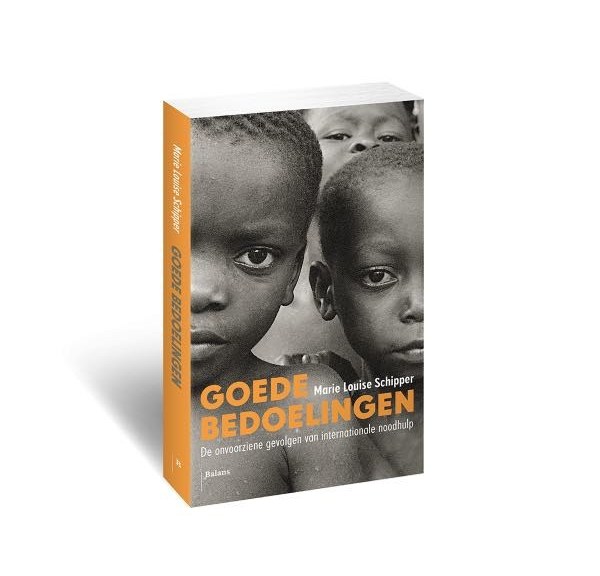
GOOD INTENTIONS by Marie Louise Schipper

Fifty One years ago, the Nigeria-Biafra war grabbed the world’s attention with its sad, haunting images in newspapers, magazines and television sets. Forty Eight years after it ended, the stories of that tragedy are still being told through films, documentaries, dramas, art works and exhibitions, music, books, in conferences and lectures. One of the people who has documented an aspect of that conflict is Marie Louise Schipper, a Dutch journalist working for OneWorld magazine and de Volkskrant newspaper. She has written a book about ten Biafran children who were evacuated to the Netherlands from Biafra for medical attention. The title of the book is Goede Bedoelingen which translates to ‘Good Intentions.’

In 1968, Marie was a young girl living with her parents. According to her, “It was a big item because it was the first international aids for starvation in Africa and nobody realized what was going on at that time. We didn’t know a lot about Africa and as a matter of fact not much about Nigeria as well. And Africa was an exotic country far, far, far away at that time. So Nigeria came into our living rooms and we could see what happened. The news in the newspaper and television was so overwhelming of these dying children. And my parents – they were devout Catholics – always told me and my sister that we should care about other people. They would tell us to finish our plates and that we should think about the children of Biafra. The images made a big impression on me, as a child. The Dutch gave a lot of money [to the relief effort] because they felt we should do something because in WW2 so many people died, and it was determined that in Biafra far more children died. Another reason these children made such a big impression on me had to do with the war stories in my own family. My father worked as a forced laborer in Germany. He was 17. My mother’s family was on the run and had to live with a family they didn’t know. My grandfather died during a bombardment. He was never found.”

When Marie became a journalist, she was surprised that the stories of these ten children were not written. “I thought there must be somebody who has written this all down. But there was nothing written. It was like when snow has fallen and everything is completely white and nobody has run into it. That was my first impression, that it was completely blank. There was nothing about it, only publications in the newspapers. When I started interviewing people everybody said, ‘No, I don’t remember these children, I don’t remember them.’ And I said, ‘Why don’t you remember them, because it doesn’t happen often that ten children from Nigeria, out of a war, come to the Netherlands.’ I felt they were hiding something. And I thought, ‘What are they hiding?’ I discovered that one of the children who was here had epilepsy and he was really ill. He was a bit retarded and was also in a foster home. He needed a lot of attention but people from the Nigerian embassy were very strict and said the children have to go back to Nigeria. The foster parents didn’t want to let them go because they didn’t know where they were sending them to. The foster parents of the sickest child were under so much pressure, so they decided to send him back to Nigeria. He was first sent to Gabon, with enough medicine for half a year, and afterwards sent to one of the rehabilitation centers at Ikot Ekpene. His family didn’t show up, so he was sent to Nung Udoe Orphanage and he died shortly afterwards. And I think that was why all the doctors were saying they didn’t know a thing. That was the reason they didn’t want to talk about it because they sent a boy who was really ill back to a country that was recovering from the war without proper medication.”

“How did you eventually find somebody who told you the truth?” I asked.

“I spoke to a lot of nurses and they had memories about these children. They also had photographs and they told me about the foster parents, and I said that must be the reason nobody wanted to talk about it.”

“Why do you think the Biafran authorities decide to take them to the Netherlands instead of Ivory Coast, Gabon or Sao Tome?”

“There reason was primarily because of Abie Nathan, an Isreali pilot. He was also a humanitarian and did a lot of food aid. He tried to mobilize the Isreali people to send in goods and food for the people of Biafra. He was very popular and charismatic, and had a lot of connections in the Netherlands. He was filmed by a television crew asking people to do something about Biafra; that everybody should give a hand. When this documentary was broadcast a lot of people got mobilized. He said he convinced Ojukwu that these children should be sent to the Netherlands where they could get proper help. But Ojukwu said no. Finally they decided to bring the children to the Netherlands as a symbolic gesture where the children in Europe would get acquainted with the Biafran children while the Biafran children would get more knowledge about the world. The decision was made and ten of the children came to the Netherlands.

At the end of the war, eight of the children were taken back to Nigeria. But two remained in the Netherlands. The official documents said the two who remained in the Netherlands had no parents and family back home. But in the 1990’s, one of them decided to look for her family. She discovered she had two villages full of relations. She returned to Nigeria to meet them.”

When Marie started to gather material for her book, she knew she had to make the trip to Nigeria.

“If I didn’t visit Nigeria, the story wouldn’t have been complete.”

“That was very courageous of you. So, how did the journey to Nigeria start?” I asked.

“I went to the African Studies Centre here in Netherlands, in Leiden. And one of the people who was connected to the African Institute, he works nowadays in England, he said to me the best thing I could do was contact *Emeka Anyanwu, an Anthropologist at Nsukka University. I thought it was a better idea the students of Edlyne go on research and try to find out what happened to the children. And it worked fairly well because we found two of them. It was like a needle in a haystack.  When we knew they were traced, we traveled from Nsukka to Owerri, from Owerri to Umuahia, and from Umuahia to Orlu. We visited the hospital in Umuahia [Queen Elizabeth Teaching Hospital] and all the places that were important during the war. I visited the airfield at Uli.”

“Is it still there?” I asked.

“Yes. You can see the traces of the road and there was a man who saw us walking and was curious. It’s not always you see White people there. He told us that was the road and he also knew the Ojukwu bunker. It was a small bunker. Even Edlyne didn’t know there was a smaller one.”

It took Marie Louise Schipper fifteen years to finish the book, and it was published on October 27, 2017, in Amsterdan. Unfortunately, the book is written in Dutch and, at the moment, Marie cannot afford to hire a translator. She said, “I would like to give the opportunity for more people to read it.”

[I spoke to Marie on the 23rd of May, 2018, via Facebook and these are excerpts from our chat.]


MUSIC IN A TIME OF WAR – 3

SHOWDOWN AT LIDO

by Frank Onyezili

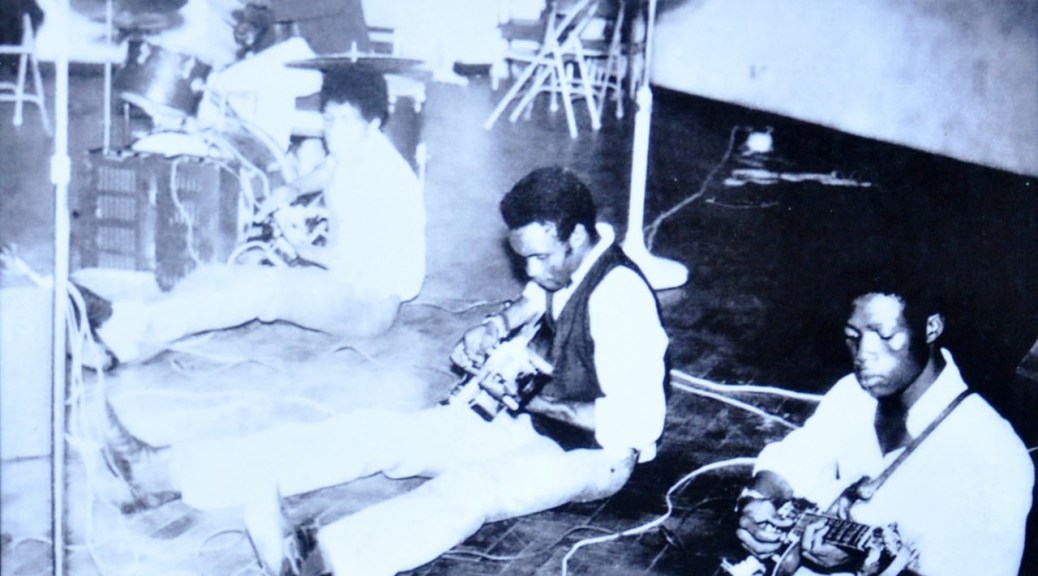
The famed Garden City, Port Harcourt, Nigeria, was reverberating with news of the arrival of the new kids on the block. The Fractions a pop music group comprising Travis Oli on vocals and guitar, Mike Obanye on drums, Jake Sollo on bass and Frank Zilli on rhythm guitar, had hit town parading Ify Jerry, their new lead guitarist, and were literally setting it alight with their funky sound, music that was refreshingly new in those climes in those days. However, their arrival signalled intensification of rivalry between the group and the Hykkers, the landlords at Lido nightclub, situated on a street next to Hotel Emilia where the Fractions were based.

It was 1968 and the civil war between Nigeria’s Federal troops and the secessionist Biafran forces was at its peak. There was not the entertainment of Premiership or La Liga football, no Diamond league and no Hussain Bolt. Just war, and music, to which everyone, soldier and civilian alike, flocked. For the better part of three years the combatants were locked in a war of attrition, in which no quarters were given nor prisoners taken, a war that by conservative estimates cost more than two million lives, mostly of women and children. First Nsukka, then Enugu had fallen to Federal troops who were facing serious challenges of their own as the Biafrans overran the Midwest as far as Benin and were threatening Ore, right in the heartland of Nigeria’s western region. But there in Port Harcourt it was still music, sweet soulful music, opium for the rich and poor alike in the Biafran enclave in a time of war.

The Lido was a shrine of sorts to night-clubbers in Port Harcourt who gather there like ants to sugar, to listen, more listen than dance, to the music dished out by the Hykkers, a five-member pop music group led by ever-immaculately-dressed Bob Miga on rhythm guitar and with frontman Pat Finn on vocals. The Lido itself was an eye-catcher fashioned in the finest traditions of Las Vegas, with cool shaded lighting embellished with custom-built music acoustics. Every Saturday nite was Lido nite in Port Harcourt and security details needed to be deployed around the perimeters of the usually jam-packed venue.

The Hykkers were masters of their art and were superbly organized by Eddie Roberts, a wily professional image-maker, spin doctor and thoroughbred dealer who had negotiated a lucrative long-term contract for the Hykkers at the Lido. He did not have to say that he saw the Fractions as interlopers in his own backyard, intruders that needed to the uprooted and disposed of. For years, in Port Harcourt, the Hykkers had held sway, becoming a bit complacent, and the coming of the Fractions represented both a wake-up call as well as a serious, even existential, threat to the Hykkers. And Eddie Roberts was determined to “drown” the Fractions.

Had the Fractions remained in Enugu, from where they started out in Biafra, the showdown at Lido would probably have been averted and the Hykkers would have continued to rule the roost. But the Coal City had been overrun and the fleeing Fractions landed in Port Harcourt impromptu. Upon arrival, Frank Zilli, him of the Beatles hairdo, had visited the home of his childhood friend and primary schoolmate, Bob Miga, who barely concealed his indignation at the Fractions’ invasion of their territory. The rest of the Hykkers more openly cold-shouldered me as well as the other Fractions, flaring the flames that literally stuffed out any chance of the two groups accommodating each other and making music peacefully.

Much of the rivalry had to do with the demography of the fan-bases of the two groups. While fans of the Hykkers were generally older folks, the Fractions and their rancorous music appealed more to the youth, soldier and civilian alike, a new wave of music lovers who filled up every inch of space especially at the Fractions Sunday ‘jumps’. While the Hykkers’ music was mostly laid back, sedentary, the Fractions’ were the exact opposite, vivacious, unrelenting, as they dazzled with stage acts which Travis Oli, the acclaimed king of the smooch, smartly choreographed. The fans of each group loved their own to the core, almost to the point of fanaticism, even long after the music had stopped.

Surreptitiously, three events, all unrelated, combined to make a Hykkers/Fractions showdown inevitable: First, using his connection to the Biafran leader Odumegwu Ojukwu, Tony Amadi, a seasoned and respected journalist in his own right and the savvy, innovative and enterprising manager of the Fractions had the group accredited as the “Biafran Armed Forces Entertainment Group”, a status that came with handy fringe benefits such as chauffer-driven transportation, immunity from molestation from soldiers and easy access to highly-placed government officials. Second, Pal Akalonu, a famous veteran broadcaster and musician had taken to a strong liking of the Fractions and was openly marketing them in Port Harcourt and Aba, a noisy populous city near the Hykkers stronghold. And, thirdly, Mr Ukonnu, a TV producer of note in both Nigeria and Biafra had just invited and recorded the Fractions in Aba for TV viewers across Biafra, a first in those days, broadening the Fractions’ fan-base considerably and incurring even more loathing by fans of the Hykkers. There had to be a decider to the question on everyone’s lips: Who was the greater, the Fractions or the Hykkers? And there would be no neutrals.

And what a showdown it was. The Fractions conceded home advantage to the Hykkers by agreeing to play at Lido, for the first time. Also the Lido acoustics better suited the tenor-toned ambience of the Hykkers’ musical renditions. But the Fractions were quietly confident that when the chips were down they would deliver both good music and catchy stagecraft, better than whatever the Hykkers could offer. They were sure that when it mattered, their twin advantages, in stagecraft and raunchy soulful sound, would prevail.

The ground rules were simple: beginning with the home group, each group would render two numbers, there would be a second round, again of two numbers each, to be followed by a finale in which each group would play its last number. The body language of the audience would be the judge and jury.

So, up first, came the Hykkers with Pat Finn belting out “Please Please Please” the James Brown 1956 rhythm and blues classic. The older folks in the jam-packed auditorium crooned while the youth listened with bemusement. It was not a dance tune and received only generous applause all round. Pat Finn’s next number was “Walking the dog”, Rufus Thomas’ 1965 hit, which drew a sizeable number of dancers mostly their own fans. The Fractions opened with Arthur Conley’s 1967 single, “Sweet Soul Music”, which had Travis Oli taunting and teasing his audience with the refrain question ”… do you like good music?”, to which the youths, who were already familiar with the song, responded loftily “Yeah yeah”. But, more than that, the youths surged to the dance floor as Travis worked them into a frenzy, twisting and turning, weaving the cords of his microphone round his wrists before detaching it from its stand and walking right up to the centre of the dance floor, still asking *do you like good music?”. The atmosphere was electric and, suddenly, there was no holding back. The Fractions without a pause went into their second number, “Hold on I’m coming”, recorded by Sam and Dave in 1966 under the Stax label, with Ify Jerry’s funky lead guitar wailing another infectious refrain. Lido erupted and this time, it was youths and older folks alike wriggling to Travis’ sandpaper-like vocals, as sweat poured from his face and eager female fans obliged with their handkerchiefs.

In the second round, the Hykkers opened with “Baby I love you” the 1963 megahit by the Ronettes. Here was Pat Finn doing what he does best, crooning teasingly with the backing duo of Bob and Eddy in harmonious encores of the title line “Baby I love you”. This time the older folks stepped on to the dance floor, rocking gently within tight grips. Not to be outdone, Pat Finn, without a pause, went into James Brown’s “Papas got a brand new bag” which also got youths joining in on the dance floor, leaving no room for tight grips.

For their second round the Fractions rendered “Knock on Wood”, an Otis Redding 1967 hit which again the Fractions had popularised at almost every household level in Biafra and which received tremendous ovation once the audience recognised its opening riffs. With a stylish change of pace, orchestrated by the canny Mike on drums, the Fractions delved into their own original song, “Do the Smooch”, performed as only Travis could and drawing virtually every one to the dance floor as Travis led the tutorials on those new dance steps of his, dance steps that have now outlived him.

At “Do the Smooch”, Lido lit up as never before. Never before had a musical group mesmerised its audience so completely. Biafran currency notes flew from all corners of the auditorium, aimed at Travis’ sweaty face and Travis, oblivious to it all, continued to thrill even the most ardent of the Hykkers fans.

For their finale the Hykkers, perhaps realising that the show was not going their way, opted for an upbeat dance tune, “Hang on Sloopy” penned by the McCoys in 1965. The audience responded with a few getting on to the dance floor. But the atmosphere was tense, subdued, as if in anticipation of what the Fractions were coming up with next. And when they came up, the Fractions did not disappoint. Astonishingly and with telling effect the Fractions rendered their own version of *Papa’s got a brand new bag”, which the Hykkers had offered earlier. First it was Jerry’s merry twang of his lead guitar followed by Jake Sollos thundering bass lines and Mike’s crisp drumming, anchored by Frank Zilli’s steady rhythm chords, before Travis bellowed a mind-blowing rendition of the same song Pat Finn had sung earlier. The difference was clear. While the Hykkers had lumbered and laboured through the number, the Fractions free-wheeled, weaving through the gears with minimum fuss, and with stagecraft to match James Brown’s.

The audience responded in cash and kind, plastering Travis’ face with Biafran notes of all denominations and occupying every inch of space on the dance floor. Then enthralled fans, from both camps, surged on to the stage, urging Travis and the other Fractions on. But Lido had seen and heard enough. The lights went off momentarily, a warning that the show had ended. The crowd turned round and headed for the exits, into the street and into the night, the names of every Fraction on every lip, young and old. The showdown was over, the judge and jury had turned in an unmistakeable verdict with their feet, hands and wallets, and the Fractions were the uncrowned masters of pop music in Biafra.

——————

Frank Onyezili was the Rhythm Guitarist for The Fractions.

Cover photograph – courtesy Frank Onyezili – shows The Fractions in session.

MY INTUITION SAVED ME

People used to call my father Mallam because he lived in Jos most of his life. During the pogrom it was his Hausa friends who protected him. He was half-dressed when they bundled him out of his house and rushed him to a helicopter. It landed safely at Onitsha.

My only brother was at Ahmadu Bello University, Zaria, studying Electrical Engineering. When people started returning we did not see him. We were all worried. My grandmother lost hope. One faithful day, as I came out to the front of the house, a taxi stopped and, behold, it was my brother. Everybody started shouting. He started narrating how they were evacuated from the campus and given protection. They were provided with vehicles that helped to evacuate them safely back to the East.

Threats were going on back and forth, so the tension was building up. Some months later, we started hearing that war had broken out. People were calling it police action. Soon, we started hearing that Biafran and Nigerian soldiers were fighting at the war front. Then, the first air raid came. The plane was dropping what Biafrans described as kerosene tins. Months later, the second one came. I was standing outside calling my mother, “Come and see this plane o. It looks like birds are following it. Why are birds following it?” The next thing I heard was an explosion and smoke from the building next to our own. I shouted, “Mama, it is bomb o.” People were shouting. Noise everywhere. I didn’t know that what I was calling birds were bombs.

The night before we left Onitsha there was shooting from night till morning. Red hot bullets being sprayed all over. We didn’t know what to do. The next morning my brother said, “Let us go.” Where are we heading to? Nobody knew. But there was only one direction – towards Owerri, Ihiala, Oba. Each person carried whatever they could carry. I carried my school box that contained my uniform and a few clothes. One of my elder sisters carried my mother’s box of wrappers. She carried it instead of her own. And those wrappers saved us. The only problem was how to convey our grandmother. She had a breakdown because of the trauma, so we were dragging her. We’ll walk and stop, walk and stop. It delayed us but we were still moving. The sound of shelling kept reducing so we knew we were fleeing the battle field. Along the road we met a family we knew and they took my grandmother in their car. They said they’ll drop her where we could pick her up. As God will have it they dropped her at Oba, in a church. It was an open place where people who were tired of trekking stopped to rest. People were still escaping, telling stories about those who could not escape, how they were being killed by soldiers.

We left Oba a few days later. I don’t know who organised the transport. It was a lorry and it dropped us at St. Martins Church, Odata, at Ihiala. It’s one big church. It’s still there.

The following day, directly opposite the church, we found a family who welcomed us into their home; Simon Okoli’s family. I still remember their name. They were very kind to us. They gave us one room in their house. It had a bamboo bed, the type called anaba aghalu. When they saw the room was small for all of us they gave us another one. They gave us pots and allowed us to use their kitchen. They said we shouldn’t pay for the rooms. We gave the bed to our grandmother. We had picked her from a refugee camp where our family friends had dropped her. But even though this family welcomed us they said we were saboteurs, because of Major Ifeajuna. During the war, if you were from Onitsha, there was a stigma attached to you.

We only had that half bucket of rice my sister carried from Onitsha but soon relief materials started coming in. There was nothing like a camp there but we gathered at a particular place and each family got their own share.

There were no jobs, no work, so ideas started coming into our heads. One day my immediate elder sister said, “This meat we don’t eat, let us not start suffering from kwashiorkor.” She would buy native fowls, cut them into parts and take to Nkwo Ogbe – their market – to sell. We would make a little gain. When we didn’t sell the head and legs we’d take them home for our soup.

One fateful day, my mother gave us various assignments and mine was to go to St. Martins and queue up for salt. I refused to go and my mother caned me. Instead, I followed my sister to the market to sell our chicken parts. I think there was only one lap remaining when I said to her, “We are leaving this place right now. Carry this tray let us go away.” She asked why, but I insisted we were leaving. On our way home we saw our brother chatting with a police man. He waved at us. Then I looked in the air and called out, “Ngozi, are you seeing what I am seeing?” She said, “What is it?” I said, “Look up. That plane is not making any sound.” The plane was hovering, turning to one side, turning to another side. I said, “Did they shoot it somewhere and it wants to crash?” Before I finished saying it, we heard an explosive noise. The plane was shelling the market, the meat section, that same spot where we had been standing. Sellers and buyers were mangled. As we watched, the plane moved in the direction of our house, releasing rockets and bullets. We ran into a bushy area and while I was taking cover I was looking and pointing upwards. My sister smacked me and said, “Lie down, lie down,” but I said, “I will not lie down. I want to see who is in that plane.” The plane moved towards the direction of the church, three times, releasing rockets and bullets. The sounds were accompanied with light, like lightning. It was the worst air raid I ever saw. When we got home we heard that that church compound, where I was supposed to line up for salt, was the target. All that maneouvring the plane was doing was to get the most accurate angle to hit the people on the line. As people narrated what happened, my mother looked at me, looked at me, looked at me. I cannot tell you why I refused to go to that church but I have always been intuitive. And I used to be stubborn when I was small. If I didn’t want to do something I wouldn’t do it. After that day, she never asked me to do anything I didn’t want to do.

In 1968, my grandmother died and we buried her in Ihiala. My brother went to one Irish Reverend Father at St. Martins Church, Odata – Father Brady – and told him we wanted to know if our uncle was still in Lagos or not. The Reverend Father made inquiries and found out he had left for Dublin with his wife, when the war started. They sent a packet of Complan milk, through Rev Father Brady, and my uncle later wrote to confirm that we received it. A few days later, the Reverend Father just drove inside the compound and opened the boot. What did we see? A box as high as this, square, sealed. It was filled with all manner of tinned food: meat, corned beef, stock fish soaked in salt granules as big as this, giant tins of corn beef, fish, sardines, bread, assorted tinned foods, seasoning cubes, cheese. It is because of this that I usually tell people that I ate the best of food during the Biafran war. We made a lot of Biafran money from the salt, cloths and Chicken that we were selling then.

Inside that box there was also an envelope with dollars, so somebody advised my brother to start trading in tobacco. We contacted his friend who was working at Ulli airport and through him, a pilot brought back the first bag of tobacco. The women who were trading on it were buying it off him and selling same to soldiers at the war front. We made a lot of Biafran money and that was how we survived. Before then, we were selling my mother’s wrappers, all those costly Georges and Abadas, and people were buying them. We even sold my box. I cried o.

We left Ihiala on January 17. By then the Nigerian soldiers had reached Ihiala. Umuahia had fallen and Ojukwu had left. So the village head and the elders took a decision to make peace with the soldiers. They welcomed them and negotiated with them not to touch anybody in Ihiala. So there was peace in Ihiala. The soldiers used to come to the stream where we used to fetch water. They’ll just give us their water bottles to fill for them and we were always very cautious. When they leave we start fetching again. Thank God for the wisdom he gave the Igwe.

A few days after they arrived lorries appeared. Evacuation. We didn’t waste time. Everybody started going back. Up till today I do not know who arranged for the vehicles. We jumped inside and they dropped us at Fegge, Onitsha.

-Dr. Mrs. Lillian Chibuogu Ilo

(PHOTOS TAKEN FROM THE INTERNET)

‘AFIA ATTACK’ – A Soldier’s Account

The thing about Afia Attack is that hunger led people to take all sorts of risks.

I joined the battle to prevent Awka from falling into the hands of the Nigerian Soldiers. My unit joined the battle in Amansea community but the Nigerian Soldiers kept having the upper hand. I remained in that sector between Awka and Onitsha until we settled at the Ogidi-Nkpor axis where we were responsible for opening up the Biafra One and Biafra Two routes to allow traders from Biafra Two to cross to Biafra One. The hunger was in Biafra Two – the present Anambra South and part of Anambra Central, while the food basket was in Biafra One – present day Anambra North which includes Ogbaru, Anambra West, Anambra East and Ayamelum. Stationed there, from time to time we would strike and dislodge the Nigerian army, and recover places like Iyienu and Nkpor Agu. We would then open up Nkpor road and once we did that the traders waiting on the Biafra One side would rush across with their goods.

Each time we opened a thoroughfare, we wept. We saw what hunger did to people. It was a terrible experience. I remember the day I saw a cousin of mine, who is a Medical Doctor today, all bloated up, extremely pale in colour, his hair was just white and curly. He was just a little boy of about nine or ten years. I couldn’t believe my eyes. I wept. I said to myself, “Is this my family?” Well, that put the fire in me to fight more.

Many of those traders were women, and they helped to keep families alive.  They were in two categories. Some of them were there to buy looted property from civilians and even soldiers, because many people left their houses without taking a pin. When soldiers entered those deserted houses there was always this temptation to pick property and sell in other to raise money for food, cigarettes, hot drinks, and other needs of theirs. It was this group of women and some men who usually bought such looted property off the soldiers. They bought from both Nigerian and Biafran soldiers. But the real ‘Afia Attack’ women were those who earned a living by going across boundaries, buying and selling, especially in foodstuff. They supplied soldiers with cigarettes, goof [marijuana] and hot drinks. This endeared them to the soldiers who reciprocated by granting them easy passage to whichever side of Biafra they were going as soon as the passage was secured.  Sometimes these women bribed people to take them across the front line because no matter how vast the area was, the soldiers knew the paths through which they could pass without being detected. They would escort them to a certain point and advise them to lie low until it was safe to cross. If the women were unlucky and the road closed after they had crossed, then they stayed back till the road opened again. And where did they stay? They stayed at the war front. They lived with the soldiers in the bunkers. Women with children. For us young men we jumped at those opportunities. We were happy. What we couldn’t get normally, we got on a platter of gold.

Some Biafran women even offered themselves to Nigerian soldiers in exchange for items like tinned foods and cigarettes. Some were used as spies. They would tell the women, “We will keep you alive but don’t give us away. Just give us information.” So it was give and take. Sometimes when we wanted to attack, we would filter the information the day before and the women would come close. Some would sleep with us in the night and in the morning, before we knew it, they would have crossed. And when they returned they came with all sorts of gifts for us.

Markets developed around these boundaries. People would wait for the women to return because they were always in a hurry to dispose of their goods. And when they were going back they slept in the bunkers with the soldiers for as long as it took for the road to be opened again.

But I don’t call them loose women. These were women who were so hard up that they used what they had to get what they needed. They saw their children and everybody around them dying, so they went out determined to help their families. Not only families, the soldiers at the war front were kept alive by those women. These women can never tell you what they did but they sacrificed a lot. They did things that were against the culture of the Igbo people just to survive. Sometimes they were caught by Nigerian soldiers and raped mercilessly. Sometimes they lost their money and other belongings. It was ‘Afia Attack’ that led to the phrase of ‘Di gba kwa oku.’ [To hell with the husband.] That was the origin of that phrase. What husband are you talking about when lives had to be saved? What are you husbanding when your children are dying before you? They made a lot of sacrifices for Biafra, their children, their families. I wish we can single them out and honour them.

Something else happened during that war. Some Igbos were bold enough to join the Nigerian soldiers when they were driving Biafrans away, following them from place to place as they conquered and penetrated more areas. Some were acting as interpreters. Some, particularly women, were even living with them and giving them information. When they conquered a place they did not always kill people. What they really needed was information such as, “Who and who was here? Which route did they follow? Which way shall we pass?” Information gathering is very important in any war. So these people gave the Nigerian soldiers information. And any area they conquered they just went there and looted.

That must have been what happened to my father’s house, because he was a wealthy man by the standards of those days. It was a beautiful six-bedroom bungalow, and when they were running away I visited them from the war front and we dug a big pit at the back yard. We carried all our valuables and buried in that pit hoping that whenever we came back we would just dig them up. But when we came back at the end of the war our house was leveled to the ground. Nothing was standing. Not only was the building gone, the place where we buried the property was completely excavated. Nothing was left in that pit.

War is a horrible thing. It brings out the worst in human beings. The things you won’t ordinarily do, you will find yourself doing them.

-Igwe Dr. Chukwuemeka Ilo

DISARMED IN A TRENCH – PART 2

Ojukwu never knew this until 1976 when we met in Washington DC at the reception the late Nchewi Imoke gave him. After I told him how I saved his life, he said he would like to meet Reginald whenever he came to Nigeria. But we never met him.

Immediately Ojukwu’s plane took off, a long distance shelling started raining from Awommama and we could see the canons flying past the airport. The Nigerians had miscalculated, so the shelling hit a village and killed people there. In between this shelling an International Red Cross plane from Caritas arrived and instead of landing on the air strip it lowered and poured its food supplies on the tarmac. We loaded some in our van to send to my parents. Because of the shelling a lot of the evacuation flights were cancelled. After Ojukwu’s departure, Colonel Achuzia took over the podium and started calling people to board for evacuation. He called Captain Anuku. Anuku entered. Called Colonel Timothy Onwuatuegwu, but he was absent. Meanwhile, the pilot of the plane was already panicking because of the shelling that had just taken place. As people forced themselves in, the staircase broke and every person on it fell off. The pilot panicked and took off without closing the doors. One person fell off and died. A young girl had her head crushed by one of the tyres of the plane. She was about 7 years old and the daughter of a prominent Nigerian.

We kicked off with our jeep loaded with food. Many people had come to board the planes but could not, so there was an exodus of people leaving the airport. You can’t believe that from within that massive crowd I heard the voice of my youngest brother, my mother’s last child. He was shouting the name of my sister, “Echika, Echika, Echika.” I told Reggie that I just heard Ugo’s voice calling Echika, and he said, “Lambo, how can you hear Ugo’s voice in this crowd?” I said, “Driver, stop, let me go down. You can continue. If you don’t see me again, tell the story but I will not live with my conscience if I don’t investigate this voice.” Immediately I got down my brother cocked his Kalashnikov and ordered everybody down. He took over the wheels and we started driving slowly backwards, and who did we see? My last sister, Echika, holding my two youngest brothers. She was only eleven years while Ugo was four. He had fallen down and bruised his leg that was why he was calling out her name, with cries. We put them in the vehicle and took them straight to my parents.

What happened was that my mother had handed three of them to Colonel Anuku and asked him to take them overseas. Colonel Anuku put them in a vehicle with an orderly and driver with instructions to take them to the airport. Then he took his own children and rode with them in another vehicle. When the shelling started, the driver carrying my siblings panicked and fell into a ditch, brought the children out of the vehicle and fled. My mother cried and cried. Reginald cried also and said he’d never dispute anything I said again. It was providence.

Many children got lost or separated from their parents that way. It could have been the same with my siblings. If they had evacuated them to Gabon or Ivory Coast they would have been sent to an orphanage and who knows what their fate would have been afterwards. My mother was the head of the Red Cross in Owerri and because there were so many abandoned children on the streets, she was helping people adopt these children. She would give them documents which they would take to their local governments and register the adoption.

During her funeral in 2000, a woman came with a huge cow, many dancers, and a young lady. During the presentation, she told the congregation how my mother knew she had been pining away from childlessness and asked her to adopt a child, who was one and half years old at the time. That was the young lady with her; all grown up; a second year university student at the time. She told the crowd it was because of that her adopted daughter that she wakes up every day to face the world. Everybody applauded.

-Achiuogo Lambert Agugua

Music in a time of war – 2

Members of my family were saying, “Come back. Come back.’ And I asked them, “What am I going to be doing in Biafra? Fighting?” After a lot of pressure, I decided I would go back but I knew I had to earn money. So I left for Biafra with a group of musicians. There was Travis Oli – the Singer, Mike Obanye – the Drummer, Frank Onyezili – the Rhythm Guitarist, Terry Eze – the Assistant Manager, Sonny Okosuns and myself. Sonny Okosuns was the only non-Igbo but he was not afraid because he was born in Enugu and could speak Igbo. We were arrested at Onitsha Bridge because they said we were spies. Sonny Okosuns was sent back while the rest of us were taken to the police station at Ridge Way, Enugu. I had some contacts at Enugu so I started to press buttons. I sent a note from police detention to Chuddy Soky, the Commander of the Biafran Air Force telling him of our plight. He drove to the police station and asked them to release us, which they did.

When we left the station, we met a young man called Ikenna Odogbo, a Disc Jockey and show host in Radio Biafra. He took us to live with him from where the musicians started their rehearsals while I went into the field to look for business.

I knew we couldn’t do anything without equipment so I went with a letter to the Director-General of the Biafran Civil Defence. After reading it he looked at me and said, “We are fighting a war and you are talking about music. Will you get out of this place?” I was about nineteen years old but I was talking with a lot of confidence. I was not deterred at all and headed straight to Ojukwu’s office. I had met him when he was the Military Administrator of East Central State. That was when Chubby Chekker, the American musician who invented the Twist, was touring the East. I was part of the tour which was sponsored by Coca Cola and we had paid Ojukwu a courtesy visit. When I arrived he was in a meeting so I spent five hours waiting for him. I was convinced I had a good product. He remembered me and I gave him the letter I had written to the Civil Defence. After reading it he said in his very calm manner, “And what did he tell you?” I said, “He drove me out of his office. He said I was crazy to be talking about music when there’s a war.” Ojukwu dialled a number and asked him to come to the office. Then he told me, “Please sit down.” When the Director General entered the office he almost collapsed. Ojukwu gave him my letter and asked him to read. He was shaking as he was reading it. When he finished, Ojukwu said to him, “Now, take this young man. Anything he asks for, do it.” I asked for a bus and a Peugeot wagon to move our men and equipment, and I had two drivers assigned to me.

That was how The Fractions became the Biafran Armed Forces Entertainment Group. We were moving from camp to camp and even played three times for Ojukwu in his bunker at Umuahia. They knew that music is a vital tool in any military operation so whenever the soldiers were going to war, we would play our best music, they would smoke and become charged up. But in a few hours some would be dead. They were not paying us but they gave us a lot of support, food items, cigarettes and whatever we wanted.

We were also playing at International Club Enugu where we were charging a gate fee. We were copying the American soul sounds such as Wilson Picket, James Brown and Aretha Franklin. The turn-out was always huge because there was not much entertainment during the war – no Television, no football, no games, no cinemas.

We introduced pop music to the east and it was really big. We also started the Sunday Jump and people were coming even in the midst of hostilities.

I also had a column in the Biafran Outlook, a government paper. The editor, Gab Idigo, knew I was already writing in Lagos so gave me a column where I was writing about The Fractions and music generally.

We played throughout 1967, 1968 and 1969. Owerri was our base when it was not occupied by the Nigerian forces. We played our last formal gig at Nkwerre just after Christmas 1969. After the show a few of us remained in the hotel. It was called Central Hotel. Around 4 a.m. some soldiers in a truck came into the hotel, arrested us and took us to Bishop Shanahan School Orlu, where they shaved our hair. That same morning they took us to a garrison to start military training. We had been conscripted and we thought the end had come.

The next day I knew I had to do something. We were hearing shelling so I headed to the gate. I saw a bucket lying on the ground and I picked it as if I was going to fetch water. It was a well-fortified gate but nobody questioned me because they must have thought I had been sent by an officer. I ran into the bush and right there I saw Frank Zili. He had left the camp without telling me because it was a tense situation. We meandered our way out of the forest and got to a safe place.

I returned to Lagos just before the war ended and it was by God’s plan. I was returning to Owerri with a member of the group when we met a Nigerian soldier at Mbieri. He had dug himself into a trench and could have killed us. His gun was pointed at us so we raised our hands. When he came out of the trench I saw from his facial marks that he was Yoruba. Immediately, Yoruba started pouring from my mouth. He relaxed and lowered his gun. We became acquainted and he offered us cigarettes. Later, he made Garri and we ate it with canned Egusi soup. The Nigerian soldiers used to carry a lot of supplies in their kit but the Biafran soldiers didn’t have anything. After he entertained us he said, “Look, I cannot leave two of you on your own.” We trekked from Mbieri to Owerri prison where he handed us over to his superiors. We told them we were members of The Fractions Pop Group and they said, “Okay, you have to play for us not just for Ojukwu’s army.” They gave us a jeep to pick our equipment at Anara. From there we turned back to Owerri and continued to Port Harcourt.

We arrived Port Harcourt around 6.00 am and drove to the headquarters of the marine commandos headed by Obasanjo. He was already in the field doing drills with the soldiers. Then, I saw Roy Chicago, the musician, coming towards me. He recognised me. “Tony, what are you doing here?” Then he turned to Obasanjo. “Olu, ore mi niyen o. Mo mgbe wan lo si eko – this is my friend o. I’m taking him to Lagos.” Roy had come to entertain Nigerian troops and was heading to the airport to be flown to Lagos that morning. That was how I came into Lagos.

I slept in Roy’s house that night. It was No 9 Bishop Crowther Street, Surulere. In the morning I decided to go for a walk around the area. A Volkswagen pulled up beside me and I heard a voice shouting, “Driver, stop, stop, stop!” It was Eddy Adenirokun and we just grabbed each other in an embrace. He said, “How did you get here? I thought you were in Biafra.” I was looking so haggard but I followed him to Daily Times office on Lagos Island. Sam Amuka was there, producing the Sunday Times for the next day. He’s such a funny guy and he said, “So you just came from Biafra? Okay, go and write about your experiences.” Immediately, I went off to type my story. My picture was splashed on the front page and I was paid three shillings, my first income after Biafra.