Category Archives: THE SOLDIERS

THE JAMAICAN WIFE

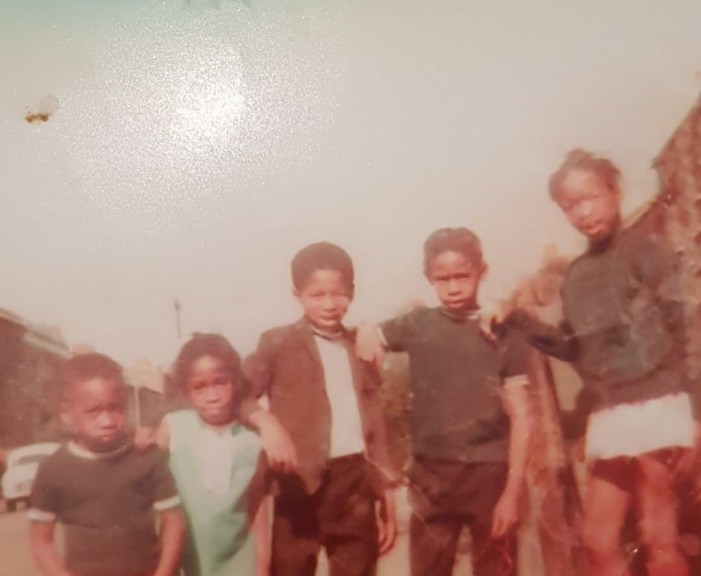
When our ship landed in Lagos most of the foreigners decided they weren’t getting off the ship. This was January 1966. The coup had already taken place. Dad decided we were going in. He had been given a job with the Water Resources in Lagos. So we got a flat at 51 Modupe Johnson Street, off Bode Thomas, Surulere. We were neighbours with the *Obas. They had three boys. And guess what? Their mother was also Jamaican. Six months later, the second coup took place.

One day we were told we had to move next door. And we were like, “Why?” But we packed up and moved next door. Before that my dad had gone out one day and come back with an Opel Record. It was a two door car. My dad was not around a lot. We thought he was going to work. Once in a while he would show up with the car. Sometimes he would leave the car and be gone. Then, one day he went out with mum and when they came back she had this baby in her arms.

Another day, dad was about to leave the house and I followed him. I was slow but when I got to the front window I saw him getting in the trunk of his car. I thought, “Why is dad getting into the trunk?” When I heard the rest of the story as an adult I realized that’s what he had to do to stay alive. I didn’t know where he was being taken. On reflection I think it had happened a few times but that was the only time I saw it.

One day dad shows up with the car and said, “You are going back to your grandparents.” That was the first time I would be going to Eastern Nigeria and I can proudly say I was stepping into Biafra because the Republic of Biafra had just been declared. On our way to the East we were stopped at the Onitsha Head Bridge by Biafran soldiers. They were saying they were not going to let us through. In the argument one of them slapped my dad. My mum grabbed a huge glass jug and jumped out of the car. She was waving it and threatening that the jug could break on his head if he laid a finger on dad. Jamaicans no dey play o. The arguments went on for some time and finally they let us go. From there we proceeded to our village which was not far from Onitsha.  That’s the last image I had coming into Biafra.

Tina – My mum didn’t speak Igbo and she had a foreign accent. The soldiers were cocking their guns as if to shoot us. The soldiers threatened they would throw my parents over the bridge into the water, which was far. I remember peering over the rails and the water seemed so far away. I don’t remember how the argument was resolved. We heard later from my dad that when he joined the army those men on that bridge that day were under his command.

Chinedu: Dad eventually joined the army and we were living with our mum in a flat off Edinburgh Road, Enugu. One time I got sick and mum was crying so much because I was in and out of consciousness. She came out looking for help but nobody was there to help, and tension was in the air.  She took me to Eastern Medical Centre and Dr. Okeke figured out what was wrong with me. Some weeks later, dad came back. He was a Civil Engineer and had gone for Officers Training. He told us we were going to the village, so we took off. That’s where we spent time with my grandparents, uncles and other relations.

Our house in the village was right on the Enugu-Onitsha road. That’s where I got the experience of a mass return. Everyone was heading towards Onitsha. It was a mass migration. Years later I was in America when Rwanda happened. I was watching a TV report about the crisis when I saw the mass of people trooping down the road with their luggage on their head. My body just started to shake because it brought back a lot of memories.

Tina: Another vivid memory I have is that everybody left the compound but my mum refused to leave. She felt that if she left our village my dad wouldn’t know where to find us. So we were sitting on our suitcases in front of my grandfather’s house waiting, and waiting. Dad was at Nsukka at the time but somehow he got a message that we hadn’t left with the others, so he sent his driver, Felix, to get us. We’d be dead now if it hadn’t been for Felix. [Laughter.]  Felix arrived in a station wagon and somebody helped him to bundle my mum into the car. We couldn’t take any of our belongings. We just jumped into the car and sped off. We didn’t realize how much danger we were in. That’s the strange thing about this – I can’t remember feeling frightened. In our escape Felix had to avoid all the major roads so he wouldn’t get caught by the soldiers.

Chinedu: Another memory I have was that dad buried his car during the war. Then he built something over the pit and covered it. After the war he dug it out and that’s what I used to learn to drive in 1973. I was 11 years old. [Laughter]

After our escape Felix took us to Ogbunike. The whole family was there and that was where we started seeing signs of the family not wanting to pay attention to us. It wasn’t blatant but it was happening. They were probably worried about what limited resources they had. When it came time to share food they weren’t including mum.

[Tina turns to Chinedu.] What was it about a bag of sugar?

Chinedu: Nicky was the size of a bag of sugar. That was the argument Dad gave Mum to convince her to leave. Nicky had not been fed well and therefore not grown to the normal size of a one year old, but she continued to stay in spite of all we were going through not getting enough food for five of us. He said it was better for her to take us back to England where we would be better cared for.

My grandfather also told me he didn’t like the way his children were treating us. They were doing it because they were looking out for themselves and we were foreigners. My mother, being Jamaican and her first time in the country, not able to speak the language, felt isolated, and my dad was not around.

Vivian: Maybe they felt you all were privileged, or they thought you should not have come back home.

Chinedu: Daddy was the reason they were getting all that salt and tinned food. Had it not been for him they wouldn’t have had anything. When you are not seen as part of a group you are treated as an outsider. Those things happen. To be accepted we had to work really hard. I remember the fight my mum had with my grandmother. She was dealing with that stress of not being given her own share of things. A knife was drawn but a lady who lived in the same compound separated the fight.

Dad’s division was under Cornel Achuzia. They used to refine oil so they always had fuel which they’d sell to buy food. My dad always sent someone to drop off the food, so we seemed to have food even when others didn’t. I remember eating a lot of crabs. Today, I do not like crab meat.

I remember we had five chickens which traveled with us as we moved from place to place. Each of us owned one and assumed ownership of it. The eggs were a steady source of protein. If my uncle Emeka felt like eating chicken he’d murder one of the chickens at night. [Laughter] He would come in the morning and say, “Nnaa, this chicken all of a sudden died.” And we’d have to cook it.

Tina – I remember thinking at the time that if the chicken had died of a disease and we cooked and ate it then whatever had killed the chicken would affect us too.  To be honest I don’t think I eat any of those chickens that had died in mysterious circumstances. It hadn’t occurred to me that it was my Uncle doing it.

After we left for Ogbunike there was a battle in our town, Ifite Dunu. It was known as Ifite-Ukpo then. Most people know about the battle that took place in Abagana, the town next to ours, but not the one in Ifite-Dunu. When the Nigerian soldiers came in to our town most houses were mud houses. They saw this big structure and moved in. It was my Uncle Cyril’s house. He had won the Jamaican Sweepstakes before the war so he was like a millionaire. He had houses in Onitsha and Enugu. After Enugu fell, the Biafran army made their way back and regrouped. Dad and his group decided they were going to attack my uncle’s house and dislodge the Nigerians. They succeeded, but the house was riddled with bullets. Even in 1973 when we came back from the UK we could still see casings all over the place. Uncle Cyril refused to fix the metal bars or repaint the walls. He just patched the holes.  He wanted a reminder of what happened because he lost his brother during that war.

Tina: There was a lot of traveling between places. We had to keep moving, sometimes we’d walk, sometimes my dad would send his driver to take us to the new place. Each time we were traveling the driver had to get out of the car to check the roads, because if there was a mound or something unusual on the road they were worried it was a mortar.

One of the places we stayed at was a school, I think. There was a field in front of it, and every foot of this field was covered in sharpened bamboo sticks. Each one was about four to five feet in height and so towered over me. We were told they were put there so that if Nigerian soldiers parachuted from their planes they wouldn’t survive the impact. I remember playing in this field, weaving in between the bamboo sticks oblivious to what they would do to a human being landing on it.

We spent some time at Abatete and Umunze. In one of these places we could stand on our veranda and see the fighting. It looked like a firework display.

There were two bunkers side by side. Our bunker was muddy and hadn’t been built properly so the walls were caving in. On this occasion we had to go to our neighbours bunker during the air raid. Our own collapsed and we were lucky we were not in it when that happened. On another occasion there was an air raid while we were playing away from the house. We hadn’t realized that we were so far away from the bunkers. We tried to run but everybody was shouting at us, “Lie down, lie down, lie down.” So we lay down in that field and we were watching the plane zoom past and come back, with a smoke trail, and then somewhere in the distance there was an explosion, boom, boom, boom, boom. The owner of the house where we were living, a reverend or something, drove down to where the sound came from. He had gone to pick the wounded and take them to where they could get help. When he came back he had to clean out his car. Everybody gathered around the car. I remembered this vividly. I struggled and pushed my head in between somebody’s legs and saw…whooo…I had never seen that amount of blood. That day was something else.

As I recall, I don’t remember fear. I don’t remember being scared. I just remember not liking certain things, not liking being in a different place, not liking how I had to be on the floor, because whenever we slept on the floor our faces would swell up. So if there was anywhere off the floor for me, Chinedu and Ifeanyi to sleep, we slept there, while Indy, Nicky and mum slept on the floor. They didn’t react as badly to sleeping on the floor as we did.

Chinedu: They were Nigerian born, that’s all I can say. [Laughter]

Tina: One of the things I don’t like, even now, is carrying bags when travelling. I make it a point not to. Where possible I check in all my luggage. I think it’s linked to the experience of moving from place to place. It didn’t matter how young you were, you had to carry something. It didn’t matter if your arms were tired you just had to carry things because you would need these things.

I’m sure we were traumatized because there’s no way you go through that experience without sustaining trauma, but you find a way to cope with it probably by blocking things out, because you have no choice.

Chinedu: You know what is Mkpor n’ani? When that thing goes off, my heart still skips. If I know it’s going to happen, then I’m fine, but if it happens unexpectedly I get agitated. And right now I haven’t watched any videos of refugees in the North East. I will watch clips of dead people but haven’t watched clips of people in IDP camps.

Vivian: Tell me how you were evacuated.

Chinedu: I remember the plane at night. I remember everybody hiding. Next thing you know, people were going out to the plane with lanterns. These people running with lanterns, where are they going? I didn’t know they were going to light up the runway. [Laughter] Those pilots, if I ever saw one, the kind hug wey I go give the guy erh? Imagine the planes in that kind of darkness. And African darkness is very dark. There’s no moon light. It is total darkness. And that lantern was just barely giving him light. Everybody rushed to board, but mum was still fighting, saying she wasn’t going. At the door of the plane she was still refusing. She’s a stubborn woman. That’s when we knew daddy wasn’t coming with us.

After the pilot taxied and turned around, na rush o, because there was no time. The Nigerian soldiers were shooting at the plane when we took off. It was a cargo plane. There were no chairs. And we were sitting on a bench. I remember the plane taking off and the benches falling. And once the plane took off it had to fly up at a sharp angle, to get fast above the line of fire. I know it was last week of November or early December, because we spent Christmas in Las Palmas, the Canary Islands. We remember the other people who were in the plane with us. One of our parents was either West Indian, or American or European. We flew to Sao Tome and from there to Equatorial Guinea, then Las Palmas in the Canary Islands, and finally London.

My dad never joined us. He had been promoted to a Lieutenant Colonel a few days before the war ended. He was hit in his neck by shrapnel. He spent the last days of the war in hospital, and another six months recovering. After he recovered he came to London to see us.

When everybody was being given twenty pounds my dad sold his wedding suit to a Nigerian soldier for fifty pounds. He hadn’t dug out his car yet. He said if he had dug it out they would have taken it. So, he sold his suit and had some money. And for a guy to say, “I am going to give you fifty pounds for that suit,” that was a lot of money back then. Some of those Nigerian soldiers were not bad people. They were doing a job.

Tina: Another impact I didn’t really know the war made on me until now is that when I go shopping I always buy a lot, usually much more than I need to. I always stock up so that if anything happens we will have something. That experience of not having what you need when you need it, and even when you did have it, it was never really enough. There’s a phrase I use to describe myself, “I am a war baby.” So the way I use that phrase is that no matter how little food or resources I have I’ll share it, not even manage it, I’ll share. I believe that when there are other people around you who are hungry and in need, and you have a little food and a few resources, you will have to share it. I practice this daily and I think that this is as a direct result of my war experience.

Chinedu: For me it’s my phobia for crabs. [Laughter]

Tina: We all went back to Nigeria in 1973, three years after the war ended.

Recently we had my mother’s DNA tested and we found out she’s sixty one percent Nigerian
BOYS’ COMPANY

The wounded soldiers were coming back to the village and telling us what was happening at the war front. They were showing us how to dodge bullets. They were carving guns with wood and giving us, teaching us how to do manoeuvres. They were preparing our minds to fight. But nobody told me how to dodge air raids. So, the first day it happened, I didn’t know it was air raid. I was fishing with my friend, Monday Iroegbu, from Amaogudu Otampa,  and I was wearing a red T-shirt. The bomber dropped nine bombs into the river. I was counting the bombs as they were being dropped, out of sheer curiosity. Monday is still alive and can corroborate this story. Some of the bombs exploded but many did not. We started running so they started spraying bullets at us. I got to one big tree and ran behind it. The helicopter lowered and parked in our ama, our village square. It was piloted by a white man. I believe they wanted to catch me alive. They just wanted a prize, a trophy. I ran into the bush and our people who were already taking cover there said, “Oh, remove your red shirt, remove your red shirt. That is why they are bombing this place.” So I removed it and threw it away. At the end of the day we came out and started counting dead bodies.

People were losing their homes because of the advancing enemy, but there was community assistance and collaboration. When they move to another community the people there will accept them. My grandmother took in over twenty people just because they were Ndigbo who were running for their lives. She was a local midwife so she was quite popular. We gave the refugees part of our farm land and they built temporary accommodations on it. We cooked communal food and shared to them. They were with us for almost four months before the war got to us and we became refugees ourselves.

We were hearing about the war on the radio, but majority of the things they were saying were propaganda. So, even when it was getting closer to us we didn’t know. When the soldiers eventually entered our community my mother said she was not going anywhere; that she won’t run from Lagos to the village, and then start running away again. Almost the entire community ran away but my mother was busy frying and selling garri. I said, ‘Mama, ndi mmadu a gba chaala oso – other people have run away.’ She said to me, ‘Nwa m’, ebe ariri nwuru wu ili ya – wherever the millipede dies is its grave.’ My sister came out of the bedroom and said, ‘Mama, if I die my blood is on your head.’ My mother was shocked. She said, ‘Who said that?’ I said, ‘It is Ifeyinwa.’ She said, ‘Ngwa, ngwa, ngwa – hurry, hurry, hurry, let us go.’ That is how we started preparing to leave.

The day our village collapsed, there was an old woman who couldn’t run because she was blind. Her name was Nneoma Ukazim. We used to call her Nne. Her children were in the army. One of them was working with the Nigerians against our people and later became the chairman of the Liberated Isuikwuato Area. So, there was nobody to help her. She was just trying to feel her way around, touching walls and fences. I told my mother that I wasn’t going to leave the old woman. So I took her. We got to a small river where two palm trees were placed across to make a bridge. The old woman couldn’t get on it so I, a ten year old, I carried her on my back to the other side. A Biafran soldier who was running from battle saw me and assisted both of us until we got to a safer place. Surprisingly, she survived the war and I became her confidant, to the extent that she told me her burial plans and gave me the clothes she wanted to be buried in. She died in the 70s.

We slept in somebody’s house the first night. The next day the shelling started in that community so we moved again. We kept moving. We moved about four times. The first place we ran to was a town called Ezere in Isikwuato. Some people ran to a place called Isi-Iyi. The war never got there. They said the deity in that place prevented the soldiers from getting there; that the people who ran there were safe. No bombs, no bullets.

A lot of people got lost due to the sudden movements. My sister, Florence, almost got lost. She went with other family members to Umuobiala, another community in Isikwuato, to visit my aunt, Mrs. Chidinma Ojiaboh. The day she was to come back, the shelling started. That day was what we called Church Ahia, when our market day falls on a Sunday. This happens once in eight weeks, and it is celebrated in a big way, like Christmas or Easter. So she couldn’t come back. And we couldn’t go to her. Even my aunt she had gone to visit, they left her and ran away. So my sister was running alone in a bush between Umuobiala and Afo Ugiri, when the vigilante found her. They were also called Civil Defence and were the liaison between the civilian population and military authorities. When they identify orphans they take them to the Red Cross. They assumed she was an orphan because she said she didn’t know the whereabouts of her parents. They took her to a camp where other children were waiting to be evacuated. But during the documentation one of the soldiers recognized her. He was from our village. That was how he sent us a message across enemy lines. We moved, me and my mother.

The Nigerian soldiers were still sleeping when we got to the check point, so we sneaked through their backyard. It was when we were coming back that they caught us. They asked us where we were coming from. They said I was Ojukwu soldier. I denied several times. They were convinced that Biafra was using child soldiers, which was true. They were using child soldiers to steal for the army. I was one of them. They called us Boys Company. They will send us to steal food and clothes. We will wear only our shorts. They will shave off our hair and rub oil on our bodies so that if they catch you, g’a gbu cha pu – you will slip away. We even stole guns and ammunition. Those who did very well in the training were given real guns which they called Ojukwu Catapult. They very small submachine guns and were easier for young boys to carry. The training was two weeks. They taught us manoeuvres, weapons handling, parade, how to recognize the enemy. Those of us who were born outside Igbo land spoke different languages. I was very good in Yoruba so it was an advantage. When the Nigerian soldiers catch you, you speak Yoruba to them and they say, ‘Omo ale, just let him go.’ My uncle was in the BOFF, the Biafran Organisation for Freedom Fighters. The day they caught him he started speaking Hausa. He was very fluent in it. Very fair in complexion. He said he was Dan Kano, that he was from kano. They asked him all manner of questions and he answered correctly, so they went drinking with him. He escaped and came back to tell us the story.

There was even an airstrip in my community where lighter air craft used to land. It was in that vast land between Okigwe and Uturu, right from where you have ABSU up to Ihube. During the war it was called Ugba junction because there was a big Ugba tree there. They camped Nigerian soldiers on that land. But before it was captured by Nigeria, Biafra was using it as an airstrip. Before our place fell we were the ones protecting the airstrip. We used to put pongee sticks all over the fields so that no aircraft will be able to land. At night when our own planes are coming in, because we already know they are coming, we will create a path for them to land. The flights were a collaboration between the Biafran Air Force and some foreign bodies. Some of those journalists who came, came as aid workers. Some were bringing arms and relief materials, and also helping to move children of well-to-do Biafrans out. These are stories that will not make the headlines.

We had uncles and brothers who were working for the Biafran government digging trenches. Those trenches were dug by civilians, not by soldiers. They were using older men who were too old to fight. They were also using them for propaganda. They will go and dig trenches and come back with information about the enemy.

Where you have Stella Maris College at Uturu, there used to be a rehabilitation center for wounded soldiers. They called it Hope Ville. They were making shoes and all manners of crafts during the war.

Biafra was very organised. And everybody contributed. My parents contributed. I contributed. They called it Win the War effort. Everybody made contributions to that war. If you were making baskets, you donate them to the Biafran Government. Anything you can provide – farmland, houses – you give to the government. When they need an office, you vacate yours. Biafra succeeded because of communal efforts and that was why the war lasted for so long. The Nigerian army thought they could over-run the entire South East within days. But Ojukwu miscalculated. You have no arms, no bullets, you say you are waging a war. So those who are talking about Biafra did not witness the war, they are doing it because of the marginalization in Nigeria.

Certain communities were even divided. Nigerian soldiers on one side and Biafran soldiers on the other. People used to sneak across to the Nigerian side to buy food and other things. They call it Ahia attack. I was following my mother to these markets. Some of them were designated as Ahia Ogbe – market for the deaf and dumb. Because of the air raids. These markets were held in the forests and only sign language was used. One day I escorted my mother to a market in Ishiagu to buy yams. We walked the whole day. I was carrying three long native baskets – abo. Inside the baskets I had yams and Adu, which is like cocoyam. My mother was also carrying a basket. Do you know that at every road block Biafran soldiers will take one yam? By the time we got to our village our baskets were almost empty. I cried that day and I said, “God, do not allow Biafra to win this war because if we do we are going to see worse things.” Ojukwu was no longer in control. The soldiers were hungry. They were committing atrocities in the areas they controlled.

The hunger was so much that one day we ate the wild variety of Una, the one called unabiwu. There was nothing else to eat. We said if bullets don’t kill us something else will kill us. After the meal, we slept for four days at a stretch. We didn’t wake up for four days. It probably contains very high levels of cyanide. We were lucky to have even woken up. On another occasion we ate a wild variety of beans. We bought it mistakenly, and it almost killed us. I was the first person it affected because immediately after eating I started having hallucinations. They gave us palm oil and coconut water, and that was what saved us. The only person who wasn’t affected was my sister, Florence, the one who was found in a forest. She had a stronger constitution.

Just like my sister, my father was presumed dead during the war. We mourned him. They put something in the ground and conducted a symbolic burial for him. It was after the war that one of my uncles ran into him in Liverpool, England. He asked him what he was doing in Liverpool and my father said, “They told me my wife and children are dead. What am I coming to do in Nigeria?” My uncle told him we were all alive, that only one of us died. My father said, “What of my wife?” My uncle said, “Your wife is alive.” What happened was that my father was in the navy and Nigeria wanted them to bombard Port Harcourt with the NNS Aradu. He and his colleagues refused. They diverted the ship and abandoned it at sea. They were rescued by a Congolese fishing boat which took them to Congo. President Sese Seko granted them asylum and facilitated their move to England. The Nigerian government recovered the ship but it’s no longer sea worthy. After the war my father came back to the village, but we had to undo the burial we had done. They performed some rites before he could enter the compound. The government arrested him, court marshaled him, and sacked him with no benefits. He eventually became a sailor and that is what he was doing until he retired.

Anyway, after interrogating me and my mother at the check point, the Nigerian soldiers let us go. We brought my sister back. By then we had been liberated.

-Richard Harrison

[Cover photo courtesy internet]

THE WOMEN FIGHTERS

I was working at Textile Mills Aba when they came and conscripted us. They just took us to Aba Sports Stadium, near Ngwa Road. The whole stadium was filled with people.

We had group pictures. The one I took with my group I can’t find it. I kept it all this time.

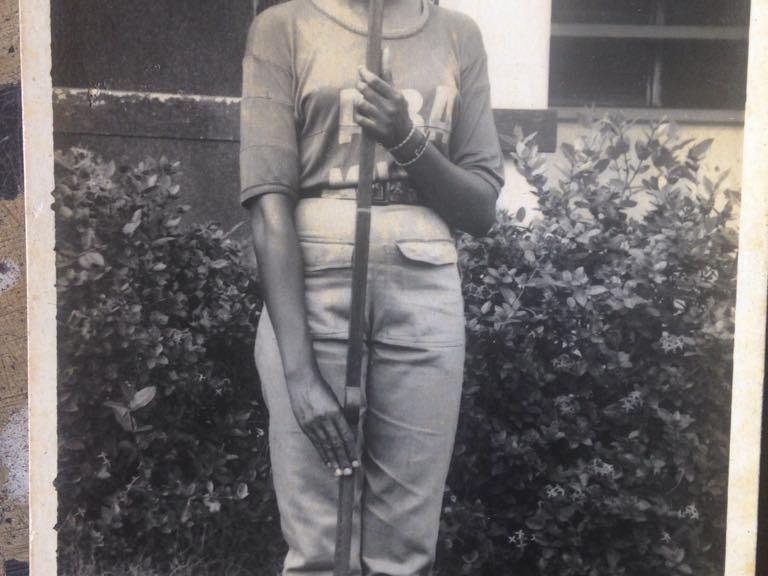
The military people used to come and train us. We did it for about three months. Male and female o. They didn’t train the girls separately o. There’s nothing like you are a girl. Your commander, whatever he says, that’s what you will do.  No going back. Whether you like it or not. When it’s time for us to take cover, everybody will lie down. They showed us how to handle a gun, how to lie down, how to… when they say… erh…what’s that their slang again? ‘Preseeeeent arm!’ You present your arm. ‘Preseeent arm!’ You raise it like this. [She lifts her arms]. When they ask you to shoot, you know that thing is not a real gun, then they’ll show you what to do. [She makes the sound of gun shots with her mouth] Kpa-kpa-kpa-kpa-kpa-kpa. They will shout, “Order!” You bring out your leg. So all that training is what they were doing. But, no, they didn’t allow us to use a real gun. I’m not sure they had it in mind.

We’ll go in the morning and come back in the evening. They gave us uniform. They didn’t camp us. We were coming from our houses.  Even then, my father and mum won’t allow me. They were so scared that we should…arh! [She claps her hands].

They just wanted the first batch to go and assist the real soldiers. We were not the real soldiers. They didn’t train us to that level. The real army was in the war front. This militia was just to go and support them. They sent some to Abagana, Port Harcourt, wherever they know the fight was fierce they sent them there. They were there, helping the casualties, like Red Cross. The women, they were using them in the refugee camps, but my parents refused. They say I won’t go, they won’t allow me to follow them out again. That was the end of my militia training.

In our own case it was this stick they gave us. But the people they were training to go to war front they gave them real gun and showed them what to do, how to use the trigger, how to do this and how to do that, take cover, lie down.

We were excited, yes, especially in the morning when our commander will start chanting ‘Hep! Hep! Hep! Hep!’ [She starts to march.] All of us, we were so excited carrying our guns. But we were scared o. They said all the people that went to the front didn’t come back. So when they conscript some people they will be pretending they are sick or something is wrong with them. They will say they have been in the psychiatric ward, yes. War is not something you wish to experience a second time. Very bad.

The war was not easy o. Not easy. Hei. The air raid will come in the morning from 10.00 o’clock to 12.00 o’clock. It will come again by 4.00 pm in the evening till around 5.00 pm. My mother dug a big bunker, so when the air raid starts all of us will go there and stay. In the morning my mother will disguise herself, paint her face with this black uri, then she will bring a basket with food to us. When she drops it she will quietly go back to the house. Throughout that day we’ll be there. Inside that bunker. Lying down. The little food she’ll bring to us that’s what we’ll eat until evening. After that second air raid all of us will then go back to the house.

There was one air raid at Aba. Look at me. You see this thing here. [She touches a scar on her leg.] It was some of the bullets from that air raid. One afternoon like this the air raid came. It killed so many people near our house. Some of it fell inside one of the rooms in our house. Number 3A Asa Road Aba.  That is where we were living. It shook the whole house. It was then Ojukwu came to our house. That was the first time we saw Ojukwu.  He came with his people. They came and removed the bomb. Big something like this. Come and see dead corpses everywhere. [She touches a scar on her hand]. A piece of that bullet was in me for more than one year before it came out. [She touches her hand again] See the marks. This one, this one. It was moving round my body before they brought it out.

After that air raid we started running. From Aba we ran to Umuahia. From Umuahia we ran to Mbano. From Mbano to Nkwerre. From Nkwerrre, myself, my sister and her husband, and the last born of my mother went to Umuchu. We were at Umuchu when the war ended. We came back to Nkwerre. My parents were at Nkwerre. From Nkwerre we all started coming back to Port Harcourt.

Our parrot from the war followed us till after the war. Pretty boy, that’s what we called the parrot. It followed us till after the war. It was very intelligent. Even when they bombed our house in Aba, the parrot was there. We were hearing they were forcing women into marriage so our mother used to rub uri on our faces. If you see how our faces looked. Pretty Boy will give us sign that the soldiers are coming. When they come close to the house he will start asking them questions, “What are you doing here? What are you doing here?” [She laughs.] Then my mother will start crying and speaking Hausa to the soldiers. My mother, she’s a linguist. If it is Hausa, she will speak. If it is Yoruba, she will speak. Many languages. The parrot knew all our names. Pretty Boy. Yees! If you put sugar in his water he will drink. If you do something wrong he will gossip about you, unless you give him that sugar then he won’t talk. If not, when mama comes he will tell her everything you did.

[Cover Photo shows the contributor. The photograph was taken by Gorgeous Studios, 42 St. Micheal’s Road, Aba.]

‘AFIA ATTACK’ – A Soldier’s Account

The thing about Afia Attack is that hunger led people to take all sorts of risks.

I joined the battle to prevent Awka from falling into the hands of the Nigerian Soldiers. My unit joined the battle in Amansea community but the Nigerian Soldiers kept having the upper hand. I remained in that sector between Awka and Onitsha until we settled at the Ogidi-Nkpor axis where we were responsible for opening up the Biafra One and Biafra Two routes to allow traders from Biafra Two to cross to Biafra One. The hunger was in Biafra Two – the present Anambra South and part of Anambra Central, while the food basket was in Biafra One – present day Anambra North which includes Ogbaru, Anambra West, Anambra East and Ayamelum. Stationed there, from time to time we would strike and dislodge the Nigerian army, and recover places like Iyienu and Nkpor Agu. We would then open up Nkpor road and once we did that the traders waiting on the Biafra One side would rush across with their goods.

Each time we opened a thoroughfare, we wept. We saw what hunger did to people. It was a terrible experience. I remember the day I saw a cousin of mine, who is a Medical Doctor today, all bloated up, extremely pale in colour, his hair was just white and curly. He was just a little boy of about nine or ten years. I couldn’t believe my eyes. I wept. I said to myself, “Is this my family?” Well, that put the fire in me to fight more.

Many of those traders were women, and they helped to keep families alive.  They were in two categories. Some of them were there to buy looted property from civilians and even soldiers, because many people left their houses without taking a pin. When soldiers entered those deserted houses there was always this temptation to pick property and sell in other to raise money for food, cigarettes, hot drinks, and other needs of theirs. It was this group of women and some men who usually bought such looted property off the soldiers. They bought from both Nigerian and Biafran soldiers. But the real ‘Afia Attack’ women were those who earned a living by going across boundaries, buying and selling, especially in foodstuff. They supplied soldiers with cigarettes, goof [marijuana] and hot drinks. This endeared them to the soldiers who reciprocated by granting them easy passage to whichever side of Biafra they were going as soon as the passage was secured.  Sometimes these women bribed people to take them across the front line because no matter how vast the area was, the soldiers knew the paths through which they could pass without being detected. They would escort them to a certain point and advise them to lie low until it was safe to cross. If the women were unlucky and the road closed after they had crossed, then they stayed back till the road opened again. And where did they stay? They stayed at the war front. They lived with the soldiers in the bunkers. Women with children. For us young men we jumped at those opportunities. We were happy. What we couldn’t get normally, we got on a platter of gold.

Some Biafran women even offered themselves to Nigerian soldiers in exchange for items like tinned foods and cigarettes. Some were used as spies. They would tell the women, “We will keep you alive but don’t give us away. Just give us information.” So it was give and take. Sometimes when we wanted to attack, we would filter the information the day before and the women would come close. Some would sleep with us in the night and in the morning, before we knew it, they would have crossed. And when they returned they came with all sorts of gifts for us.

Markets developed around these boundaries. People would wait for the women to return because they were always in a hurry to dispose of their goods. And when they were going back they slept in the bunkers with the soldiers for as long as it took for the road to be opened again.

But I don’t call them loose women. These were women who were so hard up that they used what they had to get what they needed. They saw their children and everybody around them dying, so they went out determined to help their families. Not only families, the soldiers at the war front were kept alive by those women. These women can never tell you what they did but they sacrificed a lot. They did things that were against the culture of the Igbo people just to survive. Sometimes they were caught by Nigerian soldiers and raped mercilessly. Sometimes they lost their money and other belongings. It was ‘Afia Attack’ that led to the phrase of ‘Di gba kwa oku.’ [To hell with the husband.] That was the origin of that phrase. What husband are you talking about when lives had to be saved? What are you husbanding when your children are dying before you? They made a lot of sacrifices for Biafra, their children, their families. I wish we can single them out and honour them.

Something else happened during that war. Some Igbos were bold enough to join the Nigerian soldiers when they were driving Biafrans away, following them from place to place as they conquered and penetrated more areas. Some were acting as interpreters. Some, particularly women, were even living with them and giving them information. When they conquered a place they did not always kill people. What they really needed was information such as, “Who and who was here? Which route did they follow? Which way shall we pass?” Information gathering is very important in any war. So these people gave the Nigerian soldiers information. And any area they conquered they just went there and looted.

That must have been what happened to my father’s house, because he was a wealthy man by the standards of those days. It was a beautiful six-bedroom bungalow, and when they were running away I visited them from the war front and we dug a big pit at the back yard. We carried all our valuables and buried in that pit hoping that whenever we came back we would just dig them up. But when we came back at the end of the war our house was leveled to the ground. Nothing was standing. Not only was the building gone, the place where we buried the property was completely excavated. Nothing was left in that pit.

War is a horrible thing. It brings out the worst in human beings. The things you won’t ordinarily do, you will find yourself doing them.

-Igwe Dr. Chukwuemeka Ilo

DISARMED IN A TRENCH – PART 2

Ojukwu never knew this until 1976 when we met in Washington DC at the reception the late Nchewi Imoke gave him. After I told him how I saved his life, he said he would like to meet Reginald whenever he came to Nigeria. But we never met him.

Immediately Ojukwu’s plane took off, a long distance shelling started raining from Awommama and we could see the canons flying past the airport. The Nigerians had miscalculated, so the shelling hit a village and killed people there. In between this shelling an International Red Cross plane from Caritas arrived and instead of landing on the air strip it lowered and poured its food supplies on the tarmac. We loaded some in our van to send to my parents. Because of the shelling a lot of the evacuation flights were cancelled. After Ojukwu’s departure, Colonel Achuzia took over the podium and started calling people to board for evacuation. He called Captain Anuku. Anuku entered. Called Colonel Timothy Onwuatuegwu, but he was absent. Meanwhile, the pilot of the plane was already panicking because of the shelling that had just taken place. As people forced themselves in, the staircase broke and every person on it fell off. The pilot panicked and took off without closing the doors. One person fell off and died. A young girl had her head crushed by one of the tyres of the plane. She was about 7 years old and the daughter of a prominent Nigerian.

We kicked off with our jeep loaded with food. Many people had come to board the planes but could not, so there was an exodus of people leaving the airport. You can’t believe that from within that massive crowd I heard the voice of my youngest brother, my mother’s last child. He was shouting the name of my sister, “Echika, Echika, Echika.” I told Reggie that I just heard Ugo’s voice calling Echika, and he said, “Lambo, how can you hear Ugo’s voice in this crowd?” I said, “Driver, stop, let me go down. You can continue. If you don’t see me again, tell the story but I will not live with my conscience if I don’t investigate this voice.” Immediately I got down my brother cocked his Kalashnikov and ordered everybody down. He took over the wheels and we started driving slowly backwards, and who did we see? My last sister, Echika, holding my two youngest brothers. She was only eleven years while Ugo was four. He had fallen down and bruised his leg that was why he was calling out her name, with cries. We put them in the vehicle and took them straight to my parents.

What happened was that my mother had handed three of them to Colonel Anuku and asked him to take them overseas. Colonel Anuku put them in a vehicle with an orderly and driver with instructions to take them to the airport. Then he took his own children and rode with them in another vehicle. When the shelling started, the driver carrying my siblings panicked and fell into a ditch, brought the children out of the vehicle and fled. My mother cried and cried. Reginald cried also and said he’d never dispute anything I said again. It was providence.

Many children got lost or separated from their parents that way. It could have been the same with my siblings. If they had evacuated them to Gabon or Ivory Coast they would have been sent to an orphanage and who knows what their fate would have been afterwards. My mother was the head of the Red Cross in Owerri and because there were so many abandoned children on the streets, she was helping people adopt these children. She would give them documents which they would take to their local governments and register the adoption.

During her funeral in 2000, a woman came with a huge cow, many dancers, and a young lady. During the presentation, she told the congregation how my mother knew she had been pining away from childlessness and asked her to adopt a child, who was one and half years old at the time. That was the young lady with her; all grown up; a second year university student at the time. She told the crowd it was because of that her adopted daughter that she wakes up every day to face the world. Everybody applauded.

-Achiuogo Lambert Agugua

DISARMED IN A TRENCH – PART 1

Before the fall of Port Harcourt in 1968, there was a long-distance shelling from the high seas. The shell was falling so rapidly on Port Harcourt and became a threat to life. Prior to this time my younger ones and my mum had been evacuated to Nkwerre. I was working with Directorate of Petroleum at the time, so I stayed back in Port Harcourt with my father.

When we decided to evacuate PH, we carried a few items that were valuable, such as our Television, to a neighbour’s house. He was Mr. Graham-Douglas, a lawyer at the time, and he kept those things for us until the end of the war. We then loaded as much property as we could into my father’s car. I had a parrot I was very fond of but there was no room for it in the car so we simply opened its cage and let it out. We set off and the parrot also took off. It kept flying over us and when there was a hold-up it would hover close to the vehicle. It tracked our vehicle until we passed Elele and lost it and carried on.

It was around here that we saw my cousin, Mmagwu. She had tied her luggage on her back and was carrying her baby in her arms. There was no place for her to sit in the vehicle so I said to her, “Mmagwu, let me have the baby and when you come home you can take her from me.” But she said, “No, no, no! I won’t. Ebe m nwuru ka nwa m’ g’anwu – wherever I die, that’s where my child will die.” She made it to Nkwerre on foot and I was glad to see her a few days later.

I moved to Umuahia and joined the DMI. One day there was an air raid by what I thought was a very vicious Egyptian pilot. It was as though he was targeting me. I ran out from the Peugeot 404 I was driving and ran under a tree just as bullets started raining on the tree. One of them came towards my forehead but instead it hit a branch, cut the branch, fell on my shoulder and burnt me my right shoulder blade. I was shouting, “Oh my God, is my time up?” At that moment of my dismay, a petrol station exploded close by – kpoooo! People had their hands amputated. Many died. I picked up the bullet and gave it to my friend who was going on a mission to buy weapons for Biafra. I asked him to show it to my sister in London. I wanted her to see the bullet that almost killed me. Many years later, I found out who flew that plane. It wasn’t an Egyptian pilot as I had thought. It was a retired Air Commodore and we are members of Full Gospel Business Men’s Fellowship. The day I gave it as a testimony, he got up and apologised and said he was the one who flew that plane. He said that every description I gave was correct, and that they were targeting the fuel station as part of actions to stifle the Biafran nation.

After this incident I joined the Biafran Navy and was sent to the School of Infantry at Bishop Shanahan College, Orlu. I passed out sometime in 1969 and was posted to Defence Head Quarters which was Head Quartered at St Catherine’s Secondary School, Nkwerre. I became a liaison between the School of Infantry, the Navy and the Defence Head Quarters, so I was communicating to Captain Anuku, the Commander of the Biafran Navy, and Lt. Col. Timothy Onwuatuegwu, the commander of the School of Infantry.

For some reason, which I attribute to God’s design, Nkwerre was the only place in Biafra that could not be hit during air raids. The Nigerian Air Force could hit Orlu and Atta but couldn’t hit Amaifeke, Abba, and the areas around Nkwerre. After the war I asked a pilot friend of mine, the late Ibikari Brown, the reason for this. He said from the air Nkwerre is in a valley, which is like a curvature, and when you are trying to hit a target inside that curvature the wind drifts it to one end of the curvature and that’s where it’s going to fall. You invariably miss the valley itself. Whereas if you use a missile, which the Nigerian Air Force wasn’t using then, it will pierce through the condition of the wind and go straight down to the target. So the wind shifts the movement of the bombs and drifts them from meeting the target. That is one of the reasons why the banks, hospitals, training schools, etc, were located at Nkwerre.

As a matter of fact, how I knew the war was about to end was that, on the 11th of January 1970, I had instructions to go and tell the late Colonel Timothy Onwuatuegwu, who was the Commandant at the School of Infantry in Orlu, and late Captain Anuku, the Commander of the Biafran Navy, to proceed to Uga Airport for evacuation out of Biafra. The Biafran government attempted to evacuate prominent people who could either be killed or arrested by the Nigerian soldiers after the surrender. I searched everywhere for Colonel Onwuatuegwu but I couldn’t find him. I was so distraught when I was returning from Ihioma but, all of a sudden, I saw a command vehicle parked on the road. It was Colonel Timothy Onwuatuegwu. I came out of my Q-movement vehicle, saluted him and said, “Sir, I have been looking for you.” He said, “What are you searching for me for?” I said, “I have a message from the DHQ that you should report at Uga Airport for evacuation.” He got very angry and said to me, “Don’t you bring me this kind of message again. A na-eme evacuate for what? Where are we going? All these children that we deceived, what will be their fate? I will die here. Go and tell H.E. [His Excellency] that I’m not going anywhere. I will die in this country. I have already signed my death warrant. Umuaka n’ine anyi deceive ru, ma ndi nwuru anwu, ma ndi di ndu, why are we running away – All these children we deceived, the ones who died, the ones who are alive, why are we running away? We should stay here and die with them.” He refused to come with me. By the way, at the end when General Effiong handed over and Colonel Onwuatuegwu knew he was being sought for, he tried to escape through Cameroon but they caught him at Calabar and killed him. That’s how he died – a very brilliant, nice human being. Anyway, I proceeded to Oguta and informed Captain Anuku to proceed to Uga. He agreed. I then called my younger brother, Reginald, who was a Major and said to him, “There’s a movement tonight. Ojukwu is leaving Biafra tomorrow night. Let’s go to the airport for that evacuation.”

We took one Major Asuquo and a couple of others with us to the airport. We went in a Quarter Master Movement Vehicle, which was in charge of all supplies from Defence Head Quarters. There was chaos at the airport. The check point was manned by the Commander of the Biafran Air Force, and when he was searching our vehicle, he flashed his torch on my face. I squinted and his orderly cocked his gun, demanding to know why I was frowning at his master. Angered, my brother cocked his own Kalashnikov and insisted the Commander should stop flashing the light on my face. Tensions were high and at that point we all knew it was no longer child’s play. Major Asuquo ran out of the vehicle and placated everybody, saying that any shots fired would result in a blood bath, an extra-ordinary implosion, as every uniformed person at the airport was armed to the teeth. They lowered their guns.

We went inside where Ojukwu was addressing people to keep the faith. Then he walked into the flight. I started searching for my brother and somebody said, “He’s in the trench over there.” He was actually there, aiming his gun at the fuel tank of Ojukwu’s plane. It was a Kalashnikov and it had tracer bullets. I ran to him and grabbed him. I said, “Reggie, Reggie. Why, why?” He said to me, “How can this man tell us we will fight to the last man and if we all die the grass will fight on our behalf, and now he wants to be the first to leave? Lambo, do you know the number of people who have died? No, I’m not going to allow him and if you touch me I will shoot you because I know I’m going to die here today.” I let go of him but I said, “You and I don’t really care whether we die here today or not, but the fact is that if you gun down this plane they will go and kill papa and mama, and all our brothers and sisters.” I started naming all our siblings one after the other, and he broke down and started crying. That is how I disarmed him in the trench.

-Lambert Agugua

For The Love Of Family – Part 2

[Ben Onwuka was a former Biafran soldier who was wounded in battle. He talks about other wounded soldiers who were evacuated to Holland by the International Committee of the Red Cross for medical attention. A couple of them became mentally unstable and one was eventually committed to a mental institution in Holland. He also talks about returning to Nigeria to look for *Ruth, the girl he loved, who he had also promised to marry.]

                                                                         ———-

We were disappointed to hear that Biafra was no more; doesn’t exist anymore. We couldn’t believe it. We never thought Biafra would lose the war. We so believed in it – the efforts we put in, the determination. Anybody who really fought the war with all his mind was disappointed. We were confused and emotional. After everything, we didn’t have anything to show for it.

The Dutch people knew we were hurt because we lost the war. They said they can’t force us to go back since we came as Biafrans, but if we decide to go, they’ll arrange for our going back. They said it’s either we stay and study or we learn a trade so that when we decide to go back we will have some skills. I’m very much indebted to them.

One boy, Christopher, wanted to do banking. Felix, from Ngwa, also wanted banking because he did Commercial School in Nigeria. I wanted to do Medicine because I saw a lot of people dying in Biafra and that was my motivation. But they don’t give foreigners scholarships for medical studies and it takes about eight years to finish. It also costs a lot of money. So I thought of agriculture because of my experience of hunger in Biafra. My aim was to return and help my country. I started with Agricultural Secondary School, a bit of Forestry and landscape architecture, then entered States Tropical Agricultural Higher School where I got my first degree in Tropical Agriculture.

17407929_10211548664210116_67754857_o
Ben, as a student of Biology and Entomology

After that I went to work in Wageningen and obtained my second degree in Biology and Entomology in Wageningen University and Research Centre. My major work was irradiation of insects to induce lethal genes in them or induce translocation in their genes for the purpose of insect control. These were done in the institute for Atomic Sciences in Agriculture in Wageningen where I live until now.

Some of the other soldiers didn’t fare so well. One of them was John who developed mental problems. He joined the army as a very young boy of seventeen or eighteen years. He underwent several operations because his mouth was shattered, so they tried to reconstruct his teeth and mouth and jaws. So much so that he became mentally confused. They used shiny metals for the construction, so he had appendages on his head like antennas which made him look like a mobile robot. When he comes out people will be staring. Sometimes they used his skin to do skin grafts. They cut it and pull it, and you see it growing from here to there. They used it to construct his lips because there was nothing left there.

I remember one day when we were in the Military Rehabilitation Center. They gave me a special room because I was an officer. John knocked on my door and when I opened it he just dived under my bed and said, “Oga, please, they’re looking for me. They are looking for me.” I said, “John, nobody is looking for you. Please come out.” He said, “They want to kill me this night. You don’t know what they are doing. This is a way to get me. I don’t know why you can’t see this.” All the other boys came and pleaded. But he kept on doing this. Every time it will start. Eventually, they put him in a psychiatric center and we went there to visit him. I could see death in his face. He said, “Please, I am going with you people. Do you see they have marked where they will bury me?” It was so sad to see. We were new and couldn’t speak Dutch but John will say something like, “The news this afternoon was saying that John has to be killed, must be killed.” But you can’t do anything to stop him. When it became impossible to treat him, they sent him back to Nigeria. He was accompanied by a military nurse who gave his family a lot of money to take care of him. They also promised to be monitoring his progress. The wounds had healed in a way so he was able to eat. They even put false teeth but who takes care of such things in the village? You have to bring it out, brush it and put it back. He even had special food from Holland. But we heard he went to the village shop and stole cigarettes, so they beat him up. And whenever he passes, people will be making fun of him, saying things like, “Ony’ara, o n’ezu kwa oshi – Mad man. He also steals.” John eventually became the village lunatic. The white nurse came a second time to see what became of John and was so disappointed with his condition. He stayed back for some time and tried to take care of him. He gave the family money again to continue the care and he remained in contact with them. But the third time he asked about John, they told him John was dead.

Another person who developed mental problems over there was Victor from Nsukka area. He became quite dangerous, setting his house on fire and threatening to kill somebody who was making calls in a public phone booth. He claimed the person was plotting against him. Anytime the tell us what is going on, it doesn’t matter what time of the night, we will go to see him. He even claimed he had impregnated my girlfriend’s friend. She had gone with us to the hospital to visit him and she liked him so much. So, every time he sees Crystal, my wife, he will ask, “Where is your friend? She’s having my child.” He became so dangerous they put him in a very, very highly guarded psychiatric hospital where it became impossible for us to see him or get information about him. Till today I think of Victor.

Cyril’s case was different. His two legs were amputated and he had artificial legs. But he was so clever he was speaking Dutch within six months we were in Holland. He was playing music for people, doing disk-jokey. He will hire sex [pornographic] films and invite people to his house to see the films. He was even smoking grass and riding his motor cycle without licence. He could commit a crime and they’ll look at him like, okay he’s a Biafran and he has no legs. He became problematic financially to the Dutch people so they offered him money to go back home. Actually, they made the same offer to all of us. If you want to go back home, they give you about 15,000 guilders to resettle. It was big money. When Cyril showed interest in going home, they increased the money and paid for his transport back. His plan was to start a business when he returns home. He promised to stay in touch but we never heard from him again. Any time I’m in Nigeria, I think of him and wonder what became of him.

I was settling down to my new life but I couldn’t forget *Ruth.

BEN ONWUKA 20
Ben, as a sportsman in Holland

There was a Red Cross man who was going to Nigeria and I gave him an assignment to look for her. He succeeded and went to my family, but they told him that *Ruth’s family left Achina when the war ended and she went with them without even crossing the street to say to my own parents, “I am going.” I get emotional when I remember this because I had even given them wine that I will marry her. My brother told the Red Cross man to tell me, “The person you’re calling your wife didn’t even say bye-bye to us. Till today we have not heard anything about her.” On my own part, I had never been to her village but I knew she was from Eke, around Nsukka. That was when I decided to take my mind off her. I got a white girlfriend, who later became my wife. I told her about Ruth, that I’m still in love with her and I don’t know where she is. She was so sad about the situation but she also liked me a lot.

The first time I wanted to travel to Nigeria, I told my wife I am going to look for *Ruth, that I must see her. You know, when you are interested in somebody, you are always interested in that person. By then I already had my first child, Amara. My wife bought a present and asked me to give to her. That was in 1975.

I got to Enugu and headed to 66 Zik Avenue, which was where I met her. The people I met there said they know the family but they left a long time ago. I didn’t know what to do. I walked to the bus stop and was standing there, thinking of what to do when a young man stopped me and asked if I was one of the musicians coming to perform in Enugu that day.   BEN ONWUKA 15I used to dress in a flashy way then – high heels, jeans, Afro and beards – so he mistook me for somebody in show business. When he was speaking his voice was very familiar and I said to him, “Your voice resembles a voice I used to know.” He looked at me again and said my own face is a bit familiar. I asked him if he has ever lived in Achina. He said, “Yes, we were refugees in Achina.” I asked him if he knew any Ben and he said yes. He looked at me again and exclaimed, “Are you Ben?” I said yes, I am Ben. He embraced me and I said, “I’m looking for your sister.” He said *Ruth was married but I said he should take me to her. We went to his house first and after taking some drinks, we set out. I was so excited as I sat in the sitting room waiting for *Ruth to come out. Then, I heard her voice. She was saying, “Kedu onye n’acho kwa nu m’ kita? I na ghi a gwa ya na m n’akpa ishi – who is the person looking for me now? Why didn’t you tell the person I’m plaiting my hair?” She entered the room with hair half-plaited and when she saw me she screamed, “Ben!”
After she recovered from the shock, she pleaded with her brother to take me back to his house. I was surprised because I was prepared to meet her husband. In less than one hour she arrived at her brother’s house, looking very flashy. I saw *Ruth again as a woman. She started crying and we held ourselves. I asked why I had to leave her house and she narrated how she was in an unhappy marriage because her husband was possessive and beat her often. We talked and talked and after, I gave her a present from my wife. She said she was waiting for me to come back for her because I was her first love and had already given wine to her parents. I was so sad. I told her it wasn’t possible because we were both married and had a child each. She said that anytime I come to Nigeria, she will be available for me. I said, “My God.” But I understand what must have happened. She may have been forcefully married off to the man. After the war, people had nothing to eat and if you see a lady and promise to marry her the parents will just ask you to bring whatever you have and take her away. I promised to visit her anytime I come to Nigeria. I promised to be giving her some money as long as her husband doesn’t know.

I didn’t have any more contact with *Ruth until seven or eight years ago when I went to Enugu. Through an acquaintance, I traced her brother through his wife who had a shop in town. When I got there, I introduced myself and told her I was looking for her husband’s sister, *Ruth. She asked me to describe her, so I mentioned the names of her siblings and relations. Immediately, she called her husband on the phone, “Hello dear, there’s somebody waiting for you here.” Soon, he arrived. He had aged a bit but I could see some of his facial features still there. He kept looking at me, then he said, “Ben, what brought you here after so many years?” I told him I met *Ruth when I came back many years ago, that I wanted to see how she and her children are doing. I saw his face changing. The wife said, “We are very sorry. *Ruth is dead.” I couldn’t believe it. I kept saying, “What? Late? Died?” They said she died the previous year from bleeding caused by injuries to the head. The brother’s wife said if I had come earlier, *Ruth wouldn’t have died; that she talked about me all the time.

That day, I felt like my wife just died. Even though *Ruth is dead I still long to see her children. The next assignment is to trace her brother again and see how I can get in contact with her children.

BEN ONWUKA 4

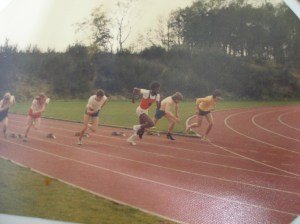
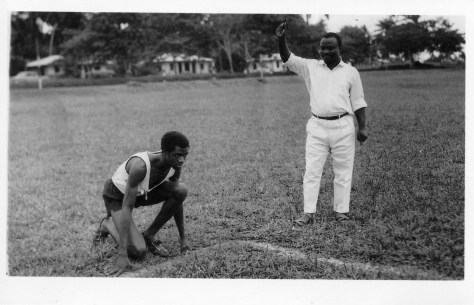
Ben Onwuka is a former Biafran soldier. Before that he was the Nigerian champion in the 400 meters race, 1964-65. He lives in Holland with his wife, children and grandchildren.


A FRIENDSHIP BROKEN BY WAR – PART 1

“… I went to fetch water from the stream and noticed there was a Nigerian soldier on the other side. He was staring at me and I became afraid…I looked at him, his gun, the way he was dressed. I said if I start running he’ll shoot, so I stood and stared back at him. He started walking towards me and shouted, “Smartisco!” M’ ku jaa. This was my hang-out [nick] name in Kaduna. I said who can be calling me this name here? I went closer. It was Yaya… Should I go forward or not? My eyes filled with tears. He waved at me. I waved back. Then he turned and walked away. The following day, the boy who went to fetch water came back with things like Oxford biscuits, Exeter Corn Beef, High Society cigarettes. He said he picked them from our own side of the stream…Every day after that, whenever our boys went to the stream, something was there. Everyday. I believe Yaya kept them for me. Maybe he thought I will come again to fetch water. But I never went back.” – Smart Eze

                                                                      ———-

I was one of the brightest kids in the village but my father was a peasant farmer, so I didn’t have the privilege of going to secondary school. I shuttled from one relation to the other – Aba to Lagos before ending up in Kaduna where I trained as an electrician. After my training, I got a job with Electrical Contractors of Nigeria limited.

The night of January 15, 1966, we were hearing explosions but we were not bothered because we were used to soldiers doing exercises. Saturday morning we set off to work at the Nigeria Air Force Base where we were carrying out various electrical installations, including air conditioners. As we drove past the Premier’s house I noticed that the police guard wasn’t there. But on both sides of the road we saw soldiers in camouflage uniforms lying down with their guns pointing towards us and signalling to us to go back. We knew something must have happened. Later we heard that a coup had taken place but we didn’t know who carried out the coup, for what purpose, was it in Kaduna, Zaria, Lagos or Ibadan? Towards the middle of the day news started coming out that the coup plotters killed a number of politicians, that Ahmadu Bello and Tafawa Balewa were affected, that the head of the coup was one Igbo officer. It went on till Sunday so there was a stand still. We didn’t know what to do.

When the rioting began, Southerners in general began feeling insecure. In July another coup took place and I said to myself, “This is time to leave.” But leaving was not easy. Northern soldiers had broken out of the barracks and joined the civilian mobs to attack the easterners. I was twenty one years old at the time and had many northern friends like Yaya and Mo, and some Igbo boys like Sunday and Victor. We were all young men, without any care in the world, going to parties and cinemas every Friday and Saturday, smoking, drinking. Mo and Yaya and some of the Hausa boys came and gave us advance warning that our street, Zaria Street, was going to be hot the next day. They gave us Agbadas to wear so that we’ll blend in with the mob when they come to attack. Then, they took our boxes ahead of us to the railway station. The following day, the mob came and we joined them as they went from house to house, killing, rampaging, up to the train station. We saw many atrocities that day. One child was crying, running around, looking for his parents. They raised him up and dashed him on the ground. His body started twitching and convulsing, until he became still. When we got to the railway, Yaya and the others handed our suitcases to us.

While we waited with others for the train to arrive, the soldiers came and started identifying the Igbo soldiers who had escaped from the barracks. They lined them up at the platform and shot them, and left the bodies there for the train to crush. Horror! We were terrified, asking, “When will the train arrive?” When it finally arrived, it was very full because it had been picking up people along the way. They were announcing that more trains were coming but we knew we couldn’t stay there. We managed to squeeze ourselves inside. People were almost trampled, some were already dead, no space, some hanging on the door of the train and when the train moved, I saw people falling off.

At Markurdi Bridge, some soldiers stopped the train and took some Igbo men out. What happened to them, you can guess. After several hours we arrived at Enugu. There was one huge man in the train. They had cut off his head so it didn’t come with the body. His photograph was used as propaganda to show the atrocities the northerners were committing against easterners. It caused an uproar in Igbo land.

When Victor and I returned to our village, it was late. That day was our market Sunday. When our market day falls on a Sunday we celebrate it with a big party. Our arrival caused a lot of merriment because other people also arrived from Kano, Jos, etc. Those whose relations hadn’t arrived were scared.

The military government at the time had established the Resettlement Commission to receive displaced easterners. The idea was to have our records so that when tensions died down we can all go back. We never thought we’d not go back. I registered with them and they organised a Grade Three Trade Test for Industrial and Domestic Installations for me. I passed the test and interview and, while waiting for the letter of appointment, the war broke out. All my dreams were now dashed.

But one happy thing happened around this time. My mother and father had separated when I was about three years old, but when she heard I survived the pogroms, she sneaked to a neighbour’s house and asked them to call me. She told me she was my mother and we were both crying. If she hadn’t come that day I would not have remembered her face again. We went to visit my younger sister who was married. We were all crying and I was imagining how Nigerian soldiers will come and kill my family. I said, “No. I will carry a gun. I must defend.”

I joined at the end of 1967 and my first posting was Ikot Ekpene sector, at one remote village. The Nigerians had entered there in September/October through their rubber plantations and were camped on one side of a hill. I think they were cut off there and didn’t get supplies for a long time. Our own group was camped on the other side of the same hill. There was a stream close by where we all used to fetch water but it was miraculous that we didn’t attack each other. I’m sure if our bosses had heard about it they would have court-marshalled us.

A few days into this extraordinary cease fire, I went to fetch water and noticed a Nigerian soldier on the other side of the stream. He was staring at me and I became afraid. Was he going to start shooting? I looked at him, his gun, the way he was dressed. I felt that if I start running he’ll shoot, so I stood and stared back at him. He started walking towards me and shouted, “Smartisco!” M’ ku jaa. This was my hang-out [nick] name in Kaduna. I said who could be calling me this name here? I went closer. It was Yaya. My body went cold. I didn’t know what to do. The stream was about three metres wide. Should I go forward or not? I didn’t want to attract attention so my group doesn’t start shooting thinking I have been captured, or his side will open fire. We didn’t talk but my eyes filled with tears. He waved at me. I waved back. Then he walked away.

The following day, the boy who went to fetch water came back with things like Oxford biscuits, Exeter Corn Beef and High Society cigarettes. He said he picked them at the point where we fetch water. Our leader said we shouldn’t touch them, that they may be poisoned. After I told them what happened, he said we could eat them but they insisted I eat first. Every day after that, whenever our boys went to the stream, something was there. Everyday. I believe Yaya kept them for me. Maybe he thought I will come again to fetch water. But I never went back.

One night we started hearing noise. We wondered if they were leaving or preparing to attack us. Before morning, they took us on, shooting. Kept shooting. We later found out that they changed the first group and brought in new people. They may have noticed that the former group was not taking us on. We returned fire but theirs was more, so we retreated and regrouped. They redeployed some of us to Port Harcourt where the Nigerians had taken over the airport. My ears were damaged in the attack and one of the boys I pulled out had his legs blown off. They took us to Aba General Hospital and when my ears cleared, I went home to recover.

I went back to the front and they attached me to the Ogbunigwe section of the engineering battalion. I was posted to the Afikpo zone where they trained me as an Ogbunigwe electrician and operator. Ogbunigwe was developed by Biafran scientists and was one of the highly effective defensive bombs in the weapons arsenal of the Biafran Army. It was made up of the main explosive in an encasement, the removable detonator, the battery and switch, and connecting cables. The main explosive segment came in different sizes – between 5 kilos and 500 kilos. The massive ones were transported to their locations by lorry, while the soldiers carried the lighter ones in their hands. The batteries and the detonators were put in separate bags. We used both car and torch batteries to generate the electrical power but whenever torch batteries were used, they were connected serially to each other to produce an electromotive force between 12 and 16 volts. The detonator could only be inserted into the main segment of the explosive and connected by wires to the batteries and the switch at the moment the Ogbunigwe was ready to be launched. The batteries had to be fully charged for the operation to be successful. It was a highly risky job for the operators and that is how I got blind.

SMART EZE PHOTOS 1
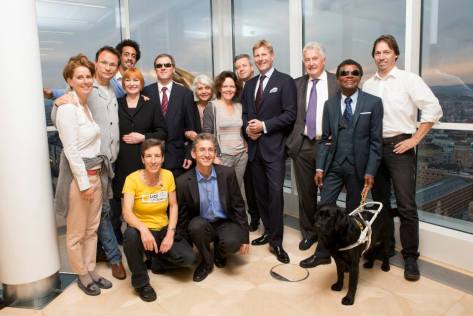
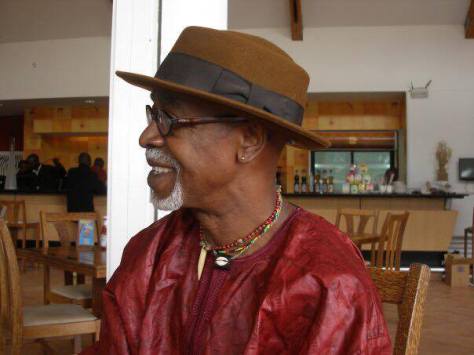
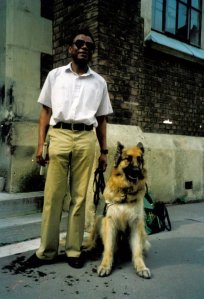
Smart Eze with his guide dog.

It happened on the 12th of November, 1968. There was shooting the whole of Saturday and Sunday. By Tuesday nobody was shooting again and we were trying to go further and deploy our Ogbunigwe so our troops can move forward. I don’t know how one of our boys touched the detonator and it exploded all over my face, chest, eyes, head. Some of the boys had their stomachs ruptured. Some had their arms cut off. Some died on the spot. The boy who detonated it, nothing happened to him. Those who were not wounded found a way to put us in an ambulance which took us to the Biafran Forces Hospital in Ohafia. I went in for surgery and when I woke up the next day, I heard people crying, boys in pains. I tried to see but I couldn’t. No light. Nothing.

One day, the boy who was helping me in the hospital, Chidike, told me there was a white man who was going from ward to ward looking at patients. When the man got to my bed, he inspected my eyes and asked if I would like to go to Austria for medical treatment. I said yes. Later on, Chidike overheard one of the Nigerian doctors telling the others that my eyes were beyond repair. But Dr. Bakker insisted I could learn a trade even if the doctors don’t restore my sight. He later told us he was under tremendous pressure from politicians and other prominent members of society to select their relations for treatment abroad. He said he followed his instincts and did as he was led.

While I was waiting to be evacuated from the hospital, the Nigerians entered from Afikpo and started shelling the hospital. I don’t think the staff were able to carry those who were immobile, but we escaped to St. Augustine’s, Nkwerre, and from there to Ekwerazu, where other wounded soldiers were waiting to travel out.

I told Chidike to take me to my village. My father was devastated to see me, his first son, being led by the hand. He opened my eyes and looked. Then, he placed his hands on my head and blessed me. I didn’t see him again because he died in April, 1970. My mother was crying but I couldn’t see her; I was only hearing her voice. I wish my father had lived to see how my life turned out.

The next morning, we left with my mother to Holy Rosary, Umuahia, where I signed enough relief for her. We returned to Ekwerazu. That same day, my village was sacked. The soldiers who drove us away from Ohafia had entered Umuahia and proceeded to Afo Ugiri, my village. If I hadn’t left that morning, I would have missed my group and not gone abroad.

Our plane was the last to leave Biafra. We had to wait for some time because Nigeria blockaded us until 1st of May, four months later. Maybe, if we had left earlier, they would have been able to restore my vision, even if partially. And if we had stayed longer, we would not have left because the war ended six months later.

                                                                       ———-

SMART EZE PHOTOS 3

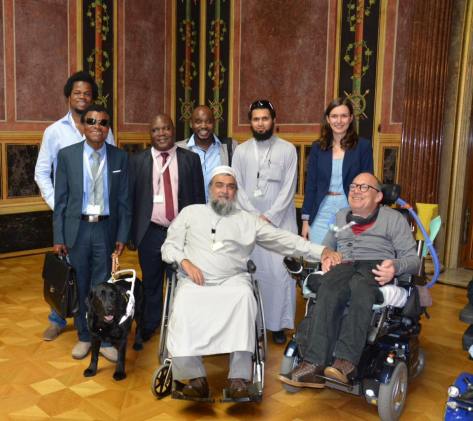
Dr. Smart Eze obtained a Doctorate Degree in Philosophy from the University of Vienna, in 1979. He worked with the United Nations in Vienna, Austria from 1980 to 2005. In 1981 he was the Ambassador for the United Nations International Year of Disabled Persons. He currently serves as honorary board member and goodwill ambassador for LIGHT FOR THE WORLD, an Austrian civic organization that provides medical treatment and support to people living with eyes diseases, blindness and other disabilities in underprivileged regions of the world.

SMART EZE PHOTOS 6

SMART EZE PHOTOS 7

His autobiography, My Four Worlds, was published in July 2010, by AuthorHouse UK.  The German version “Meine Vier Welten” was published in 2015 by Epubli, GMBH, Berlin.

Dr. Smart Eze also speaks Igbo, French and German. He lives in Vienna, Austria with his wife and children.

For the love of family – Part 1.

*Some names have been changed to protect the identities of the people concerned.*

“I started seeing changes in my little cousins, nephews, nieces. Their hairs were changing colour and they started getting big stomachs. One day, I saw eke [python]. I didn’t know what to do because in my place it’s a taboo to kill it. But I said to myself, “My younger ones are dying and this should be a good source of protein.” I killed it with the help of one other boy. We did it at night. I told the boy we have to throw away the skin because if they see it, they’ll know it’s eke. We made them drink the water because that’s where the nutrient is. And nothing has happened to any of us till date.” – Ben Onwuka

                                                                      ———-

I was working with the Sports Commission in Lagos when the problem started. I had to leave Lagos and go to my brother’s house at Ibadan. I was there when they killed Aguiyi Ironsi at Fajuyi’s house. Ogundipe made a statement first, asking the whole country to be calm. Within twelve hours, Gowon made his own statement saying that God in His infinite mercies has given the leadership of Nigeria into the hands of a northerner. But Ojukwu said Ogundipe should be the next in line because he’s next to Aguiyi ironsi.

They started killing a lot of Igbo officers in 4th battalion and we were also hearing about the killings in the north. My brother was at Ijebu Ode at that time but I told his wife that we have to leave. We moved back to Enugu and I started teaching at Salvation Army Primary School, Ogbete. I was also doing sport because my aim was to represent Biafra in the Commonwealth Games which was about to hold in Kingston, Jamaica. I was already the Nigerian champion in 400 yards, 1964-65.

BEN ONWUKA 19
Ben with his coach, Chief Dickson Esema, at Salvation Army Secondary School, Akai Ubium, Eket.

The war was raging. The school where I was teaching became a sort of camp. Some people who came back from the front lost their eyes, some were mutilated. They were telling us the stories, the reality of the war, that it was terrible. In spite of it, a lot of boys wanted to join and it became a sort of fashion to be in the Biafran army. I started asking myself, “What am I doing in the classroom when B54 is bombing Enugu, bombing a lot of places?” So I decided to go for selection as an ordinary soldier. It was at Enugu Garrison and there were hundreds of boys, rows and rows of people. Everybody was struggling to be in the line and when I tried to push myself in, one of the military police flogged me because they said I was causing confusion. It was so funny. He started pursuing me but ran through the elephant grass and disappeared.

I went back to teaching. But I saw an advert that Biafra wanted to recruit their first officers. The qualifications were Credit in Maths, English and so on, and I had all of them, so I went for recruitment again. This one was based on ability to run and they took us in about five buses and dropped us twelve kilometres away. We had to run back and I was the second to come into the garrison. The first person was one Mr. Onu, who was a marathon runner. After the obstacle tests and interviews I was selected. We then went for our military training at Enugu Hilltop. Three months later Ojukwu came and commissioned us. We were the first Biafran officers and I was the first army officer from Achina. Because of it, other boys from my town got interested and joined the army.

BEN ONWUKA 10
Ben as a Biafran soldier.

After the training, I went to Afo Ugiri in Mbano to pick my boys because they train the boys elsewhere. When I was inspecting the boys they assigned to me, who did I see standing there? My brother, my immediate seniour brother. That moment, I was almost mentally devastated but I didn’t act as if I knew him. I was saying to myself, “God, how can I take my brother to the war front. Suppose we enter an ambush?” This my brother had been a driver and was not in regular contact with the family so we didn’t know his whereabouts until that day.

Later, I called him and asked what motivated him to join the army. He said the boys who joined earlier were always pushing him around and maltreating him as if he’s nothing. That was the first time I regretted entering the army. I called Bernard, my fellow officer, and said to him, “Do you know this man is my brother? Nya nwa soro mu.” [“He’s directly older than me.”] Bernard couldn’t believe it. I told him, “We have to swap. Take him and give me one of your boys.” Bernard took my brother, Isaiah, and I took another boy from Bernard. I didn’t want two of us to die at the same place. And I didn’t want him to influence me.

At first, I fought at Ugwu Oba, near Enugu, before I was posted to Port Harcourt under Achuzia. He was a no-nonsense soldier. With him, it’s either you die fighting or you survive. If you show signs of laziness, he’ll shoot you in the leg and tell you to go home and rest. But he was a good fighter and a great leader. He was in charge of Otuocha Brigade and the 18 Battalion, which I fought in, was part of it.

The war didn’t get to my village but the effect was still there. I was fighting at Abagana but whenever things were quiet I was seize the opportunity and my driver will drive me home at night. I started seeing changes in my little cousins, nephews, nieces. Their hairs were changing colour and they started getting big stomachs. Sometimes I come with food, but after a day or two it will be finished. One day, I saw eke [python]. I didn’t know what to do because in my place it’s a taboo to kill python. But I said to myself, “My younger ones are dying and this should be a good source of protein.” I killed it with the help of one other boy. We did it at night. My people didn’t know it was eke because I skinned it; you know eke has nice colour – black and white. I told the boy we have to throw away the skin because if they see it, they’ll know it’s eke. We made them drink the stock because that’s where the nutrient is. And nothing has happened to any of us till date. I don’t believe in all those rubbish superstitions.

It was at Abagana I sustained this wound. [Indicating his right arm]. We infiltrated their media and got information they were going to attack that day, so we were ready. I went from trench to trench to give orders to my boys. One of them was killed some days before and another was shot at the neck when he was eating, so I knew the person shooting is not far. I called my batman and told him, “Stay here. I want to find out what is happening.” I wanted him to stay at a particular place so that if the guns get stuck he could open and repair them. I had my grenade and my gun and I entered into the front line, gradually…creeping…going. I heard the shooting again and I saw the smoke – whitish. This was the first time I was coming face to face with a Nigerian soldier. When I got to where I knew was a good position, I got up on my hands a bit, the way lizards do. As soon as I lopped, shots burst out. The place was a cassava farm so he must have heard sounds and knew somebody was around. One of the bullets got my hand. I felt a sensation and knew something has happened to my hand. I waited for a while and then my grenade exploded – Gbrrrrrrrrrrr! There was smoke. If I didn’t throw it out it could have exploded and killed me. I waited for a while and when I didn’t hear the gun shots any more I started creeping back. I was using one hand because I thought the other was gone. When I got to where I told my batsman to stay, he wasn’t there. My Second-in-Command appeared immediately. “Oga! Oga! What happened? Look at! Your hands and clothes are full of blood.” As he was tearing my shirt, it became completely dark and that was the last thing I knew.

When I opened my eyes it was at Iyienu hospital. I was so thirsty and was asking for water. “Please. Water, water, water.” The nurses got me infused and gave me a sedative and I went to bed again. When I opened my eyes it was at the hospital at Ihiala. I had no feelings in my arm. The nurse sitting near me was my classmate – Caroline. I was looking at her and she looked like an angel. When she saw my eyes open she exclaimed, “Hei! They’re killing all our boys o!” The ward was filled with people, wounded boys, most of them from Abagana. If you go to the mortuary, a lot of dead people. A boy was brought that evening but he died in the night. They left him there till morning. It was normal that people die around you and you stay with them. You don’t feel it. You’re not afraid of it.

My hand almost developed gangrene. The doctors carried out three to four operations and each time it will open again and I lose a lot of blood. They wanted to amputate it but Caroline kept pleading that they shouldn’t. The doctors told her to choose one – losing me or me losing my hand. But Caro said they should try one more time. They took me to the theatre again and I slept till 12.00 o’clock the next day. After a week, two weeks, three weeks, one month, there was no bleeding. The wound was healed. I was lucky to have her.

I was discharged but I didn’t go back to the army. Instead, I was visiting wounded soldiers in hospitals, to encourage them. My younger brother had a bicycle so he was taking me from Achina to Nkwerre and other hospitals. I was also going to Umuahia to see my girlfriend, *Ruth. I met her when I was a teacher at Enugu. She was really very good to me and I wanted to marry her. When I am going, I buy things for her and the fact that we managed to come on a bicycle to see her, she’ll be so happy. Her family approved of our friendship and the first place I entered when I got my pip as a second Lieutenant was their house. After Umuahia fell, I arranged for her family to move to Achina, so she could be close to me. I was being paid about fifteen pounds and I knew that if Biafra wins  the war, I will have a nice position in the army and can start a family.

On one of my visits to St. Augustine’s, Nkwerre, I was told that some Red Cross doctors were selecting wounded soldiers for evacuation. I didn’t have my hospital card but one nurse who was a girlfriend to one of my friends told me to try and see the doctors.  When it came to my turn, Dr. Jaja, who was a colonel at that time, told the white doctors, “This is one of the cases. We have done our best but we think it’s possible to make the hand to bend.” After examining me, they asked me to come back in two weeks’ time. From there we left for Umuahia to see *Ruth. On our way we saw a lot – dead people, hungry people, those deserting the front, no more very willing to fight.

Two weeks later I went back to St. Augustine’s but the lieutenant in charge told me my name was not on the list. But my name was actually there. What happened was that, on one of my visits, I saw a lot of wounded soldiers in front of his office, waiting for him to sign their papers so they can go home. But he was gisting with his girlfriend, so I confronted him. After he gave me the sad news, I left. At Umuahia, a Red Cross car stopped us and a white man came down. He recognized me by my sportswear and said I should have been in Italy for medical treatment. He was surprised when I told him my name wasn’t on the list but he said I should keep reporting at their office. My brother and I went back after a week and met two doctors – Dr. Bakker and Dr. Middlekoop. They said that one patient had died after an amputation, so I would take his place. Then, they asked me what I knew about Holland. I remembered my Geography and told them that the Dutch live under sea level, their farmers wear clogs and the capital is Amsterdam. They were impressed and said I was going to see all those things in reality. Somehow I was sad because of the guy who died but I was also happy. It was providence.

When I told *Ruth I was selected, she was very happy but she was worried that when I go abroad I will meet a white lady and forget her. But that wasn’t my intention. A gba nye go m’ ya ola. [I had already given her a ring.] I even bought a fake one for myself and was telling people I was married.

The next day I went to Ekwerazu, Mbaise to join other selected soldiers. We were many but eleven of us went to Holland. Some went to Germany, Austria, Denmark, and others a bit further north. We are still in touch, all of us who are alive.

Holland was a different environment – from war front to silence and peace. We went straight to the hospital. Everything in the ward was white and clean and I was thinking, “Is this paradise? Am I dead?” It was just like a dream. The following morning, instead of hearing air raids we saw people going about their businesses, riding their bicycles everywhere. From the window, we were just looking.

My plan was to go back to the army, not as a combatant, but to join the administration and training. So, after my treatment, I prepared to go back. But the war became very intense and no plane could land at Ulli. They told me to wait. I kept on waiting, till the news came that the war had ended.

We were disappointed to hear that Biafra was no more; doesn’t exist anymore. We couldn’t believe it. We never thought Biafra would lose the war. We so believed in it – the efforts we put in, the determination. Anybody who really fought the war with all his mind was disappointed. We were confused and emotional. After everything, we didn’t have anything to show for it.

I swore I will never live as a Nigerian. I said it and I still stand on it.

BEN ONWUKA 4
Ben Onwuka

                                                                         ———-

Ben Onwuka was the Nigerian champion in the 400 meters race, 1964-1965. He is an Entomologist, and worked with the Institute for Atomic Sciences in Agriculture, Wageningen, Holland. He is the founder of Omenala, a Foundation whose aim was to propagate African cultures [and the Igbo culture in particular] in Holland, through Music. He was also the President and Activity Coordinator for The International Club, Wageningen, where he was a member for 25 years. He lives in Wageningen, Holland with his family.

Read the second part of his story next week.