Category Archives: The Biafran Airlift

FRIENDS OF SAO-TOME AND PRINCIPE – PRESERVING BIAFRA’S L1049H SUPER CONSTELLATIONS

Mr. Xavier Munoz Torrent is a Geographer from Barcelona, who first came to Sao Tome and Principe in 1986. He is a member of Friends of Sao Tome and Principe, an association which was started 40 years after the Nigeria-Biafra war, and whose interest and work is in preserving the history of the island. http://www.saotomeprincipe.eu/caue_projetos/caue_activitats/caue_biafra2011.htm

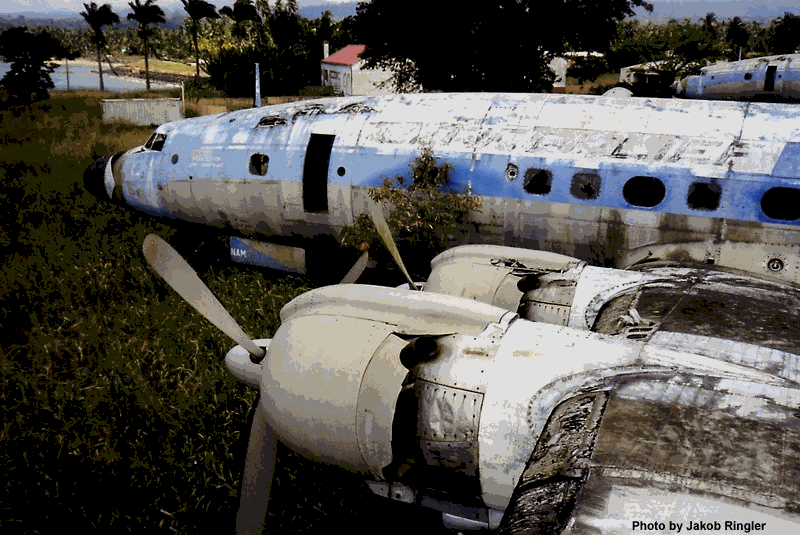
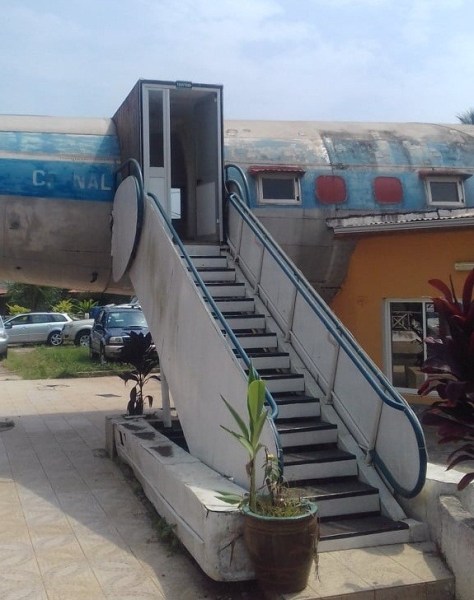
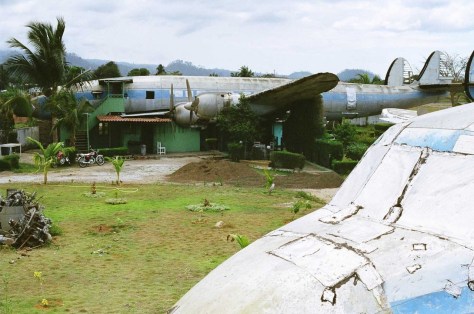
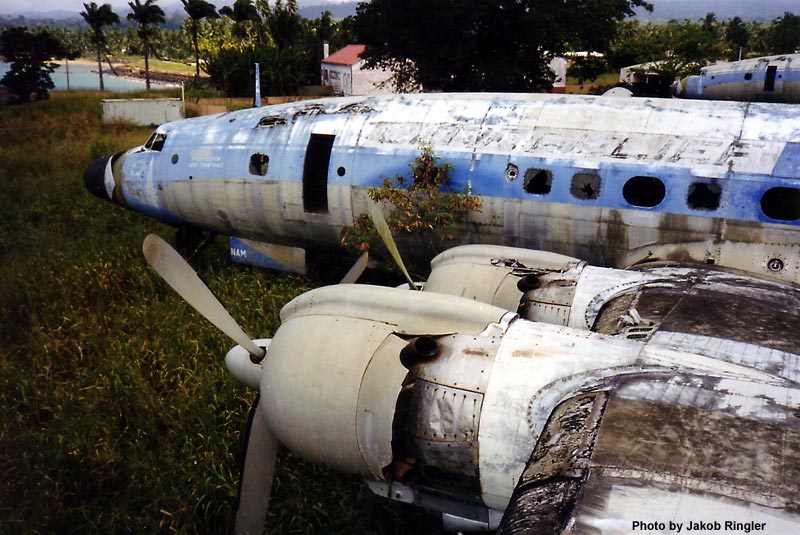
Some of the cultural landmarks which are of interest to the association are the two Lockheed L 1049H Super Constellation air planes which were used in the airlift into Biafra. Friends of Sao Tome and Principe has launched a campaign to “officially recognize as inheritance and preserve as monument” these two air craft and have made a proposal to their government to this effect. In the meantime, a Sao Tomean businessman, Mr. David de Mata, has converted one of the planes to a restaurant and the other to a discotheque, the idea being that it would prevent the plane from further detoriation. In an article published here – https://www.telanon.info/suplemento/2019/02/04/28600/patrimonio-nacional-ruinas-e-sucata/ Mr. Xavier says:

“What’s more, worrying comments now come to us about the deterioration of the structures of the two imposing Lockheed L1049H Super Constellation (“Connies”) planes near Sao Tome airport, which for a time have been preserved by the direction of the “As Asas do Plane” restaurant, which constitute the last remnant of the Biafra relief bridge, a titanic effort undertaken by a handful of international NGOs in the late 1960s…The risk of final destruction causes us special sadness to those who, from all parts of the globe, call for its preservation and suggest its conversion into a center for the study of historical memory…Its disappearance would constitute a new attack on history and culture, even against the memory of the dead in Biafra, a new act of total lack of sensitivity.”

Photos are taken from Friends of Sao Tome and Principe website. They show the Super Constellations in their present state.

SAO TOME 2

sao tome 3

LIVING IN SAINT-ANDRE REFUGEE CENTER, GABON – A FORMER CHILD REFUGEE’S ACCOUNT – PART ONE.

LEAVING BIAFRA

In 1968, just before Enugwu-Ukwu fell to the Nigerian troops, my family took refuge in my maternal grandparents’ home at Egbengwu, Nimo, a neighbouring town. When we got there, my grandparents’ house was teeming with refugees. The distribution center at Nimo was St Mary’s Primary School, and it was also completely occupied by refugees from surrounding towns like Enugwu-Ukwu, Nawfia, and Amawbia. One Irish priest, named Reverend Father Nolan, was in charge of relief distribution, assisted by other people such as Mr. Otie, the headmaster of the school. The Parish church was Assumpta Catholic Church but because of its location on the major road from Enugwu-Ukwu to Nimo it was close to the war front so it was not considered ideal as a relief distribution centre. It was on one of such visits to St Mary’s, in company of my younger sister, Rhoda, that Father Nolan announced that officials of CARITAS were coming to St Mary’s the next day to take sick children to Gabon. He told parents to bring their children who were ill the following day.

Although I was not suffering from kwashiorkor, I was frail and weak, so I made up my mind to present myself for consideration. I was just seven years old, but I saw it as a life-saving opportunity. My decision was not well received by my mother who reasoned that I was too young to be sprinted out to an unknown country beyond their care and reach. She broke down, saying, “Who is going to care and treat you like the mother who gave birth to you?” My dad, who was not known to give in easily to emotions, approved of my decision and offered to take me to St. Mary’s.

On arrival we saw babies, toddlers, and teenagers with bloated stomachs, swollen legs, and severely shrunken bodies, all looking like living ghosts. Many were too weak to stand, so they sat on the floor. Soon after, Father Nolan and Mr. Otie arrived with the CARITAS representatives. Mr. Igboka, the Catechist, was also there. When the selection started, all the kids in front of me were selected. I was rejected four times even though I buckled my feet on each occasion to create the impression that I was very ill. After my fourth rejection my father went into a tirade. This prompted the officials to call me forward, so I was the last kid to be selected that day.

The next stage was the documentation. The CARITAS officials wrote each child’s first name, surname, parents’ names, village and town, and the processing centre. Then they stuck an adhesive tape with identification number on our wrists. Mine was 492. This was the last documentation in Biafra.

As a green-coloured Austin lorry made its way towards us, my father came to me, shook my hands, and prayed that I would come back to meet them alive. My mother embraced me, sobbing. Other parents watched their children being loaded into the lorry, like cargo, and into an uncertain future. As our lorry slowly revved to drive off, I positioned myself to wave a final good bye to my parents. Years later, I learnt that my mother cried inconsolably for two days after my departure.

As soon as we departed Nimo, our chaperons informed us they were taking us to Ulli airport and from there to Gabon. On the way some children were crying. After some time our lorry stopped by the roadside so we could have lunch. It was either two small pieces of yam or one big piece placed on our palms.

When we got to Ulli airport, our lorry parked in an inconspicuous place waiting for the signal to approach the tarmac. I could see planes landing and taking off in the pitch darkness. After a long wait we drove up to the tarmac where a plane was waiting. For the first time, I saw an aircraft in a stationary position. The size was a far cry from the little bird-like thing we kids usually saw flying across the skies. We all came out of the lorry and a ladder was placed at the foot of the aircraft. Two big men positioned themselves, one at the foot of the ladder and the other at the top. One after the other, we were taken up the ladder into the aircraft. There were no chairs inside but there were blankets spread across the floor. We were given one or two cubes of sugar and asked to lie down. I could not remember when last I saw sugar in those terrible days, and I became excited again after the emotional separation from my parents. The door of the aircraft was shut, the engine started, the lights turned off, and I could sense a slow movement of the plane up to the time we became airborne.

We were woken up at Libreville International airport. My first impression was that this was real ‘obodo oyibo’ – a marvel. There were aircraft of different sizes and shapes, and that gave me the opportunity of seeing these planes at close quarters in broad daylight. Vans pulled up at the foot of our plane, and we all boarded. Those who were too weak to get into the vans were either helped in or carried inside. After a short drive our van pulled into a massive church complex. It was called St. Andre and the priest in charge was Monseigneur Camille.

———————–

The contributor, Johnny Abada, lives in the United States of America.

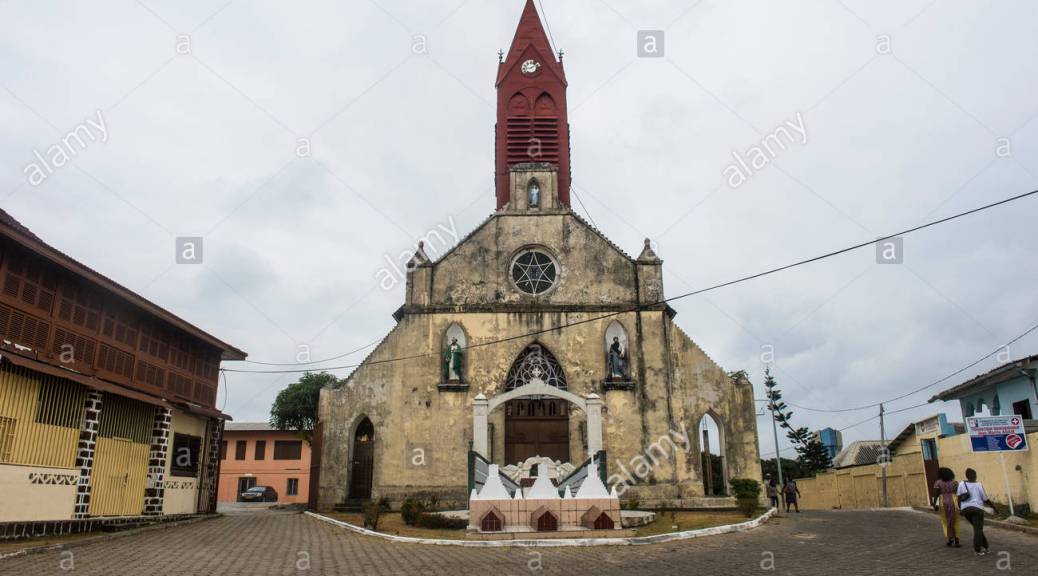
NB-The image on this post is taken from the internet. It shows St. Marie Cathedral, one of the centers used to house refugees during the Nigeria-Biafra war.


THE JAMAICAN WIFE

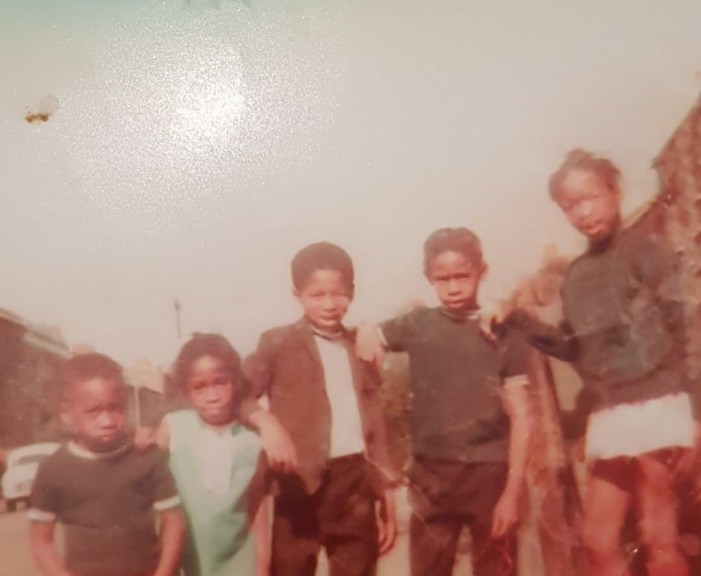
When our ship landed in Lagos most of the foreigners decided they weren’t getting off the ship. This was January 1966. The coup had already taken place. Dad decided we were going in. He had been given a job with the Water Resources in Lagos. So we got a flat at 51 Modupe Johnson Street, off Bode Thomas, Surulere. We were neighbours with the *Obas. They had three boys. And guess what? Their mother was also Jamaican. Six months later, the second coup took place.

One day we were told we had to move next door. And we were like, “Why?” But we packed up and moved next door. Before that my dad had gone out one day and come back with an Opel Record. It was a two door car. My dad was not around a lot. We thought he was going to work. Once in a while he would show up with the car. Sometimes he would leave the car and be gone. Then, one day he went out with mum and when they came back she had this baby in her arms.

Another day, dad was about to leave the house and I followed him. I was slow but when I got to the front window I saw him getting in the trunk of his car. I thought, “Why is dad getting into the trunk?” When I heard the rest of the story as an adult I realized that’s what he had to do to stay alive. I didn’t know where he was being taken. On reflection I think it had happened a few times but that was the only time I saw it.

One day dad shows up with the car and said, “You are going back to your grandparents.” That was the first time I would be going to Eastern Nigeria and I can proudly say I was stepping into Biafra because the Republic of Biafra had just been declared. On our way to the East we were stopped at the Onitsha Head Bridge by Biafran soldiers. They were saying they were not going to let us through. In the argument one of them slapped my dad. My mum grabbed a huge glass jug and jumped out of the car. She was waving it and threatening that the jug could break on his head if he laid a finger on dad. Jamaicans no dey play o. The arguments went on for some time and finally they let us go. From there we proceeded to our village which was not far from Onitsha.  That’s the last image I had coming into Biafra.

Tina – My mum didn’t speak Igbo and she had a foreign accent. The soldiers were cocking their guns as if to shoot us. The soldiers threatened they would throw my parents over the bridge into the water, which was far. I remember peering over the rails and the water seemed so far away. I don’t remember how the argument was resolved. We heard later from my dad that when he joined the army those men on that bridge that day were under his command.

Chinedu: Dad eventually joined the army and we were living with our mum in a flat off Edinburgh Road, Enugu. One time I got sick and mum was crying so much because I was in and out of consciousness. She came out looking for help but nobody was there to help, and tension was in the air.  She took me to Eastern Medical Centre and Dr. Okeke figured out what was wrong with me. Some weeks later, dad came back. He was a Civil Engineer and had gone for Officers Training. He told us we were going to the village, so we took off. That’s where we spent time with my grandparents, uncles and other relations.

Our house in the village was right on the Enugu-Onitsha road. That’s where I got the experience of a mass return. Everyone was heading towards Onitsha. It was a mass migration. Years later I was in America when Rwanda happened. I was watching a TV report about the crisis when I saw the mass of people trooping down the road with their luggage on their head. My body just started to shake because it brought back a lot of memories.

Tina: Another vivid memory I have is that everybody left the compound but my mum refused to leave. She felt that if she left our village my dad wouldn’t know where to find us. So we were sitting on our suitcases in front of my grandfather’s house waiting, and waiting. Dad was at Nsukka at the time but somehow he got a message that we hadn’t left with the others, so he sent his driver, Felix, to get us. We’d be dead now if it hadn’t been for Felix. [Laughter.]  Felix arrived in a station wagon and somebody helped him to bundle my mum into the car. We couldn’t take any of our belongings. We just jumped into the car and sped off. We didn’t realize how much danger we were in. That’s the strange thing about this – I can’t remember feeling frightened. In our escape Felix had to avoid all the major roads so he wouldn’t get caught by the soldiers.

Chinedu: Another memory I have was that dad buried his car during the war. Then he built something over the pit and covered it. After the war he dug it out and that’s what I used to learn to drive in 1973. I was 11 years old. [Laughter]

After our escape Felix took us to Ogbunike. The whole family was there and that was where we started seeing signs of the family not wanting to pay attention to us. It wasn’t blatant but it was happening. They were probably worried about what limited resources they had. When it came time to share food they weren’t including mum.

[Tina turns to Chinedu.] What was it about a bag of sugar?

Chinedu: Nicky was the size of a bag of sugar. That was the argument Dad gave Mum to convince her to leave. Nicky had not been fed well and therefore not grown to the normal size of a one year old, but she continued to stay in spite of all we were going through not getting enough food for five of us. He said it was better for her to take us back to England where we would be better cared for.

My grandfather also told me he didn’t like the way his children were treating us. They were doing it because they were looking out for themselves and we were foreigners. My mother, being Jamaican and her first time in the country, not able to speak the language, felt isolated, and my dad was not around.

Vivian: Maybe they felt you all were privileged, or they thought you should not have come back home.

Chinedu: Daddy was the reason they were getting all that salt and tinned food. Had it not been for him they wouldn’t have had anything. When you are not seen as part of a group you are treated as an outsider. Those things happen. To be accepted we had to work really hard. I remember the fight my mum had with my grandmother. She was dealing with that stress of not being given her own share of things. A knife was drawn but a lady who lived in the same compound separated the fight.

Dad’s division was under Cornel Achuzia. They used to refine oil so they always had fuel which they’d sell to buy food. My dad always sent someone to drop off the food, so we seemed to have food even when others didn’t. I remember eating a lot of crabs. Today, I do not like crab meat.

I remember we had five chickens which traveled with us as we moved from place to place. Each of us owned one and assumed ownership of it. The eggs were a steady source of protein. If my uncle Emeka felt like eating chicken he’d murder one of the chickens at night. [Laughter] He would come in the morning and say, “Nnaa, this chicken all of a sudden died.” And we’d have to cook it.

Tina – I remember thinking at the time that if the chicken had died of a disease and we cooked and ate it then whatever had killed the chicken would affect us too.  To be honest I don’t think I eat any of those chickens that had died in mysterious circumstances. It hadn’t occurred to me that it was my Uncle doing it.

After we left for Ogbunike there was a battle in our town, Ifite Dunu. It was known as Ifite-Ukpo then. Most people know about the battle that took place in Abagana, the town next to ours, but not the one in Ifite-Dunu. When the Nigerian soldiers came in to our town most houses were mud houses. They saw this big structure and moved in. It was my Uncle Cyril’s house. He had won the Jamaican Sweepstakes before the war so he was like a millionaire. He had houses in Onitsha and Enugu. After Enugu fell, the Biafran army made their way back and regrouped. Dad and his group decided they were going to attack my uncle’s house and dislodge the Nigerians. They succeeded, but the house was riddled with bullets. Even in 1973 when we came back from the UK we could still see casings all over the place. Uncle Cyril refused to fix the metal bars or repaint the walls. He just patched the holes.  He wanted a reminder of what happened because he lost his brother during that war.

Tina: There was a lot of traveling between places. We had to keep moving, sometimes we’d walk, sometimes my dad would send his driver to take us to the new place. Each time we were traveling the driver had to get out of the car to check the roads, because if there was a mound or something unusual on the road they were worried it was a mortar.

One of the places we stayed at was a school, I think. There was a field in front of it, and every foot of this field was covered in sharpened bamboo sticks. Each one was about four to five feet in height and so towered over me. We were told they were put there so that if Nigerian soldiers parachuted from their planes they wouldn’t survive the impact. I remember playing in this field, weaving in between the bamboo sticks oblivious to what they would do to a human being landing on it.

We spent some time at Abatete and Umunze. In one of these places we could stand on our veranda and see the fighting. It looked like a firework display.

There were two bunkers side by side. Our bunker was muddy and hadn’t been built properly so the walls were caving in. On this occasion we had to go to our neighbours bunker during the air raid. Our own collapsed and we were lucky we were not in it when that happened. On another occasion there was an air raid while we were playing away from the house. We hadn’t realized that we were so far away from the bunkers. We tried to run but everybody was shouting at us, “Lie down, lie down, lie down.” So we lay down in that field and we were watching the plane zoom past and come back, with a smoke trail, and then somewhere in the distance there was an explosion, boom, boom, boom, boom. The owner of the house where we were living, a reverend or something, drove down to where the sound came from. He had gone to pick the wounded and take them to where they could get help. When he came back he had to clean out his car. Everybody gathered around the car. I remembered this vividly. I struggled and pushed my head in between somebody’s legs and saw…whooo…I had never seen that amount of blood. That day was something else.

As I recall, I don’t remember fear. I don’t remember being scared. I just remember not liking certain things, not liking being in a different place, not liking how I had to be on the floor, because whenever we slept on the floor our faces would swell up. So if there was anywhere off the floor for me, Chinedu and Ifeanyi to sleep, we slept there, while Indy, Nicky and mum slept on the floor. They didn’t react as badly to sleeping on the floor as we did.

Chinedu: They were Nigerian born, that’s all I can say. [Laughter]

Tina: One of the things I don’t like, even now, is carrying bags when travelling. I make it a point not to. Where possible I check in all my luggage. I think it’s linked to the experience of moving from place to place. It didn’t matter how young you were, you had to carry something. It didn’t matter if your arms were tired you just had to carry things because you would need these things.

I’m sure we were traumatized because there’s no way you go through that experience without sustaining trauma, but you find a way to cope with it probably by blocking things out, because you have no choice.

Chinedu: You know what is Mkpor n’ani? When that thing goes off, my heart still skips. If I know it’s going to happen, then I’m fine, but if it happens unexpectedly I get agitated. And right now I haven’t watched any videos of refugees in the North East. I will watch clips of dead people but haven’t watched clips of people in IDP camps.

Vivian: Tell me how you were evacuated.

Chinedu: I remember the plane at night. I remember everybody hiding. Next thing you know, people were going out to the plane with lanterns. These people running with lanterns, where are they going? I didn’t know they were going to light up the runway. [Laughter] Those pilots, if I ever saw one, the kind hug wey I go give the guy erh? Imagine the planes in that kind of darkness. And African darkness is very dark. There’s no moon light. It is total darkness. And that lantern was just barely giving him light. Everybody rushed to board, but mum was still fighting, saying she wasn’t going. At the door of the plane she was still refusing. She’s a stubborn woman. That’s when we knew daddy wasn’t coming with us.

After the pilot taxied and turned around, na rush o, because there was no time. The Nigerian soldiers were shooting at the plane when we took off. It was a cargo plane. There were no chairs. And we were sitting on a bench. I remember the plane taking off and the benches falling. And once the plane took off it had to fly up at a sharp angle, to get fast above the line of fire. I know it was last week of November or early December, because we spent Christmas in Las Palmas, the Canary Islands. We remember the other people who were in the plane with us. One of our parents was either West Indian, or American or European. We flew to Sao Tome and from there to Equatorial Guinea, then Las Palmas in the Canary Islands, and finally London.

My dad never joined us. He had been promoted to a Lieutenant Colonel a few days before the war ended. He was hit in his neck by shrapnel. He spent the last days of the war in hospital, and another six months recovering. After he recovered he came to London to see us.

When everybody was being given twenty pounds my dad sold his wedding suit to a Nigerian soldier for fifty pounds. He hadn’t dug out his car yet. He said if he had dug it out they would have taken it. So, he sold his suit and had some money. And for a guy to say, “I am going to give you fifty pounds for that suit,” that was a lot of money back then. Some of those Nigerian soldiers were not bad people. They were doing a job.

Tina: Another impact I didn’t really know the war made on me until now is that when I go shopping I always buy a lot, usually much more than I need to. I always stock up so that if anything happens we will have something. That experience of not having what you need when you need it, and even when you did have it, it was never really enough. There’s a phrase I use to describe myself, “I am a war baby.” So the way I use that phrase is that no matter how little food or resources I have I’ll share it, not even manage it, I’ll share. I believe that when there are other people around you who are hungry and in need, and you have a little food and a few resources, you will have to share it. I practice this daily and I think that this is as a direct result of my war experience.

Chinedu: For me it’s my phobia for crabs. [Laughter]

Tina: We all went back to Nigeria in 1973, three years after the war ended.

Recently we had my mother’s DNA tested and we found out she’s sixty one percent Nigerian

EQUATORIAL CONSTELLATIONS

The place and importance of the Biafran Airlift in the history of Sao Tome and, by extension, Portugal, cannot be over written.

For almost three years that the war lasted, this small island located in the Gulf of Guinea saw the influx of individuals from all over the world. Journalists, diplomats, aid workers, missionaries, clergy men, politicians, doctors, military personnel, mercenaries, business men and all sorts of people arrived the island on their way to and from Biafra. Consequently, hotels and guest houses, restaurants, shops and markets, beaches and other leisure spots, the aviation industry, etc, all benefited, in one way or the other, from the upsurge in commercial activity on the island. The governor of Sao Tome even tried to cash in on the windfall by imposing a fee for every child that was brought from Biafra into Sao Tome. But Father Tony Byrne, one of the initiators of the Air lift, resisted the move.

Born in Portugal in 1975, five years after the war and the Airlift ended, Silas Tiny is a Sao Tomean film maker whose interest in this monumental event led him into making a film about the airlift. The film is called ‘Equatorial Constellations.’ According to him, the goal of the film is “… not to narrate a past event but to display that very past through the present inner look of the ones involved in it 50 years ago. The film will, ‘…bring together former child refugees, Sao Tomeans, Joint Church Aid officials and volunteers who created the largest and riskiest relief effort that world has ever seen.’ He goes on – “Hundreds of children had been evacuated from their land, arrived in this island…escaping pain, slaughter and famine. Today, fifty years have passed, that memory remains an open wound, their names, faces and lives forgotten and their remembrances fade away…Where are these children, and what happened in their memories so far? What can they convey? Their stories are part of the universal memory and remain as living testimonies…”

Silas and I are looking for any of these ‘children’ because we think our projects will not be complete without their participation. We will appreciate any leads and references in this regard.

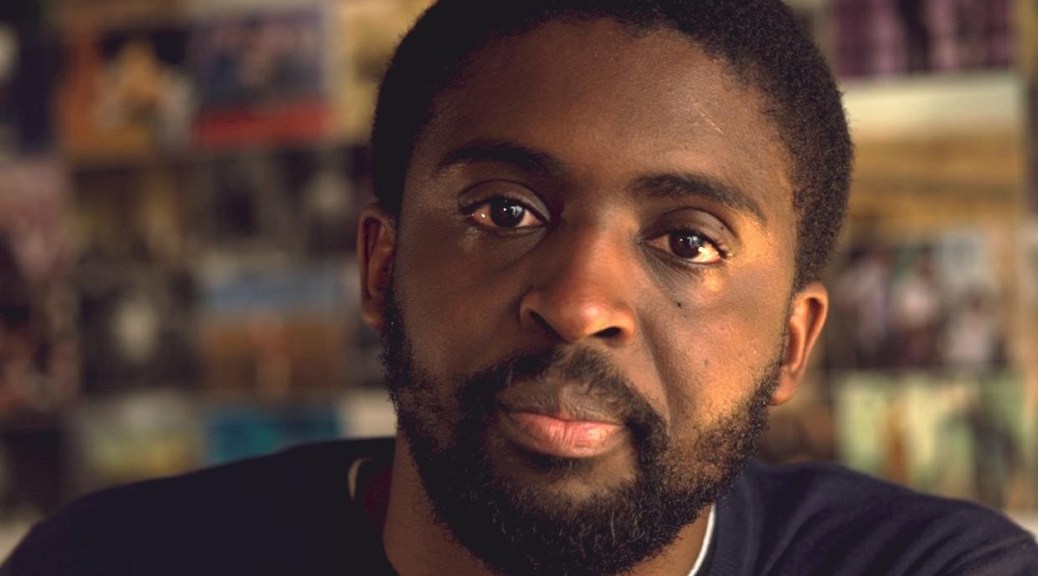
[The cover photo shows Silas Tiny]

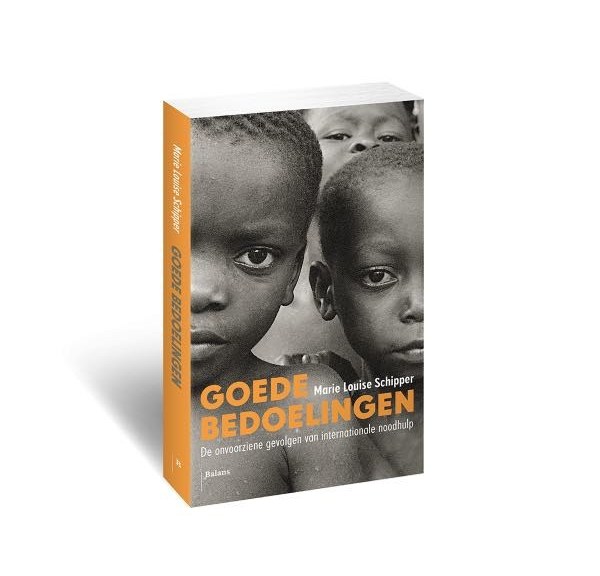
GOOD INTENTIONS by Marie Louise Schipper

Fifty One years ago, the Nigeria-Biafra war grabbed the world’s attention with its sad, haunting images in newspapers, magazines and television sets. Forty Eight years after it ended, the stories of that tragedy are still being told through films, documentaries, dramas, art works and exhibitions, music, books, in conferences and lectures. One of the people who has documented an aspect of that conflict is Marie Louise Schipper, a Dutch journalist working for OneWorld magazine and de Volkskrant newspaper. She has written a book about ten Biafran children who were evacuated to the Netherlands from Biafra for medical attention. The title of the book is Goede Bedoelingen which translates to ‘Good Intentions.’

In 1968, Marie was a young girl living with her parents. According to her, “It was a big item because it was the first international aids for starvation in Africa and nobody realized what was going on at that time. We didn’t know a lot about Africa and as a matter of fact not much about Nigeria as well. And Africa was an exotic country far, far, far away at that time. So Nigeria came into our living rooms and we could see what happened. The news in the newspaper and television was so overwhelming of these dying children. And my parents – they were devout Catholics – always told me and my sister that we should care about other people. They would tell us to finish our plates and that we should think about the children of Biafra. The images made a big impression on me, as a child. The Dutch gave a lot of money [to the relief effort] because they felt we should do something because in WW2 so many people died, and it was determined that in Biafra far more children died. Another reason these children made such a big impression on me had to do with the war stories in my own family. My father worked as a forced laborer in Germany. He was 17. My mother’s family was on the run and had to live with a family they didn’t know. My grandfather died during a bombardment. He was never found.”

When Marie became a journalist, she was surprised that the stories of these ten children were not written. “I thought there must be somebody who has written this all down. But there was nothing written. It was like when snow has fallen and everything is completely white and nobody has run into it. That was my first impression, that it was completely blank. There was nothing about it, only publications in the newspapers. When I started interviewing people everybody said, ‘No, I don’t remember these children, I don’t remember them.’ And I said, ‘Why don’t you remember them, because it doesn’t happen often that ten children from Nigeria, out of a war, come to the Netherlands.’ I felt they were hiding something. And I thought, ‘What are they hiding?’ I discovered that one of the children who was here had epilepsy and he was really ill. He was a bit retarded and was also in a foster home. He needed a lot of attention but people from the Nigerian embassy were very strict and said the children have to go back to Nigeria. The foster parents didn’t want to let them go because they didn’t know where they were sending them to. The foster parents of the sickest child were under so much pressure, so they decided to send him back to Nigeria. He was first sent to Gabon, with enough medicine for half a year, and afterwards sent to one of the rehabilitation centers at Ikot Ekpene. His family didn’t show up, so he was sent to Nung Udoe Orphanage and he died shortly afterwards. And I think that was why all the doctors were saying they didn’t know a thing. That was the reason they didn’t want to talk about it because they sent a boy who was really ill back to a country that was recovering from the war without proper medication.”

“How did you eventually find somebody who told you the truth?” I asked.

“I spoke to a lot of nurses and they had memories about these children. They also had photographs and they told me about the foster parents, and I said that must be the reason nobody wanted to talk about it.”

“Why do you think the Biafran authorities decide to take them to the Netherlands instead of Ivory Coast, Gabon or Sao Tome?”

“There reason was primarily because of Abie Nathan, an Isreali pilot. He was also a humanitarian and did a lot of food aid. He tried to mobilize the Isreali people to send in goods and food for the people of Biafra. He was very popular and charismatic, and had a lot of connections in the Netherlands. He was filmed by a television crew asking people to do something about Biafra; that everybody should give a hand. When this documentary was broadcast a lot of people got mobilized. He said he convinced Ojukwu that these children should be sent to the Netherlands where they could get proper help. But Ojukwu said no. Finally they decided to bring the children to the Netherlands as a symbolic gesture where the children in Europe would get acquainted with the Biafran children while the Biafran children would get more knowledge about the world. The decision was made and ten of the children came to the Netherlands.

At the end of the war, eight of the children were taken back to Nigeria. But two remained in the Netherlands. The official documents said the two who remained in the Netherlands had no parents and family back home. But in the 1990’s, one of them decided to look for her family. She discovered she had two villages full of relations. She returned to Nigeria to meet them.”

When Marie started to gather material for her book, she knew she had to make the trip to Nigeria.

“If I didn’t visit Nigeria, the story wouldn’t have been complete.”

“That was very courageous of you. So, how did the journey to Nigeria start?” I asked.

“I went to the African Studies Centre here in Netherlands, in Leiden. And one of the people who was connected to the African Institute, he works nowadays in England, he said to me the best thing I could do was contact *Emeka Anyanwu, an Anthropologist at Nsukka University. I thought it was a better idea the students of Edlyne go on research and try to find out what happened to the children. And it worked fairly well because we found two of them. It was like a needle in a haystack.  When we knew they were traced, we traveled from Nsukka to Owerri, from Owerri to Umuahia, and from Umuahia to Orlu. We visited the hospital in Umuahia [Queen Elizabeth Teaching Hospital] and all the places that were important during the war. I visited the airfield at Uli.”

“Is it still there?” I asked.

“Yes. You can see the traces of the road and there was a man who saw us walking and was curious. It’s not always you see White people there. He told us that was the road and he also knew the Ojukwu bunker. It was a small bunker. Even Edlyne didn’t know there was a smaller one.”

It took Marie Louise Schipper fifteen years to finish the book, and it was published on October 27, 2017, in Amsterdan. Unfortunately, the book is written in Dutch and, at the moment, Marie cannot afford to hire a translator. She said, “I would like to give the opportunity for more people to read it.”

[I spoke to Marie on the 23rd of May, 2018, via Facebook and these are excerpts from our chat.]


IMAGES FROM THE PAST

Between 1964 and 1966, David Koren was a Peace Corps Volunteer in Amaogwugwu, Umuahia, in Eastern Nigeria. When the Nigeria-Biafra war broke out in 1967 he was recalled to work on the Biafran Airlift that brought food and aid from Sao Tome into Biafra. His book ‘Far Away in the Skies’ is his account of his experiences on the airlift. It is on sale on Amazon.com. [A Nigerian edition will be launched in August, 2018.] Excerpts of the book are published here and on mybiafranstory.org under the category The Biafran Airlift.

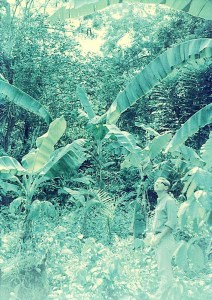
Near Amaogwugwu 1965
David, near Amaogwugwu, Umuahia.
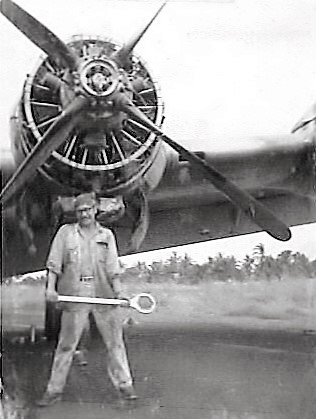
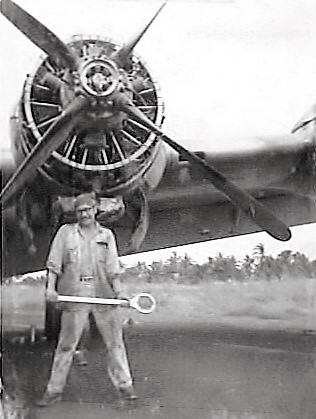
The prop wrench before I bent it
David, holding a Pop Wrench. [He also learned to carry out repairs on the planes.]
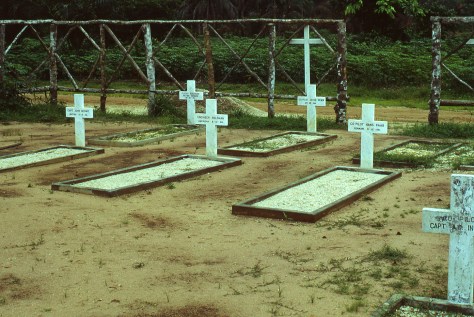
DAVID KOREN - Biafra Uli cemetary
A grave yard at the end of the runway at Ulli Airport. Crew members who died when the relief planes were brought down were buried here.


The World is Deep-Part Two; David Koren’s Story

Barry and Larry often worked as a team, and Leo and I as a team.  On a night that Barry and Larry were flying, Leo and I were drinking with the ARCO mechanics.  There was Arnie the Swede, Helmut the Dane, Smyth the Englishman, Ben the Israeli, and three or four other Europeans.  They complained about being overworked, that it was too much for the handful of them to keep those old planes flying.  Leo and I said that we could turn a wrench, and we would be glad to help them if they showed us what to do. Chi nyere m aka – God gave me hands. And I can use them.

The next day ARCO hired us as help mechanics, and the Portuguese airport authorities issued us flight line IDs as Ajudante de Mecanico.  And so we became more formally connected with the airlift, not just nebulous Field Service Officers.

We began our career as mechanics by removing parts from the damaged DC-7, noting carefully how we did it.  Then we would ride into Biafra with the first flight, and work all night removing the same parts from another DC-7, which was down at Uli, and then come out with the last flight.  The downed plane had had mechanical trouble and couldn’t take off.  The next day the MiGs shot it up.  The right wing and the fuselage burned; remarkably the left wing was still intact, with fuel still left in the wing tanks.

***

There was a night at Uli when a late fog rolled in.  I could hear a plane cross overhead and circle around, waiting for an opportunity to set down. It never came, and the plane returned to Sao Tome.  That was my ride back.  In a way I was glad, because I got to spend a day in Biafra.

The sky turned slowly from black to grey as the morning light filtered through the fog.  Reverend Aitken appeared.

“I’m going to Umuahia.  Do you want to ride along?”

“Yes!”

I didn’t see my old school, Ohuhu Community Grammar School, because the road to Amaogwugwu was not on our way.  I did see a convent school where another PCV, Nancy Amadei, had been stationed. I saw women on the side selling food from enamel pans.  I saw garri, peppers, and vegetables.  I saw one woman frying yam chips in palm oil over a charcoal fire. I saw chickens, which surprised me – I thought they’d be all gone by then.  This was the heart of Biafra, but I saw no begging.

***

On an afternoon when I had just finished loading a plane, and the engines were started, Father Byrne came to me with a large package. He ordered me to stop the plane and put the package on board. I objected that the plane was already buttoned up and on its way.  We could put it on the next plane.  He said that the package was very important and must go on that flight. I ran around in front of the plane waving to the pilot. I pointed to the package, and he stopped taxiing. Helmut helped me put it in the forward cargo hold. When we backed away and the plane moved on, I said to him, “Do you know what is in that package?” He didn’t. It was sanitary napkins for the Nuns.

We washed a DC-7 one day. It took all day and a lot of soap and water. I was soaking wet, but that wasn’t so bad for a hot day on the equator.  The point of cleaning a plane was to reduce the skin friction, making it faster and more fuel efficient. As we did every evening when we weren’t flying, we watched the planes take off, and later watched as they returned. The plane we washed didn’t return.  We waited and watched and turned to the tower for news, but there was nothing.  It was gone. I had the terrible feeling that we had done something wrong when we washed the plane and caused it to crash. The investigation later determined that it had hit an iroko tree on approach to Uli in the dark.  The plane disintegrated.

***

There was a church near one end of the runway at Uli.  The crew of our plane and others that went down during the airlift were buried in the churchyard.  I heard that after the war Nigeria bulldozed the airstrip to eliminate the memory of it.  And they bulldozed the graves.

***

In spite of the bombing, the mechanical challenges, and the hazardous navigation, the planes kept flying, most of the time. At the height of the airlift, during the time I was there, we had up to 44 arrivals a night at Uli, which made it one of the busiest airports in Africa. But there were two times that I remember when the air crews refused to fly, and the airlift stopped for a few days. On one occasion a rumor spread that the Nigerian MiGs would begin flying at night to shoot our planes down. Caritas and WCC pleaded with the crews to fly, and eventually they did.  Another rumor stopped the airlift a second time.  One night the news spread that France had recognized Biafra. In jubilation Biafran soldiers fired their guns in the air.  Some of the bullets struck a plane coming in at Uli. There was no serious damage, but the crews stopped flying again until the WCC and Caritas petitioned Biafra to enforce firing discipline.

***

Before a return flight, Reverend Aiken summoned me again.  A van was parked in a clearing near the plane. Several Biafran men were standing about, silent and uneasy. There were children in the van in the last stages of starvation.  They were placed on a mat on the ground. Their eyes were open but unseeing. I kneeled down looking at one boy, appalled at his condition. He mumbled something. A man said to me, “Do you know what he is saying?” I didn’t. “He is saying, ‘My father, why don’t you speak to me? Don’t you know me?’”

Evacuated children were taken to a convent called San Antonio. After a week they could sit up, and they could feed themselves. I went to see them. As I came into the compound, about a dozen of them ran to my side.

A Nun told me a story about one of the children. He led a protest against a particular spread the kids didn’t like on their bread. At his signal all the children put down their bread and stopped eating. Some of the very young ones were reluctant to do this, but they went along. They won, and they were not served peanut butter again.

You never win, if you give up when things are easy.

Someone said that the airlift prolonged Biafra’s agony by bringing false hope. Without food for their people the leaders would have given up sooner.  It sounds like a bad idea whose time had come, an idea that someone put forward and many others adopted without thought, a piece of facile wisdom. It makes sense if you don’t stop to think about.  In fact, if you accept the idea, you can stop thinking altogether – no need to consider the complexities.

The idea can be accepted by people with no personal, immediate concept of large scale random killing.  They have not seen gangs running through their neighborhoods, dragging people out on the street and chopping them up.  Biafran people saw the trains full of refugees pouring in from all over Nigeria. They accepted those refugees into their homes and villages. And they heard their personal, immediate stories.

Another dimension, beyond security, for continuing the fight, is the concept of freedom to control one’s own destiny – not just to avoid disaster, but to build a positive future.  In the shrinking Biafran enclave was the highest concentration of Ph.D.s in all of Africa. The motivation to learn and to grow into a modern society kept Biafra going.

***

On my final trip to Biafra I was arrested as a Nigerian spy. Throughout the interrogation I remained respectful. I answered everything honestly, so when they tried to trip me up, I could always come back to what was true. I was not confrontational; I was not indignant.

After the interrogation I was led to a small room, my cell, furnished with a simple couch and some chairs.

Reverend Aitken showed up. He brought me a bag with some fresh clothes, magazines, a sandwich, and a couple of bottles of warm beer. The look on his face was disappointment, not sympathy.  I didn’t understand it then, but I may have caused the airlift a real problem.

I was interrogated again.  This time the commander told me that they weren’t sure what they were going to do with me.  He said they were thinking of sending me to Umuahia, then the seat of the Biafran government. The head of the government was General Chukwuemeka Odumegwu Ojukwu. His 2IC was Dr. Michael I. Okpara, who had been the former Premier of the Eastern Region of Nigeria and the founder of Ohuhu Community Grammar School. I told the commander that I would be happy to go to Umuahia and perhaps meet Dr. Okpara again. I would learn later that they took spies and saboteurs to Umuahia to be shot.

One of the young airport officials would sit with me and chat. I gave him some money and asked him to buy some kola nuts, oji, and palm wine, mmanya.  We invited a few others and sat outside in the warm African evening.  We broke the kola.  “Onye wetara oji, wetara ndo – He who brings kola, brings life.”  Someone there knew my name, because he knew one of my students from O.C.G.S who told him about me.  I told them about the time I had helped Aitken carry some wounded people from the village to the hospital. I asked if anyone knew how they were.  None did, but later someone inquired and reported that the boy and the young woman were recovering well.

 ***

I was called before the commander.

He said, “David, I am ordering you deported from Biafra.  You must never return again.”  As he said it, he was trying to sound very stern, but his demeanor was that of a father chastising an impetuous young man. I was escorted out to one of our relief planes. I helped unload it, and then I flew back to Sao Tome for the last time.

***

Of the people who came together for the airlift, whatever they loved about fighting, whatever they loved about flying, whatever they loved about religion, whatever they loved about life, their paths crossed in a filigree of human motivational trajectories, called Biafra.

***

Years later I gave a talk to a group of college students in Buffalo, New York. These were all students from the region formerly known as Biafra. I told them my stories and I showed them my pictures. I concluded with an observation.  Many Americans believe that most relief aid never gets to those who need it, that it is diverted by corruption. One young man from the back of the room stood up.  He said, “When we were children, we heard your planes going over at night. We never knew who you were, but we got the food.  Every person in this room is alive today because of what you did.” Then they stood up and gave me a prolonged ovation.

Uwa de egwu.

THE END

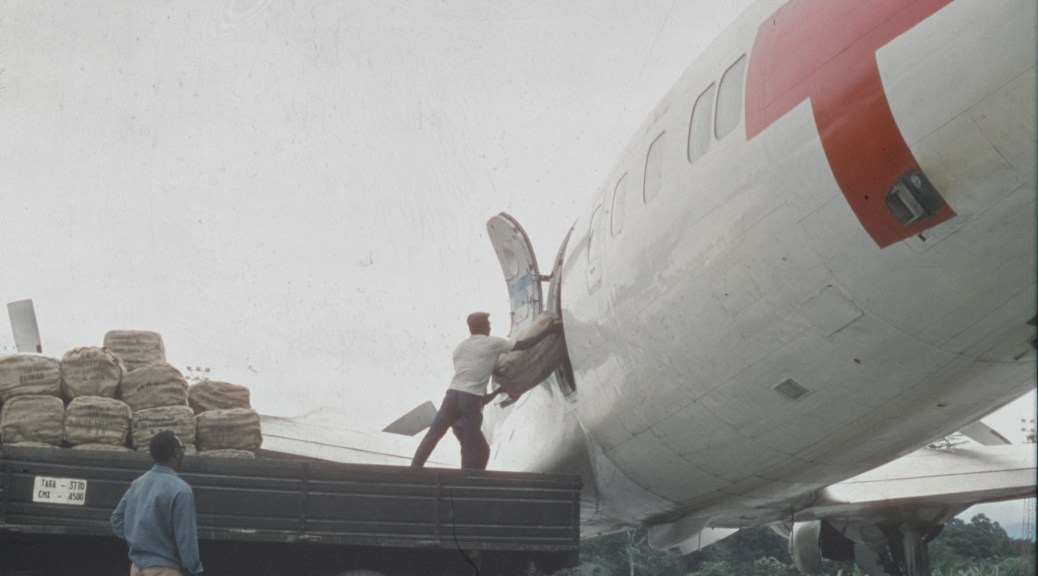
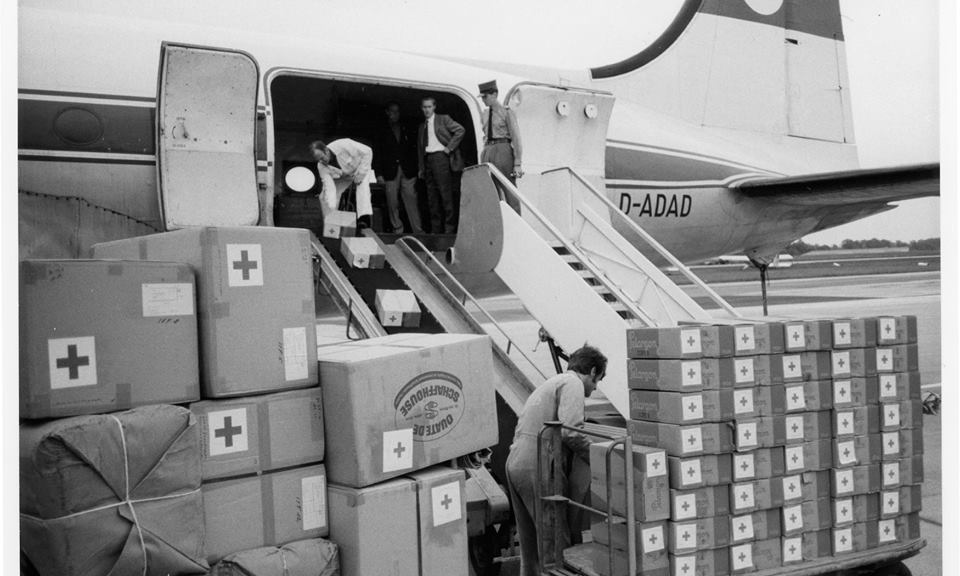
PHOTO CREDIT – THE INTERNATIONAL COMMITTEE OF THE RED CROSS

PHOTO CAPTION – LOADING RELIEF GOODS INTO RED CROSS PLANE

PHOTOGRAPHER – VATERLAUS, MAX; 1968.


The World is Deep – Part One; David Koren’s Story

In October 2017, a random internet search about the Biafran Airlift led me to an article with the unusual title ‘The World is Deep – Uwa De Egwu,’ written David L. Koren. A further search on Facebook showed him in a photograph with Okey Ndibe, Author and Scholar. Smiling, I said, “Aha!” A few days later, introductions were made via email and I became acquainted with David, who was a Peace Corps Volunteer in Umuahia, South East Nigeria, between 1964 and 1966. He left Nigeria just before the war broke out but in 1968, with the war in full bloom, he answered a call by the United Nations to work as a United Nations Field Service Officer, a job which entailed organizing and flying relief material from Sao Tome into Biafra.

His experiences, captured in ‘The World is Deep,’ is the first eye witness account about the airlift to be published in mybiafranstory.org. It can be found in the category THE BIAFRAN AIRLIFT. With his permission I have edited the article for brevity and broken it into two parts. David has also published a book ‘Far Away In The Skies,’ which is a more detailed account of his experiences working on the Airlift. It will be on sale in Nigeria in March 2018.

Below are email exchanges between David and I. They serve as a preamble to the article.

D.L.K.- I grew up in a working class family in Pittsburgh, Pennsylvania. Through hard work and living on the financial edge I became the first in my family to earn a university degree. Seeking to know more about the world, I joined the United States Peace Corps, and I was assigned to teach English at Ohuhu Community Grammar School in Amaogwugwu near Umuahia, before the war. I served there for three years, having the best time of my young life. For me, and for most Peace Corps Volunteers immersed in a different culture, we learned as much as we taught. Nigeria became my second home, with a new family. So, in 1968 when UNICEF asked me to return to work on the Biafran Airlift, I made the easy choice and volunteered again. Afterwards, I followed a career as a counselor in a mental institution. For a second career, I went back to school to study physics and astronomy, then worked designing optical lenses for industrial lasers. Now I keep busy on my six acre mini farm with my wife and two tractors.

V.O.- In a nutshell, what are your views about war, crisis and displacement?

D.L.K.- People gain more through diversity and synergy than brutal warfare.

V.O.- What are your fondest memories from living in Ohuhu? Any names of families, friends or colleagues you would like to mention?

D.L.K.- I have fond memories of my student librarians: Matthew Nwuba, Onyema Obilo, and Patience Igweonu; also our senior prefect, Okon Nkanta Abijah; and our principle, Wilber O. Nsofor. I still have my grade book from 1964, 65, and 66, with all the student names, and at the end of my book, Far Away in the Sky, I published all their names. At a convention of the Ohuhu Union in Houston, Texas, last May, I met some of them and asked them to sign my grade book next to their names. What an emotional high.

V.O.- You said, “…we learned as much as we taught?” What were the most important things you learned about the Igbo society at the time?

D.L.K.- I learned the friendliness of the Igbo people and their warm acceptance of strangers like ourselves, the strength of family ties, the desire to learn and the skill to apply their knowledge. I learned about Igbo philosophy through slogans and proverbs: profound expressions such as “The World is Deep,” “Life is the Main Thing,” “God Gave Me Hands,” (also “God gives me a hand in my need”), as well as the patience, perseverance, and acceptance implied by “Who knows tomorrow?” Most importantly, the assurance of protection and safety in the kola ceremony. Even after 50 years, I still feel comfortable in Igbo company.

V.O.- Was it your experience in the Nigeria-Biafra war that qualified you to be a counsellor in a mental institution afterwards?

D.L.K.- After I returned form Biafra, I earned a master’s degree in Rehabilitation Counselling and I scored very highly in a state-wide entrance exam for the position. But no doubt my experience in the war strengthened an attitude in me of acceptance for people in need through no fault of their own. Mentally ill people especially need reassurance that in spite of their disability, they are people of worth.

V.O.- But I’m lost with “Life is the Main Thing.” Does it translate to ‘Ndubuisi?’

D.L.K.- Yes. I should have written: Uwa di egwu, Ndubuisi, Chinyere m aka, and Onye ma echi.

UWA DI EGWU – THE WORLD IS DEEP – PART ONE

BIAFRAN AIRLIFT

David L. Koren

March 2007 (Revised January 2018)

The first time I went to Africa the sun was rising over an endless stretch of palm trees as the Pan Am Boeing 707 banked steeply on approach to Lagos, Nigeria, January 1st 1964.

The second time I went to Africa, two years later, the captain of the green and white painted Nigeria Airways/Pan Am 707 announced that we were denied permission to land at Lagos, because there had just been a military coup.

We circled for some time before we were cleared to land.  Soldiers with guns watched us disembark. I was supposed to make a connecting flight to Enugu, capital of the Eastern Region, where I had been stationed for the last two years as an American Peace Corps Volunteer. I was just returning from home leave.

Nobody knew what was happening. Arriving passengers were escorted to the Catering Rest House, where we were to put up for the time being. Later, I went to bed, in a small room, in a distant land, unable to adumbrate any sense of future.

***

The next day a flight was arranged to the Eastern Region. We landed at Port Harcourt with no problems. The airline arranged for a small bus to transport passengers to Enugu. I got off in Umuahia and took a bush taxi – a Morris Minor – to my school, Ohuhu Community Grammar School in the village of Amaogwugwu.

The school was started by Dr. Michael I. Okpara, a prominent man from the village, and also the Premier of the Eastern Region of Nigeria.

News began to unfold of what happened with the coup. Peace Corps Volunteers got news from the local newspaper and from what we called time-n-newsweek.  The international editions of Time and Newsweek were available in Umuahia, and we bought both of them from the news boys, onye akwukwo.

After six months another coup ousted all the Igbos (Ironsi was shot, Gowon was installed), leading to the massacre of Igbo civilians in the North and a mass exodus of refugees back into the Eastern Region.

Trains arrived from the sabon garis of the North carrying refugees; on one there was a headless body. All of these people were absorbed into their villages of origin. New huts were constructed and donations of food and clothing were requested. We all contributed. Although this was a great burden on the local population, it was effective in caring for the refugees. And therefore there were no refugee camps with deplorable conditions to catch the attention of the world media.

Toward the end of 1966, there was increasing talk of war.  I discussed it with my students. I told them that war would be very bad. They were less concerned about it. One student said, “We will fight them. If we win we will rule them. If they win they will rule us.”

 ***

Dr. Okpara hosted a send-off celebration for me and my fellow PCV, Ric Holt. He conferred on us the honorary title of Bende Warrior Chieftain, along with the appropriate garments – a wrapper and jumper of fine cloth and a woven cap.

I stood up in my new clothes to give thanks.

Bende kweno!”

Ha!” (The response).

Bende kweno!”

Ha!”

Enyi mba enyi!”

Ha!”

Enyi mba enyi!”

Ha!”

Dr. Okpara and the other dignitaries and guests seemed amused.

At this time the commercial planes were still flying between the regions, and I left Nigeria with the memory of soldiers at airports.

***

The third time I went to Africa, October 1968, I flew in an old DC-6 propeller plane from Amsterdam to Tripoli to Ivory Coast to Sao Tome, bringing relief supplies for Biafra.

I joined three other former PCVs on Sao Tome; we were to act as cargo masters on the relief flights. We were officially known as United Nations Field Service Officers, and we were kept busy while waiting for clearance to enter Biafra.

Food donations came to Sao Tome by air and sea and were delivered to thirteen different warehouses around town. As each shipment arrived it was dumped in a warehouse with no organization, no inventory. Preparing a plane load of relief supplies was difficult, because no one knew what food was available and what condition it was in. The four of us Field Service Officers worked with Sao Tomeans and a Danish relief organization to organize the warehouse.

The relief effort on Sao Tome was put together by a group of Northern European churches, Nordchurchaid, representing the Protestant World Council of Churches and Catholic Caritas International. This was distinct from the International Committee of the Red Cross – ICRC – which operated from the island of Fernando Po. WCC and Caritas were established entities, but the airlift they put together for Biafra took form as it went along. They created a company called ARCO to buy and charter planes, while a German church group called Das Diakonische Werk was designated to provide flight operations. The United Nations contributed a handful of Field Service Officers.

***

These donations were well meant, but inefficient. A DC-7 carrying 10 tons of canned goods would be carrying 7 tons of water and metal. A pharmaceutical company sent a shipment of sun tan lotion. It was said that they wrote it off as a charitable donation. Other medical donations were more appropriate. Things changed when we began receiving 50 pound bags of dried food and powdered milk. The food was called CSM, for a mixture of corn meal, soy beans, and milk. There was a similar mixture called Formula II. By the time I began flying into Biafra we were carrying those bags, bales of dried stock fish, medicines, fuel and batteries for the lorries used to distribute them.

***

We flew at night to avoid the Nigerian MiGs.  The Nigerians also had a night bomber that would drop its bombs when we were coming in for a landing.  We took off from Sao Tome while it was still light and timed the flight to arrive over the coast just at dark. We could see the burn-off flames from the oil wells in the Niger River delta. From my seat near the back of the plane I could also see the bright traces of antiaircraft shells arcing up toward us from below. The planes flew without navigation lights, so the gunners had to track us by the sound of our engines. The pilots didn’t seem worried about this. When I mentioned it to Captain Delahunt – he had been a carrier pilot in WW II – he banked the big plane around to identify where the AA was coming from. The bombs didn’t fall at every landing, but often enough.

***

Each day either WCC or Caritas would choose the cargo for the flights that night. The trucks would go to the warehouses, load, and return to the flight line. My job was to help supervise the loading, in terms of what went into each plane and the distribution of the cargo within each plane.

All flights for the night would be either WCC or Caritas, alternating from night to night. WCC and Caritas had separate distribution networks in Biafra.

The four of us UNICEF volunteers took turns flying into Biafra.  We would go in with the first plane, help with the unloading, and come out with the last flight.  Those who stayed in Sao Tome helped load the planes.

***

My first landing in Biafra was uneventful, but emotional.  The night air was fresh and tropical and familiar.  It felt, in a sense, like coming home.

My job was to supervise the young Biafran Airforce fatigue workers who were hustling to get the food out the door so the planes could escape the bombs and return to Sao Tome for another load. Sometimes I held the torch light and sometimes I joined in heaving the food onto the lorries.

After the first plane was unloaded I got down and waited in the night for the next plane to arrive. Sometimes the wait would be a couple of hours as the first wave of planes returned to Sao Tome for a second run. It was kept very dark. If someone showed a light, even briefly, there were shouts from unseen soldiers all around, “Off de light!  Off de light!”

***

When the bombs started falling you could hear them screaming down. After some experience with this it became possible to tell by the Doppler shift and intensity of the scream whether a bomb was going away from you or coming toward you and about how much time you had before it got there.

One night after I had unloaded the first plane and climbed into the second one, the bombs came. The air crew and the soldiers who had been gathering outside the plane went for the bunker. By the sound I knew that the bomb was coming my way, and I judged that I didn’t have time to climb down the ladder and get to shelter. There were sacks of CSM piled neatly on either side of a narrow isle in the center of the plane and I dove in there, hoping they might absorb some of the shrapnel.  The blast shook the plane and deafened me, but we escaped damage. The next day on Sao Tome, I walked around the plane for a closer inspection. I found a few hits, one near a tire, but none more than nicks or scratches.

Immediately after that bomb went off, a second one hit further down the runway. We kept unloading the second plane as the first plane, which I had come on, was preparing to take off. I heard the engines rev up, and I heard it roaring down the runway. But then it stopped all of a sudden. As soon as we finished unloading I ran down to see what was going on. I saw a Canadian relief plane sitting on the runway with its nose wheel yards away from a huge bomb crater. Captain Patterson and a WCC missionary, Reverend William Aitken, were examining the hole. Reverend Aitken had heard the explosion and thought it was near the runway.  He found the hole and also saw the aircraft starting its run toward him. From the edge of the crater he ran straight at the accelerating plane waving his arms frantically with a flashlight in each hand. The pilot told me that the flashlights were very faint from his perspective in the cockpit, but he could tell that there was something on the runway, so he throttled back and stood up on his brakes.  He blew a tire but didn’t hit the crater or Rev. Aitken. The plane maneuvered around the crater and took off.  There was enough runway left for it to get airborne.

I only had a few contacts with Reverend Aitken, but they were significant.  After the plane took off he asked me to come with him, and we went to find the flight line officer.  We found him in the dark, and we all drove to a house near the airfield. The officer pounded on the door. “Wake up! Wake up! You’re holding up the Nation.” The man emerged tying his wrapper. He was in charge of airport maintenance.  We drove him to his bulldozer, and he filled the crater.  Tomorrow he would pave it, but tonight planes could land and take off on it.

Reverend Aitken was tall, slender, and earnest. He never said much, but he listened attentively. After a bomb fell beyond the end of the runway one night, he came out of the dark and said, “Come with me.”  The bomb had fallen in a village compound. Five members of the same family had run out of their house seeking cover when the bomb hit. A boy of about 20 years was dead. Two children lay dead with ragged shrapnel wounds in their foreheads and bellies. A boy of about 6 was hit in the leg.  His leg was twisted at an odd angle.  His eyes were open, but he made no sound.  A young woman was bleeding from several places. She was singing. The song was high, plaintive, haunting, and continuous.  We put them in the station wagon and drove them to the hospital at Awo Amama.  When we left them the woman was still singing.***

On Sao Tome the four of us UNICEF Volunteers – Larry, Barry, Leo, and I – met the others who had gathered for this airlift. Missionaries. Mercenaries. Air crew and mechanics. Portuguese. Biafrans. Diplomats. Journalists. Africans of Sao Tome.

The mercenaries preferred the Hotel Salazar, the high ground. Most of them had little to say: they sat quietly and drank and watched. Johnny Correa, a Puerto Rican American from New York City, breezed in once in a while, always ebullient. Taffy Williams, gregarious for a clandestine fighter, boasted of their exploits. He told of Steiner leading a few Biafran fighters through enemy lines to blow up some planes in Enugu. He said that Biafrans were the best fighters in Africa. “With a company of men like that we could make it all the way to the Mediterranean, and no one could stop us.”  I thought, why the Mediterranean?  Why not Lagos? Or Port Harcourt?

The four of us would sit at Costa’s and talk about the motivation of those who came to the airlift.  Some people were there to make money. Many were there because they were compelled by their religion to help the poor and suffering in the name of God. Yet many of these, missionaries included, openly distained or detested Biafrans. It was an abstract duty and the objects of their charity were irrelevant.

It did not occur to the four of us, not then, to consider why we were there.

As an aviation job, the Biafran Airlift attracted a fraternity of fliers from all over the world. ARCO hired a DC-7 captain from Lapland who used to herd reindeer. Crews from Iceland were there flying off the equator. A few men had recently flown with the other big aviation job at the time, Air America in Vietnam, Laos and Cambodia. The CIA had conducted a food relief operation in Laos with Air America. But no one talked about that, much.

***

PHOTO CREDIT – INTERNATIONAL COMMITTEE OF THE RED CROSS

PHOTO CAPTION- DC4 CARRY TONS OF MEDICINES AND VITAMINS TO BIAFRA

DATE TAKEN – 27th May, 1968



BIAFRAN AIRLIFT

The BIAFRAN AIRLIFT was the first and most massive civilian relief program in modern history. It flew 5,314 missions, lifting more than 60,000 tons of relief material and consequently saving an estimated I million lives.

It started after Nigeria imposed a food blockade on Biafra, which ensured that food and medicines couldn’t come into the secessionist enclave. Food production had dwindled as locals abandoned their homes and farms seeking safety. The catholic missionaries in charge of parishes started reporting cases of massive starvation and death in their locations.

At that time, the only planes allowed into Biafra were flown by Hank Wharton, a gun runner, who was flying in arms for the Biafran government. Father Tony Byrne, one of those Catholic priests, got permission from the Vatican to negotiate with Wharton to fly in relief materials for the starving populace. But the church was faced with the moral conflict of having guns and relief in the same planes. This meant that relief material could only be flown in when Mr. Wharton wasn’t flying in guns and ammunition. This, in turn, meant that relief material, which initially constituted a few boxes of medications bought with funds raised by Catholic missionaries, was often delayed.

By this time news had started filtering out to the rest of the world about the crisis in Biafra. Western reporters, such as Frederic Forsyth, were going back with news and photos showing severely malnourished children and, for the first time, the disaster happening in Biafra was being shown on televisions around the world. This elicited shock and outrage from individuals and governments, and churches started mobilizing the media to appeal for help for the people of Biafra.

A group of Danish churches, headed by Pastor Vigor Mollerup, also started mobilizing help to start an airline whose planes would fly relief into Biafra. He met with Father Tony Byrne on the island of Sao Tome and, in the summer of 1968, an alliance was formed between Catholic and Protestant churches.

At this time, Port Harcourt had fallen and the Biafran government turned a road in Uli into an airport. But Wharton was still in charge and the churches were being accused of bringing in arms in the guise of aid. Worse, on one occasion, Wharton’s pilots didn’t fly for two weeks and this indirectly led to the death of 40,000 Biafran children. A timely solution to this problem came when Captain Gustaf Van Rosen, a Swedish Aristocrat and pilot, flew into Biafra and met with Odumegwu Ojukwu, a meeting which led to Ojukwu granting permission to the churches to land their own planes at Uli.

Wharton’s monopoly was finally broken and Joint Church Aid, fondly called Jesus Christ Airlines, started operations. The planes came from the United States, Canada and Scandinavia, and they flew more than 30 flights every night. Each one had two fishes, the oldest symbols of Christianity, painted on them. Some of the pilots were Axel Duch, a Danish-Canadian man who was the first to volunteer his services to the airlift; Phil Philip and Eddie Roocroft from Britain; Harald Snaeholm and Thosteinn “Tony” Jonsson from Iceland; and Gunnar Oestergaard from Denmark. Captain Gustaf Van Rosen was its first Chief of Flight Operations but he was soon replaced by Axel Duch.

Despite the fact that relief planes are usually welcome into conflict zones, the planes of the JCA were considered illegal. They were shot at and bombed by the Nigerian Air Force every night, and when crew members died, they were buried in a grave at the end of the runway. But the rest kept flying, even mastering how to land, off load their cargo and take off in 20 minutes.

But the planes didn’t always return empty to Sao Tome. Sometimes they carried precious cargo – children and babies in the worst and last stages of malnourishment and ill health. They were taken to San Antonio Orphanage on the island where they were nursed back to health.

In May 1969, Van Rosen returned to Biafra with Swedish sports planes fitted with rockets. These Biafran Babies, as he called them, wrecked a lot of havoc on Nigerian planes. The reprisal attacks were brutal. The airlift became more dangerous and pilots started leaving.

In January 1970 the war ended and on January 12 a crew from Iceland flew the last mission into Biafra, to evacuate relief workers and priests. Its pilot was Thorstein “Tony” Jonsson. He had flown in and out of Bifara more than 400 times, more than any other pilot on the airlift.

Today, the carcasses of those planes lie in a field on the island of Sao Tome – silent, metal monuments to bravery [dare-devilry if you will], compassion and all that is noble in our shared humanity.

Many of the people who took part in that airlift are still alive. One of them is David L. Koren, a former Peace Corps Volunteer, who organized the warehouses in Sao Tome, loaded and flew the cargo into Biafra, and sometimes evacuated vulnerable children. His account of his experiences will be the first in a new series – THE BIAFRAN AIRLIFT – starting on Saturday 27th January, 2018, on this blog and on mybiafranstory.org.