Tag Archives: Childhood trauma

LIVING IN SAINT-ANDRE REFUGEE CENTER, GABON – A FORMER CHILD REFUGEE’S ACCOUNT – PART ONE.

LEAVING BIAFRA

In 1968, just before Enugwu-Ukwu fell to the Nigerian troops, my family took refuge in my maternal grandparents’ home at Egbengwu, Nimo, a neighbouring town. When we got there, my grandparents’ house was teeming with refugees. The distribution center at Nimo was St Mary’s Primary School, and it was also completely occupied by refugees from surrounding towns like Enugwu-Ukwu, Nawfia, and Amawbia. One Irish priest, named Reverend Father Nolan, was in charge of relief distribution, assisted by other people such as Mr. Otie, the headmaster of the school. The Parish church was Assumpta Catholic Church but because of its location on the major road from Enugwu-Ukwu to Nimo it was close to the war front so it was not considered ideal as a relief distribution centre. It was on one of such visits to St Mary’s, in company of my younger sister, Rhoda, that Father Nolan announced that officials of CARITAS were coming to St Mary’s the next day to take sick children to Gabon. He told parents to bring their children who were ill the following day.

Although I was not suffering from kwashiorkor, I was frail and weak, so I made up my mind to present myself for consideration. I was just seven years old, but I saw it as a life-saving opportunity. My decision was not well received by my mother who reasoned that I was too young to be sprinted out to an unknown country beyond their care and reach. She broke down, saying, “Who is going to care and treat you like the mother who gave birth to you?” My dad, who was not known to give in easily to emotions, approved of my decision and offered to take me to St. Mary’s.

On arrival we saw babies, toddlers, and teenagers with bloated stomachs, swollen legs, and severely shrunken bodies, all looking like living ghosts. Many were too weak to stand, so they sat on the floor. Soon after, Father Nolan and Mr. Otie arrived with the CARITAS representatives. Mr. Igboka, the Catechist, was also there. When the selection started, all the kids in front of me were selected. I was rejected four times even though I buckled my feet on each occasion to create the impression that I was very ill. After my fourth rejection my father went into a tirade. This prompted the officials to call me forward, so I was the last kid to be selected that day.

The next stage was the documentation. The CARITAS officials wrote each child’s first name, surname, parents’ names, village and town, and the processing centre. Then they stuck an adhesive tape with identification number on our wrists. Mine was 492. This was the last documentation in Biafra.

As a green-coloured Austin lorry made its way towards us, my father came to me, shook my hands, and prayed that I would come back to meet them alive. My mother embraced me, sobbing. Other parents watched their children being loaded into the lorry, like cargo, and into an uncertain future. As our lorry slowly revved to drive off, I positioned myself to wave a final good bye to my parents. Years later, I learnt that my mother cried inconsolably for two days after my departure.

As soon as we departed Nimo, our chaperons informed us they were taking us to Ulli airport and from there to Gabon. On the way some children were crying. After some time our lorry stopped by the roadside so we could have lunch. It was either two small pieces of yam or one big piece placed on our palms.

When we got to Ulli airport, our lorry parked in an inconspicuous place waiting for the signal to approach the tarmac. I could see planes landing and taking off in the pitch darkness. After a long wait we drove up to the tarmac where a plane was waiting. For the first time, I saw an aircraft in a stationary position. The size was a far cry from the little bird-like thing we kids usually saw flying across the skies. We all came out of the lorry and a ladder was placed at the foot of the aircraft. Two big men positioned themselves, one at the foot of the ladder and the other at the top. One after the other, we were taken up the ladder into the aircraft. There were no chairs inside but there were blankets spread across the floor. We were given one or two cubes of sugar and asked to lie down. I could not remember when last I saw sugar in those terrible days, and I became excited again after the emotional separation from my parents. The door of the aircraft was shut, the engine started, the lights turned off, and I could sense a slow movement of the plane up to the time we became airborne.

We were woken up at Libreville International airport. My first impression was that this was real ‘obodo oyibo’ – a marvel. There were aircraft of different sizes and shapes, and that gave me the opportunity of seeing these planes at close quarters in broad daylight. Vans pulled up at the foot of our plane, and we all boarded. Those who were too weak to get into the vans were either helped in or carried inside. After a short drive our van pulled into a massive church complex. It was called St. Andre and the priest in charge was Monseigneur Camille.

———————–

The contributor, Johnny Abada, lives in the United States of America.

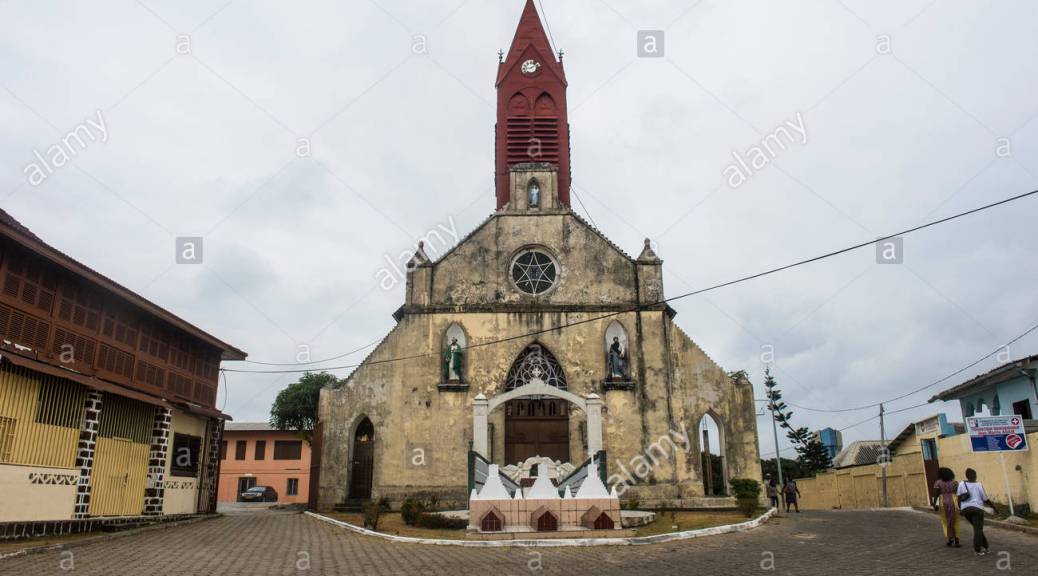
NB-The image on this post is taken from the internet. It shows St. Marie Cathedral, one of the centers used to house refugees during the Nigeria-Biafra war.


THE JAMAICAN WIFE

When our ship landed in Lagos most of the foreigners decided they weren’t getting off the ship. This was January 1966. The coup had already taken place. Dad decided we were going in. He had been given a job with the Water Resources in Lagos. So we got a flat at 51 Modupe Johnson Street, off Bode Thomas, Surulere. We were neighbours with the *Obas. They had three boys. And guess what? Their mother was also Jamaican. Six months later, the second coup took place.

One day we were told we had to move next door. And we were like, “Why?” But we packed up and moved next door. Before that my dad had gone out one day and come back with an Opel Record. It was a two door car. My dad was not around a lot. We thought he was going to work. Once in a while he would show up with the car. Sometimes he would leave the car and be gone. Then, one day he went out with mum and when they came back she had this baby in her arms.

Another day, dad was about to leave the house and I followed him. I was slow but when I got to the front window I saw him getting in the trunk of his car. I thought, “Why is dad getting into the trunk?” When I heard the rest of the story as an adult I realized that’s what he had to do to stay alive. I didn’t know where he was being taken. On reflection I think it had happened a few times but that was the only time I saw it.

One day dad shows up with the car and said, “You are going back to your grandparents.” That was the first time I would be going to Eastern Nigeria and I can proudly say I was stepping into Biafra because the Republic of Biafra had just been declared. On our way to the East we were stopped at the Onitsha Head Bridge by Biafran soldiers. They were saying they were not going to let us through. In the argument one of them slapped my dad. My mum grabbed a huge glass jug and jumped out of the car. She was waving it and threatening that the jug could break on his head if he laid a finger on dad. Jamaicans no dey play o. The arguments went on for some time and finally they let us go. From there we proceeded to our village which was not far from Onitsha.  That’s the last image I had coming into Biafra.

Tina – My mum didn’t speak Igbo and she had a foreign accent. The soldiers were cocking their guns as if to shoot us. The soldiers threatened they would throw my parents over the bridge into the water, which was far. I remember peering over the rails and the water seemed so far away. I don’t remember how the argument was resolved. We heard later from my dad that when he joined the army those men on that bridge that day were under his command.

Chinedu: Dad eventually joined the army and we were living with our mum in a flat off Edinburgh Road, Enugu. One time I got sick and mum was crying so much because I was in and out of consciousness. She came out looking for help but nobody was there to help, and tension was in the air.  She took me to Eastern Medical Centre and Dr. Okeke figured out what was wrong with me. Some weeks later, dad came back. He was a Civil Engineer and had gone for Officers Training. He told us we were going to the village, so we took off. That’s where we spent time with my grandparents, uncles and other relations.

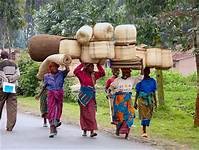
Our house in the village was right on the Enugu-Onitsha road. That’s where I got the experience of a mass return. Everyone was heading towards Onitsha. It was a mass migration. Years later I was in America when Rwanda happened. I was watching a TV report about the crisis when I saw the mass of people trooping down the road with their luggage on their head. My body just started to shake because it brought back a lot of memories.

Tina: Another vivid memory I have is that everybody left the compound but my mum refused to leave. She felt that if she left our village my dad wouldn’t know where to find us. So we were sitting on our suitcases in front of my grandfather’s house waiting, and waiting. Dad was at Nsukka at the time but somehow he got a message that we hadn’t left with the others, so he sent his driver, Felix, to get us. We’d be dead now if it hadn’t been for Felix. [Laughter.]  Felix arrived in a station wagon and somebody helped him to bundle my mum into the car. We couldn’t take any of our belongings. We just jumped into the car and sped off. We didn’t realize how much danger we were in. That’s the strange thing about this – I can’t remember feeling frightened. In our escape Felix had to avoid all the major roads so he wouldn’t get caught by the soldiers.

Chinedu: Another memory I have was that dad buried his car during the war. Then he built something over the pit and covered it. After the war he dug it out and that’s what I used to learn to drive in 1973. I was 11 years old. [Laughter]

After our escape Felix took us to Ogbunike. The whole family was there and that was where we started seeing signs of the family not wanting to pay attention to us. It wasn’t blatant but it was happening. They were probably worried about what limited resources they had. When it came time to share food they weren’t including mum.

[Tina turns to Chinedu.] What was it about a bag of sugar?

Chinedu: Nicky was the size of a bag of sugar. That was the argument Dad gave Mum to convince her to leave. Nicky had not been fed well and therefore not grown to the normal size of a one year old, but she continued to stay in spite of all we were going through not getting enough food for five of us. He said it was better for her to take us back to England where we would be better cared for.

My grandfather also told me he didn’t like the way his children were treating us. They were doing it because they were looking out for themselves and we were foreigners. My mother, being Jamaican and her first time in the country, not able to speak the language, felt isolated, and my dad was not around.

Vivian: Maybe they felt you all were privileged, or they thought you should not have come back home.

Chinedu: Daddy was the reason they were getting all that salt and tinned food. Had it not been for him they wouldn’t have had anything. When you are not seen as part of a group you are treated as an outsider. Those things happen. To be accepted we had to work really hard. I remember the fight my mum had with my grandmother. She was dealing with that stress of not being given her own share of things. A knife was drawn but a lady who lived in the same compound separated the fight.

Dad’s division was under Cornel Achuzia. They used to refine oil so they always had fuel which they’d sell to buy food. My dad always sent someone to drop off the food, so we seemed to have food even when others didn’t. I remember eating a lot of crabs. Today, I do not like crab meat.

I remember we had five chickens which traveled with us as we moved from place to place. Each of us owned one and assumed ownership of it. The eggs were a steady source of protein. If my uncle Emeka felt like eating chicken he’d murder one of the chickens at night. [Laughter] He would come in the morning and say, “Nnaa, this chicken all of a sudden died.” And we’d have to cook it.

Tina – I remember thinking at the time that if the chicken had died of a disease and we cooked and ate it then whatever had killed the chicken would affect us too.  To be honest I don’t think I eat any of those chickens that had died in mysterious circumstances. It hadn’t occurred to me that it was my Uncle doing it.

After we left for Ogbunike there was a battle in our town, Ifite Dunu. It was known as Ifite-Ukpo then. Most people know about the battle that took place in Abagana, the town next to ours, but not the one in Ifite-Dunu. When the Nigerian soldiers came in to our town most houses were mud houses. They saw this big structure and moved in. It was my Uncle Cyril’s house. He had won the Jamaican Sweepstakes before the war so he was like a millionaire. He had houses in Onitsha and Enugu. After Enugu fell, the Biafran army made their way back and regrouped. Dad and his group decided they were going to attack my uncle’s house and dislodge the Nigerians. They succeeded, but the house was riddled with bullets. Even in 1973 when we came back from the UK we could still see casings all over the place. Uncle Cyril refused to fix the metal bars or repaint the walls. He just patched the holes.  He wanted a reminder of what happened because he lost his brother during that war.

Tina: There was a lot of traveling between places. We had to keep moving, sometimes we’d walk, sometimes my dad would send his driver to take us to the new place. Each time we were traveling the driver had to get out of the car to check the roads, because if there was a mound or something unusual on the road they were worried it was a mortar.

One of the places we stayed at was a school, I think. There was a field in front of it, and every foot of this field was covered in sharpened bamboo sticks. Each one was about four to five feet in height and so towered over me. We were told they were put there so that if Nigerian soldiers parachuted from their planes they wouldn’t survive the impact. I remember playing in this field, weaving in between the bamboo sticks oblivious to what they would do to a human being landing on it.

We spent some time at Abatete and Umunze. In one of these places we could stand on our veranda and see the fighting. It looked like a firework display.

There were two bunkers side by side. Our bunker was muddy and hadn’t been built properly so the walls were caving in. On this occasion we had to go to our neighbours bunker during the air raid. Our own collapsed and we were lucky we were not in it when that happened. On another occasion there was an air raid while we were playing away from the house. We hadn’t realized that we were so far away from the bunkers. We tried to run but everybody was shouting at us, “Lie down, lie down, lie down.” So we lay down in that field and we were watching the plane zoom past and come back, with a smoke trail, and then somewhere in the distance there was an explosion, boom, boom, boom, boom. The owner of the house where we were living, a reverend or something, drove down to where the sound came from. He had gone to pick the wounded and take them to where they could get help. When he came back he had to clean out his car. Everybody gathered around the car. I remembered this vividly. I struggled and pushed my head in between somebody’s legs and saw…whooo…I had never seen that amount of blood. That day was something else.

As I recall, I don’t remember fear. I don’t remember being scared. I just remember not liking certain things, not liking being in a different place, not liking how I had to be on the floor, because whenever we slept on the floor our faces would swell up. So if there was anywhere off the floor for me, Chinedu and Ifeanyi to sleep, we slept there, while Indy, Nicky and mum slept on the floor. They didn’t react as badly to sleeping on the floor as we did.

Chinedu: They were Nigerian born, that’s all I can say. [Laughter]

Tina: One of the things I don’t like, even now, is carrying bags when travelling. I make it a point not to. Where possible I check in all my luggage. I think it’s linked to the experience of moving from place to place. It didn’t matter how young you were, you had to carry something. It didn’t matter if your arms were tired you just had to carry things because you would need these things.

I’m sure we were traumatized because there’s no way you go through that experience without sustaining trauma, but you find a way to cope with it probably by blocking things out, because you have no choice.

Chinedu: You know what is Mkpor n’ani? When that thing goes off, my heart still skips. If I know it’s going to happen, then I’m fine, but if it happens unexpectedly I get agitated. And right now I haven’t watched any videos of refugees in the North East. I will watch clips of dead people but haven’t watched clips of people in IDP camps.

Vivian: Tell me how you were evacuated.

Chinedu: I remember the plane at night. I remember everybody hiding. Next thing you know, people were going out to the plane with lanterns. These people running with lanterns, where are they going? I didn’t know they were going to light up the runway. [Laughter] Those pilots, if I ever saw one, the kind hug wey I go give the guy erh? Imagine the planes in that kind of darkness. And African darkness is very dark. There’s no moon light. It is total darkness. And that lantern was just barely giving him light. Everybody rushed to board, but mum was still fighting, saying she wasn’t going. At the door of the plane she was still refusing. She’s a stubborn woman. That’s when we knew daddy wasn’t coming with us.

After the pilot taxied and turned around, na rush o, because there was no time. The Nigerian soldiers were shooting at the plane when we took off. It was a cargo plane. There were no chairs. And we were sitting on a bench. I remember the plane taking off and the benches falling. And once the plane took off it had to fly up at a sharp angle, to get fast above the line of fire. I know it was last week of November or early December, because we spent Christmas in Las Palmas, the Canary Islands. We remember the other people who were in the plane with us. One of our parents was either West Indian, or American or European. We flew to Sao Tome and from there to Equatorial Guinea, then Las Palmas in the Canary Islands, and finally London.

My dad never joined us. He had been promoted to a Lieutenant Colonel a few days before the war ended. He was hit in his neck by shrapnel. He spent the last days of the war in hospital, and another six months recovering. After he recovered he came to London to see us.

When everybody was being given twenty pounds my dad sold his wedding suit to a Nigerian soldier for fifty pounds. He hadn’t dug out his car yet. He said if he had dug it out they would have taken it. So, he sold his suit and had some money. And for a guy to say, “I am going to give you fifty pounds for that suit,” that was a lot of money back then. Some of those Nigerian soldiers were not bad people. They were doing a job.

Tina: Another impact I didn’t really know the war made on me until now is that when I go shopping I always buy a lot, usually much more than I need to. I always stock up so that if anything happens we will have something. That experience of not having what you need when you need it, and even when you did have it, it was never really enough. There’s a phrase I use to describe myself, “I am a war baby.” So the way I use that phrase is that no matter how little food or resources I have I’ll share it, not even manage it, I’ll share. I believe that when there are other people around you who are hungry and in need, and you have a little food and a few resources, you will have to share it. I practice this daily and I think that this is as a direct result of my war experience.

Chinedu: For me it’s my phobia for crabs. [Laughter]

Tina: We all went back to Nigeria in 1973, three years after the war ended.

Recently we had my mother’s DNA tested and we found out she’s sixty one percent Nigerian

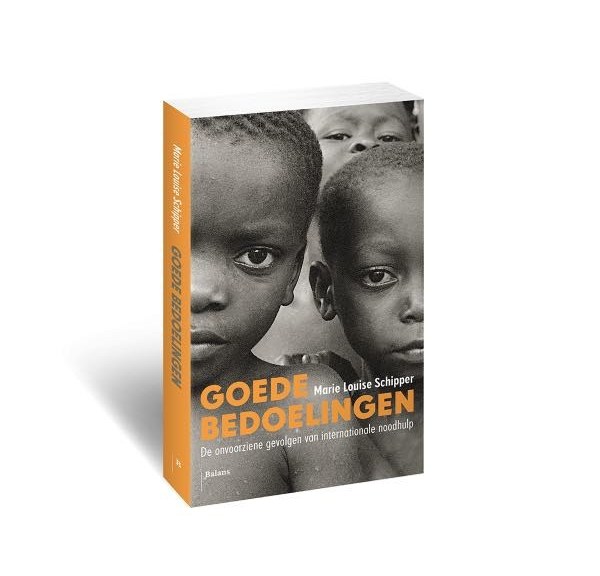
GOOD INTENTIONS by Marie Louise Schipper

Fifty One years ago, the Nigeria-Biafra war grabbed the world’s attention with its sad, haunting images in newspapers, magazines and television sets. Forty Eight years after it ended, the stories of that tragedy are still being told through films, documentaries, dramas, art works and exhibitions, music, books, in conferences and lectures. One of the people who has documented an aspect of that conflict is Marie Louise Schipper, a Dutch journalist working for OneWorld magazine and de Volkskrant newspaper. She has written a book about ten Biafran children who were evacuated to the Netherlands from Biafra for medical attention. The title of the book is Goede Bedoelingen which translates to ‘Good Intentions.’

In 1968, Marie was a young girl living with her parents. According to her, “It was a big item because it was the first international aids for starvation in Africa and nobody realized what was going on at that time. We didn’t know a lot about Africa and as a matter of fact not much about Nigeria as well. And Africa was an exotic country far, far, far away at that time. So Nigeria came into our living rooms and we could see what happened. The news in the newspaper and television was so overwhelming of these dying children. And my parents – they were devout Catholics – always told me and my sister that we should care about other people. They would tell us to finish our plates and that we should think about the children of Biafra. The images made a big impression on me, as a child. The Dutch gave a lot of money [to the relief effort] because they felt we should do something because in WW2 so many people died, and it was determined that in Biafra far more children died. Another reason these children made such a big impression on me had to do with the war stories in my own family. My father worked as a forced laborer in Germany. He was 17. My mother’s family was on the run and had to live with a family they didn’t know. My grandfather died during a bombardment. He was never found.”

When Marie became a journalist, she was surprised that the stories of these ten children were not written. “I thought there must be somebody who has written this all down. But there was nothing written. It was like when snow has fallen and everything is completely white and nobody has run into it. That was my first impression, that it was completely blank. There was nothing about it, only publications in the newspapers. When I started interviewing people everybody said, ‘No, I don’t remember these children, I don’t remember them.’ And I said, ‘Why don’t you remember them, because it doesn’t happen often that ten children from Nigeria, out of a war, come to the Netherlands.’ I felt they were hiding something. And I thought, ‘What are they hiding?’ I discovered that one of the children who was here had epilepsy and he was really ill. He was a bit retarded and was also in a foster home. He needed a lot of attention but people from the Nigerian embassy were very strict and said the children have to go back to Nigeria. The foster parents didn’t want to let them go because they didn’t know where they were sending them to. The foster parents of the sickest child were under so much pressure, so they decided to send him back to Nigeria. He was first sent to Gabon, with enough medicine for half a year, and afterwards sent to one of the rehabilitation centers at Ikot Ekpene. His family didn’t show up, so he was sent to Nung Udoe Orphanage and he died shortly afterwards. And I think that was why all the doctors were saying they didn’t know a thing. That was the reason they didn’t want to talk about it because they sent a boy who was really ill back to a country that was recovering from the war without proper medication.”

“How did you eventually find somebody who told you the truth?” I asked.

“I spoke to a lot of nurses and they had memories about these children. They also had photographs and they told me about the foster parents, and I said that must be the reason nobody wanted to talk about it.”

“Why do you think the Biafran authorities decide to take them to the Netherlands instead of Ivory Coast, Gabon or Sao Tome?”

“There reason was primarily because of Abie Nathan, an Isreali pilot. He was also a humanitarian and did a lot of food aid. He tried to mobilize the Isreali people to send in goods and food for the people of Biafra. He was very popular and charismatic, and had a lot of connections in the Netherlands. He was filmed by a television crew asking people to do something about Biafra; that everybody should give a hand. When this documentary was broadcast a lot of people got mobilized. He said he convinced Ojukwu that these children should be sent to the Netherlands where they could get proper help. But Ojukwu said no. Finally they decided to bring the children to the Netherlands as a symbolic gesture where the children in Europe would get acquainted with the Biafran children while the Biafran children would get more knowledge about the world. The decision was made and ten of the children came to the Netherlands.

At the end of the war, eight of the children were taken back to Nigeria. But two remained in the Netherlands. The official documents said the two who remained in the Netherlands had no parents and family back home. But in the 1990’s, one of them decided to look for her family. She discovered she had two villages full of relations. She returned to Nigeria to meet them.”

When Marie started to gather material for her book, she knew she had to make the trip to Nigeria.

“If I didn’t visit Nigeria, the story wouldn’t have been complete.”

“That was very courageous of you. So, how did the journey to Nigeria start?” I asked.

“I went to the African Studies Centre here in Netherlands, in Leiden. And one of the people who was connected to the African Institute, he works nowadays in England, he said to me the best thing I could do was contact *Emeka Anyanwu, an Anthropologist at Nsukka University. I thought it was a better idea the students of Edlyne go on research and try to find out what happened to the children. And it worked fairly well because we found two of them. It was like a needle in a haystack.  When we knew they were traced, we traveled from Nsukka to Owerri, from Owerri to Umuahia, and from Umuahia to Orlu. We visited the hospital in Umuahia [Queen Elizabeth Teaching Hospital] and all the places that were important during the war. I visited the airfield at Uli.”

“Is it still there?” I asked.

“Yes. You can see the traces of the road and there was a man who saw us walking and was curious. It’s not always you see White people there. He told us that was the road and he also knew the Ojukwu bunker. It was a small bunker. Even Edlyne didn’t know there was a smaller one.”

It took Marie Louise Schipper fifteen years to finish the book, and it was published on October 27, 2017, in Amsterdan. Unfortunately, the book is written in Dutch and, at the moment, Marie cannot afford to hire a translator. She said, “I would like to give the opportunity for more people to read it.”

[I spoke to Marie on the 23rd of May, 2018, via Facebook and these are excerpts from our chat.]


MY INTUITION SAVED ME

People used to call my father Mallam because he lived in Jos most of his life. During the pogrom it was his Hausa friends who protected him. He was half-dressed when they bundled him out of his house and rushed him to a helicopter. It landed safely at Onitsha.

My only brother was at Ahmadu Bello University, Zaria, studying Electrical Engineering. When people started returning we did not see him. We were all worried. My grandmother lost hope. One faithful day, as I came out to the front of the house, a taxi stopped and, behold, it was my brother. Everybody started shouting. He started narrating how they were evacuated from the campus and given protection. They were provided with vehicles that helped to evacuate them safely back to the East.

Threats were going on back and forth, so the tension was building up. Some months later, we started hearing that war had broken out. People were calling it police action. Soon, we started hearing that Biafran and Nigerian soldiers were fighting at the war front. Then, the first air raid came. The plane was dropping what Biafrans described as kerosene tins. Months later, the second one came. I was standing outside calling my mother, “Come and see this plane o. It looks like birds are following it. Why are birds following it?” The next thing I heard was an explosion and smoke from the building next to our own. I shouted, “Mama, it is bomb o.” People were shouting. Noise everywhere. I didn’t know that what I was calling birds were bombs.

The night before we left Onitsha there was shooting from night till morning. Red hot bullets being sprayed all over. We didn’t know what to do. The next morning my brother said, “Let us go.” Where are we heading to? Nobody knew. But there was only one direction – towards Owerri, Ihiala, Oba. Each person carried whatever they could carry. I carried my school box that contained my uniform and a few clothes. One of my elder sisters carried my mother’s box of wrappers. She carried it instead of her own. And those wrappers saved us. The only problem was how to convey our grandmother. She had a breakdown because of the trauma, so we were dragging her. We’ll walk and stop, walk and stop. It delayed us but we were still moving. The sound of shelling kept reducing so we knew we were fleeing the battle field. Along the road we met a family we knew and they took my grandmother in their car. They said they’ll drop her where we could pick her up. As God will have it they dropped her at Oba, in a church. It was an open place where people who were tired of trekking stopped to rest. People were still escaping, telling stories about those who could not escape, how they were being killed by soldiers.

We left Oba a few days later. I don’t know who organised the transport. It was a lorry and it dropped us at St. Martins Church, Odata, at Ihiala. It’s one big church. It’s still there.

The following day, directly opposite the church, we found a family who welcomed us into their home; Simon Okoli’s family. I still remember their name. They were very kind to us. They gave us one room in their house. It had a bamboo bed, the type called anaba aghalu. When they saw the room was small for all of us they gave us another one. They gave us pots and allowed us to use their kitchen. They said we shouldn’t pay for the rooms. We gave the bed to our grandmother. We had picked her from a refugee camp where our family friends had dropped her. But even though this family welcomed us they said we were saboteurs, because of Major Ifeajuna. During the war, if you were from Onitsha, there was a stigma attached to you.

We only had that half bucket of rice my sister carried from Onitsha but soon relief materials started coming in. There was nothing like a camp there but we gathered at a particular place and each family got their own share.

There were no jobs, no work, so ideas started coming into our heads. One day my immediate elder sister said, “This meat we don’t eat, let us not start suffering from kwashiorkor.” She would buy native fowls, cut them into parts and take to Nkwo Ogbe – their market – to sell. We would make a little gain. When we didn’t sell the head and legs we’d take them home for our soup.

One fateful day, my mother gave us various assignments and mine was to go to St. Martins and queue up for salt. I refused to go and my mother caned me. Instead, I followed my sister to the market to sell our chicken parts. I think there was only one lap remaining when I said to her, “We are leaving this place right now. Carry this tray let us go away.” She asked why, but I insisted we were leaving. On our way home we saw our brother chatting with a police man. He waved at us. Then I looked in the air and called out, “Ngozi, are you seeing what I am seeing?” She said, “What is it?” I said, “Look up. That plane is not making any sound.” The plane was hovering, turning to one side, turning to another side. I said, “Did they shoot it somewhere and it wants to crash?” Before I finished saying it, we heard an explosive noise. The plane was shelling the market, the meat section, that same spot where we had been standing. Sellers and buyers were mangled. As we watched, the plane moved in the direction of our house, releasing rockets and bullets. We ran into a bushy area and while I was taking cover I was looking and pointing upwards. My sister smacked me and said, “Lie down, lie down,” but I said, “I will not lie down. I want to see who is in that plane.” The plane moved towards the direction of the church, three times, releasing rockets and bullets. The sounds were accompanied with light, like lightning. It was the worst air raid I ever saw. When we got home we heard that that church compound, where I was supposed to line up for salt, was the target. All that maneouvring the plane was doing was to get the most accurate angle to hit the people on the line. As people narrated what happened, my mother looked at me, looked at me, looked at me. I cannot tell you why I refused to go to that church but I have always been intuitive. And I used to be stubborn when I was small. If I didn’t want to do something I wouldn’t do it. After that day, she never asked me to do anything I didn’t want to do.

In 1968, my grandmother died and we buried her in Ihiala. My brother went to one Irish Reverend Father at St. Martins Church, Odata – Father Brady – and told him we wanted to know if our uncle was still in Lagos or not. The Reverend Father made inquiries and found out he had left for Dublin with his wife, when the war started. They sent a packet of Complan milk, through Rev Father Brady, and my uncle later wrote to confirm that we received it. A few days later, the Reverend Father just drove inside the compound and opened the boot. What did we see? A box as high as this, square, sealed. It was filled with all manner of tinned food: meat, corned beef, stock fish soaked in salt granules as big as this, giant tins of corn beef, fish, sardines, bread, assorted tinned foods, seasoning cubes, cheese. It is because of this that I usually tell people that I ate the best of food during the Biafran war. We made a lot of Biafran money from the salt, cloths and Chicken that we were selling then.

Inside that box there was also an envelope with dollars, so somebody advised my brother to start trading in tobacco. We contacted his friend who was working at Ulli airport and through him, a pilot brought back the first bag of tobacco. The women who were trading on it were buying it off him and selling same to soldiers at the war front. We made a lot of Biafran money and that was how we survived. Before then, we were selling my mother’s wrappers, all those costly Georges and Abadas, and people were buying them. We even sold my box. I cried o.

We left Ihiala on January 17. By then the Nigerian soldiers had reached Ihiala. Umuahia had fallen and Ojukwu had left. So the village head and the elders took a decision to make peace with the soldiers. They welcomed them and negotiated with them not to touch anybody in Ihiala. So there was peace in Ihiala. The soldiers used to come to the stream where we used to fetch water. They’ll just give us their water bottles to fill for them and we were always very cautious. When they leave we start fetching again. Thank God for the wisdom he gave the Igwe.

A few days after they arrived lorries appeared. Evacuation. We didn’t waste time. Everybody started going back. Up till today I do not know who arranged for the vehicles. We jumped inside and they dropped us at Fegge, Onitsha.

-Dr. Mrs. Lillian Chibuogu Ilo

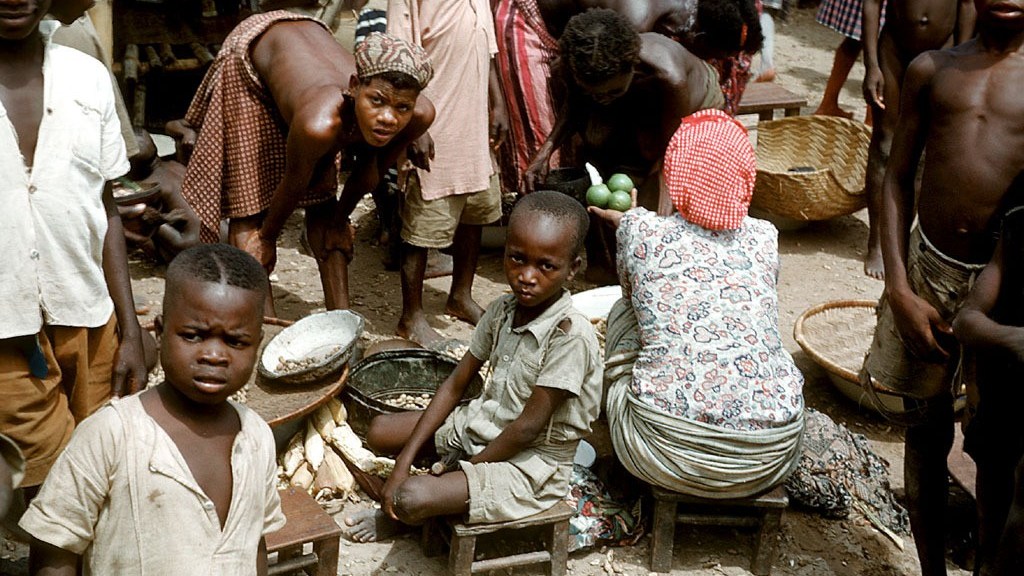
(PHOTOS TAKEN FROM THE INTERNET)

‘AFIA ATTACK’ – A Young Girl’s Account

Then it started. Bombs and more bombs. At a time, as early as 4 o’clock my mother would wake us up to have our bath and our breakfast, then she would pack our food and send us into the drainage. She had identified where parents were hiding their children. They dropped them in the morning and in the evening they picked them up. They were like gutters and you saw the water gushing out. If it was the bigger ones we’d take kitchen stools and the smaller children would sit, while our bigger sisters would lie down. Sometimes we couldn’t even sit, so we’ll just stretch out. That is where we’ll be from as early as 6.00 am till 6.00 pm. They didn’t have a choice. They had to protect us.

We were living on Asa Road, Aba, a very popular street. We were on the first floor and there were shops on the ground floor. There was a record shop there and, because people were hungry for news, they would gather in front of the shop during the news time. The volume of the radio would be raised to high heavens so that no matter how far away you were sitting or standing, you could hear the news. On one of those days, at exactly 4.00 o’clock, when the signature tune was on signalling that the news was about to start, they bombed our house. I don’t know if they were getting information from saboteurs because they knew when to strike. They were bombing and shelling at the same time- fighter and bomber. Eight Six people were killed that day. Bodies were scattered all over the place. You don’t want to see it. Heads, legs, hands, in different directions. There was brain stuck on our ceiling. One bullet landed on my father’s bed. Luckily for us my father would usually take his siesta but on that day he didn’t take his rest. Instead, he was discussing with his friend at the back of our house. My sister and her fiancée were wounded. The horrifying experience of children seeing dead bodies, not just dead bodies, but mutilated bodies. There was another incident when a petrol station opposite our house got bombed. It ignited so much fire that both the people who were buying and those who were selling perished.

Kwashiorkor became the order of the day. People were eating anything in sight – hibiscus flower, leaves, rats, lizards, cats, everything in sight. But we were lucky because my mother participated in Ahia attack – o zuru ahia attack. If she told you what she went through erh. She spoke a lot of languages so she was able to pass a lot of barricades on her way to Atani to trade. You know it’s a border so people were also coming from the other end to trade. She used to take Singer Machines to the border, the type operated by foot. They were packed in big cases. The Nigerians were buying them a lot. I don’t know why. We had a lot of them in the house. But I didn’t bother to ask her where she was getting them from. Before she went, they would nail narrow pieces of wood around the four sides of the wooden case and fill the gaps with coins, before putting the wooden cases inside cartons. She would set off with my senior brother carrying the machine. When they got to a point they would take a canoe and cross to the other side and follow the apiam way. They usually arrived on markets days. They exchanged the coins for Nigerian money and the exchange rate was quite high. She would use the money to buy plantain and fish, crayfish, garri and everything we needed in our house. Our house became a mecca of sorts because people were coming to our house to buy these things. Then she would go get some more machines. They also used to buy fish and people would come to the house to dry the fish for her. Sometimes, when they had to cross a stream the water would get to her chest. And she couldn’t swim.

One day a woman who knew she was trading in faraway places approached her and asked, “n’o bulu kwa na enwe ndi cholu umu aka ebe anwa, g’enye f’ego ka fa wee nye ndi nke ozo nni – if there were people who would take some of her children and give her money so she could feed the rest.” My mother told the woman she couldn’t do that sort of thing; that she had 9 children who were also suffering. She told the women to endure the hardship and if she was willing she would introduce her to the attack trade. The woman was not doing it out of wickedness. People were having many children at that time and, rather than lose all her children to hunger, she must have felt it was better to sell some and use the money to feed the rest.

Caritas had designated areas where they used to sell food. It was shared family by family. If they did it individually those who had more children would get more, although they needed it more too, but they decided they’d rather deal with families. At the beginning it was well organised because they were distributing the items themselves, but when they left the people working at the directorate started diverting the items. You had to bribe them to get food. People stood in the queues for days and it still didn’t get to them. They were even selling these things in the market. My mum had money so sometimes we bought from the market. But what about those who couldn’t afford it?

Life was unbearable. The trekking we did in those years, I can’t tell you how many million miles we covered. When Umuahia fell we trekked for three days. In the night we entered a bush. My mother would not sleep. My father would not sleep. They would stay awake just watching their children sleep. We left again and got to a place with nothing in sight except an abandoned primary school, without a roof. From there my mother would go out looking for a market or a gathering where she could buy food.

My mum discovered a place called Umunze, also in Mbano. One of the chiefs gave us a place and my mother paid pounds as the rent. From Umunze we went to Umuchu. It was at that time that my sister and I started our period. I woke one morning and when I saw the blood I screamed. I didn’t know what it was. My mother gave me a bath and said, “You’ve become a real woman now. Don’t allow any man to come near you.” She tore her wrappers and gave twelve pieces to me and twelve to my sister.

My father was praying to die. He had nine children. He couldn’t communicate with anybody because he couldn’t speak Igbo. He was an Ijaw man, the only non-Igbo speaking councillor in Aba at the time. If you go to Aba Town Hall you will see his photograph there – Chief Joshua Babala Ketebu. He was a civil servant and was always being transferred from one place to another. So he was not able to pick up languages unlike the rest of us who speak at least two languages. My mum was universal. She spoke Hausa, Fulani, Yoruba, Igbo and many others.

Eventually we settled at Nkwerre where we had a big house. It was peaceful and we started school again, studying under the trees. But during the rainy season we stayed at home. Sometimes the raids would come and we’d run home. My mother decided we should start generating money so my sister and I started selling oranges. We ate many before we got any sold. My mother also started her business again. It’s an experience you don’t wish your enemy, that is why when people are talking about war-war-war, I guess they didn’t experience it.

On the day the war ended we didn’t believe it had ended. Prior to that day they was a lot of shelling. It was loud and it was clear. We heard people jubilating. Shouts were coming from different directions- “War e bie la. Ha e mechaala war – the war has ended. They have ended the war!” We ran inside because we thought it was a gimmick. We didn’t know the shelling was to signal the end of the war. But my mum was worried. She said, “How will I take nine children back to PH?” She trekked from Nkwerre to Orlu where she met some soldiers. She pleaded with them and they gave her a lorry which carried us from Nkwere to my brother’s house in Port Harcourt. She was a very brave woman. She had no fear. Once you tell her that what she’s looking for is here, she doesn’t need to know anybody there, she’ll go and get it.

Eventually we got our own place and with financial help from her mother, she started her business again and we went back to school. My father died immediately after the war. My mum died 13 years ago. One of my brothers died last year. The rest of us are alive.

-Dr. Mrs. Bekky Ketebu-Igwe

(PHOTOS TAKEN FROM THE INTERNET)

Care Giver and Surrogate Mother.

*Nneka talks about her mother, late Mrs. Esther Chizube Mgbojikwe, who died in April, 2016.*

“My mum said many of the children in the refugee camps were separated from their families so other families were encouraged to take them in. She said the exercise was documented properly so it would be easy to find their parents eventually. My mum took one of the children. Her name was Angelina and she must have been about ten or eleven years at the time. She told my mum that she was running from the scene of a bombing when she saw people climbing into trucks. She joined them and that is how she ended up in Orlu with other refugees. She lived with us for about fifteen years and became like a big sister to me. I cannot think of my childhood without Angelina.” – Nneka Chris-Asoluka.

                                                                    ———

My mum died in April 2016 and we buried her two months later, on the 10th of June. It was after my children wrote their tributes that I found out there were many things I didn’t even know about her. She was very dedicated to her grandchildren and her accounts about the war were so vivid we felt as though we had witnessed it.

NNEKA ASOLUKA PHOTO 2
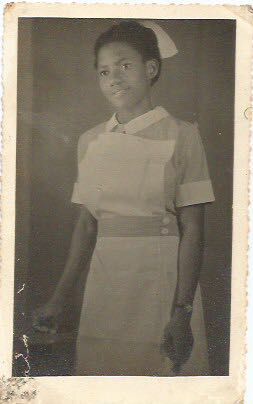
Esther Chizube Mgbojikwe, as a young nurse.

She trained as a midwife in the United Kingdom and when she came back to Nigeria, she worked briefly with Shell B.P. She later went back to the UK to study Child Nutrition and Health Visiting. They were called Health Sisters at the time. When she returned, she didn’t work in hospitals but in rural health centers where the focus of her work was pregnant women, nursing mothers and children. She preferred Health Visiting because after she returned from her midwifery training, she saw that the practice in hospitals here was so different from what she’d been taught abroad.

We were living at Nsukka when the federal troops captured the town. My mother had just returned from Britain with my baby brother. I was only two years old and my father was still abroad at the time. She said they had been hearing gun fire from the previous day but nobody was sure what was happening. They were all terrified. At about 2.00 am, her colleague at the Ministry of health, knocked on our door and said, “We’re leaving and you better do the same. If you stay here, in the next one hour I don’t know what will become of Nsukka.” Frantic, my mum woke everybody up and with the help of our nanny and steward, started to pack. But how do you start packing up the whole house at such short notice? What do you take and what do you leave? She decided to take food, her certificates, some family photos, children’s clothes. The steward had to stay back so he’d lock up and meet us at Oba, our home town. Luckily, she had filled her tank with petrol the previous day because there had been announcements that people who had cars should make sure they had full tanks at any given time.

She put us in the car and set out for Oba. When she got on the road, she saw great multitudes of people all trying to escape – carrying their children and a few belongings. You can imagine her trying to meander through the crowds and not knowing who would try to harm her. At that time many people were looking for transportation so they could have hijacked her car, but nobody did. She thinks it was because of the two small children – my brother and I – who she had in the car. She said she kept praying under her breath until the road became less busy. Throughout the night and into the morning she kept driving, until she got to Oba.

People didn’t know what was happening at Nsukka, so when her mother saw her she screamed, “Chizube, o gini?” [“Chizube, what is it?”] She said. “Mama, it has happened o. Nsukka has fallen.” She said she knew that once Nsukka was taken, Enugu would be next. Do you know what my mum did next? She handed us over to our grandmother, had a bath, changed her clothes and, immediately, turned back to return to Enugu. My grandmother was pleading, “Please, don’t go back.” But mum was already gone.

I remember asking her why she did that and she said she knew there would be refugees from Nsukka and neighbouring towns and her services would be needed. While fleeing Nsukka, she had seen lots of children and pregnant women on the road. She knew they would need medical attention and she was eager to get to Enugu so they’d start planning. That was just her kind of person. She was very dedicated to her work. So, she drove back to Enugu where a meeting had already been convened. She was posted to Owerri and, after staying in Enugu for a few days, she returned to Oba, picked us up and we left for Owerri.

Life was normal when she got to Owerri but when the Nigerian army captured it, she was posted to Orlu where she was placed in charge of distributing relief materials. They had marked trucks filled with relief materials, all of them assigned to designated places with supervisors. The Biafrans used to commandeer people’s vehicles to distribute these supplies and her official car had been commandeered from its owner. He pleaded with them to retain him as the driver of the car so he’d take care of his car. They agreed and that’s how he became my mum’s driver. But she had to learn how to ride a bicycle because the commandeered car was breaking down frequently and when that happened she will just jump on her bicycle and take off. Her senior sister worried so much for her health and safety and was always shouting, “Chizube, take it easy.” But how could she take it easy and waste any minute when people were at the refugee camps needing supplies and medical attention. My mum was so fatigued without knowing it and one day she just collapsed while climbing down from the bicycle. She was admitted in the hospital but when she regained consciousness, she demanded to be discharged. The doctors refused but trust my mum, the next day, she devised a means and sneaked away back to work.

The work was quite enormous but she said the Biafran government was very organised and had a good crisis management strategy especially in the health sector. The refugee camps were well run because the organisations that brought in relief material were comfortable with the Biafran government knowing they had structures in place which were adequate for the ongoing humanitarian work. Another thing my mum always said was that the Catholic Church was wonderful. The humanitarian agencies frequently ensured that the officials in charge of distribution of the food, clothing and medicine had more than enough supplies for themselves so they would not be tempted to take the rations meant for the refugee camps.

My mum was not only overseeing supplies, she was also caring for children and their mothers who made up about 80 % of the population of the refugee camps. They had been displaced from their homes and were very vulnerable. Many of the children had become separated from their families so others were encouraged to take them in. The exercise was documented properly so it would be easy to find their parents eventually. My mum took one of the children. Her name was Angelina and she must have been about ten or eleven years at the time. She told my mum that she was running away from a bombing when she saw people climbing into trucks. She joined them and that’s how she ended up in Orlu with other refugees. She lived with us for about fifteen years and became like a big sister to me. I cannot think of my childhood without Angelina.

NNEKA ASOLUKA PHOTO 4
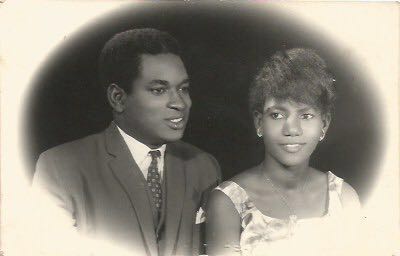
Esther and Emmanuel Mgbojikwe


Some families were able to smuggle their children out. That was how two of my cousins went to London where they had relations. Through the help of my mum they left with one of the planes that brought relief materials into Biafra. My mum said it could take several weeks before people got the chance to be evacuated. They had to be very careful because if the Nigerian planes detected such evacuations, they will bomb the airstrip. So it took several weeks for my cousins to leave. The night they eventually left, my aunt didn’t sleep because she didn’t know the fate of her children. When they got to Gabon, they were put on a plane going to the United Kingdom. She later got word that they reached London safely.

Life was very precarious. My mum said that if she was on her way and a bombing took place, she’d run into the forest and wait for the all-clear signs, thereby reducing the amount of time she wanted to spend at any refugee camp. In addition to the air raids, Nigerian soldiers were abducting women and because she was very young, she always tried to make herself look unattractive by wearing long, loose clothes and tying a scarf over her head.

Immediately the war ended, she was posted to Abakaliki. After spending five years in Abakaliki she was posted to Aba where she spent two years, then to Ohafia, Nsukka, back to Abakiliki and to Nibo from where she retired.

She said it was a traumatic time but in spite of it I didn’t detect any bitterness in her. She said those were normal things that happen in a war. Her training as a nurse also helped her not to internalise the gory experiences. All she focused on was alleviating the suffering of the people so that one day she’d look back and say I did so much. Working round the clock might also have helped her take herself out of the whole thing.

I remember asking her how she felt being away from us so often and for long periods. She said she knew we were in good hands but she needed to be there for other children whose mothers were not there. She never felt we were in any harm because we were left in the care of her mother, our aunties and nannies. Also, we had enough food and medication and were attending classes in a make-shift school which my aunty had started, to ensure that children in the area could continue their learning.

After the war, my mum found Angelina’s parents. She was from Nsukka and I remember vividly the day her brother and uncle arrived Abakaliki to see her. Wow! You can imagine the shouting and crying that went on. My mum said many children got lost like that – younger children who couldn’t talk and nobody knew them or where they were from. They took Angelina back to Nsukka to see her parents. Then, they brought her back and handed her over to my mum, saying, “This girl is now your daughter. Whatever you want to do with her, go ahead.” Angelina’s immediate senior brother also lived with us. His name was Odoja. The relationship between the two families continued for many years after. Until my mother died, she kept praying to see Angelina again.

NNEKA ASOLUKA PHOTO 3
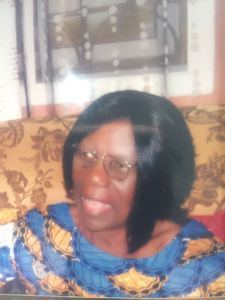
Late Mrs. Esther Chizube Mgbojikwe

My creche is in my mother’s memory. She was looking forward to the times she’d spend with the children there. And then, she just died. All the same, we’re grateful for the life she lived and the sacrifices she made during the war. She was a dynamic woman.

                                           ———-

Nneka Asoluka is a Lawyer and President of Soroptimist International of Nigeria, a global volunteer movement advocating for human rights and gender equality. She also runs Esther’s Child Minders, a Crèche and Day Care Center named after her late mother.

Memories that live forever.

“One day, directly opposite our house at Number 62, St. Michael’s Road, Aba, there was an attack. One woman was walking past with a child on her back. The blast cut off her head but she kept moving and walked for a short distance, then fell face down. When the smoke cleared, we saw her child. He was crying, saying, “Mama, kunie k’anyi na.” [“Mama, get up, let us go home.”] – F.N.N.

                                                                        ———-

The experience of the war was terrible. I doubt if there’s any emotional clinic one can go to wipe away those effects. No. I think we’ll live with it for the rest of our lives. We can’t escape it. As I’m sitting down here what are you going to tell me to erase that experience from my mind?

One day, directly opposite our house at Number 62 St. Michael’s Road, Aba, there was an attack. One woman was walking past with a child on her back. The blast cut off her head but she kept moving and walked for a short distance, then fell face down. When the smoke cleared, we saw the child. He was crying, saying, “Mama kunie k’anyi na.” [“Mama, get up, let us go.”] It was just opposite our house. I saw it life. I can still visualize it. We were by the door watching everything. You know, once the air craft dives in and bombs, it takes off. There was smoke. Very thick black smoke took over the entire place. The woman was a passer-by. Her son could have been five or six but he may have been looking smaller than his actual age due to malnutrition. We ran inside when the attack started. Normally, you run under the bed, the spring bed, so that even if blocks start falling they will fall on the mattress and cushion the effect.

Another day we were playing outside, far away from the house, when an aircraft started attacking. We took off and ran behind the Iroko tree. The bunker where we normally run into was far off from where we were, so we were now revolving round the Iroko tree. If the aircraft is coming from the right we go to the opposite side of the tree and hold onto ourselves till it zooms past.  If it’s coming from the left we run to the other side. We didn’t lie flat or go into the bunker because if it’s a bomber, dropping bombs and moving, it will bury the person alive so it was a nightmare. It was a nightmare.

At that age my mind was not fully developed so I was not really scared because we’ve been seeing a lot. I had seen soldiers, naval people, they pass through the front of our house in Orlu. So many will pass but few will return. Those that come back will have a lot of injuries. But with the bombings of buildings, smoke, people running helter-skelter, when you see people hysterical, running as if they want to disappear into thin air, then the fear started coming and it’s not good for a child. The images I saw as a child during that war, I still have them. Anything that can affect the psyche of a child is something very serious. Now if I hear the sound of a serious gun I feel uncomfortable. If I hear the sound of a machine gun now I know it’s a machine gun and my mind goes back. During one of my visits abroad, they were celebrating their Air Force day and I didn’t know. If you saw the way fighters and bombers were moving, I think my heart stopped beating for some time until I got myself back. My friend said, “No cause for alarm. It is Air Force day.” The sounds brought back memories of what I knew.

At Orlu and Aba, myself and my cousins were just living in the open. That was when I learned how to tap wine. It was not because I wanted something to eat. It’s just that we were not busy. Before we started having lessons, everybody was free. There was confusion and idleness. But I used to see palm wine tappers up there so I went up like them and, using iron and hammer, I drill a hole towards the top of the palm tree and fluid will start coming out and I will use calabash and hold the liquid. I will tie it the way palm wine tappers will tie it and leave it there. By watching people climb I got expertise in climbing. Even after the war, if I’m climbing I can move from one tree to another tree expertly and very high up.

In Aba, there were no trees to climb but the house where we were living in has a decking so I will climb to the decking and jump from there into a trip of sand. It was a very rough life. To jump over a fence was nothing for me. I was obviously reacting to the trauma I experienced. Before the war I was riding tricycles and such things but one became hardened during the war and you begin to see things you’re not supposed to see as a child. You see soldiers marching to war carrying guns but when they’re returning you’ll see real injuries. Some can no longer walk. They’ll be carried, then you’ll understand the seriousness of it.

After that Aba incident I became withdrawn. Even with my rough nature, once my father was not at home I don’t step outside. My natural self that lives outside and feels very free became withdrawn. I am always by the edge, my ears always very sharp, listening for the sound of air craft. So if an air craft is far away I will pick the sound and inform people and they will begin to take position. To the extent that if I’m inside here blindfolded, if a fighter passes, I will know the sound. I also know the sound of a bomber. I could tell the difference even with the eyes of a child. Those fighters that shoot are not very massive. They’re small and very swift. They manoeuvre easily. The bombers are slow and as they’re passing, they’re dropping [bombs] and they’ll continue on their way. By the time you turn around again everywhere is in darkness, dust, everything. If there was a tree here you won’t see that tree anymore. The tree would have been uprooted and buried.

People were short of medication, so once you fall sick and drugs are not available, you’ll just die. One of my cousins who was a sickler died in Azia because his father who donates blood for transfusion was killed in the Asaba massacre He just died. A brilliant young boy. My relations in Asaba died. The ones that ran away survived. Families were separated. In those days it is mostly the men who work while the women are house wives. During the holidays, the women travel with the children and after the holidays they will take the children back to their base but the war came and separated everybody. Some of my cousins found themselves in a refugee camp. Everybody was sharing a common toilet and a common bathroom. People use wrapper to demarcate their rooms. Those mothers suffered. That war was something else. You can imagine where there is an attack and a child is separated from the parents permanently, for ever. That child becomes anybody’s child. For people who are still living, if they start searching for their children some of them will find them provided they are still alive.

After the war, we went back to Asaba because there was nowhere else for us to go. We were not living in our own house but in my father’s uncle’s house. That was the only house in the family not affected by the war so the whole extended family was there. Everywhere was jam packed. We sleep in the parlour and everybody has a corner. At night you just go to your corner and sleep. It was terrible – that war.

My dad went back to Enugu and was visiting us from Enugu. He registered us in a public school in Asaba but when we went back to Enugu we continued with Santa Maria where we were schooling before the war. But it was no longer the Santa Maria we knew. All the missionaries were gone.

Later on when I went to Asaba for my secondary school, we used to see skeletons when we’re digging the ground. You can imagine seeing skeletons. We just cover them and move on. Now I know what a skeleton is. But seeing it then during the war you may not fully understand that this was a human being.

The suffering was much. That’s why when I see people agitating, making noise, trying to demonstrate, Pro-Biafra this and that, I know those people did not see the war. Anybody who saw the war will not attempt anything that will bring back the memories not to talk about the real thing.

War is bad.

[The featured image was taken from the internet.]

                                                                        ———-

The contributor of this story wishes to remain anonymous.