Tag Archives: Trauma

‘AFIA ATTACK’ – A Young Girl’s Account

Then it started. Bombs and more bombs. At a time, as early as 4 o’clock my mother would wake us up to have our bath and our breakfast, then she would pack our food and send us into the drainage. She had identified where parents were hiding their children. They dropped them in the morning and in the evening they picked them up. They were like gutters and you saw the water gushing out. If it was the bigger ones we’d take kitchen stools and the smaller children would sit, while our bigger sisters would lie down. Sometimes we couldn’t even sit, so we’ll just stretch out. That is where we’ll be from as early as 6.00 am till 6.00 pm. They didn’t have a choice. They had to protect us.

We were living on Asa Road, Aba, a very popular street. We were on the first floor and there were shops on the ground floor. There was a record shop there and, because people were hungry for news, they would gather in front of the shop during the news time. The volume of the radio would be raised to high heavens so that no matter how far away you were sitting or standing, you could hear the news. On one of those days, at exactly 4.00 o’clock, when the signature tune was on signalling that the news was about to start, they bombed our house. I don’t know if they were getting information from saboteurs because they knew when to strike. They were bombing and shelling at the same time- fighter and bomber. Eight Six people were killed that day. Bodies were scattered all over the place. You don’t want to see it. Heads, legs, hands, in different directions. There was brain stuck on our ceiling. One bullet landed on my father’s bed. Luckily for us my father would usually take his siesta but on that day he didn’t take his rest. Instead, he was discussing with his friend at the back of our house. My sister and her fiancée were wounded. The horrifying experience of children seeing dead bodies, not just dead bodies, but mutilated bodies. There was another incident when a petrol station opposite our house got bombed. It ignited so much fire that both the people who were buying and those who were selling perished.

Kwashiorkor became the order of the day. People were eating anything in sight – hibiscus flower, leaves, rats, lizards, cats, everything in sight. But we were lucky because my mother participated in Ahia attack – o zuru ahia attack. If she told you what she went through erh. She spoke a lot of languages so she was able to pass a lot of barricades on her way to Atani to trade. You know it’s a border so people were also coming from the other end to trade. She used to take Singer Machines to the border, the type operated by foot. They were packed in big cases. The Nigerians were buying them a lot. I don’t know why. We had a lot of them in the house. But I didn’t bother to ask her where she was getting them from. Before she went, they would nail narrow pieces of wood around the four sides of the wooden case and fill the gaps with coins, before putting the wooden cases inside cartons. She would set off with my senior brother carrying the machine. When they got to a point they would take a canoe and cross to the other side and follow the apiam way. They usually arrived on markets days. They exchanged the coins for Nigerian money and the exchange rate was quite high. She would use the money to buy plantain and fish, crayfish, garri and everything we needed in our house. Our house became a mecca of sorts because people were coming to our house to buy these things. Then she would go get some more machines. They also used to buy fish and people would come to the house to dry the fish for her. Sometimes, when they had to cross a stream the water would get to her chest. And she couldn’t swim.

One day a woman who knew she was trading in faraway places approached her and asked, “n’o bulu kwa na enwe ndi cholu umu aka ebe anwa, g’enye f’ego ka fa wee nye ndi nke ozo nni – if there were people who would take some of her children and give her money so she could feed the rest.” My mother told the woman she couldn’t do that sort of thing; that she had 9 children who were also suffering. She told the women to endure the hardship and if she was willing she would introduce her to the attack trade. The woman was not doing it out of wickedness. People were having many children at that time and, rather than lose all her children to hunger, she must have felt it was better to sell some and use the money to feed the rest.

Caritas had designated areas where they used to sell food. It was shared family by family. If they did it individually those who had more children would get more, although they needed it more too, but they decided they’d rather deal with families. At the beginning it was well organised because they were distributing the items themselves, but when they left the people working at the directorate started diverting the items. You had to bribe them to get food. People stood in the queues for days and it still didn’t get to them. They were even selling these things in the market. My mum had money so sometimes we bought from the market. But what about those who couldn’t afford it?

Life was unbearable. The trekking we did in those years, I can’t tell you how many million miles we covered. When Umuahia fell we trekked for three days. In the night we entered a bush. My mother would not sleep. My father would not sleep. They would stay awake just watching their children sleep. We left again and got to a place with nothing in sight except an abandoned primary school, without a roof. From there my mother would go out looking for a market or a gathering where she could buy food.

My mum discovered a place called Umunze, also in Mbano. One of the chiefs gave us a place and my mother paid pounds as the rent. From Umunze we went to Umuchu. It was at that time that my sister and I started our period. I woke one morning and when I saw the blood I screamed. I didn’t know what it was. My mother gave me a bath and said, “You’ve become a real woman now. Don’t allow any man to come near you.” She tore her wrappers and gave twelve pieces to me and twelve to my sister.

My father was praying to die. He had nine children. He couldn’t communicate with anybody because he couldn’t speak Igbo. He was an Ijaw man, the only non-Igbo speaking councillor in Aba at the time. If you go to Aba Town Hall you will see his photograph there – Chief Joshua Babala Ketebu. He was a civil servant and was always being transferred from one place to another. So he was not able to pick up languages unlike the rest of us who speak at least two languages. My mum was universal. She spoke Hausa, Fulani, Yoruba, Igbo and many others.

Eventually we settled at Nkwerre where we had a big house. It was peaceful and we started school again, studying under the trees. But during the rainy season we stayed at home. Sometimes the raids would come and we’d run home. My mother decided we should start generating money so my sister and I started selling oranges. We ate many before we got any sold. My mother also started her business again. It’s an experience you don’t wish your enemy, that is why when people are talking about war-war-war, I guess they didn’t experience it.

On the day the war ended we didn’t believe it had ended. Prior to that day they was a lot of shelling. It was loud and it was clear. We heard people jubilating. Shouts were coming from different directions- “War e bie la. Ha e mechaala war – the war has ended. They have ended the war!” We ran inside because we thought it was a gimmick. We didn’t know the shelling was to signal the end of the war. But my mum was worried. She said, “How will I take nine children back to PH?” She trekked from Nkwerre to Orlu where she met some soldiers. She pleaded with them and they gave her a lorry which carried us from Nkwere to my brother’s house in Port Harcourt. She was a very brave woman. She had no fear. Once you tell her that what she’s looking for is here, she doesn’t need to know anybody there, she’ll go and get it.

Eventually we got our own place and with financial help from her mother, she started her business again and we went back to school. My father died immediately after the war. My mum died 13 years ago. One of my brothers died last year. The rest of us are alive.

-Dr. Mrs. Bekky Ketebu-Igwe

(PHOTOS TAKEN FROM THE INTERNET)
DISARMED IN A TRENCH – PART 2

Ojukwu never knew this until 1976 when we met in Washington DC at the reception the late Nchewi Imoke gave him. After I told him how I saved his life, he said he would like to meet Reginald whenever he came to Nigeria. But we never met him.

Immediately Ojukwu’s plane took off, a long distance shelling started raining from Awommama and we could see the canons flying past the airport. The Nigerians had miscalculated, so the shelling hit a village and killed people there. In between this shelling an International Red Cross plane from Caritas arrived and instead of landing on the air strip it lowered and poured its food supplies on the tarmac. We loaded some in our van to send to my parents. Because of the shelling a lot of the evacuation flights were cancelled. After Ojukwu’s departure, Colonel Achuzia took over the podium and started calling people to board for evacuation. He called Captain Anuku. Anuku entered. Called Colonel Timothy Onwuatuegwu, but he was absent. Meanwhile, the pilot of the plane was already panicking because of the shelling that had just taken place. As people forced themselves in, the staircase broke and every person on it fell off. The pilot panicked and took off without closing the doors. One person fell off and died. A young girl had her head crushed by one of the tyres of the plane. She was about 7 years old and the daughter of a prominent Nigerian.

We kicked off with our jeep loaded with food. Many people had come to board the planes but could not, so there was an exodus of people leaving the airport. You can’t believe that from within that massive crowd I heard the voice of my youngest brother, my mother’s last child. He was shouting the name of my sister, “Echika, Echika, Echika.” I told Reggie that I just heard Ugo’s voice calling Echika, and he said, “Lambo, how can you hear Ugo’s voice in this crowd?” I said, “Driver, stop, let me go down. You can continue. If you don’t see me again, tell the story but I will not live with my conscience if I don’t investigate this voice.” Immediately I got down my brother cocked his Kalashnikov and ordered everybody down. He took over the wheels and we started driving slowly backwards, and who did we see? My last sister, Echika, holding my two youngest brothers. She was only eleven years while Ugo was four. He had fallen down and bruised his leg that was why he was calling out her name, with cries. We put them in the vehicle and took them straight to my parents.

What happened was that my mother had handed three of them to Colonel Anuku and asked him to take them overseas. Colonel Anuku put them in a vehicle with an orderly and driver with instructions to take them to the airport. Then he took his own children and rode with them in another vehicle. When the shelling started, the driver carrying my siblings panicked and fell into a ditch, brought the children out of the vehicle and fled. My mother cried and cried. Reginald cried also and said he’d never dispute anything I said again. It was providence.

Many children got lost or separated from their parents that way. It could have been the same with my siblings. If they had evacuated them to Gabon or Ivory Coast they would have been sent to an orphanage and who knows what their fate would have been afterwards. My mother was the head of the Red Cross in Owerri and because there were so many abandoned children on the streets, she was helping people adopt these children. She would give them documents which they would take to their local governments and register the adoption.

During her funeral in 2000, a woman came with a huge cow, many dancers, and a young lady. During the presentation, she told the congregation how my mother knew she had been pining away from childlessness and asked her to adopt a child, who was one and half years old at the time. That was the young lady with her; all grown up; a second year university student at the time. She told the crowd it was because of that her adopted daughter that she wakes up every day to face the world. Everybody applauded.

-Achiuogo Lambert Agugua

For The Love Of Family – Part 2

[Ben Onwuka was a former Biafran soldier who was wounded in battle. He talks about other wounded soldiers who were evacuated to Holland by the International Committee of the Red Cross for medical attention. A couple of them became mentally unstable and one was eventually committed to a mental institution in Holland. He also talks about returning to Nigeria to look for *Ruth, the girl he loved, who he had also promised to marry.]

                                                                         ———-

We were disappointed to hear that Biafra was no more; doesn’t exist anymore. We couldn’t believe it. We never thought Biafra would lose the war. We so believed in it – the efforts we put in, the determination. Anybody who really fought the war with all his mind was disappointed. We were confused and emotional. After everything, we didn’t have anything to show for it.

The Dutch people knew we were hurt because we lost the war. They said they can’t force us to go back since we came as Biafrans, but if we decide to go, they’ll arrange for our going back. They said it’s either we stay and study or we learn a trade so that when we decide to go back we will have some skills. I’m very much indebted to them.

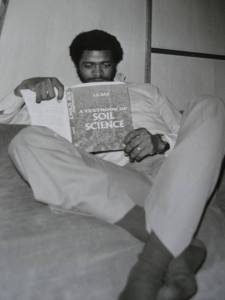
One boy, Christopher, wanted to do banking. Felix, from Ngwa, also wanted banking because he did Commercial School in Nigeria. I wanted to do Medicine because I saw a lot of people dying in Biafra and that was my motivation. But they don’t give foreigners scholarships for medical studies and it takes about eight years to finish. It also costs a lot of money. So I thought of agriculture because of my experience of hunger in Biafra. My aim was to return and help my country. I started with Agricultural Secondary School, a bit of Forestry and landscape architecture, then entered States Tropical Agricultural Higher School where I got my first degree in Tropical Agriculture.

17407929_10211548664210116_67754857_o
Ben, as a student of Biology and Entomology

After that I went to work in Wageningen and obtained my second degree in Biology and Entomology in Wageningen University and Research Centre. My major work was irradiation of insects to induce lethal genes in them or induce translocation in their genes for the purpose of insect control. These were done in the institute for Atomic Sciences in Agriculture in Wageningen where I live until now.

Some of the other soldiers didn’t fare so well. One of them was John who developed mental problems. He joined the army as a very young boy of seventeen or eighteen years. He underwent several operations because his mouth was shattered, so they tried to reconstruct his teeth and mouth and jaws. So much so that he became mentally confused. They used shiny metals for the construction, so he had appendages on his head like antennas which made him look like a mobile robot. When he comes out people will be staring. Sometimes they used his skin to do skin grafts. They cut it and pull it, and you see it growing from here to there. They used it to construct his lips because there was nothing left there.

I remember one day when we were in the Military Rehabilitation Center. They gave me a special room because I was an officer. John knocked on my door and when I opened it he just dived under my bed and said, “Oga, please, they’re looking for me. They are looking for me.” I said, “John, nobody is looking for you. Please come out.” He said, “They want to kill me this night. You don’t know what they are doing. This is a way to get me. I don’t know why you can’t see this.” All the other boys came and pleaded. But he kept on doing this. Every time it will start. Eventually, they put him in a psychiatric center and we went there to visit him. I could see death in his face. He said, “Please, I am going with you people. Do you see they have marked where they will bury me?” It was so sad to see. We were new and couldn’t speak Dutch but John will say something like, “The news this afternoon was saying that John has to be killed, must be killed.” But you can’t do anything to stop him. When it became impossible to treat him, they sent him back to Nigeria. He was accompanied by a military nurse who gave his family a lot of money to take care of him. They also promised to be monitoring his progress. The wounds had healed in a way so he was able to eat. They even put false teeth but who takes care of such things in the village? You have to bring it out, brush it and put it back. He even had special food from Holland. But we heard he went to the village shop and stole cigarettes, so they beat him up. And whenever he passes, people will be making fun of him, saying things like, “Ony’ara, o n’ezu kwa oshi – Mad man. He also steals.” John eventually became the village lunatic. The white nurse came a second time to see what became of John and was so disappointed with his condition. He stayed back for some time and tried to take care of him. He gave the family money again to continue the care and he remained in contact with them. But the third time he asked about John, they told him John was dead.

Another person who developed mental problems over there was Victor from Nsukka area. He became quite dangerous, setting his house on fire and threatening to kill somebody who was making calls in a public phone booth. He claimed the person was plotting against him. Anytime the tell us what is going on, it doesn’t matter what time of the night, we will go to see him. He even claimed he had impregnated my girlfriend’s friend. She had gone with us to the hospital to visit him and she liked him so much. So, every time he sees Crystal, my wife, he will ask, “Where is your friend? She’s having my child.” He became so dangerous they put him in a very, very highly guarded psychiatric hospital where it became impossible for us to see him or get information about him. Till today I think of Victor.

Cyril’s case was different. His two legs were amputated and he had artificial legs. But he was so clever he was speaking Dutch within six months we were in Holland. He was playing music for people, doing disk-jokey. He will hire sex [pornographic] films and invite people to his house to see the films. He was even smoking grass and riding his motor cycle without licence. He could commit a crime and they’ll look at him like, okay he’s a Biafran and he has no legs. He became problematic financially to the Dutch people so they offered him money to go back home. Actually, they made the same offer to all of us. If you want to go back home, they give you about 15,000 guilders to resettle. It was big money. When Cyril showed interest in going home, they increased the money and paid for his transport back. His plan was to start a business when he returns home. He promised to stay in touch but we never heard from him again. Any time I’m in Nigeria, I think of him and wonder what became of him.

I was settling down to my new life but I couldn’t forget *Ruth.

BEN ONWUKA 20
Ben, as a sportsman in Holland

There was a Red Cross man who was going to Nigeria and I gave him an assignment to look for her. He succeeded and went to my family, but they told him that *Ruth’s family left Achina when the war ended and she went with them without even crossing the street to say to my own parents, “I am going.” I get emotional when I remember this because I had even given them wine that I will marry her. My brother told the Red Cross man to tell me, “The person you’re calling your wife didn’t even say bye-bye to us. Till today we have not heard anything about her.” On my own part, I had never been to her village but I knew she was from Eke, around Nsukka. That was when I decided to take my mind off her. I got a white girlfriend, who later became my wife. I told her about Ruth, that I’m still in love with her and I don’t know where she is. She was so sad about the situation but she also liked me a lot.

The first time I wanted to travel to Nigeria, I told my wife I am going to look for *Ruth, that I must see her. You know, when you are interested in somebody, you are always interested in that person. By then I already had my first child, Amara. My wife bought a present and asked me to give to her. That was in 1975.

I got to Enugu and headed to 66 Zik Avenue, which was where I met her. The people I met there said they know the family but they left a long time ago. I didn’t know what to do. I walked to the bus stop and was standing there, thinking of what to do when a young man stopped me and asked if I was one of the musicians coming to perform in Enugu that day.   BEN ONWUKA 15I used to dress in a flashy way then – high heels, jeans, Afro and beards – so he mistook me for somebody in show business. When he was speaking his voice was very familiar and I said to him, “Your voice resembles a voice I used to know.” He looked at me again and said my own face is a bit familiar. I asked him if he has ever lived in Achina. He said, “Yes, we were refugees in Achina.” I asked him if he knew any Ben and he said yes. He looked at me again and exclaimed, “Are you Ben?” I said yes, I am Ben. He embraced me and I said, “I’m looking for your sister.” He said *Ruth was married but I said he should take me to her. We went to his house first and after taking some drinks, we set out. I was so excited as I sat in the sitting room waiting for *Ruth to come out. Then, I heard her voice. She was saying, “Kedu onye n’acho kwa nu m’ kita? I na ghi a gwa ya na m n’akpa ishi – who is the person looking for me now? Why didn’t you tell the person I’m plaiting my hair?” She entered the room with hair half-plaited and when she saw me she screamed, “Ben!”

After she recovered from the shock, she pleaded with her brother to take me back to his house. I was surprised because I was prepared to meet her husband. In less than one hour she arrived at her brother’s house, looking very flashy. I saw *Ruth again as a woman. She started crying and we held ourselves. I asked why I had to leave her house and she narrated how she was in an unhappy marriage because her husband was possessive and beat her often. We talked and talked and after, I gave her a present from my wife. She said she was waiting for me to come back for her because I was her first love and had already given wine to her parents. I was so sad. I told her it wasn’t possible because we were both married and had a child each. She said that anytime I come to Nigeria, she will be available for me. I said, “My God.” But I understand what must have happened. She may have been forcefully married off to the man. After the war, people had nothing to eat and if you see a lady and promise to marry her the parents will just ask you to bring whatever you have and take her away. I promised to visit her anytime I come to Nigeria. I promised to be giving her some money as long as her husband doesn’t know.

I didn’t have any more contact with *Ruth until seven or eight years ago when I went to Enugu. Through an acquaintance, I traced her brother through his wife who had a shop in town. When I got there, I introduced myself and told her I was looking for her husband’s sister, *Ruth. She asked me to describe her, so I mentioned the names of her siblings and relations. Immediately, she called her husband on the phone, “Hello dear, there’s somebody waiting for you here.” Soon, he arrived. He had aged a bit but I could see some of his facial features still there. He kept looking at me, then he said, “Ben, what brought you here after so many years?” I told him I met *Ruth when I came back many years ago, that I wanted to see how she and her children are doing. I saw his face changing. The wife said, “We are very sorry. *Ruth is dead.” I couldn’t believe it. I kept saying, “What? Late? Died?” They said she died the previous year from bleeding caused by injuries to the head. The brother’s wife said if I had come earlier, *Ruth wouldn’t have died; that she talked about me all the time.

That day, I felt like my wife just died. Even though *Ruth is dead I still long to see her children. The next assignment is to trace her brother again and see how I can get in contact with her children.

BEN ONWUKA 4

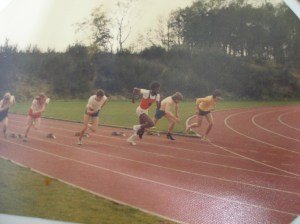
Ben Onwuka is a former Biafran soldier. Before that he was the Nigerian champion in the 400 meters race, 1964-65. He lives in Holland with his wife, children and grandchildren.


Immune to horror.

“We were eventually called back to school…Our school field was littered with corpses at different stages of bloating and decomposition – both adults and children. We had to clean the compound so we started digging shallow graves to bury the bodies. The ones that were completely decayed, we rake them over the soil and use them as manure. Then we bury their skeletons. When we started our school farm again, we were marking the position of the ridges with skulls – we push a stick into the soil and hang a skull on top of it. Sometimes we use the skulls to play hand ball – you throw to me, I throw to you.” – Okenwa Enyeribe

                                                                         ———-

I was in primary two at St. Mary’s primary school, Umuopara, Nguru, Mbaise when the war started. Fighter jets were flying over our school and when it became unbearable, we had to go into the bush to continue studying. I was only eight years but I started to see emergency platoons. I don’t know who summoned them but I started to see traders, secondary school leavers, tailors, in their work dresses, coming together and chanting war songs, “Nzogbu, enyimba enyi, nzogbu enyimba enyi!” After hearing of the pogroms in Lagos, Kano and how Igbo soldiers were massacred in barracks, people were saying, “We’re ready, enough is enough.” They absorbed them into the army and they started forming sectors all over Igbo land.

You can’t imagine that we’ll be in our compound and air raid will come and give us the first sign. We’ll go and enter the bunker. The next time it comes, it is bombing. Behind our house there was an arsenal where Biafra was manufacturing equipment but the Nigerian soldiers couldn’t locate it. Very heavy machines and trucks were going to that place to transport materials and equipment, roaring day and night. It was protected by palm trees so the Nigerian soldiers continued looking for that arsenal. Everyday. Woooo! Woooo! Woooo! We couldn’t sleep. They bombed many places but they couldn’t find that one.

With all that bombing going on, we ran into the bush. It was filled with human beings and our only cover was palm trees. Right inside that bush, markets started springing up. It was trade by barter so if you have garden eggs or chicken you can exchange them for yams or another thing.

As the war went on, the hunger, starvation and attendant issues became worse. We were blocked from Northern Nigeria so there was nothing like cattle or goats. We were blocked from Lagos so anything imported could not get to us. What we had to do was manage whatever we laid our hands on. For starch we were eating cassava, rice, maize, yams. For vegetables, anything that could be eaten, like cassava leaves, hibiscus leaves, paw-paw leaves, we were eating them, mixing them with starchy foods in a porridge. There was little protein that is why there was kwashiorkor. The only source of meat was rats, snakes, lizards. But they were correct meat at that time. If you climb a tree and see a lizard jump down from there, you follow it and jump down. If it escapes, where will you see another one? We used to dig holes in the ground to look for rats then we put our hand inside the hole not caring whether snakes live there.

We were getting relief from international organisations like Red Cross, World Council of Churches, Caritas. They brought Garri Gabon, corn meal, milk. In the morning we carry our plates and go to the relief centre at Ogbo, Nguru. The kwashiorkor place, that’s what we call it. We stay in line but when people get tired of waiting they will start dragging the food from the sharers. Sometimes the food will pour on the ground and some people will scoop it from there. Do you blame them? Sandy food was better than no food.

There was stock fish but it was stock fish soaked in salt – double action. We soak it in water for one week and use the salt water to cook. Other times we trek to Rivers State to fetch salt water in twenty litres jerry cans. We pour the water into a big drum and cook that drum of water from morning to evening. By the time it dries up what you get will be one cigarette cup of salt.

Same thing applied to soap. We made Ncha Obo by coupling dry female inflorescence of oil palm, which acted as source of potash, with oil palm in water. We can use it for two or three weeks. Necessity is the mother of invention and there’s what you call AAD – Adversity Activated Development. This is when people cultivate methods to overcome adverse conditions around them. I never knew about cassava leaves and hibiscus leaves. I never knew that tender cocoa fruits – the unripe ones – could be eaten like okro. It was very sweet.

There was also something called Emergency Rations. It came in cartons and each one contained a collapsible aluminium tripod stand where you can cook and boil water. The fuel came in the form of slices of cardboard immersed in paraffin, like laminated hydro carbon. Each slice could be used once. It also contained beverage cake, like Bournvita or Ovaltine, and protein cake, which we add to our soup to make it nutritional. We also had biscuits inside the pack and egg yoke in powdered form. Yes, relief was coming in but the people for whom it was made, were they accessing it? The secondary and primary school teachers, who were the elites at the time and who these things were entrusted to, they were selling some of them or giving to their friends and families. One day I found heaps of blankets, emergency rations, bags of corn meal and other things in the bush behind our house. This was something made for the wretched, poor and hungry people but people convert it to a business venture.

Sometimes people died not because of hunger, but because they didn’t receive help on time. One of my uncles had his ankle cut by shrapnel and we only had a dispensary in the village; no place to give him ambulatory treatment. He died of hypovolemic shock due to blood loss. Another person was my uncle, Romanus. He was with the Board of Internal Revenue in Port Harcourt before he joined the army and was made a captain. A bomb cut his ankle and he bled to death. The day the Biafrans brought him home, his parents fainted and never recovered from the trauma until they died.

Some never came back. Before they go, the elders will bless them traditionally but they didn’t return.

We almost lost my mother too. One day, she went to her farm to harvest cassava and Nigerian soldiers surrounded her. When they asked, “Are you Gowon or Ojukwu?” she said she was Gowon. They took her to a camp at Umuopara, Nguru, where they were holding other people captured from the places they invaded.

Towards the end of the war the Nigerians were firing warning bullets; noisy bullets that were giving us warning but not attacking us. One day we started hearing noise from up to 10 miles away. The thing was echoing, “One Nigeria, one Nigeria,” and people in the bush started rejoicing, “One Nigeria, One Nigeria.” I looked for my dad and my senior brother but I didn’t them. So, I set out for my village alone.

Meanwhile, five days before then, we had escaped to my aunt’s place in Ekwerazu. I went with my dog, Dandy. Very loving dog with variegated skin like a hyena. But my aunt and her family were not comfortable with Dandy. She was defecating all over the place so they kept throwing stones at her until she ran away. I cried. But when I was returning home that day, I saw Dandy about one and half kilometres to our house. I don’t know how she managed to trace her way through the bush. She was doing strange movements on the road, running forwards and backwards, sniffing. I shouted, “Dandy” and she looked at me as if to say, “I’m so disappointed in you.” But she ran to me, wagging her tail. I lifted her up and we headed home.

On the way, behold, gory images. Cadavers! Corpses! Some were slumped over their steering wheels. Some were entangled around their bicycles. Many were in different stages of decomposition, stinking. And me, a child of about ten years, this was the sight that was welcoming me as I was returning home.

When I eventually walked into our large compound, I saw my mother and she grabbed me. She managed to escape the camp where the Nigerian soldiers were holding her, passing from one bush to another until she got home. Other people were also there, rejoicing. They decided to cook a type of soup called mgbugbu. We also called it Win the War. Mgbugbu connotes an emergency meal, a way of saying, “Let us eat and keep mind and soul together until we win the war.” They put a pot on the fire and people start throwing in different things – snake, rat, lizard, cocoyam, cassava leaves, hibiscus leaves, palm oil, anything they have. When it was ready, everybody came together and shared the meal.

We were eventually called back to school but most of our classrooms had been destroyed. We had to sit on the floor until UNICEF started bringing desks and other items. Our school field was littered with corpses at different stages of bloating and decomposition – both adults and children. We had to clean the compound so we started digging shallow graves to bury the bodies. The ones that were completely decayed, we rake them over the soil and use them as manure. Then we bury their skeletons. When we started our school farm again, we were marking the position of our ridges with skulls. We drive a stick into the soil and put a skull on top of it. Sometimes we used the skulls to play hand ball – you throw to me, I throw to you. I was only ten years old but we had become desensitized and immune to horrors.

By this time the soldiers were camped at Eke Nguru. They were vicious, wicked and rode rough shod on the people. They’ll buy things from Nkwogwu market and refuse to pay. If you challenge them, it will get you a head butting or they lock you up. They chase women into their fathers’ bedrooms, shouting, “Come out. Come out.” One lady, Maria, practically lived in the bush. One captain was so intoxicated with her beauty and wanted to marry her by force. He would land in the compound ten times a day with his vehicle, so her parents hid her away.

There was a time that two soldiers on foot were knocked down by a vehicle along Eke Nguru. They commanded all vehicles, bicycles and motor cycles to park on one side. They searched everywhere for those who knocked them down till late at night. Another day, one photographer called OC Photos took pictures of one Nigerian captain but the soldier refused to pay. Instead, he started giving OC Photos head-butts and blows until his nose started bleeding. As this was going on, one man came and pleaded with him to leave OC Photos. This captain left OC and started head-butting the person who tried to intervene.

We started life afresh. They opened the roads leading to Port Harcourt, Aba and Enugu and Hausa traders started bringing grains and onions to Umuahia. People will even trek to Umuahia to buy pepper and onions to sell. We started eating those things again.

But I noticed that after the war there was economic boom and enjoyment throughout Igbo land. Government was pumping money into states so economic activity flourished. Foreigners started coming to invest. Local labour was employed and whatever you could do to make a living, you were free to do. Up to the extent that every weekend people will organise what we used to call ‘Hall.’ Primary and secondary school halls were converted to dancing halls and every weekend – Saturday and Sunday – there will be dancing and enjoyment. People were happy, trying to forget the horrors they experienced.

                                                                       ———-

Okenwa Enyeribe is a Pharmacist, author, poet and humanitarian. He is the Head of the Revolutionary Council of the Nigerian People. His novel, Win The War, is a personal account of the Nigeria-Biafra war.


Care Giver and Surrogate Mother.

*Nneka talks about her mother, late Mrs. Esther Chizube Mgbojikwe, who died in April, 2016.*

“My mum said many of the children in the refugee camps were separated from their families so other families were encouraged to take them in. She said the exercise was documented properly so it would be easy to find their parents eventually. My mum took one of the children. Her name was Angelina and she must have been about ten or eleven years at the time. She told my mum that she was running from the scene of a bombing when she saw people climbing into trucks. She joined them and that is how she ended up in Orlu with other refugees. She lived with us for about fifteen years and became like a big sister to me. I cannot think of my childhood without Angelina.” – Nneka Chris-Asoluka.

                                                                    ———

My mum died in April 2016 and we buried her two months later, on the 10th of June. It was after my children wrote their tributes that I found out there were many things I didn’t even know about her. She was very dedicated to her grandchildren and her accounts about the war were so vivid we felt as though we had witnessed it.

NNEKA ASOLUKA PHOTO 2
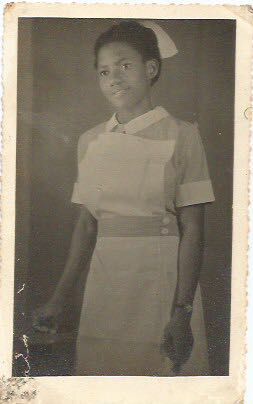
Esther Chizube Mgbojikwe, as a young nurse.

She trained as a midwife in the United Kingdom and when she came back to Nigeria, she worked briefly with Shell B.P. She later went back to the UK to study Child Nutrition and Health Visiting. They were called Health Sisters at the time. When she returned, she didn’t work in hospitals but in rural health centers where the focus of her work was pregnant women, nursing mothers and children. She preferred Health Visiting because after she returned from her midwifery training, she saw that the practice in hospitals here was so different from what she’d been taught abroad.

We were living at Nsukka when the federal troops captured the town. My mother had just returned from Britain with my baby brother. I was only two years old and my father was still abroad at the time. She said they had been hearing gun fire from the previous day but nobody was sure what was happening. They were all terrified. At about 2.00 am, her colleague at the Ministry of health, knocked on our door and said, “We’re leaving and you better do the same. If you stay here, in the next one hour I don’t know what will become of Nsukka.” Frantic, my mum woke everybody up and with the help of our nanny and steward, started to pack. But how do you start packing up the whole house at such short notice? What do you take and what do you leave? She decided to take food, her certificates, some family photos, children’s clothes. The steward had to stay back so he’d lock up and meet us at Oba, our home town. Luckily, she had filled her tank with petrol the previous day because there had been announcements that people who had cars should make sure they had full tanks at any given time.

She put us in the car and set out for Oba. When she got on the road, she saw great multitudes of people all trying to escape – carrying their children and a few belongings. You can imagine her trying to meander through the crowds and not knowing who would try to harm her. At that time many people were looking for transportation so they could have hijacked her car, but nobody did. She thinks it was because of the two small children – my brother and I – who she had in the car. She said she kept praying under her breath until the road became less busy. Throughout the night and into the morning she kept driving, until she got to Oba.

People didn’t know what was happening at Nsukka, so when her mother saw her she screamed, “Chizube, o gini?” [“Chizube, what is it?”] She said. “Mama, it has happened o. Nsukka has fallen.” She said she knew that once Nsukka was taken, Enugu would be next. Do you know what my mum did next? She handed us over to our grandmother, had a bath, changed her clothes and, immediately, turned back to return to Enugu. My grandmother was pleading, “Please, don’t go back.” But mum was already gone.

I remember asking her why she did that and she said she knew there would be refugees from Nsukka and neighbouring towns and her services would be needed. While fleeing Nsukka, she had seen lots of children and pregnant women on the road. She knew they would need medical attention and she was eager to get to Enugu so they’d start planning. That was just her kind of person. She was very dedicated to her work. So, she drove back to Enugu where a meeting had already been convened. She was posted to Owerri and, after staying in Enugu for a few days, she returned to Oba, picked us up and we left for Owerri.

Life was normal when she got to Owerri but when the Nigerian army captured it, she was posted to Orlu where she was placed in charge of distributing relief materials. They had marked trucks filled with relief materials, all of them assigned to designated places with supervisors. The Biafrans used to commandeer people’s vehicles to distribute these supplies and her official car had been commandeered from its owner. He pleaded with them to retain him as the driver of the car so he’d take care of his car. They agreed and that’s how he became my mum’s driver. But she had to learn how to ride a bicycle because the commandeered car was breaking down frequently and when that happened she will just jump on her bicycle and take off. Her senior sister worried so much for her health and safety and was always shouting, “Chizube, take it easy.” But how could she take it easy and waste any minute when people were at the refugee camps needing supplies and medical attention. My mum was so fatigued without knowing it and one day she just collapsed while climbing down from the bicycle. She was admitted in the hospital but when she regained consciousness, she demanded to be discharged. The doctors refused but trust my mum, the next day, she devised a means and sneaked away back to work.

The work was quite enormous but she said the Biafran government was very organised and had a good crisis management strategy especially in the health sector. The refugee camps were well run because the organisations that brought in relief material were comfortable with the Biafran government knowing they had structures in place which were adequate for the ongoing humanitarian work. Another thing my mum always said was that the Catholic Church was wonderful. The humanitarian agencies frequently ensured that the officials in charge of distribution of the food, clothing and medicine had more than enough supplies for themselves so they would not be tempted to take the rations meant for the refugee camps.

My mum was not only overseeing supplies, she was also caring for children and their mothers who made up about 80 % of the population of the refugee camps. They had been displaced from their homes and were very vulnerable. Many of the children had become separated from their families so others were encouraged to take them in. The exercise was documented properly so it would be easy to find their parents eventually. My mum took one of the children. Her name was Angelina and she must have been about ten or eleven years at the time. She told my mum that she was running away from a bombing when she saw people climbing into trucks. She joined them and that’s how she ended up in Orlu with other refugees. She lived with us for about fifteen years and became like a big sister to me. I cannot think of my childhood without Angelina.

NNEKA ASOLUKA PHOTO 4
Esther and Emmanuel Mgbojikwe


Some families were able to smuggle their children out. That was how two of my cousins went to London where they had relations. Through the help of my mum they left with one of the planes that brought relief materials into Biafra. My mum said it could take several weeks before people got the chance to be evacuated. They had to be very careful because if the Nigerian planes detected such evacuations, they will bomb the airstrip. So it took several weeks for my cousins to leave. The night they eventually left, my aunt didn’t sleep because she didn’t know the fate of her children. When they got to Gabon, they were put on a plane going to the United Kingdom. She later got word that they reached London safely.

Life was very precarious. My mum said that if she was on her way and a bombing took place, she’d run into the forest and wait for the all-clear signs, thereby reducing the amount of time she wanted to spend at any refugee camp. In addition to the air raids, Nigerian soldiers were abducting women and because she was very young, she always tried to make herself look unattractive by wearing long, loose clothes and tying a scarf over her head.

Immediately the war ended, she was posted to Abakaliki. After spending five years in Abakaliki she was posted to Aba where she spent two years, then to Ohafia, Nsukka, back to Abakiliki and to Nibo from where she retired.

She said it was a traumatic time but in spite of it I didn’t detect any bitterness in her. She said those were normal things that happen in a war. Her training as a nurse also helped her not to internalise the gory experiences. All she focused on was alleviating the suffering of the people so that one day she’d look back and say I did so much. Working round the clock might also have helped her take herself out of the whole thing.

I remember asking her how she felt being away from us so often and for long periods. She said she knew we were in good hands but she needed to be there for other children whose mothers were not there. She never felt we were in any harm because we were left in the care of her mother, our aunties and nannies. Also, we had enough food and medication and were attending classes in a make-shift school which my aunty had started, to ensure that children in the area could continue their learning.

After the war, my mum found Angelina’s parents. She was from Nsukka and I remember vividly the day her brother and uncle arrived Abakaliki to see her. Wow! You can imagine the shouting and crying that went on. My mum said many children got lost like that – younger children who couldn’t talk and nobody knew them or where they were from. They took Angelina back to Nsukka to see her parents. Then, they brought her back and handed her over to my mum, saying, “This girl is now your daughter. Whatever you want to do with her, go ahead.” Angelina’s immediate senior brother also lived with us. His name was Odoja. The relationship between the two families continued for many years after. Until my mother died, she kept praying to see Angelina again.

NNEKA ASOLUKA PHOTO 3
Late Mrs. Esther Chizube Mgbojikwe

My creche is in my mother’s memory. She was looking forward to the times she’d spend with the children there. And then, she just died. All the same, we’re grateful for the life she lived and the sacrifices she made during the war. She was a dynamic woman.

                                           ———-

Nneka Asoluka is a Lawyer and President of Soroptimist International of Nigeria, a global volunteer movement advocating for human rights and gender equality. She also runs Esther’s Child Minders, a Crèche and Day Care Center named after her late mother.

It wasn’t Indians and Cowboys.

“A significant outcome of the war is the foundation it laid for the further liberation of the Igbo woman. Before the war, Igbo women were generally laid back because our patriarchal society ensured that men undertook most financial responsibilities in the home and society. But when conscription was at its peak, men would disappear into the bush to avoid being signed on. Women, therefore, became the bread winners of their respective families, crossing Biafran and Nigerian lines to buy food and other supplies so their families would survive. In the process of these interactions, the Igbo woman started to became more exposed, assertive and confident and that is the essence of what the modern Igbo woman has inherited.”  – Patrick Amanze Njoku

                                                                      ———-

I was a teenager at the time so the war was a threshold into my twenties. That is the most impressionable time in the life of a child and the trauma hits you. You realize it’s not Indians and Cowboys. It’s for real. As a soldier, the first taste of fire fight causes panic in you. Most soldiers pee on their pants because they’re looking at death. You get used to it after a while but no previous experience prepares you enough for the real incidents.

I remember the day the first bomb was dropped in Owerri, next to us at Mere Street. It was either late 1967 or early 1968, at the start of the war. There weren’t jets at the time because they hadn’t purchased any bombers so they were using propeller jets and this one was a Nigerian Airways passenger plane. We heard the sound – Whooo! Whooo, Whooo! Whooo! – and came out to the junction of Ihugba and Ejiaku Street. In something like slow motion we watched as a bomb dropped out of a window. Usually a bomb would have an ejector so you don’t see it until it lands but we actually saw this one fall and land on the house next to ours. It crippled the whole damn thing and left a big hole. We actually saw flesh because we were not even up to a hundred yards away from the place. This drummed it in that hey, this was not a football match; this was serious business.

Throughout the crisis we never lived more than three to four miles away from the war front. When Owerri fell to the federal troops, my father moved us to Ubowala in Emekuku, where we got accommodation in the primary school compound which had been turned into a relief center. From there we moved to Owala, where we were till the war ended.

My father had been a minister during the British rule and the First Republic. He could have moved away to safety but he didn’t. After the war, we asked him why and he said it would have appeared like a betrayal if he had abandoned the people who had elected him into the Owerri constituency and sent him to the House of Representatives three times. The only times my father left was when he had to go on foreign missions on behalf of the Biafran cause. He went to Ireland and raised money with the Red Cross and Caritas. He also went to the Vatican because, being a knight of the Catholic Church, he knew members of the College of Cardinals and had a voice in the Vatican. He was able to raise about three hundred to four hundred thousand dollars and that was a lot of money in those days. He made a total of three trips. Sir Akanu Ibiam, who was then the Vice President of the World Council of Churches, worked more than any other person I know to raise funds for the cause. At a time, he was living permanently abroad and I remember a very moving story told to me by a young lady who worked with him. They had just raised almost two hundred thousand dollars when the war ended. So, what to do with the money? His team was astonished when he sat down and starting writing cheques to return every penny of the money to the donors.

Before enlisting in the army, I served with the Military Intelligence. We operated under Colonel Bernard Odogwu with the late Dan Njemanze as his deputy. One night we heard the ra-ta-ta-ta of small fire arms. We assumed our boys were testing new arms because the rumour around the time was that we’d gotten a new shipment of small weapons – Maddisons and Uzi riffles. But the shooting persisted all day and into the night and was even getting closer. Late into the night we started hearing vehicles, heavy duty jeeps and trucks coming from the state house. All night long they were moving so we knew something had gone wrong. What we didn’t know was that the State House was being evacuated to Madonna School in the Okigwe area. You know, human beings are very intuitive and intelligent. The fire was coming closer and closer, so people in town had sensed there was trouble. The next morning, we saw a line of human beings streaming into the road leading to the Aba Express road, some carrying children and others, a few clothes. We rushed off to Umudike where we started to evacuate some of our equipment. The Research and Production section was loading up her chemicals and equipment. The DMI was also loading up her sensitive documents. Before night we were on the Low Bed truck out of Umuahia. Most of the roads in the new republic were already occupied by Nigerians so it took us the whole day to manoeuvre through path ways and bridges, all the way to Liilu somewhere in the heart of Aguata area. We finished unpacking about 9.00 pm and I just called my friend and said, “I’ve seen enough. I’m heading to the School of Infantry now.” That’s how I joined the army; another significant moment for me.

One of the most telling moments for me was when I saw children dying of hunger and the times I happened to be at a bomb scene. Being almost a child myself those were traumatic experiences and that is why it is said, in a sense, that war changes people. On one level, a soldier learns to places little worth to his life because you know you could lose it at any moment and become a statistic. War brings out the worst in people. The survival instinct in every human being means that when faced with hunger and starvation, people react in selfish ways. For example, if food was given to you and others and you had the opportunity to take it all for yourself, you’d do so whether the other person was your sibling or parent, or not. War also brings out all manners of outrage in people. I remember an incident that happened when I was at a refugee camp with one of my cousins. He was annoyed because the Reverend Father in charge of the rations seemed to be favouring the ladies rather than soldiers who had just returned from the war front. His reason was that the rations were meant for civilians and not the military. The Reverend Father refused to give in to my cousin’s pleas so my cousin kidnapped him and conscripted him into the army. The reverend gentleman served gallantly and even attained the rank of captain. These kind of human reactions to trauma and misery, and the fact that you lose your values and everything you hold dear, informed the title of my book – The Wrath of War. It’s really terrible. One would never wish for it to happen again and anytime people are propagating war, you try to dissuade them.

This takes me back to something that happened when I was at Stella Maris College, Port Harcourt. The war was heating up so my family left Lagos, where I was schooling at St. Gregory’s College, and relocated to the east. Our principal at Stella Maris was Father Maher, an Irish priest. He was also a veteran of the Second World War, as we found out later on. Occasionally, he would try to acquaint us with world and local politics and he told us he foresaw there’d be a conflict. He said he wished it would be avoided through concessions and forgiveness on both sides. But we were all bristling with youthful enthusiasm. We thought it would be a football match and everybody would play for an hour and go home and take a bath. Some of our boys reported him to the military in Port Harcourt and he was accused of being a saboteur. Two days later, they whisked the Reverend Father away and deported him.

On the other hand, war situations can also bring out the best in human nature. You will see a woman putting her life at risk just to save her children, or any child, even if it entails taking a bullet. Magnanimity and our extended family system were taxed to the limit. I remember returning with other soldiers from Onitsha sector. It was a two-day trek and wherever the night met us we were welcomed by families. They treated us as their sons, gave us food, water to bathe and accommodation for the night. In the morning they fed us with coco-yam and palm oil before we set off. Till today, I’m yet to see that sense of selfless service by people who had so little to offer yet did so without counting the cost.

A significant outcome of the war is the foundation it laid for the further liberation of the Igbo woman. Before the war, Igbo women were generally laid back because our patriarchal society ensured that men undertook most financial responsibilities in the home and society. But when conscription was at its peak, men would disappear into the bush to avoid being signed on. Women, therefore, became the bread winners of their respective families, crossing Biafran and Nigerian lines to buy food and other supplies so their families would survive. In the process of these interactions, the Igbo woman started to became more exposed, assertive and confident and that is the essence of what the modern Igbo woman has inherited.

I remember an aunt of mine who was very dynamic and business minded even before the war and whose daughter, Josephine, inherited these traits. We were at Ubowala at the time and Josephine used to go as far as Aguleri to trade because that was the easiest path to get into Nigeria. A lot of the food coming into Biafra was coming from there so she’d go with herbs and vegetables and sell them for Nigerian currency with which she’d buy salt and other items and bring in to Biafra. At that time salt had become as valuable as crude oil. Gradually, she built up her capital and started trading on a larger scale. Most of these women were first daughters – Adas – and very much revered in Igbo land. This was the genesis of women being called Okpataku [she who gathers wealth] rather than Odiziaku [she who manages wealth] the sobriquet with which women were formerly known.

This assertiveness that started with commerce has also translated into education because there seems to be more women in schools today than men. Now Igbo women are expressing themselves more by saying, “I am a human being, I have a right to be heard and I have a right to everything just like the man.” Another thing I like about the new Igbo woman is they’re now self-educating rather than waiting for their parents. A university degree is the new benchmark for the Igbo girl and this is all a fall out of that liberation that started with commerce during the war. It’s a good thing in the sense that – like it is usually said – children are trained by their mothers even though they bear their fathers’ names and so every educated Igbo woman insists on educating her children.

                                                                          ———-

Patrick Amanze Njoku is a Journalist and the author of The Wrath of War. He was the Treasurer and Vice Chairman of the Association of Nigerian Authors, Imo State branch.

Memories that live forever.

“One day, directly opposite our house at Number 62, St. Michael’s Road, Aba, there was an attack. One woman was walking past with a child on her back. The blast cut off her head but she kept moving and walked for a short distance, then fell face down. When the smoke cleared, we saw her child. He was crying, saying, “Mama, kunie k’anyi na.” [“Mama, get up, let us go home.”] – F.N.N.

                                                                        ———-

The experience of the war was terrible. I doubt if there’s any emotional clinic one can go to wipe away those effects. No. I think we’ll live with it for the rest of our lives. We can’t escape it. As I’m sitting down here what are you going to tell me to erase that experience from my mind?

One day, directly opposite our house at Number 62 St. Michael’s Road, Aba, there was an attack. One woman was walking past with a child on her back. The blast cut off her head but she kept moving and walked for a short distance, then fell face down. When the smoke cleared, we saw the child. He was crying, saying, “Mama kunie k’anyi na.” [“Mama, get up, let us go.”] It was just opposite our house. I saw it life. I can still visualize it. We were by the door watching everything. You know, once the air craft dives in and bombs, it takes off. There was smoke. Very thick black smoke took over the entire place. The woman was a passer-by. Her son could have been five or six but he may have been looking smaller than his actual age due to malnutrition. We ran inside when the attack started. Normally, you run under the bed, the spring bed, so that even if blocks start falling they will fall on the mattress and cushion the effect.

Another day we were playing outside, far away from the house, when an aircraft started attacking. We took off and ran behind the Iroko tree. The bunker where we normally run into was far off from where we were, so we were now revolving round the Iroko tree. If the aircraft is coming from the right we go to the opposite side of the tree and hold onto ourselves till it zooms past.  If it’s coming from the left we run to the other side. We didn’t lie flat or go into the bunker because if it’s a bomber, dropping bombs and moving, it will bury the person alive so it was a nightmare. It was a nightmare.

At that age my mind was not fully developed so I was not really scared because we’ve been seeing a lot. I had seen soldiers, naval people, they pass through the front of our house in Orlu. So many will pass but few will return. Those that come back will have a lot of injuries. But with the bombings of buildings, smoke, people running helter-skelter, when you see people hysterical, running as if they want to disappear into thin air, then the fear started coming and it’s not good for a child. The images I saw as a child during that war, I still have them. Anything that can affect the psyche of a child is something very serious. Now if I hear the sound of a serious gun I feel uncomfortable. If I hear the sound of a machine gun now I know it’s a machine gun and my mind goes back. During one of my visits abroad, they were celebrating their Air Force day and I didn’t know. If you saw the way fighters and bombers were moving, I think my heart stopped beating for some time until I got myself back. My friend said, “No cause for alarm. It is Air Force day.” The sounds brought back memories of what I knew.

At Orlu and Aba, myself and my cousins were just living in the open. That was when I learned how to tap wine. It was not because I wanted something to eat. It’s just that we were not busy. Before we started having lessons, everybody was free. There was confusion and idleness. But I used to see palm wine tappers up there so I went up like them and, using iron and hammer, I drill a hole towards the top of the palm tree and fluid will start coming out and I will use calabash and hold the liquid. I will tie it the way palm wine tappers will tie it and leave it there. By watching people climb I got expertise in climbing. Even after the war, if I’m climbing I can move from one tree to another tree expertly and very high up.

In Aba, there were no trees to climb but the house where we were living in has a decking so I will climb to the decking and jump from there into a trip of sand. It was a very rough life. To jump over a fence was nothing for me. I was obviously reacting to the trauma I experienced. Before the war I was riding tricycles and such things but one became hardened during the war and you begin to see things you’re not supposed to see as a child. You see soldiers marching to war carrying guns but when they’re returning you’ll see real injuries. Some can no longer walk. They’ll be carried, then you’ll understand the seriousness of it.

After that Aba incident I became withdrawn. Even with my rough nature, once my father was not at home I don’t step outside. My natural self that lives outside and feels very free became withdrawn. I am always by the edge, my ears always very sharp, listening for the sound of air craft. So if an air craft is far away I will pick the sound and inform people and they will begin to take position. To the extent that if I’m inside here blindfolded, if a fighter passes, I will know the sound. I also know the sound of a bomber. I could tell the difference even with the eyes of a child. Those fighters that shoot are not very massive. They’re small and very swift. They manoeuvre easily. The bombers are slow and as they’re passing, they’re dropping [bombs] and they’ll continue on their way. By the time you turn around again everywhere is in darkness, dust, everything. If there was a tree here you won’t see that tree anymore. The tree would have been uprooted and buried.

People were short of medication, so once you fall sick and drugs are not available, you’ll just die. One of my cousins who was a sickler died in Azia because his father who donates blood for transfusion was killed in the Asaba massacre He just died. A brilliant young boy. My relations in Asaba died. The ones that ran away survived. Families were separated. In those days it is mostly the men who work while the women are house wives. During the holidays, the women travel with the children and after the holidays they will take the children back to their base but the war came and separated everybody. Some of my cousins found themselves in a refugee camp. Everybody was sharing a common toilet and a common bathroom. People use wrapper to demarcate their rooms. Those mothers suffered. That war was something else. You can imagine where there is an attack and a child is separated from the parents permanently, for ever. That child becomes anybody’s child. For people who are still living, if they start searching for their children some of them will find them provided they are still alive.

After the war, we went back to Asaba because there was nowhere else for us to go. We were not living in our own house but in my father’s uncle’s house. That was the only house in the family not affected by the war so the whole extended family was there. Everywhere was jam packed. We sleep in the parlour and everybody has a corner. At night you just go to your corner and sleep. It was terrible – that war.

My dad went back to Enugu and was visiting us from Enugu. He registered us in a public school in Asaba but when we went back to Enugu we continued with Santa Maria where we were schooling before the war. But it was no longer the Santa Maria we knew. All the missionaries were gone.

Later on when I went to Asaba for my secondary school, we used to see skeletons when we’re digging the ground. You can imagine seeing skeletons. We just cover them and move on. Now I know what a skeleton is. But seeing it then during the war you may not fully understand that this was a human being.

The suffering was much. That’s why when I see people agitating, making noise, trying to demonstrate, Pro-Biafra this and that, I know those people did not see the war. Anybody who saw the war will not attempt anything that will bring back the memories not to talk about the real thing.

War is bad.

[The featured image was taken from the internet.]

                                                                        ———-

The contributor of this story wishes to remain anonymous.