Tag Archives: War Memories

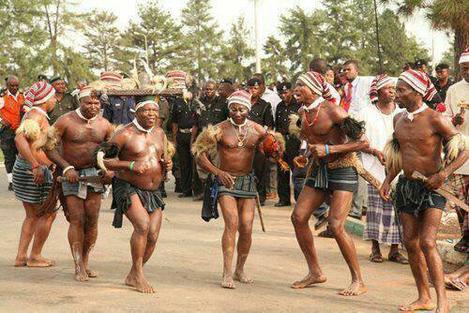
THE WAR DANCERS

I was born in Gusau but my earliest recollection of life was in Funtua. My father worked for Societe Commerciale d’Outer-Mer Automobile Nigeria (SCOA) as a District Manager responsible for trading and produce-buying, so we lived in different parts of northern Nigeria. He was a respected leader within the Igbo community, and recognized by the Emirate Council as the Igbo man to go to on matters that had to do with communal relations. At that time, the Igbo State Union was very strong in the north and once they took a resolution it was binding on all Igbos across the region.

About a year before the January 1966 coup, my father decided to take an early retirement because a friend of his in the Emirate Council informed him that a political crisis was brewing between Northern and Southern Nigeria which might boil over into violence. His friend advised him to leave because his name was top on the list of Igbos to be eliminated. My mother didn’t want to follow him immediately because she had a bakery, a chemist, and some other businesses, and was reluctant to start all over in an unfamiliar business terrain. However, they reached a compromise that she would move to Zaria, where he had a house, and where a lot more people from my hometown resided. Their thinking was that the large numbers of our people in Zaria would be able to defend themselves in the event of violence better than they would in Funtua.

In January 1966, I gained admission into St. John’s College, Kaduna. In July of the same year, the revenge coup took place, and the massacre of Igbo civilians started. As students, we lived within the relative security of the boarding house but as day students came with horrific stories of what was happening outside, I became deeply concerned about my mother and siblings in Zaria. I went to Father Canty, our Irish Principal, to obtain permission to travel to Zaria but he denied my request. Being a tenacious person, I went again but with a classmate of mine. This time, Father Canty agreed because he felt it was better to allow two people travel rather than one lone boy. He gave us one pound sterling from our pocket money to make the trip.

When we arrived Zaria, all seemed calm, so we set off on foot into Sabon Gari where our parents lived. On our way, an elderly Hausa man stopped us and asked us in Hausa, “My children, where are you going to?” We said we were going to Sabon Gari. He said, “No, no, no. Don’t go into Sabon Gari. What is happening in Sabon Gari is so much evil than I have ever seen in my entire lifetime.” He asked where we were coming from, and when we said Kaduna he said we should go back. My estimate of his age was about 70 years. He had a full white beard and might even have been an angel; I don’t know and may never know.

I wasn’t happy that we had come all the way and couldn’t accomplish our mission. I then suggested to Charles that rather than trek into Sabon Gari we should take a taxi. We boarded the first taxi that came by. As we drove into Sabon Gari, we could see a rowdy group of young men further up the road, armed with clubs, knives, cutlasses, axes, tyres, and other weapons. On sighting them, the taxi driver said he couldn’t continue the journey. I was furious and questioned why he would ask us to come down in the face of danger. He was adamant and said the violent mob will damage his vehicle. I told him he was fearful for his vehicle but not for our lives. When the mob noticed he was making a U-turn, some of them started running to catch up with the car. When we were out of danger, the driver asked us again to alight because he was heading to Kaduna. With great relief, we said we would follow him back.

On our way back to Kaduna, somewhere on the Zaria-Kaduna Road, an army truck was coming in the opposite direction from us. A hand was waving us down but our driver did not notice because he was talking with the man in the front seat with him. The army truck left its side of the road and headed towards us, in an attempt to force us off the road. Charles and I screamed, and our driver swerved into the bush. The army truck stopped, and the soldiers rushed at us. Seeing that the two people in front were northerners they spoke to them in Hausa, “Namu ne, kwo nasu ne—Are you one of us, or are you one of them?” The driver said he was one of them. They said they would have knocked us into the bush believing we were Igbos trying to escape. Then they cautioned the driver to be vigilant because the times were perilous. But before they got to our car, I had asked Charles not to answer any questions since his Hausa was not as fluent as mine. The primary school I attended from classes five to seven was Capital School, Kaduna, which the children of the northern elite and white expatriates also attended. This exposed me to the mannerisms of the children of the northern elite, so I could speak impeccable Hausa and act like them. As they turned to leave, one of the soldiers came back to us. His first question was, “Young boys, who are you?” I replied with a question as children of the elite are likely to do. “What is your problem with us? Are we disturbing you?” He replied that they just needed to know. I retorted, “You can see we are students.” The questioner mellowed down but insisted on knowing our names. I gave them the name of the man who had advised my father to leave the north, claiming he was my father. I reckoned that even if they decided to take us back to Funtua, the man would agree we were his sons, seeing that we were in trouble. My bluff worked because they let us go. Back in Kaduna, we again decided to trek back to our school. On our way, we found dead bodies littering the streets. The killings had taken place after we left Kaduna that morning. That was when it fully dawned on me that we took a very stupid risk.

A few days after this incident, the killer gangs started coming to our school, but our principal, Father Canty, and one Father Wolfe would tell them the Igbo boys had left. Still, they kept coming back. There may have been fellow students telling them we were still in school. This got the principal apprehensive, so he made arrangements for us to be airlifted from Kaduna to Enugu. Early one morning—I think it was in September 1966—at about 4.00 am, he went round the dormitories waking us up because army trucks were waiting to take us to the airport. Before this time, he had been smuggling the older Igbo boys in his 403 Peugeot pick-up van down to the east. He would squeeze many of them at a time into the pick-up, cover them with tarpaulin, and drive to Obollo Afor, the border town between current Enugu state and Benue state. There, he would leave them to find their way home. He did about four or five such runs, using different routes, until he made sure all of them were out of danger. For us younger boys, he bundled us into the waiting big army truck and took us to the airport. Those airlift operations were a tripartite arrangement between the federal government under Col. Yakubu Gowon, the northern regional government under Col. Hassan Katsina, and the Eastern regional government under Col. Chukwuemeka Odimegwu Ojukwu. The planes used were Airforce cargo planes that had no seats.

Back in Zaria, my mother was in her bakery when the killings started. My siblings were in school so she sent one of her workers to pick them up. But a bigger problem was how to move from the bakery to the army barracks, which was one of the safest places at the time. Eventually, they moved to the house of a Hausa family but word soon went out that a particular Hausa man was hiding Igbos in his house. One day, some young men came to search the house but the man of the house insisted that no such thing would happen, that no one would go into his purdah—kule—to search for anybody. They left. But that night, he moved my mother and siblings to another family and that’s how they kept moving from one family to another until they were able to get to the military barracks from where they were evacuated to the east by rail.

By the time I arrived Enugu there was no news of my mother and siblings. Notwithstanding, I had this insane confidence that they would come back safely. My father had the same confidence as I had. My mother’s relatives were crying and I was saying to them, “Don’t worry, she will come back safely.” Every day, I followed my Auntie Monica to the railway station to find out if a new train had arrived. Each day we went home, disappointed. But about a month after I came back, lo and behold, there was one of my siblings at the railway station. I screamed and said to Auntie Monica, “That’s my sister.” She was just five years old and when she realized it was me, she walked slowly to me and asked that I carry her. I asked her, “Where is Mummy?” She pointed in a certain direction and Auntie Monica followed me in disbelief. There was my mother and all my siblings in tattered clothing. They hadn’t taken their bath in more than two weeks. The emotional scene between my mother and her sister is one I will never forget.

My relatives soon put me in Colliery Secondary Technical School, on the hilltop in Ngwo. The shooting war had started at this time, and Eastern Nigeria was preparing for a war we believed would avenge the genocide committed against Ndi Igbo. Our school was the first to be closed in Biafra because it was on a high altitude and they needed it as a training camp for Biafran soldiers. We became idle and every morning I went with a few of my friends to Independence Layout where the Biafran army had converted some buildings to a Tactical Headquarters. We heard that Major Chukwuma Nzeogwu, our hero, operated from there so we went every day to catch a glimpse of him. Sometimes he came by helicopter which landed in an open space not far from the buildings. He usually looked serious but whenever we waved, he would wave back and that made our day. We were going there to stay in touch with what we believed was happening in Biafra because there were so many rumours flying around. There were also adults who came to hear the latest news and view our soldiers come and go.

One day, a 911 lorry arrived with Abiriba War Dancers. Immediately they came down, they started dancing, wielding their machetes and other paraphernalia this way and that. They were reputed to have invisible powers and would even cut off the heads of their enemies in battle. This boosted our morale and people started bragging that the northerners would see hell since the Abiriba war dancers had joined the battle. After dancing, the warriors went to eat. I remember this clearly because we ran after their lorry as it drove them to Okpara square, in front of the Parliament Building. After they were fed, they continued dancing. In the evening, they left for the war front.

About two days later, when we came back to the Tactical Headquarters, a Mercedes-Benz 911 lorry drove in. The driver and motor boys were looking solemn. As one of them was coming down from the back of the lorry, the tail board opened. My God! I saw what I had never seen in my life. Dead bodies were piled up in the lorry. From the way they were dressed we realized they were the Abiriba war dancers we had seen a few days earlier. They had been taken to the Nsukka war front with cutlasses as their only weapons. That sight affected me so much that, for many days, I couldn’t eat. I don’t know what happened to the bodies but they may have been taken back to Abiriba for burial. With the benefit of hindsight after the war, I questioned how any army commander, who is experienced in modern warfare, would allow defenseless people go to war without modern weaponry. Many crazy things happened during the war and this is why we must avoid the temptation of going into another one.

Ozoemena!

–Emma Onyilofo
The many difficulties of war – Part 2

On the 17th of January, 2017, Professor Akachi Adimora Ezeigbo agreed to meet with me and tell me her Biafran story.  On the 23rd of the same month, I traveled to Abakiliki in Ebonyi State to interview her. I felt a bit apprehensive as I had never met her before, but my worry proved to be needless because she was very warm and welcoming. For almost three hours we had a very enlightening discussion. And when we were done, she opened a bottle of wine, and we drank to life and health.

The first part of our discussion was published on May 30th, 2017. The second part is presented here in a question-and-answer format.

Enjoy!!

                                                             ——————–

VO – How did life eventually return to normal for you and your family?

AAE – After the war, I went back to Queen’s school, Enugu. But Queen’s school was destroyed. There was no refectory. The dormitories had no beds, so we placed mats on the floor and slept. Those from more comfortable homes bought mattresses. There were no books and you needed to have money to register for your School Certificate or the Higher School Certificate examination. My father, who had been in government before the war, was retired compulsorily because of his war engagement. Many others were retired like that. My mum sold some of her jewelry and wrappers, sometimes to wives of Nigerian soldiers, in order to raise money for our upkeep. Many women did the same. Sometimes she sold fruits, for any money that came in was useful. Even to pay for my external examination was difficult. When my father eventually got some money – about twenty pounds – they picked his pocket at Onitsha Motor Park. Luckily, one of my teachers in secondary school, an Anglican missionary who had left Port Harcourt when the war started, sent ten pounds to me for the exams. She was very good to me because she saw the potential in me and had told my father I was university material. Else, I would have been married off after the war as many girls were. The thing is, when children have potential it’s good to nurture it. A lot of people came to marry me after the war and my father was criticized by his relations for sending his daughters back to school. But he persisted and in 1971, my sister and I got federal government scholarships purely on merit. This was in spite of the fact that we had just emerged from the devastation of a terrible war. I was even informed that my HSC result was one of the best in the country. It was amazing when the two scholarships came. That’s how we were able to go to university. My father couldn’t have coped.

My parents are late now. My sister eventually became the first professor of Mass Communication in Nigeria. Her name is Chinyere Okunna and she served in Peter Obi’s cabinet as his Chief of Staff, Commissioner for Budget and also for Information. She’s now the Dean of Social Sciences at Nnamdi Azikiwe University, Akwa. One of my brothers worked in Shell and took an early retirement to live with his family in Canada. My youngest sister lives in US with her family. The one who was shell shocked is a business man. One just retired last year from the Federal Ministry of Education.

Yes, we survived the war as a family in spite of our losses – human and material.


VO What did the deprivation, constant displacement and other traumas of war do to you?

AAE – What the war did to me was to make me a person whose heart was constantly palpitating, always worried and anxious about what will happen next.


VO – Have you been able to overcome those feelings?

AAE – Partially. It’s not as much as it was during the war and being a committed Christian has helped too. When I find myself in a painful situation, I pray and commit it to God. I have also become more mature with age and take things in my stride.


VO – What else did the war experience do to you?

AAE – It taught me that there is no situation that doesn’t have a way around it; that no problem is insoluble. You only have to think and decide what to do. Most importantly, death has been demystified. Dying doesn’t worry me anymore because I have experienced the death of many loved ones.

VO – Most survivors I’ve spoken to seem to have adjusted so well psychologically and emotionally, in spite of all the traumas they experienced. I do not sense any bitterness in most of them.  And it isn’t as though they went through therapy afterwards. What do you think accounts for this? Is it the much talked about Igbo spirit or a hardiness peculiar to Nigerians as a people?

ANSWER – Maybe it’s a Nigerian thing but most of all it’s the Igbo spirit. Igbos are very optimistic and nothing can keep them down. No matter how bad a situation is, they hope it will get better. Even the twenty pounds they gave to people after the war didn’t get to my family. My father went a number of times but the crowds were so much he decided not to depend on it. My mother never bothered. She had been a successful business woman and had a lot of money in the bank. This was the experience of many families. Yet people survived. They started struggling afresh and bounced back.

VO – What was your own personal journey to healing?

AAE – As a secondary school girl, I had written my first novel, “Tainted Custom”. Even at that time I didn’t know much about creative writing but I had a literary ambition. I still have the manuscript and even though it hasn’t been published, people conducting research about my work or phases in African writing usually ask to examine it. Also, after the war, I told myself I was going to write about that terrible experience. And my PHD thesis was the first thing I wrote about the war. It was based on the literature of the Nigerian civil war and published as a book in 1991. Its title is Fact and Fiction in the literature of the Nigerian Civil war and it explores the fictional accounts; the non-fictional accounts written by the generals; the speeches by Odumegwu Ojukwu and Yakubu Gowon; the books by Green, Forsythe, Uwechue, Mezu, etc, and, of course, other imaginative literatures on that war. While writing that thesis, I was weeping. I was remembering my own experience and all those children who died of Kwashiokor. Roses and Bullets is the latest book I have written on the war. I don’t have any pain any longer. It has become totally purged and I only look at it as a historical experience which I have learned some lessons from. I have another novel, Children of the Eagle, and a short story, The war’s untold story. So, writing was a purgation and very therapeutic.


VO – Do you think enough literature has come out of that crisis? And what do you think about the quality of what has been written?

AAE – If there’s any aspect of Nigerian history that has been properly documented in writing, especially literature, the Nigerian civil war is the one. There’s been so much in terms of books, novels, short stories, plays, poetry collections, memoirs and essays. Chinua Achebe, Wole Soyinka, Cyprian Ekwensi, Gabriel Okara, John Munonye, Elechi Amadi, Femi Osofisan, Chimamanda Adichie, Ben Okri, Mabel Segun and her daughter, Omowunmi Segun, Kole Omotosho and many others have all written works based on the war. More books are still coming out. People have been organising conferences and seminars about the war. Some are collecting eye witness accounts such as the one you’re working on now.

VO – Do you think this body of work truly represents the narratives of that war?

AAE – Yes, especially because people are writing from different perspectives – gender, historical, political, pro-Biafra, anti- Biafra, and so on.


VO – Are people reading these works? Do people even know they exist and if they do, are they easily accessible?

AAE – Nigerians are not reading enough. I am in the habit of asking people if they have read certain books I feel they ought to have read. So I mention a title and ask, “Have you read this book?” and the response will be, “No, I haven’t.” “How could you not have read this book?” I ask further. It’s disheartening. The reading culture in Nigeria is nothing to write home about.


VO – Let’s go back to the post-war years. In your opinion, how did the war affect the Igbo society, culturally and otherwise?

AAE – In the pre-war Igbo society, there was a lot of honesty, integrity and hard work. But the war swept away our culture, our values and morals. Many young men went into armed robbery. People had become extremely poor and Biafran money was useless. Even the twenty pounds they promised, how many got it? It was also at this time they declared the indigenisation policy where other ethnic groups bought shares in companies as foreigners withdrew. Most Igbos didn’t have money to make such investments and that is the root of the lack of industrialization we see in our society, for example. We also had more Igbo women becoming promiscuous. Some went away with soldiers just to survive. Only few families who were working and receiving salaries were able to send their children back to school.

VO – The Afia Attack was very important during the war because it ensured that supplies of scarce commodities found their way into Biafra which was blockaded by the Nigerian government. Many of the traders were women because many adult men were either fighting in the war or in hiding.  Some people have said that this helped to set the Igbo woman on the path of becoming more emancipated, assertive and business minded. Do you think this claim is correct? Again, in what ways do you think the Afia Attack affected the women who took part in it?

AAE – I don’t agree with that assertion because Igbo women have always been very vibrant traders. N’obodo anyi, onwere ihe a n’a kpo ‘o jebere afo lo nkwo.’ It describes women who go to trade in other towns and return home after several days. These would be mature women who didn’t have babies or young children at home. This was also one of the reasons men were polygamous so that when one woman is not there, another will be. My mother was an astute business woman in the 50’s and 60’s. Even in the early traditional agrarian societies, when a man was planting yam his wife would be planting cassava or melon seeds or vegetables. So Igbo women have never folded their hands in idleness.

However, what the Afia Attack might have done was to open women’s eyes to wider circles and types of businesses. But it was not the catalyst. And again, some people have said it affected morality because some of these women were said to have been sleeping with the soldiers they met on the way. Others were no longer willing to subject themselves to being wives, preferring to live independently and make their own money. This is the impression you get based on the literature that has come out of that war such as Buchi Emecheta’s Destination Biafra or Flora Nwapa’s Never Again. You’ll also see that in Cyprian Ekwensi’s Survive the Peace, where a woman called Juliet abandoned her husband and went into business.

                                                                           ———-

AKACHI EZEIGBO PHOTO 1

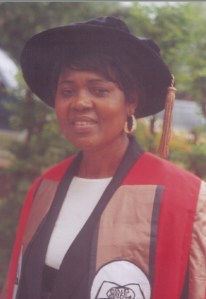
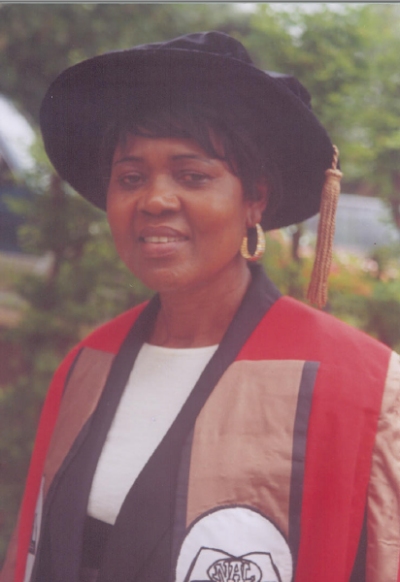
Akachi Ezeigbo, PhD, FNAL, FLSN, FESAN is a Professor of English, Department of Languages, Linguistics, Literary Studies & Theatre Arts, Federal University Ndufu-Alike, Ikwo, Abakaliki, Ebonyi State, Nigeria.


The many difficulties of war – Part 1

“Another thing that added to the difficulties of life for us was our menstruation. When your period was coming you’d be dreading it because there were no sanitary pads. What I did was cut up old wrappers and sew the pieces together. I made up to ten of them. We either put them in our pants or made a loop in them and tied them with a rope around our waist. They would soak so much with blood before I washed them. I had a particular place where I used to dry them so people wouldn’t see them. After the four or five-day cycle I’d keep them neatly until the next one.” – Akachi Adimora-Ezeigbo.

                                                                     ———-

When the war started, I was a school girl at Archdeacon Crowther Memorial Girls’ School, near Port Harcourt, so I was already knowledgeable about life. There was so much deprivation, and life became cheap and meaningless. I must describe myself as one of the people who were traumatized by that war because I lost a number of relations and classmates, young boys of eighteen – nineteen years who went to fight in that war and died.

AKACHI EZEIGBO PHOTO 3
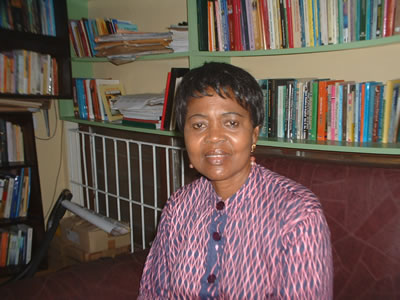
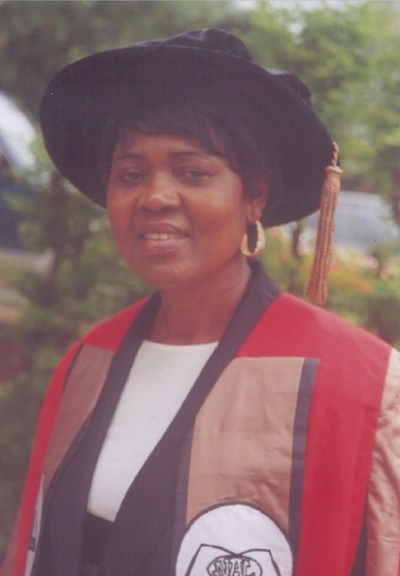
Professor Akachi Adimora-Ezeigbo in her library

Roses and Bullets, my war novel, is dedicated to them: my brother, Joseph Adimora; my cousin, Samuel Ogbuefi; my husband’s elder brother, Nathan Ezeigbo; and other close relatives.

We moved from Port Harcourt to Aba, to Mbano, and finally to our home town, Uga. There was constant displacement and in each place we lost something. When we got to Uga, the Biafran had built an airport there. The one at Ulli was for relief materials while the one in my place was purely for military purposes, where they kept all those Biafran Babies. Because of it, the Nigerian government raided Uga airport and the surrounding villages virtually every day and at nights.

Those air raids were particularly traumatic for me. They were terrible! The sounds would make you urinate in your pants, if you had pants to wear at all. The sound would strike you and paralyze you and leave you almost dead because when it came it would screech and then you had to run to the bunker. I’m sure people who had weak hearts died but we were young so we could withstand the shock. We had a permanent bunker and in the morning when you got up, you ate, if there was food, and then headed for the bunker. My father, who was a District Officer at some point, had a storey building, one of the few in my home town. But we were advised not to stay in the building because Nigeria Air Force was bombing anything they saw. We covered the roof with palm fronds but could not cover it completely. Biafra didn’t have effective air defense so sometimes when the Nigerian planes came for raids they would descend extremely low. In fact, one day, I looked up and saw the figure of the pilot. In the night you didn’t use any light so they wouldn’t see you. There was one woman who lived in the next village who was moving about in the night with a naked light. Immediately they saw the light, they rocketed the place and the woman died.

Uga was never evacuated because it was in the heartland of Biafra adjoining Akokwa and Akpulu. But as Biafra shrank, refugees from Awka, Abagana and other places came crowding into Uga, so the air raids now concentrated in the area and the surrounding towns such as Ekwulobia, Ezinifite, Amesi and Nkpologwu. Markets were now in the forests and were held at night because people were advised not to gather in groups in the day time.

During one particular raid, we ran out of the house and lay flat on the ground because there was no time to run into the bunker. The planes, which used to come in pairs, were releasing canon fire, shooting, rocketing. At the end of it, when I got up, the first thing I saw was eke [python] close to where I was taking cover. I wasn’t so scared because in Uga pythons do not bite. The locals treat them gently and with respect. Then, I saw a severed leg and an arm lying close by. People were groaning. It was horrible the way those planes killed people. It could just chop off the head or the whole trunk of a person. If you witnessed that war you would understand the reality of the fictional accounts in Half of a Yellow Sun, where the body of one of the characters kept running even after his head was cut off.

Then, there was the hunger. Sometimes there was nothing to eat. Most times we didn’t bother to go to the relief centers because one could stay there for a whole day without receiving anything. Some centers didn’t have enough supplies. Reverend Fathers were even accused of using the relief materials to lure girls. Some were accused of selling them to traders, for in the markets traders were selling stock fish, salt and other items. Some were using them politically – giving to certain people and not to others. One or two times I went begging but got nothing. After that I didn’t go again. Perhaps they didn’t want to give the locals, preferring to send the supplies to the refugee camps. Inevitably, people became more resourceful, trying to look for anything edible to assuage the hunger pangs. They would come out en masse to look for Aku – termites – in the early hours of the morning or at night. My family started eating the things we had never eaten before, like Uchakiri. I didn’t know those things were edible but when you see others eating them, you’d do the same. We cooked cassava leaves in soups and ate them with yam or cocoyam. We ate mpoto ede, cocoyam leaves. We dried the pink layer under the outer peel of cassava tubers and use it as food. My mother was making ogbono and okro soup with the tender leaves of the hibiscus flower. People who lived near small streams ate crabs. We would turn the manure in the goat pen and roast the lava we found crawling underneath. People ate rats and lizards. Now I can’t imagine myself eating these things but we relished them then. But many people still died. There was a massive continuous dying of young Children, especially from kwashiorkor. In my mother’s kindred some of the old men died because there was nothing to eat. Younger people survived because they managed to scrounge whatever they could for food.

They were also conscripting children as young as fifteen and sixteen years. My brother was fifteen when they conscripted him. He came back alive because there was a battle in the forest and they dispersed. My frightened brother ran away and came home as an Atimgbo, one suffering from shell shock. The military police was on the lookout for those who went on AWOL, so when he saw a Mami Wagon he would hail the occupant and say, “Driver give me smoke. Carry me. I’m going to Akokwa.” When he returned home, people were trooping in to sympathize with us. Women were exclaiming, “Ewuu, nwa m’o! Agha Biafra.” [Oh, poor child! This Biafra war.] After my mother gave him water to take a bath, she cooked his clothes in an iron pot for twenty four hours even though firewood was scarce. He had kwarikwata [body lice] and that was my first time of seeing them. They’re so flat it was difficult to pick them out from the fabric, so we dumped his clothes inside the pot. I don’t think he even had shoes because when they conscripted him my mum gave me, as young as I was, shoes to take to him. By the time I got there they had moved him to the war front, less than two weeks after they conscripted him. He couldn’t have had more than one week’s training. I wept so much and dropped the shoes with somebody who promised to send them to him. About five months after he came back the war ended.

Another thing that added to the difficulties of life for us was our menstruation. When your period was coming you’d be dreading it because there were no sanitary pads. What I did was cut up old wrappers and sewed the pieces together. I made up to ten of them. We either put them in our pants or made a loop in them and tied them with a rope around our waist. They would soak so much with blood before I washed them. I had a particular place where I used to dry them so people wouldn’t see them. After the four or five-day cycle I’d keep them neatly until the next one.

We had access to water because our house had a gutted roof which filled up our big underground tank during the rainy season. In the dry season we’d be hoarding the water. We also had a well called Umi. That was where we drew water for house hold chores. It was not always clear so we put alum in it. But the well water didn’t last till the next season so we went to streams like Ochi, Agwazi and Obizi. They had their source from the ground so they were there all the year round. It’s from Obizi spring in Uga that the Government provided running water to Aguata Local Government area in the present Anambra State, so you can imagine the size of this beautiful body of water.

It was even risky to be a young girl or woman during that time. After the war, the soldiers invaded everywhere. They came to my village too. They took many girls by force. Some went willingly. Others were enticed with food. They even took away people’s wives and the poor men were helpless. When you’re dealing with a man with a gun, what do you do?

AKACHI EZEIGBO PHOTO 1
Professor Akachi Adimora-Ezeigbo

                                                                     ——————-

Akachi Ezeigbo, PhD, FNAL, FLSN, FESAN is a Professor of English, Department of Languages, Linguistics, Literary Studies & Theatre Arts, Federal University Ndufu-Alike, Ikwo, Abakaliki, Ebonyi State, Nigeria.


It wasn’t Indians and Cowboys.

“A significant outcome of the war is the foundation it laid for the further liberation of the Igbo woman. Before the war, Igbo women were generally laid back because our patriarchal society ensured that men undertook most financial responsibilities in the home and society. But when conscription was at its peak, men would disappear into the bush to avoid being signed on. Women, therefore, became the bread winners of their respective families, crossing Biafran and Nigerian lines to buy food and other supplies so their families would survive. In the process of these interactions, the Igbo woman started to became more exposed, assertive and confident and that is the essence of what the modern Igbo woman has inherited.”  – Patrick Amanze Njoku

                                                                      ———-

I was a teenager at the time so the war was a threshold into my twenties. That is the most impressionable time in the life of a child and the trauma hits you. You realize it’s not Indians and Cowboys. It’s for real. As a soldier, the first taste of fire fight causes panic in you. Most soldiers pee on their pants because they’re looking at death. You get used to it after a while but no previous experience prepares you enough for the real incidents.

I remember the day the first bomb was dropped in Owerri, next to us at Mere Street. It was either late 1967 or early 1968, at the start of the war. There weren’t jets at the time because they hadn’t purchased any bombers so they were using propeller jets and this one was a Nigerian Airways passenger plane. We heard the sound – Whooo! Whooo, Whooo! Whooo! – and came out to the junction of Ihugba and Ejiaku Street. In something like slow motion we watched as a bomb dropped out of a window. Usually a bomb would have an ejector so you don’t see it until it lands but we actually saw this one fall and land on the house next to ours. It crippled the whole damn thing and left a big hole. We actually saw flesh because we were not even up to a hundred yards away from the place. This drummed it in that hey, this was not a football match; this was serious business.

Throughout the crisis we never lived more than three to four miles away from the war front. When Owerri fell to the federal troops, my father moved us to Ubowala in Emekuku, where we got accommodation in the primary school compound which had been turned into a relief center. From there we moved to Owala, where we were till the war ended.

My father had been a minister during the British rule and the First Republic. He could have moved away to safety but he didn’t. After the war, we asked him why and he said it would have appeared like a betrayal if he had abandoned the people who had elected him into the Owerri constituency and sent him to the House of Representatives three times. The only times my father left was when he had to go on foreign missions on behalf of the Biafran cause. He went to Ireland and raised money with the Red Cross and Caritas. He also went to the Vatican because, being a knight of the Catholic Church, he knew members of the College of Cardinals and had a voice in the Vatican. He was able to raise about three hundred to four hundred thousand dollars and that was a lot of money in those days. He made a total of three trips. Sir Akanu Ibiam, who was then the Vice President of the World Council of Churches, worked more than any other person I know to raise funds for the cause. At a time, he was living permanently abroad and I remember a very moving story told to me by a young lady who worked with him. They had just raised almost two hundred thousand dollars when the war ended. So, what to do with the money? His team was astonished when he sat down and starting writing cheques to return every penny of the money to the donors.

Before enlisting in the army, I served with the Military Intelligence. We operated under Colonel Bernard Odogwu with the late Dan Njemanze as his deputy. One night we heard the ra-ta-ta-ta of small fire arms. We assumed our boys were testing new arms because the rumour around the time was that we’d gotten a new shipment of small weapons – Maddisons and Uzi riffles. But the shooting persisted all day and into the night and was even getting closer. Late into the night we started hearing vehicles, heavy duty jeeps and trucks coming from the state house. All night long they were moving so we knew something had gone wrong. What we didn’t know was that the State House was being evacuated to Madonna School in the Okigwe area. You know, human beings are very intuitive and intelligent. The fire was coming closer and closer, so people in town had sensed there was trouble. The next morning, we saw a line of human beings streaming into the road leading to the Aba Express road, some carrying children and others, a few clothes. We rushed off to Umudike where we started to evacuate some of our equipment. The Research and Production section was loading up her chemicals and equipment. The DMI was also loading up her sensitive documents. Before night we were on the Low Bed truck out of Umuahia. Most of the roads in the new republic were already occupied by Nigerians so it took us the whole day to manoeuvre through path ways and bridges, all the way to Liilu somewhere in the heart of Aguata area. We finished unpacking about 9.00 pm and I just called my friend and said, “I’ve seen enough. I’m heading to the School of Infantry now.” That’s how I joined the army; another significant moment for me.

One of the most telling moments for me was when I saw children dying of hunger and the times I happened to be at a bomb scene. Being almost a child myself those were traumatic experiences and that is why it is said, in a sense, that war changes people. On one level, a soldier learns to places little worth to his life because you know you could lose it at any moment and become a statistic. War brings out the worst in people. The survival instinct in every human being means that when faced with hunger and starvation, people react in selfish ways. For example, if food was given to you and others and you had the opportunity to take it all for yourself, you’d do so whether the other person was your sibling or parent, or not. War also brings out all manners of outrage in people. I remember an incident that happened when I was at a refugee camp with one of my cousins. He was annoyed because the Reverend Father in charge of the rations seemed to be favouring the ladies rather than soldiers who had just returned from the war front. His reason was that the rations were meant for civilians and not the military. The Reverend Father refused to give in to my cousin’s pleas so my cousin kidnapped him and conscripted him into the army. The reverend gentleman served gallantly and even attained the rank of captain. These kind of human reactions to trauma and misery, and the fact that you lose your values and everything you hold dear, informed the title of my book – The Wrath of War. It’s really terrible. One would never wish for it to happen again and anytime people are propagating war, you try to dissuade them.

This takes me back to something that happened when I was at Stella Maris College, Port Harcourt. The war was heating up so my family left Lagos, where I was schooling at St. Gregory’s College, and relocated to the east. Our principal at Stella Maris was Father Maher, an Irish priest. He was also a veteran of the Second World War, as we found out later on. Occasionally, he would try to acquaint us with world and local politics and he told us he foresaw there’d be a conflict. He said he wished it would be avoided through concessions and forgiveness on both sides. But we were all bristling with youthful enthusiasm. We thought it would be a football match and everybody would play for an hour and go home and take a bath. Some of our boys reported him to the military in Port Harcourt and he was accused of being a saboteur. Two days later, they whisked the Reverend Father away and deported him.

On the other hand, war situations can also bring out the best in human nature. You will see a woman putting her life at risk just to save her children, or any child, even if it entails taking a bullet. Magnanimity and our extended family system were taxed to the limit. I remember returning with other soldiers from Onitsha sector. It was a two-day trek and wherever the night met us we were welcomed by families. They treated us as their sons, gave us food, water to bathe and accommodation for the night. In the morning they fed us with coco-yam and palm oil before we set off. Till today, I’m yet to see that sense of selfless service by people who had so little to offer yet did so without counting the cost.

A significant outcome of the war is the foundation it laid for the further liberation of the Igbo woman. Before the war, Igbo women were generally laid back because our patriarchal society ensured that men undertook most financial responsibilities in the home and society. But when conscription was at its peak, men would disappear into the bush to avoid being signed on. Women, therefore, became the bread winners of their respective families, crossing Biafran and Nigerian lines to buy food and other supplies so their families would survive. In the process of these interactions, the Igbo woman started to became more exposed, assertive and confident and that is the essence of what the modern Igbo woman has inherited.

I remember an aunt of mine who was very dynamic and business minded even before the war and whose daughter, Josephine, inherited these traits. We were at Ubowala at the time and Josephine used to go as far as Aguleri to trade because that was the easiest path to get into Nigeria. A lot of the food coming into Biafra was coming from there so she’d go with herbs and vegetables and sell them for Nigerian currency with which she’d buy salt and other items and bring in to Biafra. At that time salt had become as valuable as crude oil. Gradually, she built up her capital and started trading on a larger scale. Most of these women were first daughters – Adas – and very much revered in Igbo land. This was the genesis of women being called Okpataku [she who gathers wealth] rather than Odiziaku [she who manages wealth] the sobriquet with which women were formerly known.

This assertiveness that started with commerce has also translated into education because there seems to be more women in schools today than men. Now Igbo women are expressing themselves more by saying, “I am a human being, I have a right to be heard and I have a right to everything just like the man.” Another thing I like about the new Igbo woman is they’re now self-educating rather than waiting for their parents. A university degree is the new benchmark for the Igbo girl and this is all a fall out of that liberation that started with commerce during the war. It’s a good thing in the sense that – like it is usually said – children are trained by their mothers even though they bear their fathers’ names and so every educated Igbo woman insists on educating her children.

                                                                          ———-

Patrick Amanze Njoku is a Journalist and the author of The Wrath of War. He was the Treasurer and Vice Chairman of the Association of Nigerian Authors, Imo State branch.

BIAFRA BLUES

“The other day I met a 35-year old Nigerian man who told me he had never heard of Biafra. He is Igbo. I was traumatized by this. Hundreds of thousands of Nigerians lost their lives needlessly during this war. How do you forget an annihilation? There are no credible museums to record this collective trauma and no attempt by successive regimes to remind Nigerians of a time when our country went mad. History is important. When Nigeria erased history as a compulsory part of the curriculum in the classrooms, they instituted amnesia in our consciousness. We are a people that have been forced to forget the past. This is why every day is a repeat of the past. Because those who do not know their history always forget their past. Nigerians are in no danger of remembering their past. We have no history, says our rulers. But as we see, Biafra lives in the hearts and minds of the children of those who lived and died for a dream deferred.” – Ikhide Ikheloa

                                                                           ———-

The Nigerian civil war is often looked at through a binary lens: The East versus the rest of Nigeria and good versus evil, depending on who is telling the story. There is hardly ever a dispassionate commentary because it is so emotional and traumatic, and the narrators are invested in their story. There has not been a shortage of narrative; by my own count there are close to one hundred books on the subject of Biafra’s aborted secession.

I was a child when the war broke. I remember the feeling of fear, foreboding and a relentless loneliness. Alone with my little brother in Benin City, I thought of war as the end of the world as I knew it. The headmaster of our primary school called an assembly and told us that we were at war. I wet my shorts because I thought he meant we were all going to die. I did not want to die without seeing my parents again.

The Biafrans were the rebel forces and, believe it or not, they fought with heart. For a period they occupied Benin City where we lived and I remember the sound of gun shots, shuttered houses and the waiting, for what never came for us.

I missed my father. He was a policeman, part of Nigeria’s highly trained elite Mobile Police Force. The job of the force was to occupy “liberated” territories or overwhelm protesters in areas of unrest. The men of this force were very good at what they did. They were trained to maim and kill and saw combat often. As a little boy, I lived in fear of losing my dad during combat. My dad was always leaving and staying away from the home for long stretches of time. This time, during the early stages of the war, my dad and his team mates were in Asaba and the Biafrans ambushed them. They beat him up and broke his bones. But he escaped and lived to tell the story. Up until his death he would always tell that story with respect in his eyes. The Biafrans were feisty fighters.

My mother was also away in the village burying her father when the war came even as my dad was at war. I was left alone with my little brother in the city because we were of school age and our parents did not want us to miss school. So we stayed with a relative. My mother was worried about us. We were caught in the war in this city that had just been occupied by rebel forces and she fretted about seeing us alive again. Our relative smuggled us out of the city in a mammy wagon and we ended up in our village. I remember that day quite vividly because it was a market day. Someone must have spotted us at the motor park and run ahead to tell my mother the good news. We saw her running towards us, running and falling, running and falling. She grabbed us and held on to us without a word. She kept grinning and it is hard to put in words the joy on her face.

Our dad joined us later. One morning he came riding in in his motorcycle using just one good foot. He was so broken he had to be helped out of the motorcycle. My dad was a strong warrior. Like the Biafrans.

Right after the war, I started secondary school. The Red Cross came to our school and determined that we had been traumatized by the war and needed sustenance and support. We had just survived a war, true, it was traumatizing, yes, but nowhere near what children in Eastern Nigeria had endured. I was a child though, always hungry and since there was a promise of food I did not complain that the Red Cross was exaggerating my condition.  They brought us wheat, dried cod aka stock fish, aka oporoko, aka panla, and powdered milk that curiously came in sacks. We tried to do many things with the wheat but it was a poor substitute for garri and yam flour. The dried cod was so hard they ruined our teeth and each time we used the milk we made a mad dash to the latrines. We found out that we were lactose-intolerant. The war ended but the war continued.

When I think of Biafra, I think of the many men of the barracks – Igbo – who went home to the East and never came back. I was particularly close to one as a child and there are days I still wonder whatever happened to him. I remember the bombs and household names like Carl Gustav Von Rosen, Joseph Achuzia, Brigadier Benjamin Adekunle, the Black Scorpion, etc. I remember the songs of the time, especially those of Celestine Ukwu and Rex Jim Lawson. I play the songs and they take me back to an important part of my life and our shared history. The most traumatic images for me are of children like me with distended stomachs. We knew of kwashiorkor before we studied it in the classrooms.

Many unspeakable things happened during the war. It was in many ways a turkey shoot of the Igbo by the Federal side, and women and children bore the brunt of the hell. However, minority ethnic groups like mine got caught in the middle of the fight. Sometimes when we were reluctant to join the fray we caught hell – from either or both sides. I think of the atrocities of the rebel and Federal soldiers in the old Midwest region – from Benin City to Asaba – atrocities that still hurt to this day, especially the massacre of the men of Asaba. Google it. We need a real, well-funded museum dedicated to that war.

The other day I met a 35-year old Nigerian man who told me he had never heard of Biafra. He is Igbo. I was traumatized by this. Hundreds of thousands of Nigerians lost their lives needlessly during this war. How do you forget an annihilation? There are no credible museums to record this collective trauma and no attempt by successive regimes to remind Nigerians of a time when our country went mad. History is important. When Nigeria erased history as a compulsory part of the curriculum in the classrooms, they instituted amnesia in our consciousness. We are a people that have been forced to forget the past. This is why every day is a repeat of the past. Because those who do not know their history always forget their past. Nigerians are in no danger of remembering their past. We have no history, says our rulers. But as we see, Biafra lives in the hearts and minds of the children of those who lived and died for a dream deferred.

                                                                        ———-

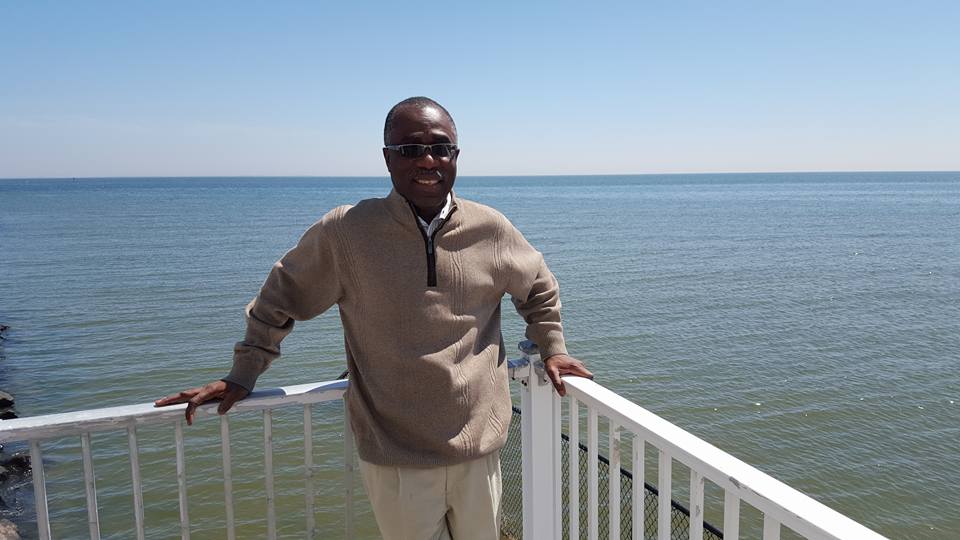
IKHIDE IKHELOA PHOTO 2

Ikhide Ikhiloa is a Writer, Critic, Political Analyst and School Administrator. He lives in the United States of America with his family.