Tag Archives: Biafran soldiers

For The Love Of Family – Part 2

[Ben Onwuka was a former Biafran soldier who was wounded in battle. He talks about other wounded soldiers who were evacuated to Holland by the International Committee of the Red Cross for medical attention. A couple of them became mentally unstable and one was eventually committed to a mental institution in Holland. He also talks about returning to Nigeria to look for *Ruth, the girl he loved, who he had also promised to marry.]

                                                                         ———-

We were disappointed to hear that Biafra was no more; doesn’t exist anymore. We couldn’t believe it. We never thought Biafra would lose the war. We so believed in it – the efforts we put in, the determination. Anybody who really fought the war with all his mind was disappointed. We were confused and emotional. After everything, we didn’t have anything to show for it.

The Dutch people knew we were hurt because we lost the war. They said they can’t force us to go back since we came as Biafrans, but if we decide to go, they’ll arrange for our going back. They said it’s either we stay and study or we learn a trade so that when we decide to go back we will have some skills. I’m very much indebted to them.

One boy, Christopher, wanted to do banking. Felix, from Ngwa, also wanted banking because he did Commercial School in Nigeria. I wanted to do Medicine because I saw a lot of people dying in Biafra and that was my motivation. But they don’t give foreigners scholarships for medical studies and it takes about eight years to finish. It also costs a lot of money. So I thought of agriculture because of my experience of hunger in Biafra. My aim was to return and help my country. I started with Agricultural Secondary School, a bit of Forestry and landscape architecture, then entered States Tropical Agricultural Higher School where I got my first degree in Tropical Agriculture.
17407929_10211548664210116_67754857_o
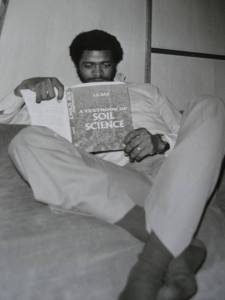
Ben, as a student of Biology and Entomology

After that I went to work in Wageningen and obtained my second degree in Biology and Entomology in Wageningen University and Research Centre. My major work was irradiation of insects to induce lethal genes in them or induce translocation in their genes for the purpose of insect control. These were done in the institute for Atomic Sciences in Agriculture in Wageningen where I live until now.

Some of the other soldiers didn’t fare so well. One of them was John who developed mental problems. He joined the army as a very young boy of seventeen or eighteen years. He underwent several operations because his mouth was shattered, so they tried to reconstruct his teeth and mouth and jaws. So much so that he became mentally confused. They used shiny metals for the construction, so he had appendages on his head like antennas which made him look like a mobile robot. When he comes out people will be staring. Sometimes they used his skin to do skin grafts. They cut it and pull it, and you see it growing from here to there. They used it to construct his lips because there was nothing left there.

I remember one day when we were in the Military Rehabilitation Center. They gave me a special room because I was an officer. John knocked on my door and when I opened it he just dived under my bed and said, “Oga, please, they’re looking for me. They are looking for me.” I said, “John, nobody is looking for you. Please come out.” He said, “They want to kill me this night. You don’t know what they are doing. This is a way to get me. I don’t know why you can’t see this.” All the other boys came and pleaded. But he kept on doing this. Every time it will start. Eventually, they put him in a psychiatric center and we went there to visit him. I could see death in his face. He said, “Please, I am going with you people. Do you see they have marked where they will bury me?” It was so sad to see. We were new and couldn’t speak Dutch but John will say something like, “The news this afternoon was saying that John has to be killed, must be killed.” But you can’t do anything to stop him. When it became impossible to treat him, they sent him back to Nigeria. He was accompanied by a military nurse who gave his family a lot of money to take care of him. They also promised to be monitoring his progress. The wounds had healed in a way so he was able to eat. They even put false teeth but who takes care of such things in the village? You have to bring it out, brush it and put it back. He even had special food from Holland. But we heard he went to the village shop and stole cigarettes, so they beat him up. And whenever he passes, people will be making fun of him, saying things like, “Ony’ara, o n’ezu kwa oshi – Mad man. He also steals.” John eventually became the village lunatic. The white nurse came a second time to see what became of John and was so disappointed with his condition. He stayed back for some time and tried to take care of him. He gave the family money again to continue the care and he remained in contact with them. But the third time he asked about John, they told him John was dead.

Another person who developed mental problems over there was Victor from Nsukka area. He became quite dangerous, setting his house on fire and threatening to kill somebody who was making calls in a public phone booth. He claimed the person was plotting against him. Anytime the tell us what is going on, it doesn’t matter what time of the night, we will go to see him. He even claimed he had impregnated my girlfriend’s friend. She had gone with us to the hospital to visit him and she liked him so much. So, every time he sees Crystal, my wife, he will ask, “Where is your friend? She’s having my child.” He became so dangerous they put him in a very, very highly guarded psychiatric hospital where it became impossible for us to see him or get information about him. Till today I think of Victor.

Cyril’s case was different. His two legs were amputated and he had artificial legs. But he was so clever he was speaking Dutch within six months we were in Holland. He was playing music for people, doing disk-jokey. He will hire sex [pornographic] films and invite people to his house to see the films. He was even smoking grass and riding his motor cycle without licence. He could commit a crime and they’ll look at him like, okay he’s a Biafran and he has no legs. He became problematic financially to the Dutch people so they offered him money to go back home. Actually, they made the same offer to all of us. If you want to go back home, they give you about 15,000 guilders to resettle. It was big money. When Cyril showed interest in going home, they increased the money and paid for his transport back. His plan was to start a business when he returns home. He promised to stay in touch but we never heard from him again. Any time I’m in Nigeria, I think of him and wonder what became of him.

I was settling down to my new life but I couldn’t forget *Ruth.
BEN ONWUKA 20
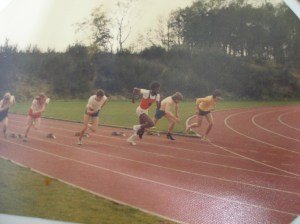
Ben, as a sportsman in Holland

There was a Red Cross man who was going to Nigeria and I gave him an assignment to look for her. He succeeded and went to my family, but they told him that *Ruth’s family left Achina when the war ended and she went with them without even crossing the street to say to my own parents, “I am going.” I get emotional when I remember this because I had even given them wine that I will marry her. My brother told the Red Cross man to tell me, “The person you’re calling your wife didn’t even say bye-bye to us. Till today we have not heard anything about her.” On my own part, I had never been to her village but I knew she was from Eke, around Nsukka. That was when I decided to take my mind off her. I got a white girlfriend, who later became my wife. I told her about Ruth, that I’m still in love with her and I don’t know where she is. She was so sad about the situation but she also liked me a lot.

The first time I wanted to travel to Nigeria, I told my wife I am going to look for *Ruth, that I must see her. You know, when you are interested in somebody, you are always interested in that person. By then I already had my first child, Amara. My wife bought a present and asked me to give to her. That was in 1975.

I got to Enugu and headed to 66 Zik Avenue, which was where I met her. The people I met there said they know the family but they left a long time ago. I didn’t know what to do. I walked to the bus stop and was standing there, thinking of what to do when a young man stopped me and asked if I was one of the musicians coming to perform in Enugu that day.   BEN ONWUKA 15I used to dress in a flashy way then – high heels, jeans, Afro and beards – so he mistook me for somebody in show business. When he was speaking his voice was very familiar and I said to him, “Your voice resembles a voice I used to know.” He looked at me again and said my own face is a bit familiar. I asked him if he has ever lived in Achina. He said, “Yes, we were refugees in Achina.” I asked him if he knew any Ben and he said yes. He looked at me again and exclaimed, “Are you Ben?” I said yes, I am Ben. He embraced me and I said, “I’m looking for your sister.” He said *Ruth was married but I said he should take me to her. We went to his house first and after taking some drinks, we set out. I was so excited as I sat in the sitting room waiting for *Ruth to come out. Then, I heard her voice. She was saying, “Kedu onye n’acho kwa nu m’ kita? I na ghi a gwa ya na m n’akpa ishi – who is the person looking for me now? Why didn’t you tell the person I’m plaiting my hair?” She entered the room with hair half-plaited and when she saw me she screamed, “Ben!”
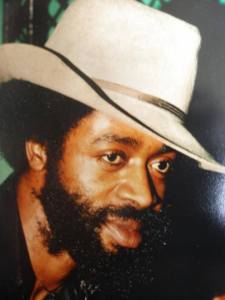
After she recovered from the shock, she pleaded with her brother to take me back to his house. I was surprised because I was prepared to meet her husband. In less than one hour she arrived at her brother’s house, looking very flashy. I saw *Ruth again as a woman. She started crying and we held ourselves. I asked why I had to leave her house and she narrated how she was in an unhappy marriage because her husband was possessive and beat her often. We talked and talked and after, I gave her a present from my wife. She said she was waiting for me to come back for her because I was her first love and had already given wine to her parents. I was so sad. I told her it wasn’t possible because we were both married and had a child each. She said that anytime I come to Nigeria, she will be available for me. I said, “My God.” But I understand what must have happened. She may have been forcefully married off to the man. After the war, people had nothing to eat and if you see a lady and promise to marry her the parents will just ask you to bring whatever you have and take her away. I promised to visit her anytime I come to Nigeria. I promised to be giving her some money as long as her husband doesn’t know.

I didn’t have any more contact with *Ruth until seven or eight years ago when I went to Enugu. Through an acquaintance, I traced her brother through his wife who had a shop in town. When I got there, I introduced myself and told her I was looking for her husband’s sister, *Ruth. She asked me to describe her, so I mentioned the names of her siblings and relations. Immediately, she called her husband on the phone, “Hello dear, there’s somebody waiting for you here.” Soon, he arrived. He had aged a bit but I could see some of his facial features still there. He kept looking at me, then he said, “Ben, what brought you here after so many years?” I told him I met *Ruth when I came back many years ago, that I wanted to see how she and her children are doing. I saw his face changing. The wife said, “We are very sorry. *Ruth is dead.” I couldn’t believe it. I kept saying, “What? Late? Died?” They said she died the previous year from bleeding caused by injuries to the head. The brother’s wife said if I had come earlier, *Ruth wouldn’t have died; that she talked about me all the time.

That day, I felt like my wife just died. Even though *Ruth is dead I still long to see her children. The next assignment is to trace her brother again and see how I can get in contact with her children.
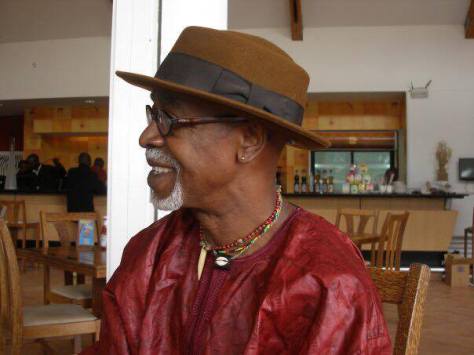
BEN ONWUKA 4

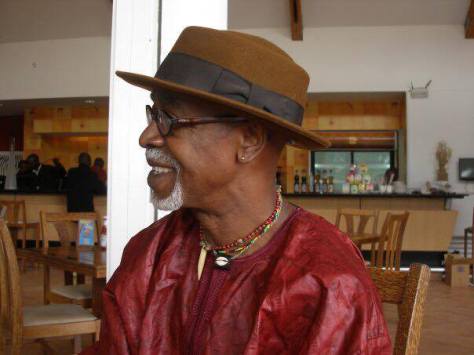
Ben Onwuka is a former Biafran soldier. Before that he was the Nigerian champion in the 400 meters race, 1964-65. He lives in Holland with his wife, children and grandchildren.


A FRIENDSHIP BROKEN BY WAR – PART 1

“… I went to fetch water from the stream and noticed there was a Nigerian soldier on the other side. He was staring at me and I became afraid…I looked at him, his gun, the way he was dressed. I said if I start running he’ll shoot, so I stood and stared back at him. He started walking towards me and shouted, “Smartisco!” M’ ku jaa. This was my hang-out [nick] name in Kaduna. I said who can be calling me this name here? I went closer. It was Yaya… Should I go forward or not? My eyes filled with tears. He waved at me. I waved back. Then he turned and walked away. The following day, the boy who went to fetch water came back with things like Oxford biscuits, Exeter Corn Beef, High Society cigarettes. He said he picked them from our own side of the stream…Every day after that, whenever our boys went to the stream, something was there. Everyday. I believe Yaya kept them for me. Maybe he thought I will come again to fetch water. But I never went back.” – Smart Eze

                                                                      ———-

I was one of the brightest kids in the village but my father was a peasant farmer, so I didn’t have the privilege of going to secondary school. I shuttled from one relation to the other – Aba to Lagos before ending up in Kaduna where I trained as an electrician. After my training, I got a job with Electrical Contractors of Nigeria limited.

The night of January 15, 1966, we were hearing explosions but we were not bothered because we were used to soldiers doing exercises. Saturday morning we set off to work at the Nigeria Air Force Base where we were carrying out various electrical installations, including air conditioners. As we drove past the Premier’s house I noticed that the police guard wasn’t there. But on both sides of the road we saw soldiers in camouflage uniforms lying down with their guns pointing towards us and signalling to us to go back. We knew something must have happened. Later we heard that a coup had taken place but we didn’t know who carried out the coup, for what purpose, was it in Kaduna, Zaria, Lagos or Ibadan? Towards the middle of the day news started coming out that the coup plotters killed a number of politicians, that Ahmadu Bello and Tafawa Balewa were affected, that the head of the coup was one Igbo officer. It went on till Sunday so there was a stand still. We didn’t know what to do.

When the rioting began, Southerners in general began feeling insecure. In July another coup took place and I said to myself, “This is time to leave.” But leaving was not easy. Northern soldiers had broken out of the barracks and joined the civilian mobs to attack the easterners. I was twenty one years old at the time and had many northern friends like Yaya and Mo, and some Igbo boys like Sunday and Victor. We were all young men, without any care in the world, going to parties and cinemas every Friday and Saturday, smoking, drinking. Mo and Yaya and some of the Hausa boys came and gave us advance warning that our street, Zaria Street, was going to be hot the next day. They gave us Agbadas to wear so that we’ll blend in with the mob when they come to attack. Then, they took our boxes ahead of us to the railway station. The following day, the mob came and we joined them as they went from house to house, killing, rampaging, up to the train station. We saw many atrocities that day. One child was crying, running around, looking for his parents. They raised him up and dashed him on the ground. His body started twitching and convulsing, until he became still. When we got to the railway, Yaya and the others handed our suitcases to us.

While we waited with others for the train to arrive, the soldiers came and started identifying the Igbo soldiers who had escaped from the barracks. They lined them up at the platform and shot them, and left the bodies there for the train to crush. Horror! We were terrified, asking, “When will the train arrive?” When it finally arrived, it was very full because it had been picking up people along the way. They were announcing that more trains were coming but we knew we couldn’t stay there. We managed to squeeze ourselves inside. People were almost trampled, some were already dead, no space, some hanging on the door of the train and when the train moved, I saw people falling off.

At Markurdi Bridge, some soldiers stopped the train and took some Igbo men out. What happened to them, you can guess. After several hours we arrived at Enugu. There was one huge man in the train. They had cut off his head so it didn’t come with the body. His photograph was used as propaganda to show the atrocities the northerners were committing against easterners. It caused an uproar in Igbo land.

When Victor and I returned to our village, it was late. That day was our market Sunday. When our market day falls on a Sunday we celebrate it with a big party. Our arrival caused a lot of merriment because other people also arrived from Kano, Jos, etc. Those whose relations hadn’t arrived were scared.

The military government at the time had established the Resettlement Commission to receive displaced easterners. The idea was to have our records so that when tensions died down we can all go back. We never thought we’d not go back. I registered with them and they organised a Grade Three Trade Test for Industrial and Domestic Installations for me. I passed the test and interview and, while waiting for the letter of appointment, the war broke out. All my dreams were now dashed.

But one happy thing happened around this time. My mother and father had separated when I was about three years old, but when she heard I survived the pogroms, she sneaked to a neighbour’s house and asked them to call me. She told me she was my mother and we were both crying. If she hadn’t come that day I would not have remembered her face again. We went to visit my younger sister who was married. We were all crying and I was imagining how Nigerian soldiers will come and kill my family. I said, “No. I will carry a gun. I must defend.”

I joined at the end of 1967 and my first posting was Ikot Ekpene sector, at one remote village. The Nigerians had entered there in September/October through their rubber plantations and were camped on one side of a hill. I think they were cut off there and didn’t get supplies for a long time. Our own group was camped on the other side of the same hill. There was a stream close by where we all used to fetch water but it was miraculous that we didn’t attack each other. I’m sure if our bosses had heard about it they would have court-marshalled us.

A few days into this extraordinary cease fire, I went to fetch water and noticed a Nigerian soldier on the other side of the stream. He was staring at me and I became afraid. Was he going to start shooting? I looked at him, his gun, the way he was dressed. I felt that if I start running he’ll shoot, so I stood and stared back at him. He started walking towards me and shouted, “Smartisco!” M’ ku jaa. This was my hang-out [nick] name in Kaduna. I said who could be calling me this name here? I went closer. It was Yaya. My body went cold. I didn’t know what to do. The stream was about three metres wide. Should I go forward or not? I didn’t want to attract attention so my group doesn’t start shooting thinking I have been captured, or his side will open fire. We didn’t talk but my eyes filled with tears. He waved at me. I waved back. Then he walked away.

The following day, the boy who went to fetch water came back with things like Oxford biscuits, Exeter Corn Beef and High Society cigarettes. He said he picked them at the point where we fetch water. Our leader said we shouldn’t touch them, that they may be poisoned. After I told them what happened, he said we could eat them but they insisted I eat first. Every day after that, whenever our boys went to the stream, something was there. Everyday. I believe Yaya kept them for me. Maybe he thought I will come again to fetch water. But I never went back.

One night we started hearing noise. We wondered if they were leaving or preparing to attack us. Before morning, they took us on, shooting. Kept shooting. We later found out that they changed the first group and brought in new people. They may have noticed that the former group was not taking us on. We returned fire but theirs was more, so we retreated and regrouped. They redeployed some of us to Port Harcourt where the Nigerians had taken over the airport. My ears were damaged in the attack and one of the boys I pulled out had his legs blown off. They took us to Aba General Hospital and when my ears cleared, I went home to recover.

I went back to the front and they attached me to the Ogbunigwe section of the engineering battalion. I was posted to the Afikpo zone where they trained me as an Ogbunigwe electrician and operator. Ogbunigwe was developed by Biafran scientists and was one of the highly effective defensive bombs in the weapons arsenal of the Biafran Army. It was made up of the main explosive in an encasement, the removable detonator, the battery and switch, and connecting cables. The main explosive segment came in different sizes – between 5 kilos and 500 kilos. The massive ones were transported to their locations by lorry, while the soldiers carried the lighter ones in their hands. The batteries and the detonators were put in separate bags. We used both car and torch batteries to generate the electrical power but whenever torch batteries were used, they were connected serially to each other to produce an electromotive force between 12 and 16 volts. The detonator could only be inserted into the main segment of the explosive and connected by wires to the batteries and the switch at the moment the Ogbunigwe was ready to be launched. The batteries had to be fully charged for the operation to be successful. It was a highly risky job for the operators and that is how I got blind.

SMART EZE PHOTOS 1
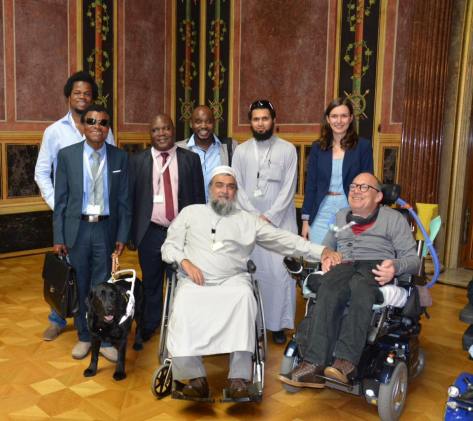
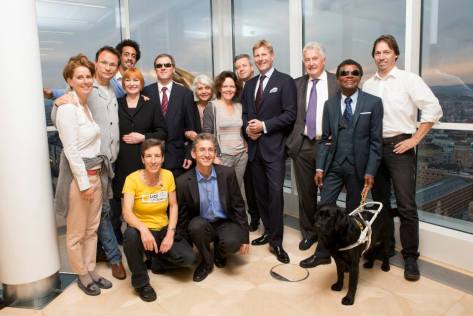
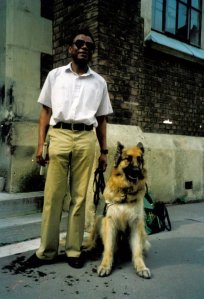
Smart Eze with his guide dog.

It happened on the 12th of November, 1968. There was shooting the whole of Saturday and Sunday. By Tuesday nobody was shooting again and we were trying to go further and deploy our Ogbunigwe so our troops can move forward. I don’t know how one of our boys touched the detonator and it exploded all over my face, chest, eyes, head. Some of the boys had their stomachs ruptured. Some had their arms cut off. Some died on the spot. The boy who detonated it, nothing happened to him. Those who were not wounded found a way to put us in an ambulance which took us to the Biafran Forces Hospital in Ohafia. I went in for surgery and when I woke up the next day, I heard people crying, boys in pains. I tried to see but I couldn’t. No light. Nothing.

One day, the boy who was helping me in the hospital, Chidike, told me there was a white man who was going from ward to ward looking at patients. When the man got to my bed, he inspected my eyes and asked if I would like to go to Austria for medical treatment. I said yes. Later on, Chidike overheard one of the Nigerian doctors telling the others that my eyes were beyond repair. But Dr. Bakker insisted I could learn a trade even if the doctors don’t restore my sight. He later told us he was under tremendous pressure from politicians and other prominent members of society to select their relations for treatment abroad. He said he followed his instincts and did as he was led.

While I was waiting to be evacuated from the hospital, the Nigerians entered from Afikpo and started shelling the hospital. I don’t think the staff were able to carry those who were immobile, but we escaped to St. Augustine’s, Nkwerre, and from there to Ekwerazu, where other wounded soldiers were waiting to travel out.

I told Chidike to take me to my village. My father was devastated to see me, his first son, being led by the hand. He opened my eyes and looked. Then, he placed his hands on my head and blessed me. I didn’t see him again because he died in April, 1970. My mother was crying but I couldn’t see her; I was only hearing her voice. I wish my father had lived to see how my life turned out.

The next morning, we left with my mother to Holy Rosary, Umuahia, where I signed enough relief for her. We returned to Ekwerazu. That same day, my village was sacked. The soldiers who drove us away from Ohafia had entered Umuahia and proceeded to Afo Ugiri, my village. If I hadn’t left that morning, I would have missed my group and not gone abroad.

Our plane was the last to leave Biafra. We had to wait for some time because Nigeria blockaded us until 1st of May, four months later. Maybe, if we had left earlier, they would have been able to restore my vision, even if partially. And if we had stayed longer, we would not have left because the war ended six months later.

                                                                       ———-

SMART EZE PHOTOS 3

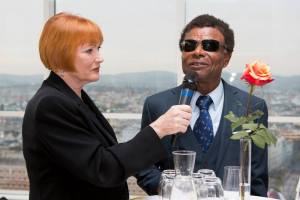
Dr. Smart Eze obtained a Doctorate Degree in Philosophy from the University of Vienna, in 1979. He worked with the United Nations in Vienna, Austria from 1980 to 2005. In 1981 he was the Ambassador for the United Nations International Year of Disabled Persons. He currently serves as honorary board member and goodwill ambassador for LIGHT FOR THE WORLD, an Austrian civic organization that provides medical treatment and support to people living with eyes diseases, blindness and other disabilities in underprivileged regions of the world.

SMART EZE PHOTOS 6

SMART EZE PHOTOS 7

His autobiography, My Four Worlds, was published in July 2010, by AuthorHouse UK.  The German version “Meine Vier Welten” was published in 2015 by Epubli, GMBH, Berlin.

Dr. Smart Eze also speaks Igbo, French and German. He lives in Vienna, Austria with his wife and children.

For the love of family – Part 1.

*Some names have been changed to protect the identities of the people concerned.*

“I started seeing changes in my little cousins, nephews, nieces. Their hairs were changing colour and they started getting big stomachs. One day, I saw eke [python]. I didn’t know what to do because in my place it’s a taboo to kill it. But I said to myself, “My younger ones are dying and this should be a good source of protein.” I killed it with the help of one other boy. We did it at night. I told the boy we have to throw away the skin because if they see it, they’ll know it’s eke. We made them drink the water because that’s where the nutrient is. And nothing has happened to any of us till date.” – Ben Onwuka

                                                                      ———-

I was working with the Sports Commission in Lagos when the problem started. I had to leave Lagos and go to my brother’s house at Ibadan. I was there when they killed Aguiyi Ironsi at Fajuyi’s house. Ogundipe made a statement first, asking the whole country to be calm. Within twelve hours, Gowon made his own statement saying that God in His infinite mercies has given the leadership of Nigeria into the hands of a northerner. But Ojukwu said Ogundipe should be the next in line because he’s next to Aguiyi ironsi.

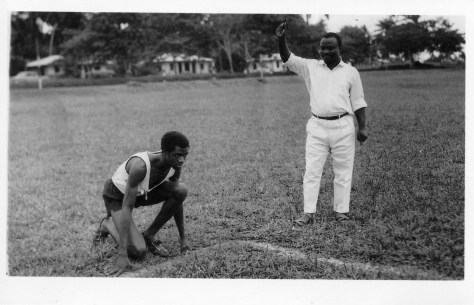
They started killing a lot of Igbo officers in 4th battalion and we were also hearing about the killings in the north. My brother was at Ijebu Ode at that time but I told his wife that we have to leave. We moved back to Enugu and I started teaching at Salvation Army Primary School, Ogbete. I was also doing sport because my aim was to represent Biafra in the Commonwealth Games which was about to hold in Kingston, Jamaica. I was already the Nigerian champion in 400 yards, 1964-65.

BEN ONWUKA 19
Ben with his coach, Chief Dickson Esema, at Salvation Army Secondary School, Akai Ubium, Eket.

The war was raging. The school where I was teaching became a sort of camp. Some people who came back from the front lost their eyes, some were mutilated. They were telling us the stories, the reality of the war, that it was terrible. In spite of it, a lot of boys wanted to join and it became a sort of fashion to be in the Biafran army. I started asking myself, “What am I doing in the classroom when B54 is bombing Enugu, bombing a lot of places?” So I decided to go for selection as an ordinary soldier. It was at Enugu Garrison and there were hundreds of boys, rows and rows of people. Everybody was struggling to be in the line and when I tried to push myself in, one of the military police flogged me because they said I was causing confusion. It was so funny. He started pursuing me but ran through the elephant grass and disappeared.

I went back to teaching. But I saw an advert that Biafra wanted to recruit their first officers. The qualifications were Credit in Maths, English and so on, and I had all of them, so I went for recruitment again. This one was based on ability to run and they took us in about five buses and dropped us twelve kilometres away. We had to run back and I was the second to come into the garrison. The first person was one Mr. Onu, who was a marathon runner. After the obstacle tests and interviews I was selected. We then went for our military training at Enugu Hilltop. Three months later Ojukwu came and commissioned us. We were the first Biafran officers and I was the first army officer from Achina. Because of it, other boys from my town got interested and joined the army.

BEN ONWUKA 10
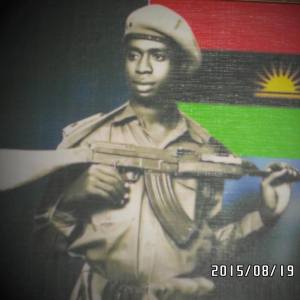
Ben as a Biafran soldier.

After the training, I went to Afo Ugiri in Mbano to pick my boys because they train the boys elsewhere. When I was inspecting the boys they assigned to me, who did I see standing there? My brother, my immediate seniour brother. That moment, I was almost mentally devastated but I didn’t act as if I knew him. I was saying to myself, “God, how can I take my brother to the war front. Suppose we enter an ambush?” This my brother had been a driver and was not in regular contact with the family so we didn’t know his whereabouts until that day.

Later, I called him and asked what motivated him to join the army. He said the boys who joined earlier were always pushing him around and maltreating him as if he’s nothing. That was the first time I regretted entering the army. I called Bernard, my fellow officer, and said to him, “Do you know this man is my brother? Nya nwa soro mu.” [“He’s directly older than me.”] Bernard couldn’t believe it. I told him, “We have to swap. Take him and give me one of your boys.” Bernard took my brother, Isaiah, and I took another boy from Bernard. I didn’t want two of us to die at the same place. And I didn’t want him to influence me.

At first, I fought at Ugwu Oba, near Enugu, before I was posted to Port Harcourt under Achuzia. He was a no-nonsense soldier. With him, it’s either you die fighting or you survive. If you show signs of laziness, he’ll shoot you in the leg and tell you to go home and rest. But he was a good fighter and a great leader. He was in charge of Otuocha Brigade and the 18 Battalion, which I fought in, was part of it.

The war didn’t get to my village but the effect was still there. I was fighting at Abagana but whenever things were quiet I was seize the opportunity and my driver will drive me home at night. I started seeing changes in my little cousins, nephews, nieces. Their hairs were changing colour and they started getting big stomachs. Sometimes I come with food, but after a day or two it will be finished. One day, I saw eke [python]. I didn’t know what to do because in my place it’s a taboo to kill python. But I said to myself, “My younger ones are dying and this should be a good source of protein.” I killed it with the help of one other boy. We did it at night. My people didn’t know it was eke because I skinned it; you know eke has nice colour – black and white. I told the boy we have to throw away the skin because if they see it, they’ll know it’s eke. We made them drink the stock because that’s where the nutrient is. And nothing has happened to any of us till date. I don’t believe in all those rubbish superstitions.

It was at Abagana I sustained this wound. [Indicating his right arm]. We infiltrated their media and got information they were going to attack that day, so we were ready. I went from trench to trench to give orders to my boys. One of them was killed some days before and another was shot at the neck when he was eating, so I knew the person shooting is not far. I called my batman and told him, “Stay here. I want to find out what is happening.” I wanted him to stay at a particular place so that if the guns get stuck he could open and repair them. I had my grenade and my gun and I entered into the front line, gradually…creeping…going. I heard the shooting again and I saw the smoke – whitish. This was the first time I was coming face to face with a Nigerian soldier. When I got to where I knew was a good position, I got up on my hands a bit, the way lizards do. As soon as I lopped, shots burst out. The place was a cassava farm so he must have heard sounds and knew somebody was around. One of the bullets got my hand. I felt a sensation and knew something has happened to my hand. I waited for a while and then my grenade exploded – Gbrrrrrrrrrrr! There was smoke. If I didn’t throw it out it could have exploded and killed me. I waited for a while and when I didn’t hear the gun shots any more I started creeping back. I was using one hand because I thought the other was gone. When I got to where I told my batsman to stay, he wasn’t there. My Second-in-Command appeared immediately. “Oga! Oga! What happened? Look at! Your hands and clothes are full of blood.” As he was tearing my shirt, it became completely dark and that was the last thing I knew.

When I opened my eyes it was at Iyienu hospital. I was so thirsty and was asking for water. “Please. Water, water, water.” The nurses got me infused and gave me a sedative and I went to bed again. When I opened my eyes it was at the hospital at Ihiala. I had no feelings in my arm. The nurse sitting near me was my classmate – Caroline. I was looking at her and she looked like an angel. When she saw my eyes open she exclaimed, “Hei! They’re killing all our boys o!” The ward was filled with people, wounded boys, most of them from Abagana. If you go to the mortuary, a lot of dead people. A boy was brought that evening but he died in the night. They left him there till morning. It was normal that people die around you and you stay with them. You don’t feel it. You’re not afraid of it.

My hand almost developed gangrene. The doctors carried out three to four operations and each time it will open again and I lose a lot of blood. They wanted to amputate it but Caroline kept pleading that they shouldn’t. The doctors told her to choose one – losing me or me losing my hand. But Caro said they should try one more time. They took me to the theatre again and I slept till 12.00 o’clock the next day. After a week, two weeks, three weeks, one month, there was no bleeding. The wound was healed. I was lucky to have her.

I was discharged but I didn’t go back to the army. Instead, I was visiting wounded soldiers in hospitals, to encourage them. My younger brother had a bicycle so he was taking me from Achina to Nkwerre and other hospitals. I was also going to Umuahia to see my girlfriend, *Ruth. I met her when I was a teacher at Enugu. She was really very good to me and I wanted to marry her. When I am going, I buy things for her and the fact that we managed to come on a bicycle to see her, she’ll be so happy. Her family approved of our friendship and the first place I entered when I got my pip as a second Lieutenant was their house. After Umuahia fell, I arranged for her family to move to Achina, so she could be close to me. I was being paid about fifteen pounds and I knew that if Biafra wins  the war, I will have a nice position in the army and can start a family.

On one of my visits to St. Augustine’s, Nkwerre, I was told that some Red Cross doctors were selecting wounded soldiers for evacuation. I didn’t have my hospital card but one nurse who was a girlfriend to one of my friends told me to try and see the doctors.  When it came to my turn, Dr. Jaja, who was a colonel at that time, told the white doctors, “This is one of the cases. We have done our best but we think it’s possible to make the hand to bend.” After examining me, they asked me to come back in two weeks’ time. From there we left for Umuahia to see *Ruth. On our way we saw a lot – dead people, hungry people, those deserting the front, no more very willing to fight.

Two weeks later I went back to St. Augustine’s but the lieutenant in charge told me my name was not on the list. But my name was actually there. What happened was that, on one of my visits, I saw a lot of wounded soldiers in front of his office, waiting for him to sign their papers so they can go home. But he was gisting with his girlfriend, so I confronted him. After he gave me the sad news, I left. At Umuahia, a Red Cross car stopped us and a white man came down. He recognized me by my sportswear and said I should have been in Italy for medical treatment. He was surprised when I told him my name wasn’t on the list but he said I should keep reporting at their office. My brother and I went back after a week and met two doctors – Dr. Bakker and Dr. Middlekoop. They said that one patient had died after an amputation, so I would take his place. Then, they asked me what I knew about Holland. I remembered my Geography and told them that the Dutch live under sea level, their farmers wear clogs and the capital is Amsterdam. They were impressed and said I was going to see all those things in reality. Somehow I was sad because of the guy who died but I was also happy. It was providence.

When I told *Ruth I was selected, she was very happy but she was worried that when I go abroad I will meet a white lady and forget her. But that wasn’t my intention. A gba nye go m’ ya ola. [I had already given her a ring.] I even bought a fake one for myself and was telling people I was married.

The next day I went to Ekwerazu, Mbaise to join other selected soldiers. We were many but eleven of us went to Holland. Some went to Germany, Austria, Denmark, and others a bit further north. We are still in touch, all of us who are alive.

Holland was a different environment – from war front to silence and peace. We went straight to the hospital. Everything in the ward was white and clean and I was thinking, “Is this paradise? Am I dead?” It was just like a dream. The following morning, instead of hearing air raids we saw people going about their businesses, riding their bicycles everywhere. From the window, we were just looking.

My plan was to go back to the army, not as a combatant, but to join the administration and training. So, after my treatment, I prepared to go back. But the war became very intense and no plane could land at Ulli. They told me to wait. I kept on waiting, till the news came that the war had ended.

We were disappointed to hear that Biafra was no more; doesn’t exist anymore. We couldn’t believe it. We never thought Biafra would lose the war. We so believed in it – the efforts we put in, the determination. Anybody who really fought the war with all his mind was disappointed. We were confused and emotional. After everything, we didn’t have anything to show for it.

I swore I will never live as a Nigerian. I said it and I still stand on it.

BEN ONWUKA 4
Ben Onwuka

                                                                         ———-

Ben Onwuka was the Nigerian champion in the 400 meters race, 1964-1965. He is an Entomologist, and worked with the Institute for Atomic Sciences in Agriculture, Wageningen, Holland. He is the founder of Omenala, a Foundation whose aim was to propagate African cultures [and the Igbo culture in particular] in Holland, through Music. He was also the President and Activity Coordinator for The International Club, Wageningen, where he was a member for 25 years. He lives in Wageningen, Holland with his family.

Read the second part of his story next week.