
Tag Archives: War Trauma

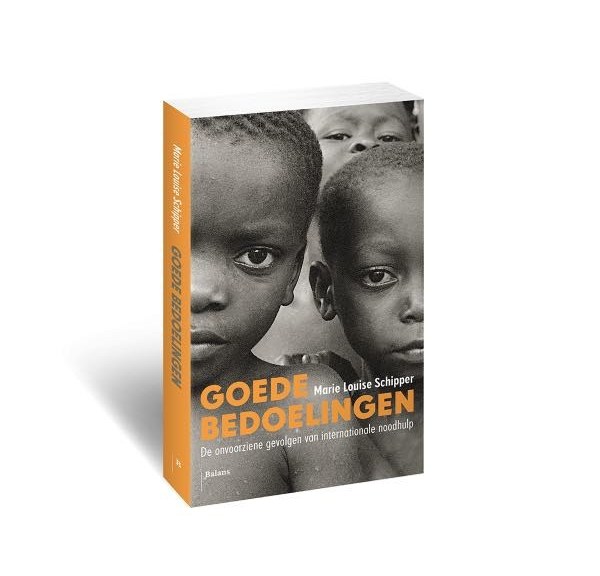
GOOD INTENTIONS by Marie Louise Schipper

Fifty One years ago, the Nigeria-Biafra war grabbed the world’s attention with its sad, haunting images in newspapers, magazines and television sets. Forty Eight years after it ended, the stories of that tragedy are still being told through films, documentaries, dramas, art works and exhibitions, music, books, in conferences and lectures. One of the people who has documented an aspect of that conflict is Marie Louise Schipper, a Dutch journalist working for OneWorld magazine and de Volkskrant newspaper. She has written a book about ten Biafran children who were evacuated to the Netherlands from Biafra for medical attention. The title of the book is Goede Bedoelingen which translates to ‘Good Intentions.’

In 1968, Marie was a young girl living with her parents. According to her, “It was a big item because it was the first international aids for starvation in Africa and nobody realized what was going on at that time. We didn’t know a lot about Africa and as a matter of fact not much about Nigeria as well. And Africa was an exotic country far, far, far away at that time. So Nigeria came into our living rooms and we could see what happened. The news in the newspaper and television was so overwhelming of these dying children. And my parents – they were devout Catholics – always told me and my sister that we should care about other people. They would tell us to finish our plates and that we should think about the children of Biafra. The images made a big impression on me, as a child. The Dutch gave a lot of money [to the relief effort] because they felt we should do something because in WW2 so many people died, and it was determined that in Biafra far more children died. Another reason these children made such a big impression on me had to do with the war stories in my own family. My father worked as a forced laborer in Germany. He was 17. My mother’s family was on the run and had to live with a family they didn’t know. My grandfather died during a bombardment. He was never found.”

When Marie became a journalist, she was surprised that the stories of these ten children were not written. “I thought there must be somebody who has written this all down. But there was nothing written. It was like when snow has fallen and everything is completely white and nobody has run into it. That was my first impression, that it was completely blank. There was nothing about it, only publications in the newspapers. When I started interviewing people everybody said, ‘No, I don’t remember these children, I don’t remember them.’ And I said, ‘Why don’t you remember them, because it doesn’t happen often that ten children from Nigeria, out of a war, come to the Netherlands.’ I felt they were hiding something. And I thought, ‘What are they hiding?’ I discovered that one of the children who was here had epilepsy and he was really ill. He was a bit retarded and was also in a foster home. He needed a lot of attention but people from the Nigerian embassy were very strict and said the children have to go back to Nigeria. The foster parents didn’t want to let them go because they didn’t know where they were sending them to. The foster parents of the sickest child were under so much pressure, so they decided to send him back to Nigeria. He was first sent to Gabon, with enough medicine for half a year, and afterwards sent to one of the rehabilitation centers at Ikot Ekpene. His family didn’t show up, so he was sent to Nung Udoe Orphanage and he died shortly afterwards. And I think that was why all the doctors were saying they didn’t know a thing. That was the reason they didn’t want to talk about it because they sent a boy who was really ill back to a country that was recovering from the war without proper medication.”

“How did you eventually find somebody who told you the truth?” I asked.

“I spoke to a lot of nurses and they had memories about these children. They also had photographs and they told me about the foster parents, and I said that must be the reason nobody wanted to talk about it.”

“Why do you think the Biafran authorities decide to take them to the Netherlands instead of Ivory Coast, Gabon or Sao Tome?”

“There reason was primarily because of Abie Nathan, an Isreali pilot. He was also a humanitarian and did a lot of food aid. He tried to mobilize the Isreali people to send in goods and food for the people of Biafra. He was very popular and charismatic, and had a lot of connections in the Netherlands. He was filmed by a television crew asking people to do something about Biafra; that everybody should give a hand. When this documentary was broadcast a lot of people got mobilized. He said he convinced Ojukwu that these children should be sent to the Netherlands where they could get proper help. But Ojukwu said no. Finally they decided to bring the children to the Netherlands as a symbolic gesture where the children in Europe would get acquainted with the Biafran children while the Biafran children would get more knowledge about the world. The decision was made and ten of the children came to the Netherlands.

At the end of the war, eight of the children were taken back to Nigeria. But two remained in the Netherlands. The official documents said the two who remained in the Netherlands had no parents and family back home. But in the 1990’s, one of them decided to look for her family. She discovered she had two villages full of relations. She returned to Nigeria to meet them.”

When Marie started to gather material for her book, she knew she had to make the trip to Nigeria.

“If I didn’t visit Nigeria, the story wouldn’t have been complete.”

“That was very courageous of you. So, how did the journey to Nigeria start?” I asked.

“I went to the African Studies Centre here in Netherlands, in Leiden. And one of the people who was connected to the African Institute, he works nowadays in England, he said to me the best thing I could do was contact *Emeka Anyanwu, an Anthropologist at Nsukka University. I thought it was a better idea the students of Edlyne go on research and try to find out what happened to the children. And it worked fairly well because we found two of them. It was like a needle in a haystack.  When we knew they were traced, we traveled from Nsukka to Owerri, from Owerri to Umuahia, and from Umuahia to Orlu. We visited the hospital in Umuahia [Queen Elizabeth Teaching Hospital] and all the places that were important during the war. I visited the airfield at Uli.”

“Is it still there?” I asked.

“Yes. You can see the traces of the road and there was a man who saw us walking and was curious. It’s not always you see White people there. He told us that was the road and he also knew the Ojukwu bunker. It was a small bunker. Even Edlyne didn’t know there was a smaller one.”

It took Marie Louise Schipper fifteen years to finish the book, and it was published on October 27, 2017, in Amsterdan. Unfortunately, the book is written in Dutch and, at the moment, Marie cannot afford to hire a translator. She said, “I would like to give the opportunity for more people to read it.”

[I spoke to Marie on the 23rd of May, 2018, via Facebook and these are excerpts from our chat.]


MY INTUITION SAVED ME

People used to call my father Mallam because he lived in Jos most of his life. During the pogrom it was his Hausa friends who protected him. He was half-dressed when they bundled him out of his house and rushed him to a helicopter. It landed safely at Onitsha.

My only brother was at Ahmadu Bello University, Zaria, studying Electrical Engineering. When people started returning we did not see him. We were all worried. My grandmother lost hope. One faithful day, as I came out to the front of the house, a taxi stopped and, behold, it was my brother. Everybody started shouting. He started narrating how they were evacuated from the campus and given protection. They were provided with vehicles that helped to evacuate them safely back to the East.

Threats were going on back and forth, so the tension was building up. Some months later, we started hearing that war had broken out. People were calling it police action. Soon, we started hearing that Biafran and Nigerian soldiers were fighting at the war front. Then, the first air raid came. The plane was dropping what Biafrans described as kerosene tins. Months later, the second one came. I was standing outside calling my mother, “Come and see this plane o. It looks like birds are following it. Why are birds following it?” The next thing I heard was an explosion and smoke from the building next to our own. I shouted, “Mama, it is bomb o.” People were shouting. Noise everywhere. I didn’t know that what I was calling birds were bombs.

The night before we left Onitsha there was shooting from night till morning. Red hot bullets being sprayed all over. We didn’t know what to do. The next morning my brother said, “Let us go.” Where are we heading to? Nobody knew. But there was only one direction – towards Owerri, Ihiala, Oba. Each person carried whatever they could carry. I carried my school box that contained my uniform and a few clothes. One of my elder sisters carried my mother’s box of wrappers. She carried it instead of her own. And those wrappers saved us. The only problem was how to convey our grandmother. She had a breakdown because of the trauma, so we were dragging her. We’ll walk and stop, walk and stop. It delayed us but we were still moving. The sound of shelling kept reducing so we knew we were fleeing the battle field. Along the road we met a family we knew and they took my grandmother in their car. They said they’ll drop her where we could pick her up. As God will have it they dropped her at Oba, in a church. It was an open place where people who were tired of trekking stopped to rest. People were still escaping, telling stories about those who could not escape, how they were being killed by soldiers.

We left Oba a few days later. I don’t know who organised the transport. It was a lorry and it dropped us at St. Martins Church, Odata, at Ihiala. It’s one big church. It’s still there.

The following day, directly opposite the church, we found a family who welcomed us into their home; Simon Okoli’s family. I still remember their name. They were very kind to us. They gave us one room in their house. It had a bamboo bed, the type called anaba aghalu. When they saw the room was small for all of us they gave us another one. They gave us pots and allowed us to use their kitchen. They said we shouldn’t pay for the rooms. We gave the bed to our grandmother. We had picked her from a refugee camp where our family friends had dropped her. But even though this family welcomed us they said we were saboteurs, because of Major Ifeajuna. During the war, if you were from Onitsha, there was a stigma attached to you.

We only had that half bucket of rice my sister carried from Onitsha but soon relief materials started coming in. There was nothing like a camp there but we gathered at a particular place and each family got their own share.

There were no jobs, no work, so ideas started coming into our heads. One day my immediate elder sister said, “This meat we don’t eat, let us not start suffering from kwashiorkor.” She would buy native fowls, cut them into parts and take to Nkwo Ogbe – their market – to sell. We would make a little gain. When we didn’t sell the head and legs we’d take them home for our soup.

One fateful day, my mother gave us various assignments and mine was to go to St. Martins and queue up for salt. I refused to go and my mother caned me. Instead, I followed my sister to the market to sell our chicken parts. I think there was only one lap remaining when I said to her, “We are leaving this place right now. Carry this tray let us go away.” She asked why, but I insisted we were leaving. On our way home we saw our brother chatting with a police man. He waved at us. Then I looked in the air and called out, “Ngozi, are you seeing what I am seeing?” She said, “What is it?” I said, “Look up. That plane is not making any sound.” The plane was hovering, turning to one side, turning to another side. I said, “Did they shoot it somewhere and it wants to crash?” Before I finished saying it, we heard an explosive noise. The plane was shelling the market, the meat section, that same spot where we had been standing. Sellers and buyers were mangled. As we watched, the plane moved in the direction of our house, releasing rockets and bullets. We ran into a bushy area and while I was taking cover I was looking and pointing upwards. My sister smacked me and said, “Lie down, lie down,” but I said, “I will not lie down. I want to see who is in that plane.” The plane moved towards the direction of the church, three times, releasing rockets and bullets. The sounds were accompanied with light, like lightning. It was the worst air raid I ever saw. When we got home we heard that that church compound, where I was supposed to line up for salt, was the target. All that maneouvring the plane was doing was to get the most accurate angle to hit the people on the line. As people narrated what happened, my mother looked at me, looked at me, looked at me. I cannot tell you why I refused to go to that church but I have always been intuitive. And I used to be stubborn when I was small. If I didn’t want to do something I wouldn’t do it. After that day, she never asked me to do anything I didn’t want to do.

In 1968, my grandmother died and we buried her in Ihiala. My brother went to one Irish Reverend Father at St. Martins Church, Odata – Father Brady – and told him we wanted to know if our uncle was still in Lagos or not. The Reverend Father made inquiries and found out he had left for Dublin with his wife, when the war started. They sent a packet of Complan milk, through Rev Father Brady, and my uncle later wrote to confirm that we received it. A few days later, the Reverend Father just drove inside the compound and opened the boot. What did we see? A box as high as this, square, sealed. It was filled with all manner of tinned food: meat, corned beef, stock fish soaked in salt granules as big as this, giant tins of corn beef, fish, sardines, bread, assorted tinned foods, seasoning cubes, cheese. It is because of this that I usually tell people that I ate the best of food during the Biafran war. We made a lot of Biafran money from the salt, cloths and Chicken that we were selling then.

Inside that box there was also an envelope with dollars, so somebody advised my brother to start trading in tobacco. We contacted his friend who was working at Ulli airport and through him, a pilot brought back the first bag of tobacco. The women who were trading on it were buying it off him and selling same to soldiers at the war front. We made a lot of Biafran money and that was how we survived. Before then, we were selling my mother’s wrappers, all those costly Georges and Abadas, and people were buying them. We even sold my box. I cried o.

We left Ihiala on January 17. By then the Nigerian soldiers had reached Ihiala. Umuahia had fallen and Ojukwu had left. So the village head and the elders took a decision to make peace with the soldiers. They welcomed them and negotiated with them not to touch anybody in Ihiala. So there was peace in Ihiala. The soldiers used to come to the stream where we used to fetch water. They’ll just give us their water bottles to fill for them and we were always very cautious. When they leave we start fetching again. Thank God for the wisdom he gave the Igwe.

A few days after they arrived lorries appeared. Evacuation. We didn’t waste time. Everybody started going back. Up till today I do not know who arranged for the vehicles. We jumped inside and they dropped us at Fegge, Onitsha.

-Dr. Mrs. Lillian Chibuogu Ilo

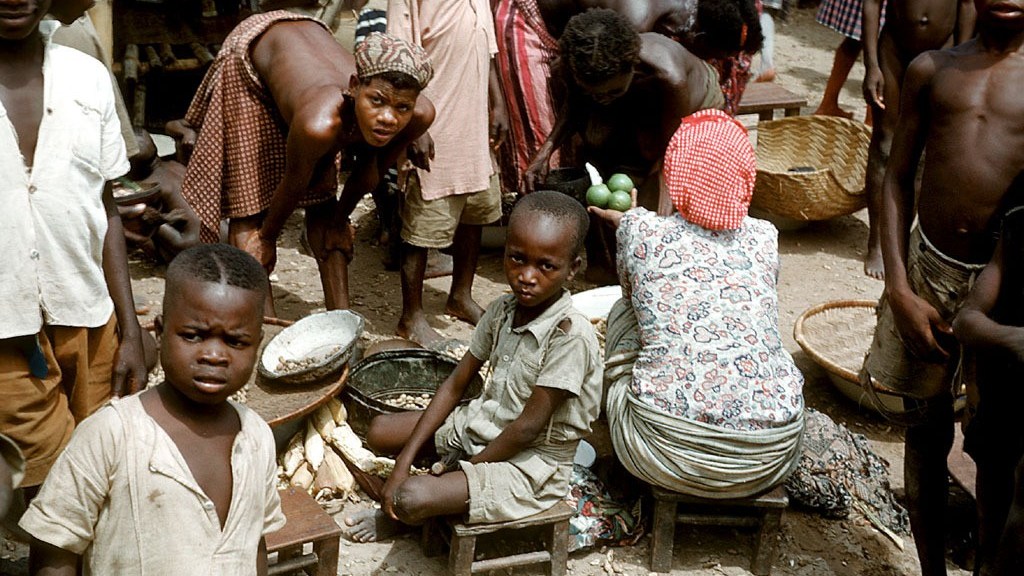
(PHOTOS TAKEN FROM THE INTERNET)