Tag Archives: Musicians

Music in a time of war – 2

Members of my family were saying, “Come back. Come back.’ And I asked them, “What am I going to be doing in Biafra? Fighting?” After a lot of pressure, I decided I would go back but I knew I had to earn money. So I left for Biafra with a group of musicians. There was Travis Oli – the Singer, Mike Obanye – the Drummer, Frank Onyezili – the Rhythm Guitarist, Terry Eze – the Assistant Manager, Sonny Okosuns and myself. Sonny Okosuns was the only non-Igbo but he was not afraid because he was born in Enugu and could speak Igbo. We were arrested at Onitsha Bridge because they said we were spies. Sonny Okosuns was sent back while the rest of us were taken to the police station at Ridge Way, Enugu. I had some contacts at Enugu so I started to press buttons. I sent a note from police detention to Chuddy Soky, the Commander of the Biafran Air Force telling him of our plight. He drove to the police station and asked them to release us, which they did.

When we left the station, we met a young man called Ikenna Odogbo, a Disc Jockey and show host in Radio Biafra. He took us to live with him from where the musicians started their rehearsals while I went into the field to look for business.

I knew we couldn’t do anything without equipment so I went with a letter to the Director-General of the Biafran Civil Defence. After reading it he looked at me and said, “We are fighting a war and you are talking about music. Will you get out of this place?” I was about nineteen years old but I was talking with a lot of confidence. I was not deterred at all and headed straight to Ojukwu’s office. I had met him when he was the Military Administrator of East Central State. That was when Chubby Chekker, the American musician who invented the Twist, was touring the East. I was part of the tour which was sponsored by Coca Cola and we had paid Ojukwu a courtesy visit. When I arrived he was in a meeting so I spent five hours waiting for him. I was convinced I had a good product. He remembered me and I gave him the letter I had written to the Civil Defence. After reading it he said in his very calm manner, “And what did he tell you?” I said, “He drove me out of his office. He said I was crazy to be talking about music when there’s a war.” Ojukwu dialled a number and asked him to come to the office. Then he told me, “Please sit down.” When the Director General entered the office he almost collapsed. Ojukwu gave him my letter and asked him to read. He was shaking as he was reading it. When he finished, Ojukwu said to him, “Now, take this young man. Anything he asks for, do it.” I asked for a bus and a Peugeot wagon to move our men and equipment, and I had two drivers assigned to me.

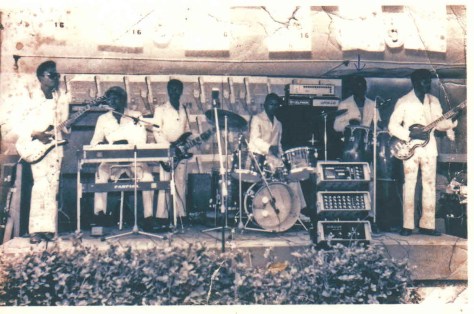
That was how The Fractions became the Biafran Armed Forces Entertainment Group. We were moving from camp to camp and even played three times for Ojukwu in his bunker at Umuahia. They knew that music is a vital tool in any military operation so whenever the soldiers were going to war, we would play our best music, they would smoke and become charged up. But in a few hours some would be dead. They were not paying us but they gave us a lot of support, food items, cigarettes and whatever we wanted.

We were also playing at International Club Enugu where we were charging a gate fee. We were copying the American soul sounds such as Wilson Picket, James Brown and Aretha Franklin. The turn-out was always huge because there was not much entertainment during the war – no Television, no football, no games, no cinemas.

We introduced pop music to the east and it was really big. We also started the Sunday Jump and people were coming even in the midst of hostilities.

I also had a column in the Biafran Outlook, a government paper. The editor, Gab Idigo, knew I was already writing in Lagos so gave me a column where I was writing about The Fractions and music generally.

We played throughout 1967, 1968 and 1969. Owerri was our base when it was not occupied by the Nigerian forces. We played our last formal gig at Nkwerre just after Christmas 1969. After the show a few of us remained in the hotel. It was called Central Hotel. Around 4 a.m. some soldiers in a truck came into the hotel, arrested us and took us to Bishop Shanahan School Orlu, where they shaved our hair. That same morning they took us to a garrison to start military training. We had been conscripted and we thought the end had come.

The next day I knew I had to do something. We were hearing shelling so I headed to the gate. I saw a bucket lying on the ground and I picked it as if I was going to fetch water. It was a well-fortified gate but nobody questioned me because they must have thought I had been sent by an officer. I ran into the bush and right there I saw Frank Zili. He had left the camp without telling me because it was a tense situation. We meandered our way out of the forest and got to a safe place.

I returned to Lagos just before the war ended and it was by God’s plan. I was returning to Owerri with a member of the group when we met a Nigerian soldier at Mbieri. He had dug himself into a trench and could have killed us. His gun was pointed at us so we raised our hands. When he came out of the trench I saw from his facial marks that he was Yoruba. Immediately, Yoruba started pouring from my mouth. He relaxed and lowered his gun. We became acquainted and he offered us cigarettes. Later, he made Garri and we ate it with canned Egusi soup. The Nigerian soldiers used to carry a lot of supplies in their kit but the Biafran soldiers didn’t have anything. After he entertained us he said, “Look, I cannot leave two of you on your own.” We trekked from Mbieri to Owerri prison where he handed us over to his superiors. We told them we were members of The Fractions Pop Group and they said, “Okay, you have to play for us not just for Ojukwu’s army.” They gave us a jeep to pick our equipment at Anara. From there we turned back to Owerri and continued to Port Harcourt.

We arrived Port Harcourt around 6.00 am and drove to the headquarters of the marine commandos headed by Obasanjo. He was already in the field doing drills with the soldiers. Then, I saw Roy Chicago, the musician, coming towards me. He recognised me. “Tony, what are you doing here?” Then he turned to Obasanjo. “Olu, ore mi niyen o. Mo mgbe wan lo si eko – this is my friend o. I’m taking him to Lagos.” Roy had come to entertain Nigerian troops and was heading to the airport to be flown to Lagos that morning. That was how I came into Lagos.

I slept in Roy’s house that night. It was No 9 Bishop Crowther Street, Surulere. In the morning I decided to go for a walk around the area. A Volkswagen pulled up beside me and I heard a voice shouting, “Driver, stop, stop, stop!” It was Eddy Adenirokun and we just grabbed each other in an embrace. He said, “How did you get here? I thought you were in Biafra.” I was looking so haggard but I followed him to Daily Times office on Lagos Island. Sam Amuka was there, producing the Sunday Times for the next day. He’s such a funny guy and he said, “So you just came from Biafra? Okay, go and write about your experiences.” Immediately, I went off to type my story. My picture was splashed on the front page and I was paid three shillings, my first income after Biafra.


Music in a time of war – 1

“I remember an incident that happened at Akabo when the Nigerian soldiers were trapped in Owerri town. The brigade was very close to where we were performing and the soldiers were dancing and some of them were saying, “This war wey we dey fight so, abi make we come die when our ogas dey drink tea for house?”  After a performance, they’ll say, “Last night, that band good o!” Sometimes they even exchanged beer and cigarettes. But when there was a fight, they will fight to finish, because in the army they say the last order must be obeyed. These are the untold stories – the friendships within the war. This was the outlook in Biafra and it was very lively. It boosted the morale of the Biafran soldiers…” – Chyke Maduforo

                                                                      ———-

I was working with the International Committee of the Red Cross when I met members of the Figures Band taking refuge in my village. They had escaped from Port Harcourt after it fell to the Nigerian soldiers and were trying to re-organize.

CHYKE MADUFORO PHOTO 3
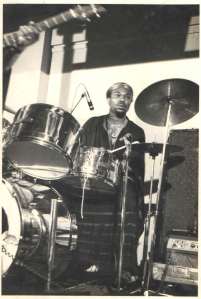
Chyke on the drums.

I fitted in perfectly with my skills and took over the drums. Berkely Jones moved from the drums to the lead guitar. Lemmy Faith was the lead singer and also handled the second guitar. Iyke Njoku was our Road Manager. Pat Moore joined us at Abba, Nkwerre, when we went to entertain the soldiers hospitalized at the Armed Forces Hospital. The commandant was Lieutenant Omoshe. We also performed at Research and Production centres. One was at Obizi High School at Mbaise here. Our music was so good that the Biafran Navy adopted us and changed our name to Sailors, so we started to perform for them when they had functions.

There were other music groups functioning in Biafra. One of them was the Atomic Eight, a High Life band which was in existence even before the war started. They were based at the Traveller’s Lodge, Aba. Their members were musically literate so the band was used by Mik Nzewi and Sonny Oti – a lecturer at the University of Jos – as a propaganda machine to entertain visitors and show the world what was going on in Biafra. Their performances were like orchestras and dance dramas and they were very effective. There were other groups, such as The Hykkers, The Fractions, The Jets and The Admirals. The propaganda group would use any of these groups, including ours, to entertain the forces in different camps, brigades and divisions. Sometimes we even played close to the front.

I remember an incident that happened at Akabo when the Nigerian soldiers were trapped in Owerri town. The brigade was very close to where we were performing and the soldiers were dancing and saying, “This war wey we dey fight so, abi make we come die when our ogas dey drink tea for house?” The following morning they’ll say, “Last night, that band good o!” Sometimes they even exchanged beer and cigarettes. But when there was a fight, they will fight to finish, because in the army they say the last order must be obeyed. These were the untold stories – the friendships within the war. This was the outlook in Biafra and it was very lively. It boosted the morale of the Biafran soldiers because they were not being paid. Where were they going to spend the money? What would they spend it on? There were supposed to do what was called allotments, which was to send part of their salaries to their families but when everything broke down – addresses, movements – that ended naturally. So they got their comfort through music. In fact the best friends of the soldiers were the musicians.

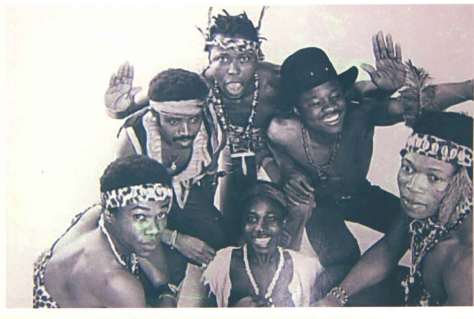
It was at this point we were called to come to Nkwerre to form another group. So, I, Berkely Jones and Pat Moore left Oguta and went to Nkwerre. We formed The Funkees and the day the group was launched was a terrific day. We decided on the name because the reigning dance style was funk and instead of spelling it FUNKIES, we decided on FUNKEES. We played with this name during the last bit of the war and that was what made us so popular. We were playing copy right by The Beetles, James Brown, Percy Sledge, Otis Redding, Sam Cooke, many others. We couldn’t record our own music because there were no recording studios so we were playing live shows.

CHYKE MADUFORO PHOTO 1
The Funkees

The Nigerian soldiers were approaching Nkwerre so the gun shots were coming closer. All they were doing at this time was looting. There was confusion everywhere. As if on cue, the other groups started to fold up one after the other. The Jets lost three of their members in a ghastly accident. The Fractions got locked up in military confinement for offences they committed against someone. The Hykkers split up while The Blossoms remained with the Nigerian Army at Owerri. But The Funkees had taken a decision to stay together and go into Nigeria together. We were prepared to be captured and we said, “If we must die, let us die together.”

That is how we became the only group that survived with both personnel and instruments intact. Providence also smiled on us when we met this Nigerian Army Lieutenant who saw us and it was as if he picked gold. He planned to take us to Owerri but he needed time to arrange for a vehicle that will take us and our equipment. It was at this time that we met Jake Solo, the bassist for The Fractions. He was with his brother, IK, now a medical Doctor, and Mike Collins, the drummer for The Fractions. They had just come out of confinement with their hairs shaved. We took them on and eventually, the army lieutenant came with a brand new Land Rover and we set off.

On the way, all we were seeing were dead bodies – both Biafran and Nigerian soldiers. It took us five hours to meander through this stretch of corpses. We arrived at Owerri at about 8.00 pm and were taken to Imo Motels. Later that night, Obasanjo, who was the commander of the 3rd division, came to receive us with his adjutant – Col Tumoye, whose brother-in-law was our bassist. His name was Felix Udofia and he had been the second bassist of The Hykkers. Colonel Tumoye came looking for Felix, who we called Murphy Lee, because they had information he was playing with a musical group. To determine we were not soldiers sent to kill him, Obasanjo asked us to play for him. Luckily, we had Jake Solo with us, so we performed and their fears were allayed. They handed us over to one Captain Keru who took good care of us.

Obasanjo promised to invite us to Port Harcourt but he didn’t. What we understood later on was they had asked all the Biafran officers to come and register at Owerri, but the Igbos were reluctant to come out. They were afraid they’ll exterminate them like what happened in Asaba. We later discovered that the reason Obasanjo left us at Owerri was to use our shows and draw young men out.

The same thing happened with civil servants at Enugu. Ukpabi Asika was finding it difficult to rehabilitate the Igbos and Enugu was a ghost town when we arrived. We started performing at Dayspring Hotel and Atlantic Hotel. Then we got into a deal with the 87 Division to perform monthly at the Officer’s Mess. The aim was to draw people out so that life can get back to normal. It worked because people started coming out, especially the young men who already knew The Funkees.

CHYKE MADUFORO PHOTO 2
The Funkees, after the war.

The Funkees is still in existence. Our policy is that the name will remain forever even if memberships change. Out of the original group, Berkely Jones, Pat Moore, Danny Heibs, Sonny Akpan and I are alive but they joined other groups after the war. I’m the only one from the original group that is left in the Funkees. Two years ago Danny and Sonny organised a theater show in London. I coordinate the new Funkees which is made up of two ladies and a man. They’ve done a remix of our songs in Igbo, English and French.

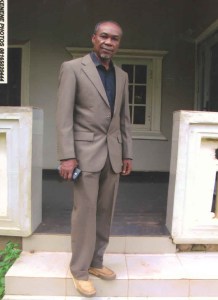
CHYKE MADUFORO PROFILE
Chyke Maduforo

                                                                           ———-

Chyke Maduforo is a business man. He is also the author of a book – Simpler Music Rudiments. He’s currently setting up a music academy that will nurture budding musical artistes. He lives in Imo State with his family.