
Members of my family were saying, “Come back. Come back.’ And I asked them, “What am I going to be doing in Biafra? Fighting?” After a lot of pressure, I decided I would go back but I knew I had to earn money. So I left for Biafra with a group of musicians. There was Travis Oli – the Singer, Mike Obanye – the Drummer, Frank Onyezili – the Rhythm Guitarist, Terry Eze – the Assistant Manager, Sonny Okosuns and myself. Sonny Okosuns was the only non-Igbo but he was not afraid because he was born in Enugu and could speak Igbo. We were arrested at Onitsha Bridge because they said we were spies. Sonny Okosuns was sent back while the rest of us were taken to the police station at Ridge Way, Enugu. I had some contacts at Enugu so I started to press buttons. I sent a note from police detention to Chuddy Soky, the Commander of the Biafran Air Force telling him of our plight. He drove to the police station and asked them to release us, which they did.
When we left the station, we met a young man called Ikenna Odogbo, a Disc Jockey and show host in Radio Biafra. He took us to live with him from where the musicians started their rehearsals while I went into the field to look for business.
I knew we couldn’t do anything without equipment so I went with a letter to the Director-General of the Biafran Civil Defence. After reading it he looked at me and said, “We are fighting a war and you are talking about music. Will you get out of this place?” I was about nineteen years old but I was talking with a lot of confidence. I was not deterred at all and headed straight to Ojukwu’s office. I had met him when he was the Military Administrator of East Central State. That was when Chubby Chekker, the American musician who invented the Twist, was touring the East. I was part of the tour which was sponsored by Coca Cola and we had paid Ojukwu a courtesy visit. When I arrived he was in a meeting so I spent five hours waiting for him. I was convinced I had a good product. He remembered me and I gave him the letter I had written to the Civil Defence. After reading it he said in his very calm manner, “And what did he tell you?” I said, “He drove me out of his office. He said I was crazy to be talking about music when there’s a war.” Ojukwu dialled a number and asked him to come to the office. Then he told me, “Please sit down.” When the Director General entered the office he almost collapsed. Ojukwu gave him my letter and asked him to read. He was shaking as he was reading it. When he finished, Ojukwu said to him, “Now, take this young man. Anything he asks for, do it.” I asked for a bus and a Peugeot wagon to move our men and equipment, and I had two drivers assigned to me.
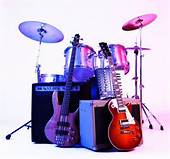
That was how The Fractions became the Biafran Armed Forces Entertainment Group. We were moving from camp to camp and even played three times for Ojukwu in his bunker at Umuahia. They knew that music is a vital tool in any military operation so whenever the soldiers were going to war, we would play our best music, they would smoke and become charged up. But in a few hours some would be dead. They were not paying us but they gave us a lot of support, food items, cigarettes and whatever we wanted.
We were also playing at International Club Enugu where we were charging a gate fee. We were copying the American soul sounds such as Wilson Picket, James Brown and Aretha Franklin. The turn-out was always huge because there was not much entertainment during the war – no Television, no football, no games, no cinemas.
We introduced pop music to the east and it was really big. We also started the Sunday Jump and people were coming even in the midst of hostilities.
I also had a column in the Biafran Outlook, a government paper. The editor, Gab Idigo, knew I was already writing in Lagos so gave me a column where I was writing about The Fractions and music generally.
We played throughout 1967, 1968 and 1969. Owerri was our base when it was not occupied by the Nigerian forces. We played our last formal gig at Nkwerre just after Christmas 1969. After the show a few of us remained in the hotel. It was called Central Hotel. Around 4 a.m. some soldiers in a truck came into the hotel, arrested us and took us to Bishop Shanahan School Orlu, where they shaved our hair. That same morning they took us to a garrison to start military training. We had been conscripted and we thought the end had come.
The next day I knew I had to do something. We were hearing shelling so I headed to the gate. I saw a bucket lying on the ground and I picked it as if I was going to fetch water. It was a well-fortified gate but nobody questioned me because they must have thought I had been sent by an officer. I ran into the bush and right there I saw Frank Zili. He had left the camp without telling me because it was a tense situation. We meandered our way out of the forest and got to a safe place.
I returned to Lagos just before the war ended and it was by God’s plan. I was returning to Owerri with a member of the group when we met a Nigerian soldier at Mbieri. He had dug himself into a trench and could have killed us. His gun was pointed at us so we raised our hands. When he came out of the trench I saw from his facial marks that he was Yoruba. Immediately, Yoruba started pouring from my mouth. He relaxed and lowered his gun. We became acquainted and he offered us cigarettes. Later, he made Garri and we ate it with canned Egusi soup. The Nigerian soldiers used to carry a lot of supplies in their kit but the Biafran soldiers didn’t have anything. After he entertained us he said, “Look, I cannot leave two of you on your own.” We trekked from Mbieri to Owerri prison where he handed us over to his superiors. We told them we were members of The Fractions Pop Group and they said, “Okay, you have to play for us not just for Ojukwu’s army.” They gave us a jeep to pick our equipment at Anara. From there we turned back to Owerri and continued to Port Harcourt.
We arrived Port Harcourt around 6.00 am and drove to the headquarters of the marine commandos headed by Obasanjo. He was already in the field doing drills with the soldiers. Then, I saw Roy Chicago, the musician, coming towards me. He recognised me. “Tony, what are you doing here?” Then he turned to Obasanjo. “Olu, ore mi niyen o. Mo mgbe wan lo si eko – this is my friend o. I’m taking him to Lagos.” Roy had come to entertain Nigerian troops and was heading to the airport to be flown to Lagos that morning. That was how I came into Lagos.
I slept in Roy’s house that night. It was No 9 Bishop Crowther Street, Surulere. In the morning I decided to go for a walk around the area. A Volkswagen pulled up beside me and I heard a voice shouting, “Driver, stop, stop, stop!” It was Eddy Adenirokun and we just grabbed each other in an embrace. He said, “How did you get here? I thought you were in Biafra.” I was looking so haggard but I followed him to Daily Times office on Lagos Island. Sam Amuka was there, producing the Sunday Times for the next day. He’s such a funny guy and he said, “So you just came from Biafra? Okay, go and write about your experiences.” Immediately, I went off to type my story. My picture was splashed on the front page and I was paid three shillings, my first income after Biafra.
 My Biafran Story