Category Archives: Uncategorized

LIVING IN SAINT-ANDRE REFUGEE CENTER, GABON- A FORMER CHILD REFUGEE’S ACCOUNT – PART TWO.

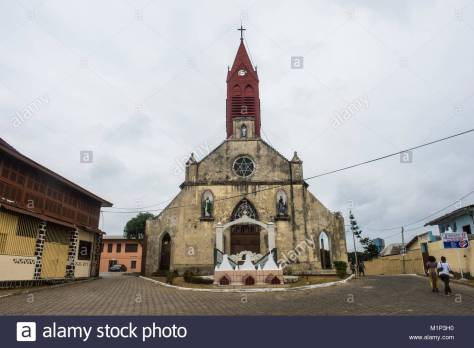
church-libreville-gabon-africa-M1P3H0SAINT-ANDRE – OUR PLACE OF REFUGE

Once we arrived, the first thing they did was to process our registration and match it with file information from Biafra. They gave us new Gabonese numbers different from the ones we were given in Biafra. These numbers were inscribed on gold or silver necklaces and no two Biafran kids in Gabon bore the same number regardless of the center where they were placed in. My own number was 518.

They took us to our dormitories – boys to the right of the dining hall, and girls to the left. Everything was well-laid out. The ones who were ill were wheeled to the sick bay. They showed us our beds before ushering us into the bathrooms to have our baths. They gave us new clothes, the kind of clothes we wore only at Christmas back in Nigeria. Afterwards, they took us to the dining hall for breakfast. Other Biafran children who had arrived weeks before us were already seated. They served us tea, bread and butter, one boiled egg and grilled delicious meat ball. Wow! It was like living in wonderland and we devoured the food like hungry lions. They must have realized we were still jetlagged because after breakfast they took us to our respective dormitories to continue our sleep.

From the next day they tried to get us into a rhythm. After breakfast the healthy ones among us would sit in every available place in the compound and sing till about 10 a.m. They taught us some Biafran songs. That aroused a lot of nostalgia in me because I remembered the last thing my father told me – “You are going to a foreign land, who is going to treat you like your mum?” That statement kept echoing in my head and once we started singing I would start crying, “Mama, mama, mama.” There was a very young chaperon called Miss Uche, and she invented a song because of me, ‘o be akwa a ma nli osikapa. K’ome, o malu ife o g’eme k’ome – the cry baby will not eat rice. If he knows what to do let him do it.” After singing they gave us snacks. It was usually tea and biscuit, bread and butter, or this one that looked very much like our Nigerian pap. By 1.00 p.m. we went for lunch. The girls sat to the left and the boys to the right. After lunch we went for siesta. It was at Saint-Andre that I learnt the word siesta. It was supposed to last for one hour but they let us sleep for two hours.

After siesta we would assemble again and start singing or playing. By 6.00 p.m. we went for dinner. Sometimes they gave us macaroni and corned beef, or rice and soup made with beef or fish. It was very tasty food. There was this French man who brought a giant fish every morning for our lunch or dinner. Sometimes we had garri. The cook was Gabonese so the kind of soup he was making was not the kind we were used to in Biafra. But we gladly ate it with garri.

We were sleeping a lot. We slept from the time we finished dinner till 6.00 a.m the following day. It soon became routine so that in the morning we didn’t need to be woken up. We would take our bath and go to the dinning hall. We all had our seats allocated to us from the first day and we retained the positions till our last day in Gabon.

The upper level of St. Andre comprised of the Reverend Father’s residence and the parish offices. The ground floor housed our dormitories, sick bay, dining hall, and a kitchen. There was a temporary mortuary in the basement of the building. A brand new football pitch was also constructed in front of the classroom blocks. There was a sick bay which could accommodate up to thirty kids.

When we arrived Saint-Andre there were no classrooms but when they felt we had regained our strength they decided to build some fabricated classrooms on the east side of the sick bay. We had the kindergarten, the Elementary 1, the Elementary 3 and 4, which were the biggest classes, and the Elementary 5. There were children from Cross River, Ogoni, Port Harcourt, and a few from across the Niger, that is Ka-Ibo. They set an exam to gauge our academic abilities and the age-appropriate class for each child. They tested us mostly in Igbo language, Reading, Math, Simple English, and Spelling. Initially, I was placed in Elementary 3 but over time I was moved to 4. By 1969/70 I was still in 4. Those in 4 and 5 were doing the same subjects, except in a few cases. We had the big boys and girls among us. I remember one Jerome Ilechukwu. He was the biggest among us, about fifteen or sixteen years, with a very deep baritone. We used to tease him a lot and say, “You should be in Biafra fighting.” We had Etim Osodion from Oron. We had Eunice Anekwe from Ogidi. Her younger brother Tagbo Anekwe was in Elementary 2 or 3. There was one Sylvester Nwanna from Imo state, who had his sister in Kindergarten. He was very intelligent so they moved him to Elementary 4. Those in Elementary 3 sat to one side of the class whole those in 4 and 5 sat on the other side. Even though I was a small guy I was the best in English Language and other subjects. These were qualities I never had in Biafra. When visitors came to see us I would be the person to read a book to them. At a point there was a French Reverend Sister who was coming from St. Marie to teach us French for two hours. We started catching up and before I came back to Nigeria I was speaking French fluently.

We were also doing what was called General Knowledge and some of the things we were being taught were the names of the official centers where Biafran children were quartered. It was drilled into us every day and night. It was important for them to drill the figures into our heads because at that point we constituted the largest Biafran community in Gabon, and they thought it was important that we know ourselves and how many we were. We even started having inter-center visits and playing inter-center soccer. So, apart from Saint-Andre with one hundred and sixty (160) children, there were three other major refugee centers in Libreville: St. Marie with five hundred and fifty [550] children, La La-la with four hundred and fifty (450) children, and the largest center, Onze kilometer, with two thousand, two hundred and twenty-six (2,226) children. I may have slightly missed a few numbers considering that the official number of kids in Gabon was three thousand, three hundred and ninety (3,390), even after kids previously sent to another city – France Ville – were returned and redistributed to the other centers in Libreville. With this number of Biafran children in Libreville, they were telling us that if the war stretched too far they could draft us to join the forces if we became old enough to do so. That was the story being spread about. To me it was far-fetched. That means the war would have lasted for close to fifteen years.

As soon as classes started things got more organized. We started taking our snacks in the classrooms. When it was time for recess we went out and came back. All classes ended by 1.00 p.m. and we lined up and marched to the refectory. After lunch we had siesta. We were no longer allowed to sleep as much as we used to do when we first arrived Libreville. We had other activities to fill up the time. By 2.00 p.m. we got up, brushed our teeth and went for evening classes, singing lessons, or catechism for the Catholics.

St. Andre had a resident priest and every Sunday we went to mass. It was said in French and that’s how we started learning French, even before it was incorporated into our school curriculum. An Anglican priest was coming every Sunday from Biafra. Father Godwin Ukwuaba, from Ovoko in Nsukka, came in from Rome, and lived in the residence upstairs. He was also the chaplain for St. Marie, Onze kilometre and La-lala. He was a very good man and eager to see us through. He started organizing catechism and taking us through the doctrines. It was under him that the first Holy Communion was organized in 1968. It was at that point I made up my mind to become a Catholic. My mind was impressionistic and I felt that anyone who could go to such an extent to provide not just for me…you need to see the number of children who were dying and taken to the mortuary for onward transmission to Biafra…it had such a big impact in my life. When I indicated my intentions to change to Catholicism, I wrote to my parents. My mum wrote back and said I could change on the condition I didn’t change my name from John. Armed with this letter I went to the priest and started attending the Catechism classes. It was when I came back to Nigeria in 1970 that I fully changed.

That wasn’t the first time I wrote to my parents. They had a way of sending letters to Biafra and I was able to provide an address. The first time I wrote to them, I heard my mother made a scene, telling everybody she had taken me for dead. It became a ritual and they would reply telling me who was alive and who was dead. This attempt to write letters on my own increased my curiosity to learn and improve. A few months before our departure from Gabon I stopped writing to them because the channel to send letters became closed.

We had a full complement of Biafran chaperons, teachers, Gabonese workers, nurses and doctors to attend to us. One Dr. Brady, an Irish medical doctor, was flown in from Ireland to be with us. She was with us for about one and half years before she left for Biafra. The general overseer of St. Andre was living upstairs with her children at a time. She supervised the teachers, dining hall managers, and other workers. Many of these workers were single. Some got married to Biafran men in Libreville. Some married Biafran folks in the United States and left. These ladies are part of the Biafran story. They had a sense of obligation and treated us like their own children. We started having male chaperons after the war in 1970. Some were Biafran soldiers who were fortunate to escape the war. They just came in to fill up the spaces our fathers could have filled. You could see they were hardened war fighters so they came in with the mind-set that we need to be men and not kids. They were really hard on us.

There were also some Irish sisters at the center. One of them was Sister Mary Aloysius, and she must have been in her 70’s. She had lived in Igbo land so she spoke a little Igbo. She was very warm, a holy soul, motherly. Her presence alone gave us a lot of comfort. She taught us sometimes and brought us religious books. Wherever she found out our parents were she procured salt and other stuff and sent to them. She was always encouraging me, telling me I would go places. If she’s dead now she’ll be in heaven. She was the closest person I had in those days, and when she left for Ireland I cried. I felt as though my second mother had been taken away from me. Her departure was so sudden but she wrote to us when she got to Ireland.

On Wednesday evenings a French priest came to show us films. They were showing us war films.

We went to the beaches every Saturday wearing our swimming trunks. On the way we’d be singing our favorite war songs. We were used to streams and rivers and the first time I sighted the Atlantic Ocean I marveled. If we didn’t go to the beach we went to St. Marie for carpentry lessons.

With this routine we knew what to expect – day to day, week to week – for the years we lived at Saint Andre.

——————————————–

The contributor, Johnny Abada, lives in the United States of America.

NB-The image on this post is taken from the internet. It shows St. Marie Cathedral, one of the centers used to house refugees during the Nigeria-Biafra war.
LIVING IN SAINT-ANDRE REFUGEE CAMP- A FORMER CHILD REFUGEE’S ACCOUNT – PART THREE

church-libreville-gabon-africa-M1P3H0

RETURNING TO NIGERIA

One evening we heard the teachers wailing and crying, “Why did God abandon us?” One of the children sneaked to their quarters to find out what was going on. They had a television and must have listened to Phillip Effiong’s surrender. They started telling us stories of how the war ended, that Ojukwu had even fled Biafra. We felt flatly defeated. We could not imagine going back to answer Nigerians again. We remembered all the stories we were told about the massacres. Some of the children were there when their parents were killed, so it was a bitter pill even for us to swallow.

It was Bishop Godfrey Okoye who came to tell us about Biafra’s defeat. He was visiting the centers to prepare us for eventual return to Nigeria. He talked about what happened in Biafra before and after the war. After speaking he asked if anyone had a question. I was the only one who stood up because I had become a bit confident and bold. I asked him who won the war. He looked at me, smiled, and said, “My son, Nigeria said they won. Let us give it to them. If they say they won let them win. What I am talking about now is your well-being and how all of you will come back eventually when things have settled.” We were disappointed, after all the suffering, after all we went through. In Gabon, we used to talk about the God of Biafra – De Dieu Biafrae. We used to say that the God of Biafra would not abandon us. We were not prepared for the defeat. It was too much to take in as kids. We also asked if it was true that Biafran men were being killed. We had heard that if Nigeria won the war all the Biafran men would be killed in other to make sure they didn’t regroup to fight again. He told us nothing of the sort happened but there were a few incidents here and there.

The defeat of Biafra didn’t affect our daily routine but some of the mistresses started leaving. One day Reverend Father Godwin Ukwuaba was invited to give us a talk at the assembly. The first thing he told us was, “Obia lu ije nwe una – he who comes visiting will eventually leave”. We knew what he was hinting at. He told us that things were being put in pace to re-unite us with our parents, and that we would be going back in batches. He said he’d miss all of us.

They started the evacuations in October or November of 1970. The first batch left from Ivory Coast. Some of my friends in Saint-Andre left with this batch. I belonged to the second batch. We had our last mass with Father Ukwuaba. After mass, he asked me and two others to accompany him to St. Marie to see the children. They were pampering us. They had already packaged clothes, food, sardines, candies, shoes, slippers, and shorts in sacks for each person. Our names were printed on the sacks.

The morning of our departure I became moody when I sighted the bus that would take us to the airport. My friends came around. I felt I would never see some of them again. I felt I had lost some of the best childhood friends I would ever make. I came to tears. I embraced all of them. I embraced the teachers, the other kids. One of the Reverend Sisters gave me a piece of wrapper for my mum and told me, “When you get back to Nigeria tell your mum to send you to school because you need to do something with your intelligence. Don’t let them send you to learn a trade.”

They started calling our names. They had made emergency passports for us which they hung around our necks. When they called your name they cross checked with the passport they had already given to you and also with your Gabonese number. Then you entered the bus. On December 2, 1970 – that was a Monday – my batch was evacuated back to Nigeria.

When we landed in Port Harcourt we were taken somewhere to have our lunch. That was my first real taste of yellow garri and ofe ogbono. When we were done we were taken to Mgbidi where the returnees’ center was set up. From Mgbidi they took us in vans, batch by batch, to re-unite with our parents. For instance I arrived Mgbidi center on a Monday and by Sunday I was driven with two others to Nimo. Instead of St. Mary’s I was taken to Assumpta Catholic Church. Sunday mass was about to start when we arrived. And you know what, as soon as we arrived word went round that we had returned. The first person I saw was my cousin, Christopher Okulu. As soon as we made eye contact he ran off to Enugu Ukwu to inform my people that I had returned. My parents were not around but he saw some members of my family. They all rushed to the Church. My brother ran into the bus where we were seated but he was asked to come down. One of my uncles wanted to know if I recognized my brother. He said to me, “You sabi this boy?” Maybe he thought I couldn’t speak Igbo any longer. I nodded my head. He asked me if I recognized the rest of them, and I said yes. More crowds started coming and before you knew it the whole field was filled up with people who wanted to know who had returned and who hadn’t. By the time my father arrived we were being served rice and stew. They were asking the crowd to give us space to eat. When I raised my face from the plate I saw my brother who was a Biafran soldier. He waved at me and gave me a thumbs up. I was released to my dad and uncle, and we set out for home.

We trekked the distance from Assumpta Catholic Church to my compound. People were making merry, praising God, saying they never thought they’d see me again. My mum came back, carried me up, and started jumping for joy. It was like a carnival.

I don’t know if there were children who were left behind in Gabon, but I can tell you about one girl who had bow legs. She came to Libreville as a toddler and up until the time we left everyone called her ‘dobo-dobo’ which translates to ‘duck.’ This was because of the way she walked. Nobody knew her first or last name. Sometime after we came back to Nigeria I saw a notice board with pictures of kids whose parents were unknown. There was a notice asking anyone who knew their parents or relatives to report to the nearest CARITAS office. Dobo-dobo’s picture was on that board. So, it’s possible that a few who escaped the documentation may have been lost for ever. Again, what do you do? They kept the children and before you knew it people adopted them.

I remain eternally grateful to Caritas, the Catholic Church and other humanitarian organisations for the impact they made in my life. My going to Gabon opened me up to a lot of opportunities. Also, they made a huge impact on the lager Biafran society. Many would have died if not for the relief materials people received. I need to go back to Libreville because that’s where my real world view developed. I honestly wish to go back there someday, to bring some closure, because it’s still like an open wound.

——————————————-

The contributor, Johnny Abada, lives in the United States of America.

NB-The image on this post is taken from the internet. It shows St. Marie Cathedral, one of the centers used to house refugees during the Nigeria-Biafra war.
 

LOVE IN A TIME OF WAR 2


I was there, anya m wee fu zi kwa ife n’ine gaa nu because my husband was an Air Force man – Staff Sergeant Samuel Chukwu. M’ g’a si n’anyi n’abo so wee nu ya bu ogu. Because oge dii j’ano n’ihu aya gi nwa g’a no n’ihu aya – I will say that I fought that war with him. Because when your husband is at the war front, you will also be at the war front. If he doesn’t come back you will never have peace of mind.

He left me at home with his mother to go and fight the war. I was with her for one year and six months. Just imagine a young girl newly married. I hadn’t even conceived then. I couldn’t hold it again.

One day one army man came on raking to our place, to find out what the enemies were doing. I told him I would like to follow him to go and see my husband, that whatever is inside I will take it. He asked me if I would be able to. I said yes, I will. My husband was at Ihiala at the time. The man told me when he will leave and asked me to prepare. When I told my Mother in law she said as long as I have the heart to follow him, I should go.

We left our place around 6.00 pm. We went through Evbu. We went by foot, through forests, forests, forests. We got to a river. I can’t remember the name. The people who ferry people across said we have to wait, because there’s a time enemies walk about, and there’s also a time when everywhere will be safe for us to cross. They took us to a small house where we met other people who wanted to cross. We stayed there till around 2.00 o’clock. Then they asked us to come out. They brought the canoe and we entered. In fact it is God. It was only me and the man in that canoe. I don’t remember how much we paid. [She sighs] I have forgotten. A di a na m’ old now. A di ro m’ e lota zi ife n’ine – I am old now. I don’t remember everything.

We crossed to another town. I have forgotten the name. We rested there for two days because soldiers camped there. The man now arranged for a car to take us to Ihiala.

My husband was very, very happy to see me. He was living in a hostel. It was when I came that he got a house. And that is where we were until the war started raining – air raids, bombers, fighters, all of them.

What the army did is that they will dig bunkers, but sometimes when the bomber comes it will drop bombs on the bunker. So they told us that once we hear the sound of the bomber we should run inside the bush.

We were living in the Air Force quarters at Ihiala. When they are going to fight, they will pack all the Air Force wives and go and dump us in a students’ hostel, because the students were no longer in school. We were many o, including those who had children. That’s how they were carrying us about like people herding cattle. We went to Aguata. We went to Ikenanzizi. When we are going each person will carry her own cooking utensils because nobody will lend you her own. I was pregnant with my first son by then. There was nothing for us to do in the hostel other than cook. Those who didn’t have will go to the market. After that, we will gather together and start discussing our problems. That will be our work until it’s safe to move us back again. [She laughs] The Air Force tried.

Agha Biafra. I can’t remember all I saw in that war.

The day I was having my baby, around 9.00 in the night, it is by God’s grace. If you see air raid that day. I can’t remember the name of the hospital but it’s a general hospital. Everywhere was shaking. I was in labor. You can imagine how I was feeling. But God brought me out. [She chuckles] They didn’t bomb the hospital but the noise erh. If this air raid is in Manchester, the nose will cause your heart to jump. If it is bomber you won’t hear the noise when it’s coming. When it comes close it will start dropping what it is carrying, killing people. After I left the hospital, nobody did omugwo for me.

Both of us took care of the baby. In fact, he was the one who used to massage my body with hot water. He did everything. By God’s Grace, me and my baby were healthy.

When the war ended we went home to Isele Uku. The Nigerian government didn’t want to call back the people who crossed to Biafra. So everybody was waiting to hear news of what will happen. One day we were at home when they brought him a paper to resume work. He decided to go and tell his mother’s people the news, and also that they should keep an eye on me and our children. He went, and on his way back a car killed him. I asked myself, “Is it his destiny?” My happiness is that he didn’t die in that war. He survived. He got home. Because if he died in the war I am not sure I will be alive to come back. To God be the glory, we went home together after the war.

-Rose Chukwu


MY PHOTO BOOK

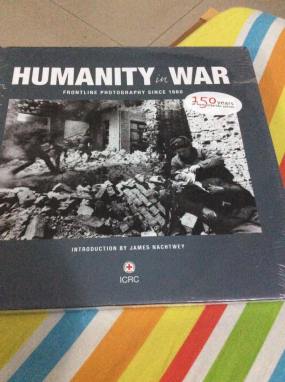
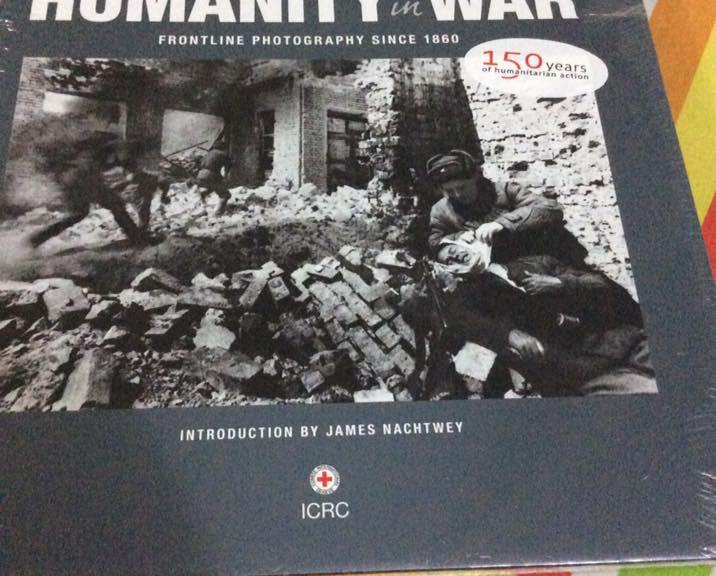
My book finally arrives, courtesy of the International Committee of the Red Cross.

On their October 4, during their ‘Ask An Archivist Day’ Facebook event, I had asked the ICRC about the Biafran children airlifted to Gabon, Ivory Coast, São Tomé, and even Europe, at different times during the war. I wanted to know about their journeys from Biafra, their lives in the host countries, and what became of them after they returned to Biafra. They referred me to the Chief Archivist who in turn suggested I visit the ICRC library in Geneva to get the information I wanted.

A few days later, I received a message saying I had won a book on account of my inquiries.

I didn’t go to Geneva, but since that day I have dug up a lot of information from the internet about the Biafran Airlift. I have found a couple of the airlifted ‘children’ and brave individuals who flew those dangerous missions that brought supplies into Biafra and, when necessary, evacuated vulnerable children to safety. Some of them have agreed to share their Biafran story with me.

The internet is truly an amazing place!

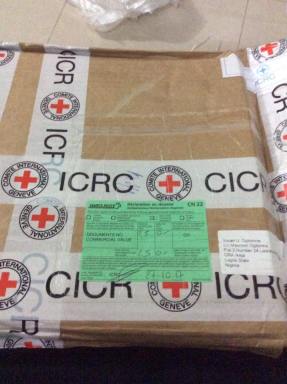
ICRC 1
MY BOOK, STILL BOXED UP
ICRC 2
VOILA!

Biafra’s Children, A Gathering of Survivors.

As Published by documenta 14’s Press Center.

The Parliament of Bodies: ‘Biafra’s Children: A Survivors’ Gathering.’

JUNE 30; 5.00-10.00 pm; Parko Eleftherias, Athens Municipality Arts Center and Museum of Anti-dictatorial and Democratic Resistance, Vassilissis Sofias, Athens.

JULY 1; 11.00–9.00pm; Parko Eleftherias, Athens Municipality Arts Center and Museum of Anti-dictatorial and Democratic Resistance, Vassilissis Sofias, Athens.

Life stream available.

Organized by Olu Oguibe, with Faith Adiele, Phillip U. Effiong, Okey Ndibe, Eddie Iroh, Vivian Ogbonna, Obiageli Okigbo, E.C.Osondu, Emeka Okereke.
Fifty years ago, in 1967, a bitter civil war broke out in the newly independent West African nation of Nigeria, a war that would create one of the greatest humanitarian disasters of the twentieth century. Lasting over thirty months, the Biafran War claimed an estimated three million lives, mostly children who died due to malnutrition and starvation after Nigeria imposed a global blockade on Biafrans, who were demanding a secure homeland. The previous year, tens of thousands of Biafrans had been murdered in waves of ethnic cleansing pogroms in different parts of Nigeria. This forced an estimated two million survivors to flee back to their ancestral homeland in then Eastern Nigeria, in search of a safe haven. The ensuing humanitarian crisis and continued violence against this population eventually led them to declare independence from Nigeria, upon which Nigeria declared war on the breakaway nation.

The death and carnage in Biafra caused global outrage. So did the collusion of global powers, especially Britain and the Soviet Union, in suppressing the Biafrans and their struggle for survival. In 1968, it was estimated that nearly 6,000 Biafrans were dying daily, most of them starving children. Photographs of Biafra’s malnourished children with their bloated bellies adorned the covers of news magazines and evening television news programs worldwide. John Lennon returned his knighthood to the Queen in protest, and Jean-Paul Sartre described Biafra as the conscience of the twentieth century. Even Winston Churchill, grandson of the British prime minister, wrote a series of newspaper columns deploring the situation in Biafra. Around the world students staged protests, sit-ins at embassies, and even a hunger strike in Norway. On May 29, 1969, Bruce Mayrock, a twenty-year old student of Columbia University in New York set himself on fire in front of the United Nations to protest Secretary General U Thant’s failure to take measures to stop the war of genocide against Biafra. Mayrock died the following day. Musicians like Jimi Hendrix and Joan Baez held concerts to raise awareness and generate relief aid for Biafra. A group of young French medics who volunteered in Biafra would go on to found the charity, Doctors without Borders (Médecins sans Frontières) in response to the human suffering that they witnessed there.

For two days this summer, June 30–July 1, 2017, child survivors from the Biafran War gather for the first time in Athens as part of documenta 14 to share their stories of living through the monumental tragedies and traumas of conflict, mass displacement, and separation from family as well as bereavement, famine, and hunger. They will also share stories of survival, which are indebted to the resilience of the human spirit and the humanitarian intervention of people around the world who sent relief aid to Biafra or opened their doors to Biafra’s refugee children.

Biafra is relevant today, not only because it represented the nearly impossible struggle of a persecuted people in their fight for self-determination and the establishment of a safe homeland, but also because the subsequent humanitarian disaster is mirrored in the plight of refugees fleeing similar crises in Syria and the Middle East today and their attempt to find safety in Europe and other parts of the world. The survivor testimonies of Biafra’s children reiterate the human cost of conflict. Alone the presence and the survival of these women and men, some of who now have children of their own, underline how humanitarian intervention can help save generations and preserve nations.

The event has been organized by Olu Oguibe, one of the child survivors, whose archival meditation on the war, Biafra Time Capsule, is on display at the National Museum of Contemporary Art (EMST) through July 16, 2017.
BIOS OF PARTICIPANTS

Faith Adiele is the author of The Nigerian-Nordic Girl’s Guide to Lady Problems and the PEN Award-winning memoir, Meeting Faith. She’s also the subject of the Public Broadcasting Service documentary My Journey Home, and co-editor of Coming of Age Around the World: A Multicultural Anthology. A professor at California College of the Arts, she is the founder of African Book Club.

Philip U. Effiong is Associate Professor of English at Michigan State University. He holds a PhD in Drama from the University of Wisconsin at Madison, and has taught Literature, Writing and History at various Nigerian, Ghanaian, and U.S. universities. In addition to his book on African American drama, his essays have appeared in several journals and encyclopedias. Effiong’s father, General Philip Effiong, was Biafra’s last head of state.

Eddie Iroh is a multimedia professional whose career has encompassed radio, television, print, and publishing, including a fairly recent post as Director General of Radio Nigeria. He is also the author of an acclaimed trilogy on the Nigeria-Biafra war, as well as the award-winning children’s novel Without a Silverspoon.

Okey Ndibe is the author of the novels Foreign Gods, Inc. and Arrows of Rain; the memoir Never Look an American in the Eye, Flying Turtles, Colonial Ghosts; and the Making of a Nigerian-American, as well as co-editor of Writers Writing on Conflicts and Wars in Africa. He has taught at several universities in the United States including Brown University.

Vivian Ogbonna is an interior decorator and writer. Since January 2017, she has been interviewing survivors of the Nigeria-Biafra war: men, women, and children who were direct victims of the conflict, most of whom do not have a platform to tell their stories. Vivian documents these stories on mybiafranstoryweb.wordpress.com, which she hopes will eventually become a database of memories, testimonies, experiences, and anecdotes about the war.

Olu Oguibe is a participating artist in documenta 14. He has written on his childhood experiences in Biafra, and his archival installation Biafra Time Capsule is currently on display at the National Museum of Contemporary Art (EMST), Athens.

Emeka Okereke is a visual artist and writer based in Lagos and Berlin. His current work explores the theme of “borders” through photography, time-based media, poetry, and performative interventions. He is also the artistic director of the Invisible Borders Trans-African Project.

Obiageli Okigbo is an artist based in Brussels. In 1967, her father, Christopher Okigbo, who is widely regarded as Africa’s greatest twentieth-century poet, died on the battlefront in Biafra. In 2005, she launched the Christopher Okigbo Foundation in his honor. She has exhibited in Brussels, London, Dubai, and Lagos, among others.

E.C.Osondu is author of the book of stories Voice of America and the novel, This House is Not For Sale. He was awarded the Caine Prize and the Pushcart Prize. His fiction has been translated into over half a dozen languages. Osondu is Associate Professor of English at Providence College, Rhode Island, USA.

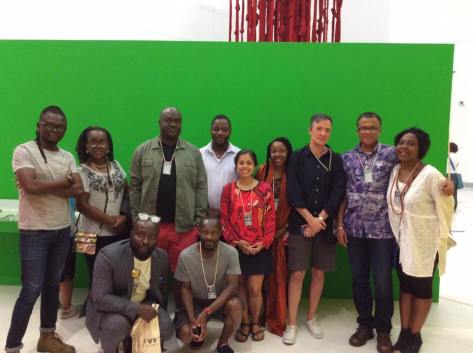
nnp documenta 3
June 29; Visiting Olu Oguibe’s Time Capsule of Biafran Memorials.
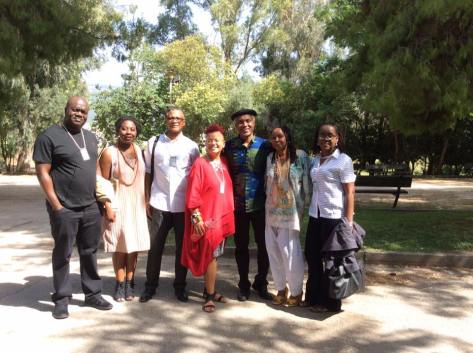
nnp documenta
 June 30; First day of the conference; arriving at Parko Eleftherias.
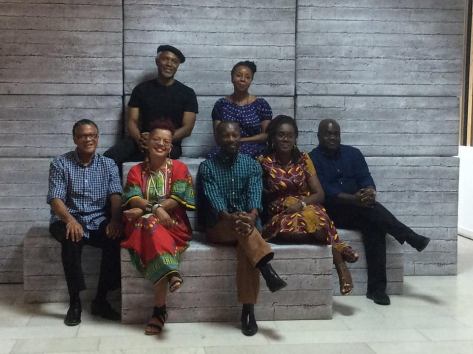
nnp documnta 2
July 1; Second day of the conference; Posing for official photographs.


ABOUT MY BIAFRAN STORY

In May, 2016, on the 49th anniversary of the Nigeria-Biafra War, a Facebook friend posted a tribute to his mother who had been an orphan living in a refugee camp in Gborokiri, Rivers State, Nigeria. He continued this way: “My father, on the other hand, was a remarkable young man who had left a flourishing career as a Sargent Major in the Nigerian police to enlist in the Biafran army. He came regularly into the camp to inspect the condition of things and to report back to his superiors. It was during one of these visits that he chanced upon my mother and, not minding that my mother was still a naive prepubescent girl, a very piquant romance that would later blossom into an unhappy marriage, began. And, that was how I and my five siblings came into a household replete with ghosts and shadows from a bloody past.”

The following month, another friend posted photographs on her timeline to commemorate her parents’ wedding anniversary. The faded, black-and-white pictures showed the couple at their wedding ceremony which had taken place on the 29th of June, 1968, as the war ravaged Aba, in Eastern Nigeria.

A few months later, it was a friend’s birthday and tributes flooded his timeline. One of them read: “Late sixties, the Nigerian civil war was in its early days… a group of persistent young musicians continued to mesmerize our chequered music scene with their witty Afrobeat infused psychedelic funk. The group, The Clusters…were a dominant music group then… As the war raged, the music played on.” 

Before this time, all I knew about the civil war were the events that led to it, the fighting that ensued and the military exploits that quashed the secession. I knew less about the men, women and children who were direct victims of the conflict. This was made worse because members of my family never spoke about their experiences. I was, therefore, intrigued by these Facebook updates that talked about wedding ceremonies, merry making and soldiers falling in love in a time of war. I knew there would be more stories like these waiting to be told – stories about death and suffering interwoven and, perhaps, tempered with those of courage, hope and happy moments. I also realized that the people who bear these stories will not be alive for ever and losing their testimonies will be like losing one’s voice without the chance of finding it again. I decided to look for these survivors and collate their stories into what the scholar and author, Okey Ndibe, calls ‘a database of memories, testimonies, experiences and anecdotes about the war.’

I interviewed my first survivor in January 2017, and this is the first batch of stories in the compendium. While speaking with the contributors I have experienced a mix of emotions – I have been angry, I have cried several times, but I have also laughed. In spite of death and trauma being the common themes in all the accounts, each one is unique and brings a different insight into the conversation.

Apart from three of the contributors who sent in their stories, I spoke to the rest in person or via Skype. While presenting their accounts here, I decided to preserve the authenticity of their narrations, including the flawed grammar, the vernacular, the transliterations, turns of phrases and other quirks that occur in speech.

However, many survivors are still reluctant to tell their stories. For some, the memories are still raw and painful. For others, the tensions caused by the agitations for Biafra has made them wary of being seen as supporters of these agitations. It may also be that some are just as I was – reluctant to confront a bitter past so as to make sense of it.

I thank all the contributors, especially those whose Facebook posts inspired this project. I am grateful to all who have given me leads to pursue, and those who have validated this modest effort. I am also indebted to the International Committee of the Red Cross for their quick responses to my inquiries and for making documents and photographs available to me during my research.

I hope that more survivors will find the courage to speak to the rest of us so we can learn the lessons from their experiences and pass on the memories to future generations.

Vivian Uchechi Ogbonna