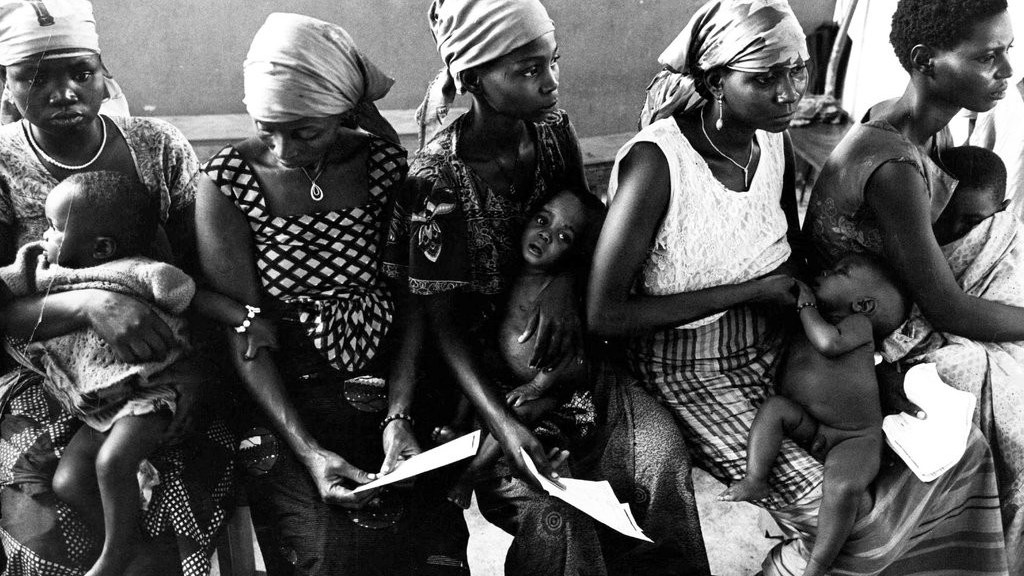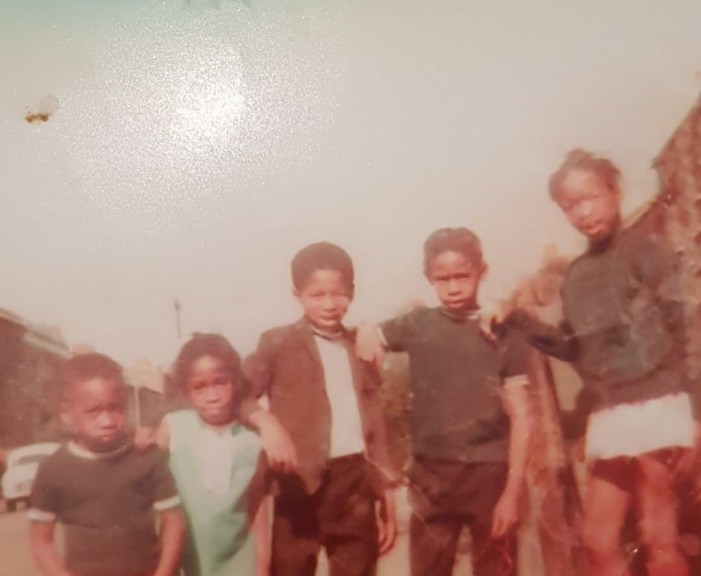
THE JAMAICAN WIFE

When our ship landed in Lagos most of the foreigners decided they weren’t getting off the ship. This was January 1966. The coup had already taken place. Dad decided we were going in. He had been given a job with the Water Resources in Lagos. So we got a flat at 51 Modupe Johnson Street, off Bode Thomas, Surulere. We were neighbours with the *Obas. They had three boys. And guess what? Their mother was also Jamaican. Six months later, the second coup took place.

One day we were told we had to move next door. And we were like, “Why?” But we packed up and moved next door. Before that my dad had gone out one day and come back with an Opel Record. It was a two door car. My dad was not around a lot. We thought he was going to work. Once in a while he would show up with the car. Sometimes he would leave the car and be gone. Then, one day he went out with mum and when they came back she had this baby in her arms.

Another day, dad was about to leave the house and I followed him. I was slow but when I got to the front window I saw him getting in the trunk of his car. I thought, “Why is dad getting into the trunk?” When I heard the rest of the story as an adult I realized that’s what he had to do to stay alive. I didn’t know where he was being taken. On reflection I think it had happened a few times but that was the only time I saw it.

One day dad shows up with the car and said, “You are going back to your grandparents.” That was the first time I would be going to Eastern Nigeria and I can proudly say I was stepping into Biafra because the Republic of Biafra had just been declared. On our way to the East we were stopped at the Onitsha Head Bridge by Biafran soldiers. They were saying they were not going to let us through. In the argument one of them slapped my dad. My mum grabbed a huge glass jug and jumped out of the car. She was waving it and threatening that the jug could break on his head if he laid a finger on dad. Jamaicans no dey play o. The arguments went on for some time and finally they let us go. From there we proceeded to our village which was not far from Onitsha.  That’s the last image I had coming into Biafra.

Tina – My mum didn’t speak Igbo and she had a foreign accent. The soldiers were cocking their guns as if to shoot us. The soldiers threatened they would throw my parents over the bridge into the water, which was far. I remember peering over the rails and the water seemed so far away. I don’t remember how the argument was resolved. We heard later from my dad that when he joined the army those men on that bridge that day were under his command.

Chinedu: Dad eventually joined the army and we were living with our mum in a flat off Edinburgh Road, Enugu. One time I got sick and mum was crying so much because I was in and out of consciousness. She came out looking for help but nobody was there to help, and tension was in the air.  She took me to Eastern Medical Centre and Dr. Okeke figured out what was wrong with me. Some weeks later, dad came back. He was a Civil Engineer and had gone for Officers Training. He told us we were going to the village, so we took off. That’s where we spent time with my grandparents, uncles and other relations.

Our house in the village was right on the Enugu-Onitsha road. That’s where I got the experience of a mass return. Everyone was heading towards Onitsha. It was a mass migration. Years later I was in America when Rwanda happened. I was watching a TV report about the crisis when I saw the mass of people trooping down the road with their luggage on their head. My body just started to shake because it brought back a lot of memories.

Tina: Another vivid memory I have is that everybody left the compound but my mum refused to leave. She felt that if she left our village my dad wouldn’t know where to find us. So we were sitting on our suitcases in front of my grandfather’s house waiting, and waiting. Dad was at Nsukka at the time but somehow he got a message that we hadn’t left with the others, so he sent his driver, Felix, to get us. We’d be dead now if it hadn’t been for Felix. [Laughter.]  Felix arrived in a station wagon and somebody helped him to bundle my mum into the car. We couldn’t take any of our belongings. We just jumped into the car and sped off. We didn’t realize how much danger we were in. That’s the strange thing about this – I can’t remember feeling frightened. In our escape Felix had to avoid all the major roads so he wouldn’t get caught by the soldiers.

Chinedu: Another memory I have was that dad buried his car during the war. Then he built something over the pit and covered it. After the war he dug it out and that’s what I used to learn to drive in 1973. I was 11 years old. [Laughter]

After our escape Felix took us to Ogbunike. The whole family was there and that was where we started seeing signs of the family not wanting to pay attention to us. It wasn’t blatant but it was happening. They were probably worried about what limited resources they had. When it came time to share food they weren’t including mum.

[Tina turns to Chinedu.] What was it about a bag of sugar?

Chinedu: Nicky was the size of a bag of sugar. That was the argument Dad gave Mum to convince her to leave. Nicky had not been fed well and therefore not grown to the normal size of a one year old, but she continued to stay in spite of all we were going through not getting enough food for five of us. He said it was better for her to take us back to England where we would be better cared for.

My grandfather also told me he didn’t like the way his children were treating us. They were doing it because they were looking out for themselves and we were foreigners. My mother, being Jamaican and her first time in the country, not able to speak the language, felt isolated, and my dad was not around.

Vivian: Maybe they felt you all were privileged, or they thought you should not have come back home.

Chinedu: Daddy was the reason they were getting all that salt and tinned food. Had it not been for him they wouldn’t have had anything. When you are not seen as part of a group you are treated as an outsider. Those things happen. To be accepted we had to work really hard. I remember the fight my mum had with my grandmother. She was dealing with that stress of not being given her own share of things. A knife was drawn but a lady who lived in the same compound separated the fight.

Dad’s division was under Cornel Achuzia. They used to refine oil so they always had fuel which they’d sell to buy food. My dad always sent someone to drop off the food, so we seemed to have food even when others didn’t. I remember eating a lot of crabs. Today, I do not like crab meat.

I remember we had five chickens which traveled with us as we moved from place to place. Each of us owned one and assumed ownership of it. The eggs were a steady source of protein. If my uncle Emeka felt like eating chicken he’d murder one of the chickens at night. [Laughter] He would come in the morning and say, “Nnaa, this chicken all of a sudden died.” And we’d have to cook it.

Tina – I remember thinking at the time that if the chicken had died of a disease and we cooked and ate it then whatever had killed the chicken would affect us too.  To be honest I don’t think I eat any of those chickens that had died in mysterious circumstances. It hadn’t occurred to me that it was my Uncle doing it.

After we left for Ogbunike there was a battle in our town, Ifite Dunu. It was known as Ifite-Ukpo then. Most people know about the battle that took place in Abagana, the town next to ours, but not the one in Ifite-Dunu. When the Nigerian soldiers came in to our town most houses were mud houses. They saw this big structure and moved in. It was my Uncle Cyril’s house. He had won the Jamaican Sweepstakes before the war so he was like a millionaire. He had houses in Onitsha and Enugu. After Enugu fell, the Biafran army made their way back and regrouped. Dad and his group decided they were going to attack my uncle’s house and dislodge the Nigerians. They succeeded, but the house was riddled with bullets. Even in 1973 when we came back from the UK we could still see casings all over the place. Uncle Cyril refused to fix the metal bars or repaint the walls. He just patched the holes.  He wanted a reminder of what happened because he lost his brother during that war.

Tina: There was a lot of traveling between places. We had to keep moving, sometimes we’d walk, sometimes my dad would send his driver to take us to the new place. Each time we were traveling the driver had to get out of the car to check the roads, because if there was a mound or something unusual on the road they were worried it was a mortar.

One of the places we stayed at was a school, I think. There was a field in front of it, and every foot of this field was covered in sharpened bamboo sticks. Each one was about four to five feet in height and so towered over me. We were told they were put there so that if Nigerian soldiers parachuted from their planes they wouldn’t survive the impact. I remember playing in this field, weaving in between the bamboo sticks oblivious to what they would do to a human being landing on it.

We spent some time at Abatete and Umunze. In one of these places we could stand on our veranda and see the fighting. It looked like a firework display.

There were two bunkers side by side. Our bunker was muddy and hadn’t been built properly so the walls were caving in. On this occasion we had to go to our neighbours bunker during the air raid. Our own collapsed and we were lucky we were not in it when that happened. On another occasion there was an air raid while we were playing away from the house. We hadn’t realized that we were so far away from the bunkers. We tried to run but everybody was shouting at us, “Lie down, lie down, lie down.” So we lay down in that field and we were watching the plane zoom past and come back, with a smoke trail, and then somewhere in the distance there was an explosion, boom, boom, boom, boom. The owner of the house where we were living, a reverend or something, drove down to where the sound came from. He had gone to pick the wounded and take them to where they could get help. When he came back he had to clean out his car. Everybody gathered around the car. I remembered this vividly. I struggled and pushed my head in between somebody’s legs and saw…whooo…I had never seen that amount of blood. That day was something else.

As I recall, I don’t remember fear. I don’t remember being scared. I just remember not liking certain things, not liking being in a different place, not liking how I had to be on the floor, because whenever we slept on the floor our faces would swell up. So if there was anywhere off the floor for me, Chinedu and Ifeanyi to sleep, we slept there, while Indy, Nicky and mum slept on the floor. They didn’t react as badly to sleeping on the floor as we did.

Chinedu: They were Nigerian born, that’s all I can say. [Laughter]

Tina: One of the things I don’t like, even now, is carrying bags when travelling. I make it a point not to. Where possible I check in all my luggage. I think it’s linked to the experience of moving from place to place. It didn’t matter how young you were, you had to carry something. It didn’t matter if your arms were tired you just had to carry things because you would need these things.

I’m sure we were traumatized because there’s no way you go through that experience without sustaining trauma, but you find a way to cope with it probably by blocking things out, because you have no choice.

Chinedu: You know what is Mkpor n’ani? When that thing goes off, my heart still skips. If I know it’s going to happen, then I’m fine, but if it happens unexpectedly I get agitated. And right now I haven’t watched any videos of refugees in the North East. I will watch clips of dead people but haven’t watched clips of people in IDP camps.

Vivian: Tell me how you were evacuated.

Chinedu: I remember the plane at night. I remember everybody hiding. Next thing you know, people were going out to the plane with lanterns. These people running with lanterns, where are they going? I didn’t know they were going to light up the runway. [Laughter] Those pilots, if I ever saw one, the kind hug wey I go give the guy erh? Imagine the planes in that kind of darkness. And African darkness is very dark. There’s no moon light. It is total darkness. And that lantern was just barely giving him light. Everybody rushed to board, but mum was still fighting, saying she wasn’t going. At the door of the plane she was still refusing. She’s a stubborn woman. That’s when we knew daddy wasn’t coming with us.

After the pilot taxied and turned around, na rush o, because there was no time. The Nigerian soldiers were shooting at the plane when we took off. It was a cargo plane. There were no chairs. And we were sitting on a bench. I remember the plane taking off and the benches falling. And once the plane took off it had to fly up at a sharp angle, to get fast above the line of fire. I know it was last week of November or early December, because we spent Christmas in Las Palmas, the Canary Islands. We remember the other people who were in the plane with us. One of our parents was either West Indian, or American or European. We flew to Sao Tome and from there to Equatorial Guinea, then Las Palmas in the Canary Islands, and finally London.

My dad never joined us. He had been promoted to a Lieutenant Colonel a few days before the war ended. He was hit in his neck by shrapnel. He spent the last days of the war in hospital, and another six months recovering. After he recovered he came to London to see us.

When everybody was being given twenty pounds my dad sold his wedding suit to a Nigerian soldier for fifty pounds. He hadn’t dug out his car yet. He said if he had dug it out they would have taken it. So, he sold his suit and had some money. And for a guy to say, “I am going to give you fifty pounds for that suit,” that was a lot of money back then. Some of those Nigerian soldiers were not bad people. They were doing a job.

Tina: Another impact I didn’t really know the war made on me until now is that when I go shopping I always buy a lot, usually much more than I need to. I always stock up so that if anything happens we will have something. That experience of not having what you need when you need it, and even when you did have it, it was never really enough. There’s a phrase I use to describe myself, “I am a war baby.” So the way I use that phrase is that no matter how little food or resources I have I’ll share it, not even manage it, I’ll share. I believe that when there are other people around you who are hungry and in need, and you have a little food and a few resources, you will have to share it. I practice this daily and I think that this is as a direct result of my war experience.

Chinedu: For me it’s my phobia for crabs. [Laughter]

Tina: We all went back to Nigeria in 1973, three years after the war ended.

Recently we had my mother’s DNA tested and we found out she’s sixty one percent Nigerian
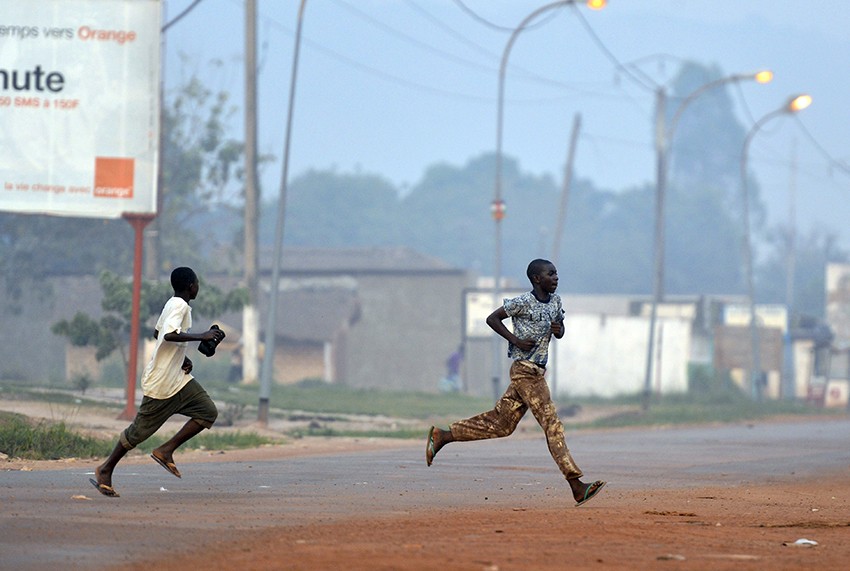
BOYS’ COMPANY

The wounded soldiers were coming back to the village and telling us what was happening at the war front. They were showing us how to dodge bullets. They were carving guns with wood and giving us, teaching us how to do manoeuvres. They were preparing our minds to fight. But nobody told me how to dodge air raids. So, the first day it happened, I didn’t know it was air raid. I was fishing with my friend, Monday Iroegbu, from Amaogudu Otampa,  and I was wearing a red T-shirt. The bomber dropped nine bombs into the river. I was counting the bombs as they were being dropped, out of sheer curiosity. Monday is still alive and can corroborate this story. Some of the bombs exploded but many did not. We started running so they started spraying bullets at us. I got to one big tree and ran behind it. The helicopter lowered and parked in our ama, our village square. It was piloted by a white man. I believe they wanted to catch me alive. They just wanted a prize, a trophy. I ran into the bush and our people who were already taking cover there said, “Oh, remove your red shirt, remove your red shirt. That is why they are bombing this place.” So I removed it and threw it away. At the end of the day we came out and started counting dead bodies.

People were losing their homes because of the advancing enemy, but there was community assistance and collaboration. When they move to another community the people there will accept them. My grandmother took in over twenty people just because they were Ndigbo who were running for their lives. She was a local midwife so she was quite popular. We gave the refugees part of our farm land and they built temporary accommodations on it. We cooked communal food and shared to them. They were with us for almost four months before the war got to us and we became refugees ourselves.

We were hearing about the war on the radio, but majority of the things they were saying were propaganda. So, even when it was getting closer to us we didn’t know. When the soldiers eventually entered our community my mother said she was not going anywhere; that she won’t run from Lagos to the village, and then start running away again. Almost the entire community ran away but my mother was busy frying and selling garri. I said, ‘Mama, ndi mmadu a gba chaala oso – other people have run away.’ She said to me, ‘Nwa m’, ebe ariri nwuru wu ili ya – wherever the millipede dies is its grave.’ My sister came out of the bedroom and said, ‘Mama, if I die my blood is on your head.’ My mother was shocked. She said, ‘Who said that?’ I said, ‘It is Ifeyinwa.’ She said, ‘Ngwa, ngwa, ngwa – hurry, hurry, hurry, let us go.’ That is how we started preparing to leave.

The day our village collapsed, there was an old woman who couldn’t run because she was blind. Her name was Nneoma Ukazim. We used to call her Nne. Her children were in the army. One of them was working with the Nigerians against our people and later became the chairman of the Liberated Isuikwuato Area. So, there was nobody to help her. She was just trying to feel her way around, touching walls and fences. I told my mother that I wasn’t going to leave the old woman. So I took her. We got to a small river where two palm trees were placed across to make a bridge. The old woman couldn’t get on it so I, a ten year old, I carried her on my back to the other side. A Biafran soldier who was running from battle saw me and assisted both of us until we got to a safer place. Surprisingly, she survived the war and I became her confidant, to the extent that she told me her burial plans and gave me the clothes she wanted to be buried in. She died in the 70s.

We slept in somebody’s house the first night. The next day the shelling started in that community so we moved again. We kept moving. We moved about four times. The first place we ran to was a town called Ezere in Isikwuato. Some people ran to a place called Isi-Iyi. The war never got there. They said the deity in that place prevented the soldiers from getting there; that the people who ran there were safe. No bombs, no bullets.

A lot of people got lost due to the sudden movements. My sister, Florence, almost got lost. She went with other family members to Umuobiala, another community in Isikwuato, to visit my aunt, Mrs. Chidinma Ojiaboh. The day she was to come back, the shelling started. That day was what we called Church Ahia, when our market day falls on a Sunday. This happens once in eight weeks, and it is celebrated in a big way, like Christmas or Easter. So she couldn’t come back. And we couldn’t go to her. Even my aunt she had gone to visit, they left her and ran away. So my sister was running alone in a bush between Umuobiala and Afo Ugiri, when the vigilante found her. They were also called Civil Defence and were the liaison between the civilian population and military authorities. When they identify orphans they take them to the Red Cross. They assumed she was an orphan because she said she didn’t know the whereabouts of her parents. They took her to a camp where other children were waiting to be evacuated. But during the documentation one of the soldiers recognized her. He was from our village. That was how he sent us a message across enemy lines. We moved, me and my mother.

The Nigerian soldiers were still sleeping when we got to the check point, so we sneaked through their backyard. It was when we were coming back that they caught us. They asked us where we were coming from. They said I was Ojukwu soldier. I denied several times. They were convinced that Biafra was using child soldiers, which was true. They were using child soldiers to steal for the army. I was one of them. They called us Boys Company. They will send us to steal food and clothes. We will wear only our shorts. They will shave off our hair and rub oil on our bodies so that if they catch you, g’a gbu cha pu – you will slip away. We even stole guns and ammunition. Those who did very well in the training were given real guns which they called Ojukwu Catapult. They very small submachine guns and were easier for young boys to carry. The training was two weeks. They taught us manoeuvres, weapons handling, parade, how to recognize the enemy. Those of us who were born outside Igbo land spoke different languages. I was very good in Yoruba so it was an advantage. When the Nigerian soldiers catch you, you speak Yoruba to them and they say, ‘Omo ale, just let him go.’ My uncle was in the BOFF, the Biafran Organisation for Freedom Fighters. The day they caught him he started speaking Hausa. He was very fluent in it. Very fair in complexion. He said he was Dan Kano, that he was from kano. They asked him all manner of questions and he answered correctly, so they went drinking with him. He escaped and came back to tell us the story.

There was even an airstrip in my community where lighter air craft used to land. It was in that vast land between Okigwe and Uturu, right from where you have ABSU up to Ihube. During the war it was called Ugba junction because there was a big Ugba tree there. They camped Nigerian soldiers on that land. But before it was captured by Nigeria, Biafra was using it as an airstrip. Before our place fell we were the ones protecting the airstrip. We used to put pongee sticks all over the fields so that no aircraft will be able to land. At night when our own planes are coming in, because we already know they are coming, we will create a path for them to land. The flights were a collaboration between the Biafran Air Force and some foreign bodies. Some of those journalists who came, came as aid workers. Some were bringing arms and relief materials, and also helping to move children of well-to-do Biafrans out. These are stories that will not make the headlines.

We had uncles and brothers who were working for the Biafran government digging trenches. Those trenches were dug by civilians, not by soldiers. They were using older men who were too old to fight. They were also using them for propaganda. They will go and dig trenches and come back with information about the enemy.

Where you have Stella Maris College at Uturu, there used to be a rehabilitation center for wounded soldiers. They called it Hope Ville. They were making shoes and all manners of crafts during the war.

Biafra was very organised. And everybody contributed. My parents contributed. I contributed. They called it Win the War effort. Everybody made contributions to that war. If you were making baskets, you donate them to the Biafran Government. Anything you can provide – farmland, houses – you give to the government. When they need an office, you vacate yours. Biafra succeeded because of communal efforts and that was why the war lasted for so long. The Nigerian army thought they could over-run the entire South East within days. But Ojukwu miscalculated. You have no arms, no bullets, you say you are waging a war. So those who are talking about Biafra did not witness the war, they are doing it because of the marginalization in Nigeria.

Certain communities were even divided. Nigerian soldiers on one side and Biafran soldiers on the other. People used to sneak across to the Nigerian side to buy food and other things. They call it Ahia attack. I was following my mother to these markets. Some of them were designated as Ahia Ogbe – market for the deaf and dumb. Because of the air raids. These markets were held in the forests and only sign language was used. One day I escorted my mother to a market in Ishiagu to buy yams. We walked the whole day. I was carrying three long native baskets – abo. Inside the baskets I had yams and Adu, which is like cocoyam. My mother was also carrying a basket. Do you know that at every road block Biafran soldiers will take one yam? By the time we got to our village our baskets were almost empty. I cried that day and I said, “God, do not allow Biafra to win this war because if we do we are going to see worse things.” Ojukwu was no longer in control. The soldiers were hungry. They were committing atrocities in the areas they controlled.

The hunger was so much that one day we ate the wild variety of Una, the one called unabiwu. There was nothing else to eat. We said if bullets don’t kill us something else will kill us. After the meal, we slept for four days at a stretch. We didn’t wake up for four days. It probably contains very high levels of cyanide. We were lucky to have even woken up. On another occasion we ate a wild variety of beans. We bought it mistakenly, and it almost killed us. I was the first person it affected because immediately after eating I started having hallucinations. They gave us palm oil and coconut water, and that was what saved us. The only person who wasn’t affected was my sister, Florence, the one who was found in a forest. She had a stronger constitution.

Just like my sister, my father was presumed dead during the war. We mourned him. They put something in the ground and conducted a symbolic burial for him. It was after the war that one of my uncles ran into him in Liverpool, England. He asked him what he was doing in Liverpool and my father said, “They told me my wife and children are dead. What am I coming to do in Nigeria?” My uncle told him we were all alive, that only one of us died. My father said, “What of my wife?” My uncle said, “Your wife is alive.” What happened was that my father was in the navy and Nigeria wanted them to bombard Port Harcourt with the NNS Aradu. He and his colleagues refused. They diverted the ship and abandoned it at sea. They were rescued by a Congolese fishing boat which took them to Congo. President Sese Seko granted them asylum and facilitated their move to England. The Nigerian government recovered the ship but it’s no longer sea worthy. After the war my father came back to the village, but we had to undo the burial we had done. They performed some rites before he could enter the compound. The government arrested him, court marshaled him, and sacked him with no benefits. He eventually became a sailor and that is what he was doing until he retired.

Anyway, after interrogating me and my mother at the check point, the Nigerian soldiers let us go. We brought my sister back. By then we had been liberated.

-Richard Harrison

[Cover photo courtesy internet]

LOVE IN A TIME OF WAR 2


I was there, anya m wee fu zi kwa ife n’ine gaa nu because my husband was an Air Force man – Staff Sergeant Samuel Chukwu. M’ g’a si n’anyi n’abo so wee nu ya bu ogu. Because oge dii j’ano n’ihu aya gi nwa g’a no n’ihu aya – I will say that I fought that war with him. Because when your husband is at the war front, you will also be at the war front. If he doesn’t come back you will never have peace of mind.

He left me at home with his mother to go and fight the war. I was with her for one year and six months. Just imagine a young girl newly married. I hadn’t even conceived then. I couldn’t hold it again.

One day one army man came on raking to our place, to find out what the enemies were doing. I told him I would like to follow him to go and see my husband, that whatever is inside I will take it. He asked me if I would be able to. I said yes, I will. My husband was at Ihiala at the time. The man told me when he will leave and asked me to prepare. When I told my Mother in law she said as long as I have the heart to follow him, I should go.

We left our place around 6.00 pm. We went through Evbu. We went by foot, through forests, forests, forests. We got to a river. I can’t remember the name. The people who ferry people across said we have to wait, because there’s a time enemies walk about, and there’s also a time when everywhere will be safe for us to cross. They took us to a small house where we met other people who wanted to cross. We stayed there till around 2.00 o’clock. Then they asked us to come out. They brought the canoe and we entered. In fact it is God. It was only me and the man in that canoe. I don’t remember how much we paid. [She sighs] I have forgotten. A di a na m’ old now. A di ro m’ e lota zi ife n’ine – I am old now. I don’t remember everything.

We crossed to another town. I have forgotten the name. We rested there for two days because soldiers camped there. The man now arranged for a car to take us to Ihiala.

My husband was very, very happy to see me. He was living in a hostel. It was when I came that he got a house. And that is where we were until the war started raining – air raids, bombers, fighters, all of them.

What the army did is that they will dig bunkers, but sometimes when the bomber comes it will drop bombs on the bunker. So they told us that once we hear the sound of the bomber we should run inside the bush.

We were living in the Air Force quarters at Ihiala. When they are going to fight, they will pack all the Air Force wives and go and dump us in a students’ hostel, because the students were no longer in school. We were many o, including those who had children. That’s how they were carrying us about like people herding cattle. We went to Aguata. We went to Ikenanzizi. When we are going each person will carry her own cooking utensils because nobody will lend you her own. I was pregnant with my first son by then. There was nothing for us to do in the hostel other than cook. Those who didn’t have will go to the market. After that, we will gather together and start discussing our problems. That will be our work until it’s safe to move us back again. [She laughs] The Air Force tried.

Agha Biafra. I can’t remember all I saw in that war.

The day I was having my baby, around 9.00 in the night, it is by God’s grace. If you see air raid that day. I can’t remember the name of the hospital but it’s a general hospital. Everywhere was shaking. I was in labor. You can imagine how I was feeling. But God brought me out. [She chuckles] They didn’t bomb the hospital but the noise erh. If this air raid is in Manchester, the nose will cause your heart to jump. If it is bomber you won’t hear the noise when it’s coming. When it comes close it will start dropping what it is carrying, killing people. After I left the hospital, nobody did omugwo for me.

Both of us took care of the baby. In fact, he was the one who used to massage my body with hot water. He did everything. By God’s Grace, me and my baby were healthy.

When the war ended we went home to Isele Uku. The Nigerian government didn’t want to call back the people who crossed to Biafra. So everybody was waiting to hear news of what will happen. One day we were at home when they brought him a paper to resume work. He decided to go and tell his mother’s people the news, and also that they should keep an eye on me and our children. He went, and on his way back a car killed him. I asked myself, “Is it his destiny?” My happiness is that he didn’t die in that war. He survived. He got home. Because if he died in the war I am not sure I will be alive to come back. To God be the glory, we went home together after the war.

-Rose Chukwu


THE WOMEN FIGHTERS

I was working at Textile Mills Aba when they came and conscripted us. They just took us to Aba Sports Stadium, near Ngwa Road. The whole stadium was filled with people.

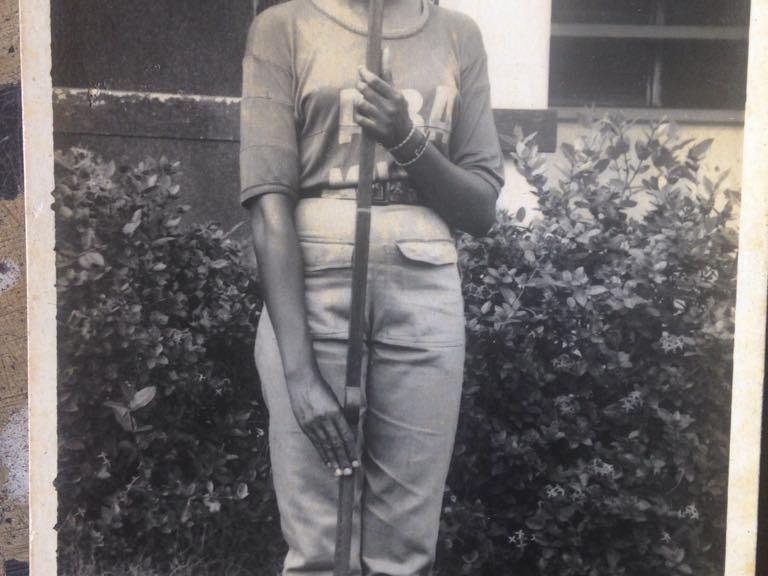
We had group pictures. The one I took with my group I can’t find it. I kept it all this time.

The military people used to come and train us. We did it for about three months. Male and female o. They didn’t train the girls separately o. There’s nothing like you are a girl. Your commander, whatever he says, that’s what you will do.  No going back. Whether you like it or not. When it’s time for us to take cover, everybody will lie down. They showed us how to handle a gun, how to lie down, how to… when they say… erh…what’s that their slang again? ‘Preseeeeent arm!’ You present your arm. ‘Preseeent arm!’ You raise it like this. [She lifts her arms]. When they ask you to shoot, you know that thing is not a real gun, then they’ll show you what to do. [She makes the sound of gun shots with her mouth] Kpa-kpa-kpa-kpa-kpa-kpa. They will shout, “Order!” You bring out your leg. So all that training is what they were doing. But, no, they didn’t allow us to use a real gun. I’m not sure they had it in mind.

We’ll go in the morning and come back in the evening. They gave us uniform. They didn’t camp us. We were coming from our houses.  Even then, my father and mum won’t allow me. They were so scared that we should…arh! [She claps her hands].

They just wanted the first batch to go and assist the real soldiers. We were not the real soldiers. They didn’t train us to that level. The real army was in the war front. This militia was just to go and support them. They sent some to Abagana, Port Harcourt, wherever they know the fight was fierce they sent them there. They were there, helping the casualties, like Red Cross. The women, they were using them in the refugee camps, but my parents refused. They say I won’t go, they won’t allow me to follow them out again. That was the end of my militia training.

In our own case it was this stick they gave us. But the people they were training to go to war front they gave them real gun and showed them what to do, how to use the trigger, how to do this and how to do that, take cover, lie down.

We were excited, yes, especially in the morning when our commander will start chanting ‘Hep! Hep! Hep! Hep!’ [She starts to march.] All of us, we were so excited carrying our guns. But we were scared o. They said all the people that went to the front didn’t come back. So when they conscript some people they will be pretending they are sick or something is wrong with them. They will say they have been in the psychiatric ward, yes. War is not something you wish to experience a second time. Very bad.

The war was not easy o. Not easy. Hei. The air raid will come in the morning from 10.00 o’clock to 12.00 o’clock. It will come again by 4.00 pm in the evening till around 5.00 pm. My mother dug a big bunker, so when the air raid starts all of us will go there and stay. In the morning my mother will disguise herself, paint her face with this black uri, then she will bring a basket with food to us. When she drops it she will quietly go back to the house. Throughout that day we’ll be there. Inside that bunker. Lying down. The little food she’ll bring to us that’s what we’ll eat until evening. After that second air raid all of us will then go back to the house.

There was one air raid at Aba. Look at me. You see this thing here. [She touches a scar on her leg.] It was some of the bullets from that air raid. One afternoon like this the air raid came. It killed so many people near our house. Some of it fell inside one of the rooms in our house. Number 3A Asa Road Aba.  That is where we were living. It shook the whole house. It was then Ojukwu came to our house. That was the first time we saw Ojukwu.  He came with his people. They came and removed the bomb. Big something like this. Come and see dead corpses everywhere. [She touches a scar on her hand]. A piece of that bullet was in me for more than one year before it came out. [She touches her hand again] See the marks. This one, this one. It was moving round my body before they brought it out.

After that air raid we started running. From Aba we ran to Umuahia. From Umuahia we ran to Mbano. From Mbano to Nkwerre. From Nkwerrre, myself, my sister and her husband, and the last born of my mother went to Umuchu. We were at Umuchu when the war ended. We came back to Nkwerre. My parents were at Nkwerre. From Nkwerre we all started coming back to Port Harcourt.

Our parrot from the war followed us till after the war. Pretty boy, that’s what we called the parrot. It followed us till after the war. It was very intelligent. Even when they bombed our house in Aba, the parrot was there. We were hearing they were forcing women into marriage so our mother used to rub uri on our faces. If you see how our faces looked. Pretty Boy will give us sign that the soldiers are coming. When they come close to the house he will start asking them questions, “What are you doing here? What are you doing here?” [She laughs.] Then my mother will start crying and speaking Hausa to the soldiers. My mother, she’s a linguist. If it is Hausa, she will speak. If it is Yoruba, she will speak. Many languages. The parrot knew all our names. Pretty Boy. Yees! If you put sugar in his water he will drink. If you do something wrong he will gossip about you, unless you give him that sugar then he won’t talk. If not, when mama comes he will tell her everything you did.

[Cover Photo shows the contributor. The photograph was taken by Gorgeous Studios, 42 St. Micheal’s Road, Aba.]

EQUATORIAL CONSTELLATIONS

The place and importance of the Biafran Airlift in the history of Sao Tome and, by extension, Portugal, cannot be over written.

For almost three years that the war lasted, this small island located in the Gulf of Guinea saw the influx of individuals from all over the world. Journalists, diplomats, aid workers, missionaries, clergy men, politicians, doctors, military personnel, mercenaries, business men and all sorts of people arrived the island on their way to and from Biafra. Consequently, hotels and guest houses, restaurants, shops and markets, beaches and other leisure spots, the aviation industry, etc, all benefited, in one way or the other, from the upsurge in commercial activity on the island. The governor of Sao Tome even tried to cash in on the windfall by imposing a fee for every child that was brought from Biafra into Sao Tome. But Father Tony Byrne, one of the initiators of the Air lift, resisted the move.

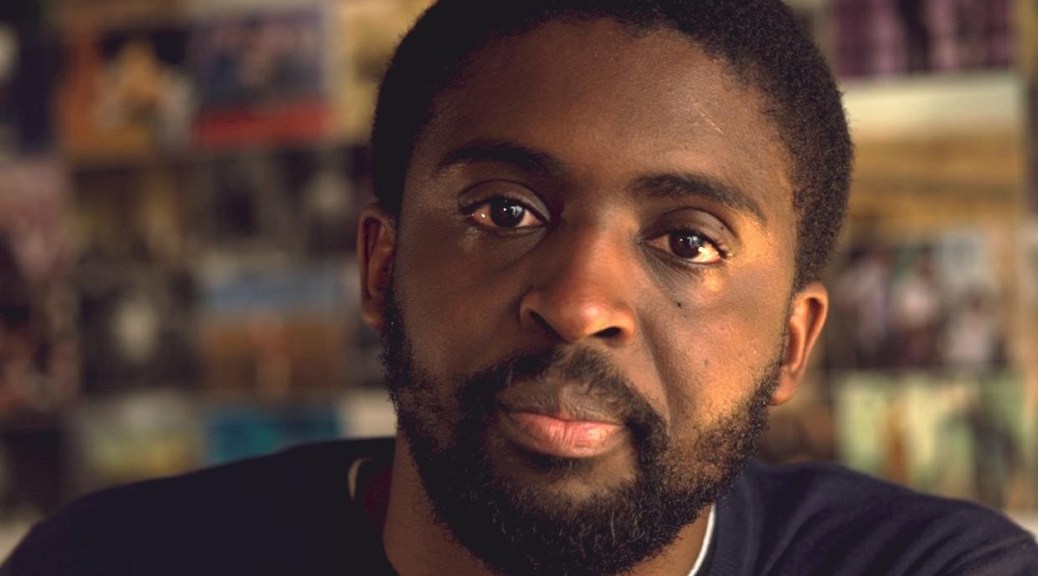
Born in Portugal in 1975, five years after the war and the Airlift ended, Silas Tiny is a Sao Tomean film maker whose interest in this monumental event led him into making a film about the airlift. The film is called ‘Equatorial Constellations.’ According to him, the goal of the film is “… not to narrate a past event but to display that very past through the present inner look of the ones involved in it 50 years ago. The film will, ‘…bring together former child refugees, Sao Tomeans, Joint Church Aid officials and volunteers who created the largest and riskiest relief effort that world has ever seen.’ He goes on – “Hundreds of children had been evacuated from their land, arrived in this island…escaping pain, slaughter and famine. Today, fifty years have passed, that memory remains an open wound, their names, faces and lives forgotten and their remembrances fade away…Where are these children, and what happened in their memories so far? What can they convey? Their stories are part of the universal memory and remain as living testimonies…”

Silas and I are looking for any of these ‘children’ because we think our projects will not be complete without their participation. We will appreciate any leads and references in this regard.

[The cover photo shows Silas Tiny]

GOOD INTENTIONS by Marie Louise Schipper

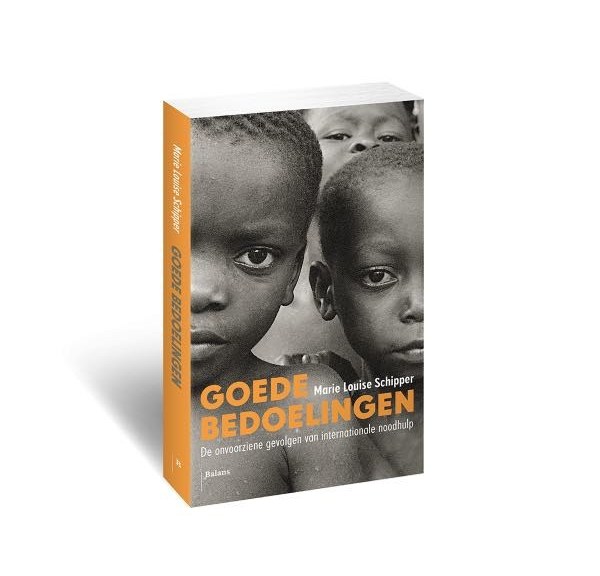
Fifty One years ago, the Nigeria-Biafra war grabbed the world’s attention with its sad, haunting images in newspapers, magazines and television sets. Forty Eight years after it ended, the stories of that tragedy are still being told through films, documentaries, dramas, art works and exhibitions, music, books, in conferences and lectures. One of the people who has documented an aspect of that conflict is Marie Louise Schipper, a Dutch journalist working for OneWorld magazine and de Volkskrant newspaper. She has written a book about ten Biafran children who were evacuated to the Netherlands from Biafra for medical attention. The title of the book is Goede Bedoelingen which translates to ‘Good Intentions.’

In 1968, Marie was a young girl living with her parents. According to her, “It was a big item because it was the first international aids for starvation in Africa and nobody realized what was going on at that time. We didn’t know a lot about Africa and as a matter of fact not much about Nigeria as well. And Africa was an exotic country far, far, far away at that time. So Nigeria came into our living rooms and we could see what happened. The news in the newspaper and television was so overwhelming of these dying children. And my parents – they were devout Catholics – always told me and my sister that we should care about other people. They would tell us to finish our plates and that we should think about the children of Biafra. The images made a big impression on me, as a child. The Dutch gave a lot of money [to the relief effort] because they felt we should do something because in WW2 so many people died, and it was determined that in Biafra far more children died. Another reason these children made such a big impression on me had to do with the war stories in my own family. My father worked as a forced laborer in Germany. He was 17. My mother’s family was on the run and had to live with a family they didn’t know. My grandfather died during a bombardment. He was never found.”

When Marie became a journalist, she was surprised that the stories of these ten children were not written. “I thought there must be somebody who has written this all down. But there was nothing written. It was like when snow has fallen and everything is completely white and nobody has run into it. That was my first impression, that it was completely blank. There was nothing about it, only publications in the newspapers. When I started interviewing people everybody said, ‘No, I don’t remember these children, I don’t remember them.’ And I said, ‘Why don’t you remember them, because it doesn’t happen often that ten children from Nigeria, out of a war, come to the Netherlands.’ I felt they were hiding something. And I thought, ‘What are they hiding?’ I discovered that one of the children who was here had epilepsy and he was really ill. He was a bit retarded and was also in a foster home. He needed a lot of attention but people from the Nigerian embassy were very strict and said the children have to go back to Nigeria. The foster parents didn’t want to let them go because they didn’t know where they were sending them to. The foster parents of the sickest child were under so much pressure, so they decided to send him back to Nigeria. He was first sent to Gabon, with enough medicine for half a year, and afterwards sent to one of the rehabilitation centers at Ikot Ekpene. His family didn’t show up, so he was sent to Nung Udoe Orphanage and he died shortly afterwards. And I think that was why all the doctors were saying they didn’t know a thing. That was the reason they didn’t want to talk about it because they sent a boy who was really ill back to a country that was recovering from the war without proper medication.”

“How did you eventually find somebody who told you the truth?” I asked.

“I spoke to a lot of nurses and they had memories about these children. They also had photographs and they told me about the foster parents, and I said that must be the reason nobody wanted to talk about it.”

“Why do you think the Biafran authorities decide to take them to the Netherlands instead of Ivory Coast, Gabon or Sao Tome?”

“There reason was primarily because of Abie Nathan, an Isreali pilot. He was also a humanitarian and did a lot of food aid. He tried to mobilize the Isreali people to send in goods and food for the people of Biafra. He was very popular and charismatic, and had a lot of connections in the Netherlands. He was filmed by a television crew asking people to do something about Biafra; that everybody should give a hand. When this documentary was broadcast a lot of people got mobilized. He said he convinced Ojukwu that these children should be sent to the Netherlands where they could get proper help. But Ojukwu said no. Finally they decided to bring the children to the Netherlands as a symbolic gesture where the children in Europe would get acquainted with the Biafran children while the Biafran children would get more knowledge about the world. The decision was made and ten of the children came to the Netherlands.

At the end of the war, eight of the children were taken back to Nigeria. But two remained in the Netherlands. The official documents said the two who remained in the Netherlands had no parents and family back home. But in the 1990’s, one of them decided to look for her family. She discovered she had two villages full of relations. She returned to Nigeria to meet them.”

When Marie started to gather material for her book, she knew she had to make the trip to Nigeria.

“If I didn’t visit Nigeria, the story wouldn’t have been complete.”

“That was very courageous of you. So, how did the journey to Nigeria start?” I asked.

“I went to the African Studies Centre here in Netherlands, in Leiden. And one of the people who was connected to the African Institute, he works nowadays in England, he said to me the best thing I could do was contact *Emeka Anyanwu, an Anthropologist at Nsukka University. I thought it was a better idea the students of Edlyne go on research and try to find out what happened to the children. And it worked fairly well because we found two of them. It was like a needle in a haystack.  When we knew they were traced, we traveled from Nsukka to Owerri, from Owerri to Umuahia, and from Umuahia to Orlu. We visited the hospital in Umuahia [Queen Elizabeth Teaching Hospital] and all the places that were important during the war. I visited the airfield at Uli.”

“Is it still there?” I asked.

“Yes. You can see the traces of the road and there was a man who saw us walking and was curious. It’s not always you see White people there. He told us that was the road and he also knew the Ojukwu bunker. It was a small bunker. Even Edlyne didn’t know there was a smaller one.”

It took Marie Louise Schipper fifteen years to finish the book, and it was published on October 27, 2017, in Amsterdan. Unfortunately, the book is written in Dutch and, at the moment, Marie cannot afford to hire a translator. She said, “I would like to give the opportunity for more people to read it.”

[I spoke to Marie on the 23rd of May, 2018, via Facebook and these are excerpts from our chat.]


MUSIC IN A TIME OF WAR – 3

SHOWDOWN AT LIDO

by Frank Onyezili

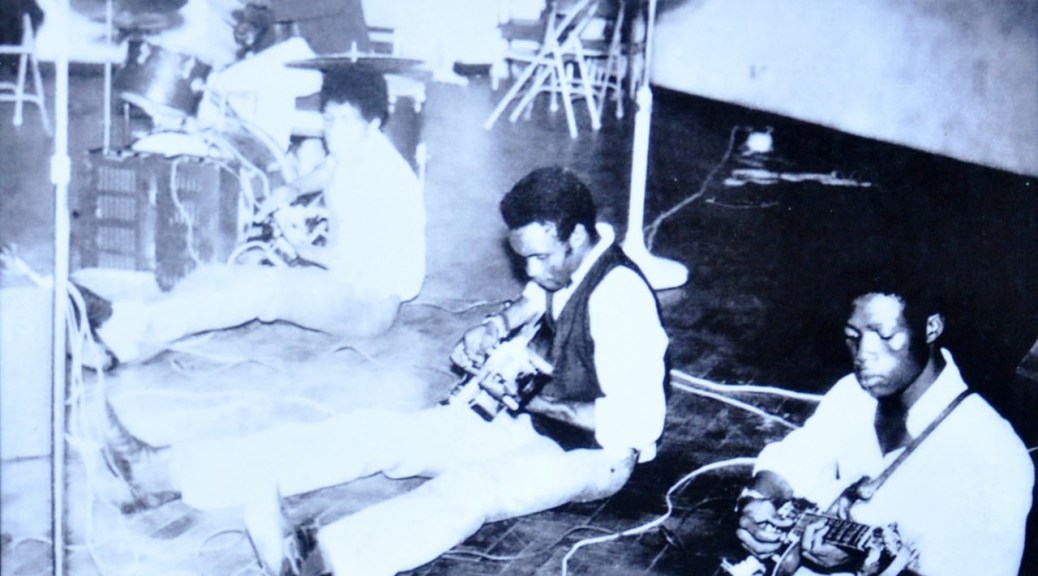
The famed Garden City, Port Harcourt, Nigeria, was reverberating with news of the arrival of the new kids on the block. The Fractions a pop music group comprising Travis Oli on vocals and guitar, Mike Obanye on drums, Jake Sollo on bass and Frank Zilli on rhythm guitar, had hit town parading Ify Jerry, their new lead guitarist, and were literally setting it alight with their funky sound, music that was refreshingly new in those climes in those days. However, their arrival signalled intensification of rivalry between the group and the Hykkers, the landlords at Lido nightclub, situated on a street next to Hotel Emilia where the Fractions were based.

It was 1968 and the civil war between Nigeria’s Federal troops and the secessionist Biafran forces was at its peak. There was not the entertainment of Premiership or La Liga football, no Diamond league and no Hussain Bolt. Just war, and music, to which everyone, soldier and civilian alike, flocked. For the better part of three years the combatants were locked in a war of attrition, in which no quarters were given nor prisoners taken, a war that by conservative estimates cost more than two million lives, mostly of women and children. First Nsukka, then Enugu had fallen to Federal troops who were facing serious challenges of their own as the Biafrans overran the Midwest as far as Benin and were threatening Ore, right in the heartland of Nigeria’s western region. But there in Port Harcourt it was still music, sweet soulful music, opium for the rich and poor alike in the Biafran enclave in a time of war.

The Lido was a shrine of sorts to night-clubbers in Port Harcourt who gather there like ants to sugar, to listen, more listen than dance, to the music dished out by the Hykkers, a five-member pop music group led by ever-immaculately-dressed Bob Miga on rhythm guitar and with frontman Pat Finn on vocals. The Lido itself was an eye-catcher fashioned in the finest traditions of Las Vegas, with cool shaded lighting embellished with custom-built music acoustics. Every Saturday nite was Lido nite in Port Harcourt and security details needed to be deployed around the perimeters of the usually jam-packed venue.

The Hykkers were masters of their art and were superbly organized by Eddie Roberts, a wily professional image-maker, spin doctor and thoroughbred dealer who had negotiated a lucrative long-term contract for the Hykkers at the Lido. He did not have to say that he saw the Fractions as interlopers in his own backyard, intruders that needed to the uprooted and disposed of. For years, in Port Harcourt, the Hykkers had held sway, becoming a bit complacent, and the coming of the Fractions represented both a wake-up call as well as a serious, even existential, threat to the Hykkers. And Eddie Roberts was determined to “drown” the Fractions.

Had the Fractions remained in Enugu, from where they started out in Biafra, the showdown at Lido would probably have been averted and the Hykkers would have continued to rule the roost. But the Coal City had been overrun and the fleeing Fractions landed in Port Harcourt impromptu. Upon arrival, Frank Zilli, him of the Beatles hairdo, had visited the home of his childhood friend and primary schoolmate, Bob Miga, who barely concealed his indignation at the Fractions’ invasion of their territory. The rest of the Hykkers more openly cold-shouldered me as well as the other Fractions, flaring the flames that literally stuffed out any chance of the two groups accommodating each other and making music peacefully.

Much of the rivalry had to do with the demography of the fan-bases of the two groups. While fans of the Hykkers were generally older folks, the Fractions and their rancorous music appealed more to the youth, soldier and civilian alike, a new wave of music lovers who filled up every inch of space especially at the Fractions Sunday ‘jumps’. While the Hykkers’ music was mostly laid back, sedentary, the Fractions’ were the exact opposite, vivacious, unrelenting, as they dazzled with stage acts which Travis Oli, the acclaimed king of the smooch, smartly choreographed. The fans of each group loved their own to the core, almost to the point of fanaticism, even long after the music had stopped.

Surreptitiously, three events, all unrelated, combined to make a Hykkers/Fractions showdown inevitable: First, using his connection to the Biafran leader Odumegwu Ojukwu, Tony Amadi, a seasoned and respected journalist in his own right and the savvy, innovative and enterprising manager of the Fractions had the group accredited as the “Biafran Armed Forces Entertainment Group”, a status that came with handy fringe benefits such as chauffer-driven transportation, immunity from molestation from soldiers and easy access to highly-placed government officials. Second, Pal Akalonu, a famous veteran broadcaster and musician had taken to a strong liking of the Fractions and was openly marketing them in Port Harcourt and Aba, a noisy populous city near the Hykkers stronghold. And, thirdly, Mr Ukonnu, a TV producer of note in both Nigeria and Biafra had just invited and recorded the Fractions in Aba for TV viewers across Biafra, a first in those days, broadening the Fractions’ fan-base considerably and incurring even more loathing by fans of the Hykkers. There had to be a decider to the question on everyone’s lips: Who was the greater, the Fractions or the Hykkers? And there would be no neutrals.

And what a showdown it was. The Fractions conceded home advantage to the Hykkers by agreeing to play at Lido, for the first time. Also the Lido acoustics better suited the tenor-toned ambience of the Hykkers’ musical renditions. But the Fractions were quietly confident that when the chips were down they would deliver both good music and catchy stagecraft, better than whatever the Hykkers could offer. They were sure that when it mattered, their twin advantages, in stagecraft and raunchy soulful sound, would prevail.

The ground rules were simple: beginning with the home group, each group would render two numbers, there would be a second round, again of two numbers each, to be followed by a finale in which each group would play its last number. The body language of the audience would be the judge and jury.

So, up first, came the Hykkers with Pat Finn belting out “Please Please Please” the James Brown 1956 rhythm and blues classic. The older folks in the jam-packed auditorium crooned while the youth listened with bemusement. It was not a dance tune and received only generous applause all round. Pat Finn’s next number was “Walking the dog”, Rufus Thomas’ 1965 hit, which drew a sizeable number of dancers mostly their own fans. The Fractions opened with Arthur Conley’s 1967 single, “Sweet Soul Music”, which had Travis Oli taunting and teasing his audience with the refrain question ”… do you like good music?”, to which the youths, who were already familiar with the song, responded loftily “Yeah yeah”. But, more than that, the youths surged to the dance floor as Travis worked them into a frenzy, twisting and turning, weaving the cords of his microphone round his wrists before detaching it from its stand and walking right up to the centre of the dance floor, still asking *do you like good music?”. The atmosphere was electric and, suddenly, there was no holding back. The Fractions without a pause went into their second number, “Hold on I’m coming”, recorded by Sam and Dave in 1966 under the Stax label, with Ify Jerry’s funky lead guitar wailing another infectious refrain. Lido erupted and this time, it was youths and older folks alike wriggling to Travis’ sandpaper-like vocals, as sweat poured from his face and eager female fans obliged with their handkerchiefs.

In the second round, the Hykkers opened with “Baby I love you” the 1963 megahit by the Ronettes. Here was Pat Finn doing what he does best, crooning teasingly with the backing duo of Bob and Eddy in harmonious encores of the title line “Baby I love you”. This time the older folks stepped on to the dance floor, rocking gently within tight grips. Not to be outdone, Pat Finn, without a pause, went into James Brown’s “Papas got a brand new bag” which also got youths joining in on the dance floor, leaving no room for tight grips.

For their second round the Fractions rendered “Knock on Wood”, an Otis Redding 1967 hit which again the Fractions had popularised at almost every household level in Biafra and which received tremendous ovation once the audience recognised its opening riffs. With a stylish change of pace, orchestrated by the canny Mike on drums, the Fractions delved into their own original song, “Do the Smooch”, performed as only Travis could and drawing virtually every one to the dance floor as Travis led the tutorials on those new dance steps of his, dance steps that have now outlived him.

At “Do the Smooch”, Lido lit up as never before. Never before had a musical group mesmerised its audience so completely. Biafran currency notes flew from all corners of the auditorium, aimed at Travis’ sweaty face and Travis, oblivious to it all, continued to thrill even the most ardent of the Hykkers fans.

For their finale the Hykkers, perhaps realising that the show was not going their way, opted for an upbeat dance tune, “Hang on Sloopy” penned by the McCoys in 1965. The audience responded with a few getting on to the dance floor. But the atmosphere was tense, subdued, as if in anticipation of what the Fractions were coming up with next. And when they came up, the Fractions did not disappoint. Astonishingly and with telling effect the Fractions rendered their own version of *Papa’s got a brand new bag”, which the Hykkers had offered earlier. First it was Jerry’s merry twang of his lead guitar followed by Jake Sollos thundering bass lines and Mike’s crisp drumming, anchored by Frank Zilli’s steady rhythm chords, before Travis bellowed a mind-blowing rendition of the same song Pat Finn had sung earlier. The difference was clear. While the Hykkers had lumbered and laboured through the number, the Fractions free-wheeled, weaving through the gears with minimum fuss, and with stagecraft to match James Brown’s.

The audience responded in cash and kind, plastering Travis’ face with Biafran notes of all denominations and occupying every inch of space on the dance floor. Then enthralled fans, from both camps, surged on to the stage, urging Travis and the other Fractions on. But Lido had seen and heard enough. The lights went off momentarily, a warning that the show had ended. The crowd turned round and headed for the exits, into the street and into the night, the names of every Fraction on every lip, young and old. The showdown was over, the judge and jury had turned in an unmistakeable verdict with their feet, hands and wallets, and the Fractions were the uncrowned masters of pop music in Biafra.

——————

Frank Onyezili was the Rhythm Guitarist for The Fractions.

Cover photograph – courtesy Frank Onyezili – shows The Fractions in session.

MY INTUITION SAVED ME

People used to call my father Mallam because he lived in Jos most of his life. During the pogrom it was his Hausa friends who protected him. He was half-dressed when they bundled him out of his house and rushed him to a helicopter. It landed safely at Onitsha.

My only brother was at Ahmadu Bello University, Zaria, studying Electrical Engineering. When people started returning we did not see him. We were all worried. My grandmother lost hope. One faithful day, as I came out to the front of the house, a taxi stopped and, behold, it was my brother. Everybody started shouting. He started narrating how they were evacuated from the campus and given protection. They were provided with vehicles that helped to evacuate them safely back to the East.

Threats were going on back and forth, so the tension was building up. Some months later, we started hearing that war had broken out. People were calling it police action. Soon, we started hearing that Biafran and Nigerian soldiers were fighting at the war front. Then, the first air raid came. The plane was dropping what Biafrans described as kerosene tins. Months later, the second one came. I was standing outside calling my mother, “Come and see this plane o. It looks like birds are following it. Why are birds following it?” The next thing I heard was an explosion and smoke from the building next to our own. I shouted, “Mama, it is bomb o.” People were shouting. Noise everywhere. I didn’t know that what I was calling birds were bombs.

The night before we left Onitsha there was shooting from night till morning. Red hot bullets being sprayed all over. We didn’t know what to do. The next morning my brother said, “Let us go.” Where are we heading to? Nobody knew. But there was only one direction – towards Owerri, Ihiala, Oba. Each person carried whatever they could carry. I carried my school box that contained my uniform and a few clothes. One of my elder sisters carried my mother’s box of wrappers. She carried it instead of her own. And those wrappers saved us. The only problem was how to convey our grandmother. She had a breakdown because of the trauma, so we were dragging her. We’ll walk and stop, walk and stop. It delayed us but we were still moving. The sound of shelling kept reducing so we knew we were fleeing the battle field. Along the road we met a family we knew and they took my grandmother in their car. They said they’ll drop her where we could pick her up. As God will have it they dropped her at Oba, in a church. It was an open place where people who were tired of trekking stopped to rest. People were still escaping, telling stories about those who could not escape, how they were being killed by soldiers.

We left Oba a few days later. I don’t know who organised the transport. It was a lorry and it dropped us at St. Martins Church, Odata, at Ihiala. It’s one big church. It’s still there.

The following day, directly opposite the church, we found a family who welcomed us into their home; Simon Okoli’s family. I still remember their name. They were very kind to us. They gave us one room in their house. It had a bamboo bed, the type called anaba aghalu. When they saw the room was small for all of us they gave us another one. They gave us pots and allowed us to use their kitchen. They said we shouldn’t pay for the rooms. We gave the bed to our grandmother. We had picked her from a refugee camp where our family friends had dropped her. But even though this family welcomed us they said we were saboteurs, because of Major Ifeajuna. During the war, if you were from Onitsha, there was a stigma attached to you.

We only had that half bucket of rice my sister carried from Onitsha but soon relief materials started coming in. There was nothing like a camp there but we gathered at a particular place and each family got their own share.

There were no jobs, no work, so ideas started coming into our heads. One day my immediate elder sister said, “This meat we don’t eat, let us not start suffering from kwashiorkor.” She would buy native fowls, cut them into parts and take to Nkwo Ogbe – their market – to sell. We would make a little gain. When we didn’t sell the head and legs we’d take them home for our soup.

One fateful day, my mother gave us various assignments and mine was to go to St. Martins and queue up for salt. I refused to go and my mother caned me. Instead, I followed my sister to the market to sell our chicken parts. I think there was only one lap remaining when I said to her, “We are leaving this place right now. Carry this tray let us go away.” She asked why, but I insisted we were leaving. On our way home we saw our brother chatting with a police man. He waved at us. Then I looked in the air and called out, “Ngozi, are you seeing what I am seeing?” She said, “What is it?” I said, “Look up. That plane is not making any sound.” The plane was hovering, turning to one side, turning to another side. I said, “Did they shoot it somewhere and it wants to crash?” Before I finished saying it, we heard an explosive noise. The plane was shelling the market, the meat section, that same spot where we had been standing. Sellers and buyers were mangled. As we watched, the plane moved in the direction of our house, releasing rockets and bullets. We ran into a bushy area and while I was taking cover I was looking and pointing upwards. My sister smacked me and said, “Lie down, lie down,” but I said, “I will not lie down. I want to see who is in that plane.” The plane moved towards the direction of the church, three times, releasing rockets and bullets. The sounds were accompanied with light, like lightning. It was the worst air raid I ever saw. When we got home we heard that that church compound, where I was supposed to line up for salt, was the target. All that maneouvring the plane was doing was to get the most accurate angle to hit the people on the line. As people narrated what happened, my mother looked at me, looked at me, looked at me. I cannot tell you why I refused to go to that church but I have always been intuitive. And I used to be stubborn when I was small. If I didn’t want to do something I wouldn’t do it. After that day, she never asked me to do anything I didn’t want to do.

In 1968, my grandmother died and we buried her in Ihiala. My brother went to one Irish Reverend Father at St. Martins Church, Odata – Father Brady – and told him we wanted to know if our uncle was still in Lagos or not. The Reverend Father made inquiries and found out he had left for Dublin with his wife, when the war started. They sent a packet of Complan milk, through Rev Father Brady, and my uncle later wrote to confirm that we received it. A few days later, the Reverend Father just drove inside the compound and opened the boot. What did we see? A box as high as this, square, sealed. It was filled with all manner of tinned food: meat, corned beef, stock fish soaked in salt granules as big as this, giant tins of corn beef, fish, sardines, bread, assorted tinned foods, seasoning cubes, cheese. It is because of this that I usually tell people that I ate the best of food during the Biafran war. We made a lot of Biafran money from the salt, cloths and Chicken that we were selling then.

Inside that box there was also an envelope with dollars, so somebody advised my brother to start trading in tobacco. We contacted his friend who was working at Ulli airport and through him, a pilot brought back the first bag of tobacco. The women who were trading on it were buying it off him and selling same to soldiers at the war front. We made a lot of Biafran money and that was how we survived. Before then, we were selling my mother’s wrappers, all those costly Georges and Abadas, and people were buying them. We even sold my box. I cried o.

We left Ihiala on January 17. By then the Nigerian soldiers had reached Ihiala. Umuahia had fallen and Ojukwu had left. So the village head and the elders took a decision to make peace with the soldiers. They welcomed them and negotiated with them not to touch anybody in Ihiala. So there was peace in Ihiala. The soldiers used to come to the stream where we used to fetch water. They’ll just give us their water bottles to fill for them and we were always very cautious. When they leave we start fetching again. Thank God for the wisdom he gave the Igwe.

A few days after they arrived lorries appeared. Evacuation. We didn’t waste time. Everybody started going back. Up till today I do not know who arranged for the vehicles. We jumped inside and they dropped us at Fegge, Onitsha.

-Dr. Mrs. Lillian Chibuogu Ilo

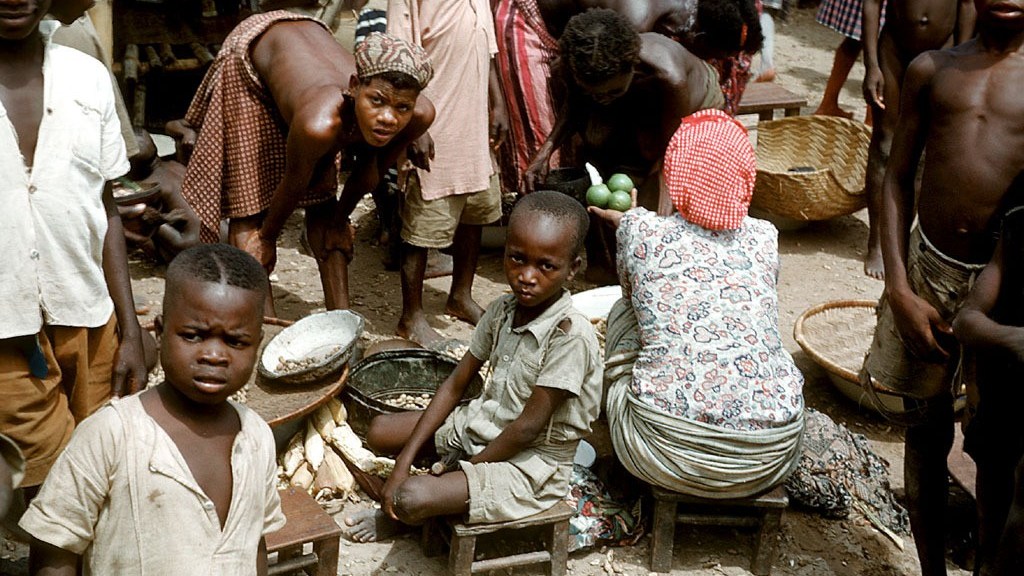
(PHOTOS TAKEN FROM THE INTERNET)

‘AFIA ATTACK’ – A Young Girl’s Account

Then it started. Bombs and more bombs. At a time, as early as 4 o’clock my mother would wake us up to have our bath and our breakfast, then she would pack our food and send us into the drainage. She had identified where parents were hiding their children. They dropped them in the morning and in the evening they picked them up. They were like gutters and you saw the water gushing out. If it was the bigger ones we’d take kitchen stools and the smaller children would sit, while our bigger sisters would lie down. Sometimes we couldn’t even sit, so we’ll just stretch out. That is where we’ll be from as early as 6.00 am till 6.00 pm. They didn’t have a choice. They had to protect us.

We were living on Asa Road, Aba, a very popular street. We were on the first floor and there were shops on the ground floor. There was a record shop there and, because people were hungry for news, they would gather in front of the shop during the news time. The volume of the radio would be raised to high heavens so that no matter how far away you were sitting or standing, you could hear the news. On one of those days, at exactly 4.00 o’clock, when the signature tune was on signalling that the news was about to start, they bombed our house. I don’t know if they were getting information from saboteurs because they knew when to strike. They were bombing and shelling at the same time- fighter and bomber. Eight Six people were killed that day. Bodies were scattered all over the place. You don’t want to see it. Heads, legs, hands, in different directions. There was brain stuck on our ceiling. One bullet landed on my father’s bed. Luckily for us my father would usually take his siesta but on that day he didn’t take his rest. Instead, he was discussing with his friend at the back of our house. My sister and her fiancée were wounded. The horrifying experience of children seeing dead bodies, not just dead bodies, but mutilated bodies. There was another incident when a petrol station opposite our house got bombed. It ignited so much fire that both the people who were buying and those who were selling perished.

Kwashiorkor became the order of the day. People were eating anything in sight – hibiscus flower, leaves, rats, lizards, cats, everything in sight. But we were lucky because my mother participated in Ahia attack – o zuru ahia attack. If she told you what she went through erh. She spoke a lot of languages so she was able to pass a lot of barricades on her way to Atani to trade. You know it’s a border so people were also coming from the other end to trade. She used to take Singer Machines to the border, the type operated by foot. They were packed in big cases. The Nigerians were buying them a lot. I don’t know why. We had a lot of them in the house. But I didn’t bother to ask her where she was getting them from. Before she went, they would nail narrow pieces of wood around the four sides of the wooden case and fill the gaps with coins, before putting the wooden cases inside cartons. She would set off with my senior brother carrying the machine. When they got to a point they would take a canoe and cross to the other side and follow the apiam way. They usually arrived on markets days. They exchanged the coins for Nigerian money and the exchange rate was quite high. She would use the money to buy plantain and fish, crayfish, garri and everything we needed in our house. Our house became a mecca of sorts because people were coming to our house to buy these things. Then she would go get some more machines. They also used to buy fish and people would come to the house to dry the fish for her. Sometimes, when they had to cross a stream the water would get to her chest. And she couldn’t swim.

One day a woman who knew she was trading in faraway places approached her and asked, “n’o bulu kwa na enwe ndi cholu umu aka ebe anwa, g’enye f’ego ka fa wee nye ndi nke ozo nni – if there were people who would take some of her children and give her money so she could feed the rest.” My mother told the woman she couldn’t do that sort of thing; that she had 9 children who were also suffering. She told the women to endure the hardship and if she was willing she would introduce her to the attack trade. The woman was not doing it out of wickedness. People were having many children at that time and, rather than lose all her children to hunger, she must have felt it was better to sell some and use the money to feed the rest.

Caritas had designated areas where they used to sell food. It was shared family by family. If they did it individually those who had more children would get more, although they needed it more too, but they decided they’d rather deal with families. At the beginning it was well organised because they were distributing the items themselves, but when they left the people working at the directorate started diverting the items. You had to bribe them to get food. People stood in the queues for days and it still didn’t get to them. They were even selling these things in the market. My mum had money so sometimes we bought from the market. But what about those who couldn’t afford it?

Life was unbearable. The trekking we did in those years, I can’t tell you how many million miles we covered. When Umuahia fell we trekked for three days. In the night we entered a bush. My mother would not sleep. My father would not sleep. They would stay awake just watching their children sleep. We left again and got to a place with nothing in sight except an abandoned primary school, without a roof. From there my mother would go out looking for a market or a gathering where she could buy food.

My mum discovered a place called Umunze, also in Mbano. One of the chiefs gave us a place and my mother paid pounds as the rent. From Umunze we went to Umuchu. It was at that time that my sister and I started our period. I woke one morning and when I saw the blood I screamed. I didn’t know what it was. My mother gave me a bath and said, “You’ve become a real woman now. Don’t allow any man to come near you.” She tore her wrappers and gave twelve pieces to me and twelve to my sister.

My father was praying to die. He had nine children. He couldn’t communicate with anybody because he couldn’t speak Igbo. He was an Ijaw man, the only non-Igbo speaking councillor in Aba at the time. If you go to Aba Town Hall you will see his photograph there – Chief Joshua Babala Ketebu. He was a civil servant and was always being transferred from one place to another. So he was not able to pick up languages unlike the rest of us who speak at least two languages. My mum was universal. She spoke Hausa, Fulani, Yoruba, Igbo and many others.

Eventually we settled at Nkwerre where we had a big house. It was peaceful and we started school again, studying under the trees. But during the rainy season we stayed at home. Sometimes the raids would come and we’d run home. My mother decided we should start generating money so my sister and I started selling oranges. We ate many before we got any sold. My mother also started her business again. It’s an experience you don’t wish your enemy, that is why when people are talking about war-war-war, I guess they didn’t experience it.

On the day the war ended we didn’t believe it had ended. Prior to that day they was a lot of shelling. It was loud and it was clear. We heard people jubilating. Shouts were coming from different directions- “War e bie la. Ha e mechaala war – the war has ended. They have ended the war!” We ran inside because we thought it was a gimmick. We didn’t know the shelling was to signal the end of the war. But my mum was worried. She said, “How will I take nine children back to PH?” She trekked from Nkwerre to Orlu where she met some soldiers. She pleaded with them and they gave her a lorry which carried us from Nkwere to my brother’s house in Port Harcourt. She was a very brave woman. She had no fear. Once you tell her that what she’s looking for is here, she doesn’t need to know anybody there, she’ll go and get it.

Eventually we got our own place and with financial help from her mother, she started her business again and we went back to school. My father died immediately after the war. My mum died 13 years ago. One of my brothers died last year. The rest of us are alive.

-Dr. Mrs. Bekky Ketebu-Igwe

(PHOTOS TAKEN FROM THE INTERNET)

‘AFIA ATTACK’ – A Soldier’s Account

The thing about Afia Attack is that hunger led people to take all sorts of risks.

I joined the battle to prevent Awka from falling into the hands of the Nigerian Soldiers. My unit joined the battle in Amansea community but the Nigerian Soldiers kept having the upper hand. I remained in that sector between Awka and Onitsha until we settled at the Ogidi-Nkpor axis where we were responsible for opening up the Biafra One and Biafra Two routes to allow traders from Biafra Two to cross to Biafra One. The hunger was in Biafra Two – the present Anambra South and part of Anambra Central, while the food basket was in Biafra One – present day Anambra North which includes Ogbaru, Anambra West, Anambra East and Ayamelum. Stationed there, from time to time we would strike and dislodge the Nigerian army, and recover places like Iyienu and Nkpor Agu. We would then open up Nkpor road and once we did that the traders waiting on the Biafra One side would rush across with their goods.

Each time we opened a thoroughfare, we wept. We saw what hunger did to people. It was a terrible experience. I remember the day I saw a cousin of mine, who is a Medical Doctor today, all bloated up, extremely pale in colour, his hair was just white and curly. He was just a little boy of about nine or ten years. I couldn’t believe my eyes. I wept. I said to myself, “Is this my family?” Well, that put the fire in me to fight more.

Many of those traders were women, and they helped to keep families alive.  They were in two categories. Some of them were there to buy looted property from civilians and even soldiers, because many people left their houses without taking a pin. When soldiers entered those deserted houses there was always this temptation to pick property and sell in other to raise money for food, cigarettes, hot drinks, and other needs of theirs. It was this group of women and some men who usually bought such looted property off the soldiers. They bought from both Nigerian and Biafran soldiers. But the real ‘Afia Attack’ women were those who earned a living by going across boundaries, buying and selling, especially in foodstuff. They supplied soldiers with cigarettes, goof [marijuana] and hot drinks. This endeared them to the soldiers who reciprocated by granting them easy passage to whichever side of Biafra they were going as soon as the passage was secured.  Sometimes these women bribed people to take them across the front line because no matter how vast the area was, the soldiers knew the paths through which they could pass without being detected. They would escort them to a certain point and advise them to lie low until it was safe to cross. If the women were unlucky and the road closed after they had crossed, then they stayed back till the road opened again. And where did they stay? They stayed at the war front. They lived with the soldiers in the bunkers. Women with children. For us young men we jumped at those opportunities. We were happy. What we couldn’t get normally, we got on a platter of gold.

Some Biafran women even offered themselves to Nigerian soldiers in exchange for items like tinned foods and cigarettes. Some were used as spies. They would tell the women, “We will keep you alive but don’t give us away. Just give us information.” So it was give and take. Sometimes when we wanted to attack, we would filter the information the day before and the women would come close. Some would sleep with us in the night and in the morning, before we knew it, they would have crossed. And when they returned they came with all sorts of gifts for us.

Markets developed around these boundaries. People would wait for the women to return because they were always in a hurry to dispose of their goods. And when they were going back they slept in the bunkers with the soldiers for as long as it took for the road to be opened again.

But I don’t call them loose women. These were women who were so hard up that they used what they had to get what they needed. They saw their children and everybody around them dying, so they went out determined to help their families. Not only families, the soldiers at the war front were kept alive by those women. These women can never tell you what they did but they sacrificed a lot. They did things that were against the culture of the Igbo people just to survive. Sometimes they were caught by Nigerian soldiers and raped mercilessly. Sometimes they lost their money and other belongings. It was ‘Afia Attack’ that led to the phrase of ‘Di gba kwa oku.’ [To hell with the husband.] That was the origin of that phrase. What husband are you talking about when lives had to be saved? What are you husbanding when your children are dying before you? They made a lot of sacrifices for Biafra, their children, their families. I wish we can single them out and honour them.

Something else happened during that war. Some Igbos were bold enough to join the Nigerian soldiers when they were driving Biafrans away, following them from place to place as they conquered and penetrated more areas. Some were acting as interpreters. Some, particularly women, were even living with them and giving them information. When they conquered a place they did not always kill people. What they really needed was information such as, “Who and who was here? Which route did they follow? Which way shall we pass?” Information gathering is very important in any war. So these people gave the Nigerian soldiers information. And any area they conquered they just went there and looted.

That must have been what happened to my father’s house, because he was a wealthy man by the standards of those days. It was a beautiful six-bedroom bungalow, and when they were running away I visited them from the war front and we dug a big pit at the back yard. We carried all our valuables and buried in that pit hoping that whenever we came back we would just dig them up. But when we came back at the end of the war our house was leveled to the ground. Nothing was standing. Not only was the building gone, the place where we buried the property was completely excavated. Nothing was left in that pit.

War is a horrible thing. It brings out the worst in human beings. The things you won’t ordinarily do, you will find yourself doing them.

-Igwe Dr. Chukwuemeka Ilo

"…a data base of memories, testimonies, experiences and anecdotes."