DISARMED IN A TRENCH – PART 2

Ojukwu never knew this until 1976 when we met in Washington DC at the reception the late Nchewi Imoke gave him. After I told him how I saved his life, he said he would like to meet Reginald whenever he came to Nigeria. But we never met him.

Immediately Ojukwu’s plane took off, a long distance shelling started raining from Awommama and we could see the canons flying past the airport. The Nigerians had miscalculated, so the shelling hit a village and killed people there. In between this shelling an International Red Cross plane from Caritas arrived and instead of landing on the air strip it lowered and poured its food supplies on the tarmac. We loaded some in our van to send to my parents. Because of the shelling a lot of the evacuation flights were cancelled. After Ojukwu’s departure, Colonel Achuzia took over the podium and started calling people to board for evacuation. He called Captain Anuku. Anuku entered. Called Colonel Timothy Onwuatuegwu, but he was absent. Meanwhile, the pilot of the plane was already panicking because of the shelling that had just taken place. As people forced themselves in, the staircase broke and every person on it fell off. The pilot panicked and took off without closing the doors. One person fell off and died. A young girl had her head crushed by one of the tyres of the plane. She was about 7 years old and the daughter of a prominent Nigerian.

We kicked off with our jeep loaded with food. Many people had come to board the planes but could not, so there was an exodus of people leaving the airport. You can’t believe that from within that massive crowd I heard the voice of my youngest brother, my mother’s last child. He was shouting the name of my sister, “Echika, Echika, Echika.” I told Reggie that I just heard Ugo’s voice calling Echika, and he said, “Lambo, how can you hear Ugo’s voice in this crowd?” I said, “Driver, stop, let me go down. You can continue. If you don’t see me again, tell the story but I will not live with my conscience if I don’t investigate this voice.” Immediately I got down my brother cocked his Kalashnikov and ordered everybody down. He took over the wheels and we started driving slowly backwards, and who did we see? My last sister, Echika, holding my two youngest brothers. She was only eleven years while Ugo was four. He had fallen down and bruised his leg that was why he was calling out her name, with cries. We put them in the vehicle and took them straight to my parents.

What happened was that my mother had handed three of them to Colonel Anuku and asked him to take them overseas. Colonel Anuku put them in a vehicle with an orderly and driver with instructions to take them to the airport. Then he took his own children and rode with them in another vehicle. When the shelling started, the driver carrying my siblings panicked and fell into a ditch, brought the children out of the vehicle and fled. My mother cried and cried. Reginald cried also and said he’d never dispute anything I said again. It was providence.

Many children got lost or separated from their parents that way. It could have been the same with my siblings. If they had evacuated them to Gabon or Ivory Coast they would have been sent to an orphanage and who knows what their fate would have been afterwards. My mother was the head of the Red Cross in Owerri and because there were so many abandoned children on the streets, she was helping people adopt these children. She would give them documents which they would take to their local governments and register the adoption.

During her funeral in 2000, a woman came with a huge cow, many dancers, and a young lady. During the presentation, she told the congregation how my mother knew she had been pining away from childlessness and asked her to adopt a child, who was one and half years old at the time. That was the young lady with her; all grown up; a second year university student at the time. She told the crowd it was because of that her adopted daughter that she wakes up every day to face the world. Everybody applauded.

-Achiuogo Lambert Agugua

DISARMED IN A TRENCH – PART 1

Before the fall of Port Harcourt in 1968, there was a long-distance shelling from the high seas. The shell was falling so rapidly on Port Harcourt and became a threat to life. Prior to this time my younger ones and my mum had been evacuated to Nkwerre. I was working with Directorate of Petroleum at the time, so I stayed back in Port Harcourt with my father.

When we decided to evacuate PH, we carried a few items that were valuable, such as our Television, to a neighbour’s house. He was Mr. Graham-Douglas, a lawyer at the time, and he kept those things for us until the end of the war. We then loaded as much property as we could into my father’s car. I had a parrot I was very fond of but there was no room for it in the car so we simply opened its cage and let it out. We set off and the parrot also took off. It kept flying over us and when there was a hold-up it would hover close to the vehicle. It tracked our vehicle until we passed Elele and lost it and carried on.

It was around here that we saw my cousin, Mmagwu. She had tied her luggage on her back and was carrying her baby in her arms. There was no place for her to sit in the vehicle so I said to her, “Mmagwu, let me have the baby and when you come home you can take her from me.” But she said, “No, no, no! I won’t. Ebe m nwuru ka nwa m’ g’anwu – wherever I die, that’s where my child will die.” She made it to Nkwerre on foot and I was glad to see her a few days later.

I moved to Umuahia and joined the DMI. One day there was an air raid by what I thought was a very vicious Egyptian pilot. It was as though he was targeting me. I ran out from the Peugeot 404 I was driving and ran under a tree just as bullets started raining on the tree. One of them came towards my forehead but instead it hit a branch, cut the branch, fell on my shoulder and burnt me my right shoulder blade. I was shouting, “Oh my God, is my time up?” At that moment of my dismay, a petrol station exploded close by – kpoooo! People had their hands amputated. Many died. I picked up the bullet and gave it to my friend who was going on a mission to buy weapons for Biafra. I asked him to show it to my sister in London. I wanted her to see the bullet that almost killed me. Many years later, I found out who flew that plane. It wasn’t an Egyptian pilot as I had thought. It was a retired Air Commodore and we are members of Full Gospel Business Men’s Fellowship. The day I gave it as a testimony, he got up and apologised and said he was the one who flew that plane. He said that every description I gave was correct, and that they were targeting the fuel station as part of actions to stifle the Biafran nation.

After this incident I joined the Biafran Navy and was sent to the School of Infantry at Bishop Shanahan College, Orlu. I passed out sometime in 1969 and was posted to Defence Head Quarters which was Head Quartered at St Catherine’s Secondary School, Nkwerre. I became a liaison between the School of Infantry, the Navy and the Defence Head Quarters, so I was communicating to Captain Anuku, the Commander of the Biafran Navy, and Lt. Col. Timothy Onwuatuegwu, the commander of the School of Infantry.

For some reason, which I attribute to God’s design, Nkwerre was the only place in Biafra that could not be hit during air raids. The Nigerian Air Force could hit Orlu and Atta but couldn’t hit Amaifeke, Abba, and the areas around Nkwerre. After the war I asked a pilot friend of mine, the late Ibikari Brown, the reason for this. He said from the air Nkwerre is in a valley, which is like a curvature, and when you are trying to hit a target inside that curvature the wind drifts it to one end of the curvature and that’s where it’s going to fall. You invariably miss the valley itself. Whereas if you use a missile, which the Nigerian Air Force wasn’t using then, it will pierce through the condition of the wind and go straight down to the target. So the wind shifts the movement of the bombs and drifts them from meeting the target. That is one of the reasons why the banks, hospitals, training schools, etc, were located at Nkwerre.

As a matter of fact, how I knew the war was about to end was that, on the 11th of January 1970, I had instructions to go and tell the late Colonel Timothy Onwuatuegwu, who was the Commandant at the School of Infantry in Orlu, and late Captain Anuku, the Commander of the Biafran Navy, to proceed to Uga Airport for evacuation out of Biafra. The Biafran government attempted to evacuate prominent people who could either be killed or arrested by the Nigerian soldiers after the surrender. I searched everywhere for Colonel Onwuatuegwu but I couldn’t find him. I was so distraught when I was returning from Ihioma but, all of a sudden, I saw a command vehicle parked on the road. It was Colonel Timothy Onwuatuegwu. I came out of my Q-movement vehicle, saluted him and said, “Sir, I have been looking for you.” He said, “What are you searching for me for?” I said, “I have a message from the DHQ that you should report at Uga Airport for evacuation.” He got very angry and said to me, “Don’t you bring me this kind of message again. A na-eme evacuate for what? Where are we going? All these children that we deceived, what will be their fate? I will die here. Go and tell H.E. [His Excellency] that I’m not going anywhere. I will die in this country. I have already signed my death warrant. Umuaka n’ine anyi deceive ru, ma ndi nwuru anwu, ma ndi di ndu, why are we running away – All these children we deceived, the ones who died, the ones who are alive, why are we running away? We should stay here and die with them.” He refused to come with me. By the way, at the end when General Effiong handed over and Colonel Onwuatuegwu knew he was being sought for, he tried to escape through Cameroon but they caught him at Calabar and killed him. That’s how he died – a very brilliant, nice human being. Anyway, I proceeded to Oguta and informed Captain Anuku to proceed to Uga. He agreed. I then called my younger brother, Reginald, who was a Major and said to him, “There’s a movement tonight. Ojukwu is leaving Biafra tomorrow night. Let’s go to the airport for that evacuation.”

We took one Major Asuquo and a couple of others with us to the airport. We went in a Quarter Master Movement Vehicle, which was in charge of all supplies from Defence Head Quarters. There was chaos at the airport. The check point was manned by the Commander of the Biafran Air Force, and when he was searching our vehicle, he flashed his torch on my face. I squinted and his orderly cocked his gun, demanding to know why I was frowning at his master. Angered, my brother cocked his own Kalashnikov and insisted the Commander should stop flashing the light on my face. Tensions were high and at that point we all knew it was no longer child’s play. Major Asuquo ran out of the vehicle and placated everybody, saying that any shots fired would result in a blood bath, an extra-ordinary implosion, as every uniformed person at the airport was armed to the teeth. They lowered their guns.

We went inside where Ojukwu was addressing people to keep the faith. Then he walked into the flight. I started searching for my brother and somebody said, “He’s in the trench over there.” He was actually there, aiming his gun at the fuel tank of Ojukwu’s plane. It was a Kalashnikov and it had tracer bullets. I ran to him and grabbed him. I said, “Reggie, Reggie. Why, why?” He said to me, “How can this man tell us we will fight to the last man and if we all die the grass will fight on our behalf, and now he wants to be the first to leave? Lambo, do you know the number of people who have died? No, I’m not going to allow him and if you touch me I will shoot you because I know I’m going to die here today.” I let go of him but I said, “You and I don’t really care whether we die here today or not, but the fact is that if you gun down this plane they will go and kill papa and mama, and all our brothers and sisters.” I started naming all our siblings one after the other, and he broke down and started crying. That is how I disarmed him in the trench.

-Lambert Agugua

IMAGES FROM THE PAST

Between 1964 and 1966, David Koren was a Peace Corps Volunteer in Amaogwugwu, Umuahia, in Eastern Nigeria. When the Nigeria-Biafra war broke out in 1967 he was recalled to work on the Biafran Airlift that brought food and aid from Sao Tome into Biafra. His book ‘Far Away in the Skies’ is his account of his experiences on the airlift. It is on sale on Amazon.com. [A Nigerian edition will be launched in August, 2018.] Excerpts of the book are published here and on mybiafranstory.org under the category The Biafran Airlift.

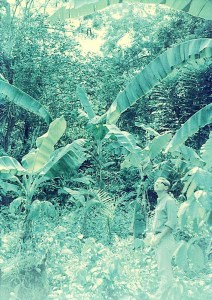
Near Amaogwugwu 1965
David, near Amaogwugwu, Umuahia.
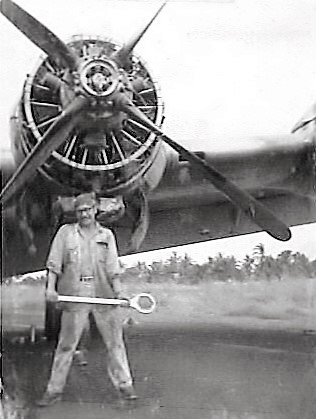
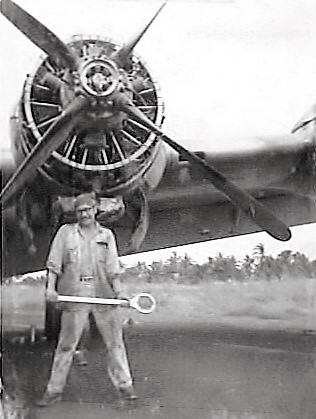
The prop wrench before I bent it
David, holding a Pop Wrench. [He also learned to carry out repairs on the planes.]
DAVID KOREN - Biafra Uli cemetary
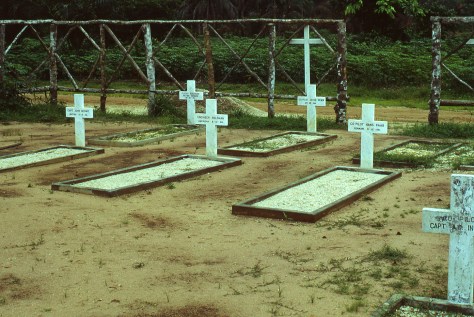
A grave yard at the end of the runway at Ulli Airport. Crew members who died when the relief planes were brought down were buried here.


The World is Deep-Part Two; David Koren’s Story

Barry and Larry often worked as a team, and Leo and I as a team.  On a night that Barry and Larry were flying, Leo and I were drinking with the ARCO mechanics.  There was Arnie the Swede, Helmut the Dane, Smyth the Englishman, Ben the Israeli, and three or four other Europeans.  They complained about being overworked, that it was too much for the handful of them to keep those old planes flying.  Leo and I said that we could turn a wrench, and we would be glad to help them if they showed us what to do. Chi nyere m aka – God gave me hands. And I can use them.

The next day ARCO hired us as help mechanics, and the Portuguese airport authorities issued us flight line IDs as Ajudante de Mecanico.  And so we became more formally connected with the airlift, not just nebulous Field Service Officers.

We began our career as mechanics by removing parts from the damaged DC-7, noting carefully how we did it.  Then we would ride into Biafra with the first flight, and work all night removing the same parts from another DC-7, which was down at Uli, and then come out with the last flight.  The downed plane had had mechanical trouble and couldn’t take off.  The next day the MiGs shot it up.  The right wing and the fuselage burned; remarkably the left wing was still intact, with fuel still left in the wing tanks.

***

There was a night at Uli when a late fog rolled in.  I could hear a plane cross overhead and circle around, waiting for an opportunity to set down. It never came, and the plane returned to Sao Tome.  That was my ride back.  In a way I was glad, because I got to spend a day in Biafra.

The sky turned slowly from black to grey as the morning light filtered through the fog.  Reverend Aitken appeared.

“I’m going to Umuahia.  Do you want to ride along?”

“Yes!”

I didn’t see my old school, Ohuhu Community Grammar School, because the road to Amaogwugwu was not on our way.  I did see a convent school where another PCV, Nancy Amadei, had been stationed. I saw women on the side selling food from enamel pans.  I saw garri, peppers, and vegetables.  I saw one woman frying yam chips in palm oil over a charcoal fire. I saw chickens, which surprised me – I thought they’d be all gone by then.  This was the heart of Biafra, but I saw no begging.

***

On an afternoon when I had just finished loading a plane, and the engines were started, Father Byrne came to me with a large package. He ordered me to stop the plane and put the package on board. I objected that the plane was already buttoned up and on its way.  We could put it on the next plane.  He said that the package was very important and must go on that flight. I ran around in front of the plane waving to the pilot. I pointed to the package, and he stopped taxiing. Helmut helped me put it in the forward cargo hold. When we backed away and the plane moved on, I said to him, “Do you know what is in that package?” He didn’t. It was sanitary napkins for the Nuns.

We washed a DC-7 one day. It took all day and a lot of soap and water. I was soaking wet, but that wasn’t so bad for a hot day on the equator.  The point of cleaning a plane was to reduce the skin friction, making it faster and more fuel efficient. As we did every evening when we weren’t flying, we watched the planes take off, and later watched as they returned. The plane we washed didn’t return.  We waited and watched and turned to the tower for news, but there was nothing.  It was gone. I had the terrible feeling that we had done something wrong when we washed the plane and caused it to crash. The investigation later determined that it had hit an iroko tree on approach to Uli in the dark.  The plane disintegrated.

***

There was a church near one end of the runway at Uli.  The crew of our plane and others that went down during the airlift were buried in the churchyard.  I heard that after the war Nigeria bulldozed the airstrip to eliminate the memory of it.  And they bulldozed the graves.

***

In spite of the bombing, the mechanical challenges, and the hazardous navigation, the planes kept flying, most of the time. At the height of the airlift, during the time I was there, we had up to 44 arrivals a night at Uli, which made it one of the busiest airports in Africa. But there were two times that I remember when the air crews refused to fly, and the airlift stopped for a few days. On one occasion a rumor spread that the Nigerian MiGs would begin flying at night to shoot our planes down. Caritas and WCC pleaded with the crews to fly, and eventually they did.  Another rumor stopped the airlift a second time.  One night the news spread that France had recognized Biafra. In jubilation Biafran soldiers fired their guns in the air.  Some of the bullets struck a plane coming in at Uli. There was no serious damage, but the crews stopped flying again until the WCC and Caritas petitioned Biafra to enforce firing discipline.

***

Before a return flight, Reverend Aiken summoned me again.  A van was parked in a clearing near the plane. Several Biafran men were standing about, silent and uneasy. There were children in the van in the last stages of starvation.  They were placed on a mat on the ground. Their eyes were open but unseeing. I kneeled down looking at one boy, appalled at his condition. He mumbled something. A man said to me, “Do you know what he is saying?” I didn’t. “He is saying, ‘My father, why don’t you speak to me? Don’t you know me?’”

Evacuated children were taken to a convent called San Antonio. After a week they could sit up, and they could feed themselves. I went to see them. As I came into the compound, about a dozen of them ran to my side.

A Nun told me a story about one of the children. He led a protest against a particular spread the kids didn’t like on their bread. At his signal all the children put down their bread and stopped eating. Some of the very young ones were reluctant to do this, but they went along. They won, and they were not served peanut butter again.

You never win, if you give up when things are easy.

Someone said that the airlift prolonged Biafra’s agony by bringing false hope. Without food for their people the leaders would have given up sooner.  It sounds like a bad idea whose time had come, an idea that someone put forward and many others adopted without thought, a piece of facile wisdom. It makes sense if you don’t stop to think about.  In fact, if you accept the idea, you can stop thinking altogether – no need to consider the complexities.

The idea can be accepted by people with no personal, immediate concept of large scale random killing.  They have not seen gangs running through their neighborhoods, dragging people out on the street and chopping them up.  Biafran people saw the trains full of refugees pouring in from all over Nigeria. They accepted those refugees into their homes and villages. And they heard their personal, immediate stories.

Another dimension, beyond security, for continuing the fight, is the concept of freedom to control one’s own destiny – not just to avoid disaster, but to build a positive future.  In the shrinking Biafran enclave was the highest concentration of Ph.D.s in all of Africa. The motivation to learn and to grow into a modern society kept Biafra going.

***

On my final trip to Biafra I was arrested as a Nigerian spy. Throughout the interrogation I remained respectful. I answered everything honestly, so when they tried to trip me up, I could always come back to what was true. I was not confrontational; I was not indignant.

After the interrogation I was led to a small room, my cell, furnished with a simple couch and some chairs.

Reverend Aitken showed up. He brought me a bag with some fresh clothes, magazines, a sandwich, and a couple of bottles of warm beer. The look on his face was disappointment, not sympathy.  I didn’t understand it then, but I may have caused the airlift a real problem.

I was interrogated again.  This time the commander told me that they weren’t sure what they were going to do with me.  He said they were thinking of sending me to Umuahia, then the seat of the Biafran government. The head of the government was General Chukwuemeka Odumegwu Ojukwu. His 2IC was Dr. Michael I. Okpara, who had been the former Premier of the Eastern Region of Nigeria and the founder of Ohuhu Community Grammar School. I told the commander that I would be happy to go to Umuahia and perhaps meet Dr. Okpara again. I would learn later that they took spies and saboteurs to Umuahia to be shot.

One of the young airport officials would sit with me and chat. I gave him some money and asked him to buy some kola nuts, oji, and palm wine, mmanya.  We invited a few others and sat outside in the warm African evening.  We broke the kola.  “Onye wetara oji, wetara ndo – He who brings kola, brings life.”  Someone there knew my name, because he knew one of my students from O.C.G.S who told him about me.  I told them about the time I had helped Aitken carry some wounded people from the village to the hospital. I asked if anyone knew how they were.  None did, but later someone inquired and reported that the boy and the young woman were recovering well.

 ***

I was called before the commander.

He said, “David, I am ordering you deported from Biafra.  You must never return again.”  As he said it, he was trying to sound very stern, but his demeanor was that of a father chastising an impetuous young man. I was escorted out to one of our relief planes. I helped unload it, and then I flew back to Sao Tome for the last time.

***

Of the people who came together for the airlift, whatever they loved about fighting, whatever they loved about flying, whatever they loved about religion, whatever they loved about life, their paths crossed in a filigree of human motivational trajectories, called Biafra.

***

Years later I gave a talk to a group of college students in Buffalo, New York. These were all students from the region formerly known as Biafra. I told them my stories and I showed them my pictures. I concluded with an observation.  Many Americans believe that most relief aid never gets to those who need it, that it is diverted by corruption. One young man from the back of the room stood up.  He said, “When we were children, we heard your planes going over at night. We never knew who you were, but we got the food.  Every person in this room is alive today because of what you did.” Then they stood up and gave me a prolonged ovation.

Uwa de egwu.

THE END

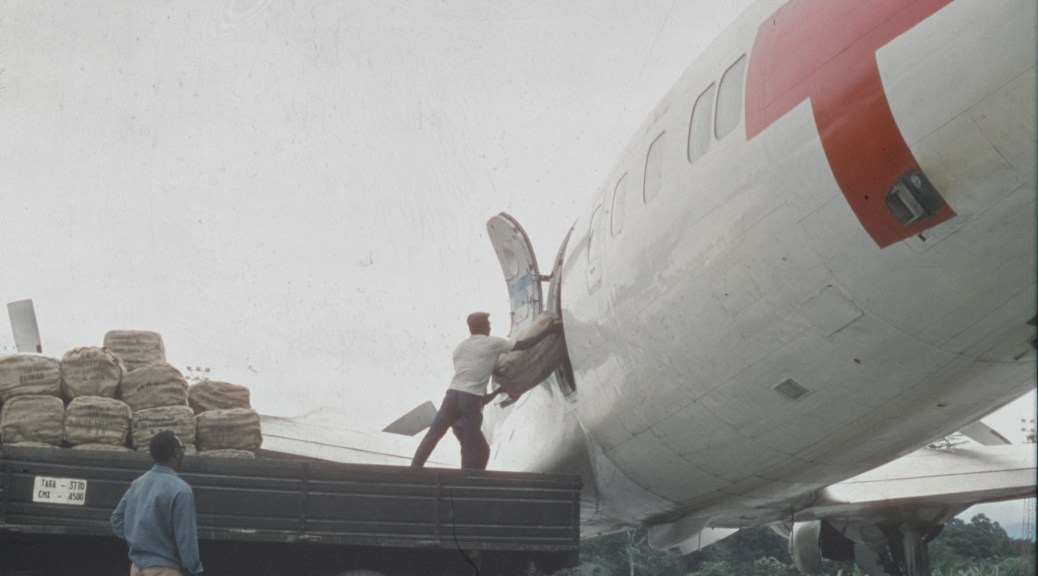
PHOTO CREDIT – THE INTERNATIONAL COMMITTEE OF THE RED CROSS

PHOTO CAPTION – LOADING RELIEF GOODS INTO RED CROSS PLANE

PHOTOGRAPHER – VATERLAUS, MAX; 1968.


The World is Deep – Part One; David Koren’s Story

In October 2017, a random internet search about the Biafran Airlift led me to an article with the unusual title ‘The World is Deep – Uwa De Egwu,’ written David L. Koren. A further search on Facebook showed him in a photograph with Okey Ndibe, Author and Scholar. Smiling, I said, “Aha!” A few days later, introductions were made via email and I became acquainted with David, who was a Peace Corps Volunteer in Umuahia, South East Nigeria, between 1964 and 1966. He left Nigeria just before the war broke out but in 1968, with the war in full bloom, he answered a call by the United Nations to work as a United Nations Field Service Officer, a job which entailed organizing and flying relief material from Sao Tome into Biafra.

His experiences, captured in ‘The World is Deep,’ is the first eye witness account about the airlift to be published in mybiafranstory.org. It can be found in the category THE BIAFRAN AIRLIFT. With his permission I have edited the article for brevity and broken it into two parts. David has also published a book ‘Far Away In The Skies,’ which is a more detailed account of his experiences working on the Airlift. It will be on sale in Nigeria in March 2018.

Below are email exchanges between David and I. They serve as a preamble to the article.

D.L.K.- I grew up in a working class family in Pittsburgh, Pennsylvania. Through hard work and living on the financial edge I became the first in my family to earn a university degree. Seeking to know more about the world, I joined the United States Peace Corps, and I was assigned to teach English at Ohuhu Community Grammar School in Amaogwugwu near Umuahia, before the war. I served there for three years, having the best time of my young life. For me, and for most Peace Corps Volunteers immersed in a different culture, we learned as much as we taught. Nigeria became my second home, with a new family. So, in 1968 when UNICEF asked me to return to work on the Biafran Airlift, I made the easy choice and volunteered again. Afterwards, I followed a career as a counselor in a mental institution. For a second career, I went back to school to study physics and astronomy, then worked designing optical lenses for industrial lasers. Now I keep busy on my six acre mini farm with my wife and two tractors.

V.O.- In a nutshell, what are your views about war, crisis and displacement?

D.L.K.- People gain more through diversity and synergy than brutal warfare.

V.O.- What are your fondest memories from living in Ohuhu? Any names of families, friends or colleagues you would like to mention?

D.L.K.- I have fond memories of my student librarians: Matthew Nwuba, Onyema Obilo, and Patience Igweonu; also our senior prefect, Okon Nkanta Abijah; and our principle, Wilber O. Nsofor. I still have my grade book from 1964, 65, and 66, with all the student names, and at the end of my book, Far Away in the Sky, I published all their names. At a convention of the Ohuhu Union in Houston, Texas, last May, I met some of them and asked them to sign my grade book next to their names. What an emotional high.

V.O.- You said, “…we learned as much as we taught?” What were the most important things you learned about the Igbo society at the time?

D.L.K.- I learned the friendliness of the Igbo people and their warm acceptance of strangers like ourselves, the strength of family ties, the desire to learn and the skill to apply their knowledge. I learned about Igbo philosophy through slogans and proverbs: profound expressions such as “The World is Deep,” “Life is the Main Thing,” “God Gave Me Hands,” (also “God gives me a hand in my need”), as well as the patience, perseverance, and acceptance implied by “Who knows tomorrow?” Most importantly, the assurance of protection and safety in the kola ceremony. Even after 50 years, I still feel comfortable in Igbo company.

V.O.- Was it your experience in the Nigeria-Biafra war that qualified you to be a counsellor in a mental institution afterwards?

D.L.K.- After I returned form Biafra, I earned a master’s degree in Rehabilitation Counselling and I scored very highly in a state-wide entrance exam for the position. But no doubt my experience in the war strengthened an attitude in me of acceptance for people in need through no fault of their own. Mentally ill people especially need reassurance that in spite of their disability, they are people of worth.

V.O.- But I’m lost with “Life is the Main Thing.” Does it translate to ‘Ndubuisi?’

D.L.K.- Yes. I should have written: Uwa di egwu, Ndubuisi, Chinyere m aka, and Onye ma echi.

UWA DI EGWU – THE WORLD IS DEEP – PART ONE

BIAFRAN AIRLIFT

David L. Koren

March 2007 (Revised January 2018)

The first time I went to Africa the sun was rising over an endless stretch of palm trees as the Pan Am Boeing 707 banked steeply on approach to Lagos, Nigeria, January 1st 1964.

The second time I went to Africa, two years later, the captain of the green and white painted Nigeria Airways/Pan Am 707 announced that we were denied permission to land at Lagos, because there had just been a military coup.

We circled for some time before we were cleared to land.  Soldiers with guns watched us disembark. I was supposed to make a connecting flight to Enugu, capital of the Eastern Region, where I had been stationed for the last two years as an American Peace Corps Volunteer. I was just returning from home leave.

Nobody knew what was happening. Arriving passengers were escorted to the Catering Rest House, where we were to put up for the time being. Later, I went to bed, in a small room, in a distant land, unable to adumbrate any sense of future.

***

The next day a flight was arranged to the Eastern Region. We landed at Port Harcourt with no problems. The airline arranged for a small bus to transport passengers to Enugu. I got off in Umuahia and took a bush taxi – a Morris Minor – to my school, Ohuhu Community Grammar School in the village of Amaogwugwu.

The school was started by Dr. Michael I. Okpara, a prominent man from the village, and also the Premier of the Eastern Region of Nigeria.

News began to unfold of what happened with the coup. Peace Corps Volunteers got news from the local newspaper and from what we called time-n-newsweek.  The international editions of Time and Newsweek were available in Umuahia, and we bought both of them from the news boys, onye akwukwo.

After six months another coup ousted all the Igbos (Ironsi was shot, Gowon was installed), leading to the massacre of Igbo civilians in the North and a mass exodus of refugees back into the Eastern Region.

Trains arrived from the sabon garis of the North carrying refugees; on one there was a headless body. All of these people were absorbed into their villages of origin. New huts were constructed and donations of food and clothing were requested. We all contributed. Although this was a great burden on the local population, it was effective in caring for the refugees. And therefore there were no refugee camps with deplorable conditions to catch the attention of the world media.

Toward the end of 1966, there was increasing talk of war.  I discussed it with my students. I told them that war would be very bad. They were less concerned about it. One student said, “We will fight them. If we win we will rule them. If they win they will rule us.”

 ***

Dr. Okpara hosted a send-off celebration for me and my fellow PCV, Ric Holt. He conferred on us the honorary title of Bende Warrior Chieftain, along with the appropriate garments – a wrapper and jumper of fine cloth and a woven cap.

I stood up in my new clothes to give thanks.

Bende kweno!”

Ha!” (The response).

Bende kweno!”

Ha!”

Enyi mba enyi!”

Ha!”

Enyi mba enyi!”

Ha!”

Dr. Okpara and the other dignitaries and guests seemed amused.

At this time the commercial planes were still flying between the regions, and I left Nigeria with the memory of soldiers at airports.

***

The third time I went to Africa, October 1968, I flew in an old DC-6 propeller plane from Amsterdam to Tripoli to Ivory Coast to Sao Tome, bringing relief supplies for Biafra.

I joined three other former PCVs on Sao Tome; we were to act as cargo masters on the relief flights. We were officially known as United Nations Field Service Officers, and we were kept busy while waiting for clearance to enter Biafra.

Food donations came to Sao Tome by air and sea and were delivered to thirteen different warehouses around town. As each shipment arrived it was dumped in a warehouse with no organization, no inventory. Preparing a plane load of relief supplies was difficult, because no one knew what food was available and what condition it was in. The four of us Field Service Officers worked with Sao Tomeans and a Danish relief organization to organize the warehouse.

The relief effort on Sao Tome was put together by a group of Northern European churches, Nordchurchaid, representing the Protestant World Council of Churches and Catholic Caritas International. This was distinct from the International Committee of the Red Cross – ICRC – which operated from the island of Fernando Po. WCC and Caritas were established entities, but the airlift they put together for Biafra took form as it went along. They created a company called ARCO to buy and charter planes, while a German church group called Das Diakonische Werk was designated to provide flight operations. The United Nations contributed a handful of Field Service Officers.

***

These donations were well meant, but inefficient. A DC-7 carrying 10 tons of canned goods would be carrying 7 tons of water and metal. A pharmaceutical company sent a shipment of sun tan lotion. It was said that they wrote it off as a charitable donation. Other medical donations were more appropriate. Things changed when we began receiving 50 pound bags of dried food and powdered milk. The food was called CSM, for a mixture of corn meal, soy beans, and milk. There was a similar mixture called Formula II. By the time I began flying into Biafra we were carrying those bags, bales of dried stock fish, medicines, fuel and batteries for the lorries used to distribute them.

***

We flew at night to avoid the Nigerian MiGs.  The Nigerians also had a night bomber that would drop its bombs when we were coming in for a landing.  We took off from Sao Tome while it was still light and timed the flight to arrive over the coast just at dark. We could see the burn-off flames from the oil wells in the Niger River delta. From my seat near the back of the plane I could also see the bright traces of antiaircraft shells arcing up toward us from below. The planes flew without navigation lights, so the gunners had to track us by the sound of our engines. The pilots didn’t seem worried about this. When I mentioned it to Captain Delahunt – he had been a carrier pilot in WW II – he banked the big plane around to identify where the AA was coming from. The bombs didn’t fall at every landing, but often enough.

***

Each day either WCC or Caritas would choose the cargo for the flights that night. The trucks would go to the warehouses, load, and return to the flight line. My job was to help supervise the loading, in terms of what went into each plane and the distribution of the cargo within each plane.

All flights for the night would be either WCC or Caritas, alternating from night to night. WCC and Caritas had separate distribution networks in Biafra.

The four of us UNICEF volunteers took turns flying into Biafra.  We would go in with the first plane, help with the unloading, and come out with the last flight.  Those who stayed in Sao Tome helped load the planes.

***

My first landing in Biafra was uneventful, but emotional.  The night air was fresh and tropical and familiar.  It felt, in a sense, like coming home.

My job was to supervise the young Biafran Airforce fatigue workers who were hustling to get the food out the door so the planes could escape the bombs and return to Sao Tome for another load. Sometimes I held the torch light and sometimes I joined in heaving the food onto the lorries.

After the first plane was unloaded I got down and waited in the night for the next plane to arrive. Sometimes the wait would be a couple of hours as the first wave of planes returned to Sao Tome for a second run. It was kept very dark. If someone showed a light, even briefly, there were shouts from unseen soldiers all around, “Off de light!  Off de light!”

***

When the bombs started falling you could hear them screaming down. After some experience with this it became possible to tell by the Doppler shift and intensity of the scream whether a bomb was going away from you or coming toward you and about how much time you had before it got there.

One night after I had unloaded the first plane and climbed into the second one, the bombs came. The air crew and the soldiers who had been gathering outside the plane went for the bunker. By the sound I knew that the bomb was coming my way, and I judged that I didn’t have time to climb down the ladder and get to shelter. There were sacks of CSM piled neatly on either side of a narrow isle in the center of the plane and I dove in there, hoping they might absorb some of the shrapnel.  The blast shook the plane and deafened me, but we escaped damage. The next day on Sao Tome, I walked around the plane for a closer inspection. I found a few hits, one near a tire, but none more than nicks or scratches.

Immediately after that bomb went off, a second one hit further down the runway. We kept unloading the second plane as the first plane, which I had come on, was preparing to take off. I heard the engines rev up, and I heard it roaring down the runway. But then it stopped all of a sudden. As soon as we finished unloading I ran down to see what was going on. I saw a Canadian relief plane sitting on the runway with its nose wheel yards away from a huge bomb crater. Captain Patterson and a WCC missionary, Reverend William Aitken, were examining the hole. Reverend Aitken had heard the explosion and thought it was near the runway.  He found the hole and also saw the aircraft starting its run toward him. From the edge of the crater he ran straight at the accelerating plane waving his arms frantically with a flashlight in each hand. The pilot told me that the flashlights were very faint from his perspective in the cockpit, but he could tell that there was something on the runway, so he throttled back and stood up on his brakes.  He blew a tire but didn’t hit the crater or Rev. Aitken. The plane maneuvered around the crater and took off.  There was enough runway left for it to get airborne.

I only had a few contacts with Reverend Aitken, but they were significant.  After the plane took off he asked me to come with him, and we went to find the flight line officer.  We found him in the dark, and we all drove to a house near the airfield. The officer pounded on the door. “Wake up! Wake up! You’re holding up the Nation.” The man emerged tying his wrapper. He was in charge of airport maintenance.  We drove him to his bulldozer, and he filled the crater.  Tomorrow he would pave it, but tonight planes could land and take off on it.

Reverend Aitken was tall, slender, and earnest. He never said much, but he listened attentively. After a bomb fell beyond the end of the runway one night, he came out of the dark and said, “Come with me.”  The bomb had fallen in a village compound. Five members of the same family had run out of their house seeking cover when the bomb hit. A boy of about 20 years was dead. Two children lay dead with ragged shrapnel wounds in their foreheads and bellies. A boy of about 6 was hit in the leg.  His leg was twisted at an odd angle.  His eyes were open, but he made no sound.  A young woman was bleeding from several places. She was singing. The song was high, plaintive, haunting, and continuous.  We put them in the station wagon and drove them to the hospital at Awo Amama.  When we left them the woman was still singing.***

On Sao Tome the four of us UNICEF Volunteers – Larry, Barry, Leo, and I – met the others who had gathered for this airlift. Missionaries. Mercenaries. Air crew and mechanics. Portuguese. Biafrans. Diplomats. Journalists. Africans of Sao Tome.

The mercenaries preferred the Hotel Salazar, the high ground. Most of them had little to say: they sat quietly and drank and watched. Johnny Correa, a Puerto Rican American from New York City, breezed in once in a while, always ebullient. Taffy Williams, gregarious for a clandestine fighter, boasted of their exploits. He told of Steiner leading a few Biafran fighters through enemy lines to blow up some planes in Enugu. He said that Biafrans were the best fighters in Africa. “With a company of men like that we could make it all the way to the Mediterranean, and no one could stop us.”  I thought, why the Mediterranean?  Why not Lagos? Or Port Harcourt?

The four of us would sit at Costa’s and talk about the motivation of those who came to the airlift.  Some people were there to make money. Many were there because they were compelled by their religion to help the poor and suffering in the name of God. Yet many of these, missionaries included, openly distained or detested Biafrans. It was an abstract duty and the objects of their charity were irrelevant.

It did not occur to the four of us, not then, to consider why we were there.

As an aviation job, the Biafran Airlift attracted a fraternity of fliers from all over the world. ARCO hired a DC-7 captain from Lapland who used to herd reindeer. Crews from Iceland were there flying off the equator. A few men had recently flown with the other big aviation job at the time, Air America in Vietnam, Laos and Cambodia. The CIA had conducted a food relief operation in Laos with Air America. But no one talked about that, much.

***

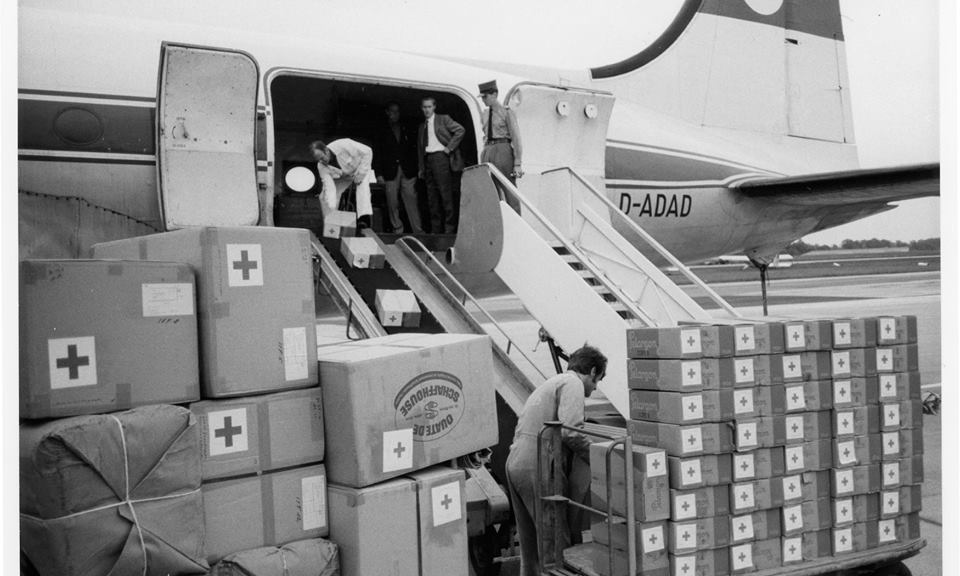
PHOTO CREDIT – INTERNATIONAL COMMITTEE OF THE RED CROSS

PHOTO CAPTION- DC4 CARRY TONS OF MEDICINES AND VITAMINS TO BIAFRA

DATE TAKEN – 27th May, 1968



BIAFRAN AIRLIFT

The BIAFRAN AIRLIFT was the first and most massive civilian relief program in modern history. It flew 5,314 missions, lifting more than 60,000 tons of relief material and consequently saving an estimated I million lives.

It started after Nigeria imposed a food blockade on Biafra, which ensured that food and medicines couldn’t come into the secessionist enclave. Food production had dwindled as locals abandoned their homes and farms seeking safety. The catholic missionaries in charge of parishes started reporting cases of massive starvation and death in their locations.

At that time, the only planes allowed into Biafra were flown by Hank Wharton, a gun runner, who was flying in arms for the Biafran government. Father Tony Byrne, one of those Catholic priests, got permission from the Vatican to negotiate with Wharton to fly in relief materials for the starving populace. But the church was faced with the moral conflict of having guns and relief in the same planes. This meant that relief material could only be flown in when Mr. Wharton wasn’t flying in guns and ammunition. This, in turn, meant that relief material, which initially constituted a few boxes of medications bought with funds raised by Catholic missionaries, was often delayed.

By this time news had started filtering out to the rest of the world about the crisis in Biafra. Western reporters, such as Frederic Forsyth, were going back with news and photos showing severely malnourished children and, for the first time, the disaster happening in Biafra was being shown on televisions around the world. This elicited shock and outrage from individuals and governments, and churches started mobilizing the media to appeal for help for the people of Biafra.

A group of Danish churches, headed by Pastor Vigor Mollerup, also started mobilizing help to start an airline whose planes would fly relief into Biafra. He met with Father Tony Byrne on the island of Sao Tome and, in the summer of 1968, an alliance was formed between Catholic and Protestant churches.

At this time, Port Harcourt had fallen and the Biafran government turned a road in Uli into an airport. But Wharton was still in charge and the churches were being accused of bringing in arms in the guise of aid. Worse, on one occasion, Wharton’s pilots didn’t fly for two weeks and this indirectly led to the death of 40,000 Biafran children. A timely solution to this problem came when Captain Gustaf Van Rosen, a Swedish Aristocrat and pilot, flew into Biafra and met with Odumegwu Ojukwu, a meeting which led to Ojukwu granting permission to the churches to land their own planes at Uli.

Wharton’s monopoly was finally broken and Joint Church Aid, fondly called Jesus Christ Airlines, started operations. The planes came from the United States, Canada and Scandinavia, and they flew more than 30 flights every night. Each one had two fishes, the oldest symbols of Christianity, painted on them. Some of the pilots were Axel Duch, a Danish-Canadian man who was the first to volunteer his services to the airlift; Phil Philip and Eddie Roocroft from Britain; Harald Snaeholm and Thosteinn “Tony” Jonsson from Iceland; and Gunnar Oestergaard from Denmark. Captain Gustaf Van Rosen was its first Chief of Flight Operations but he was soon replaced by Axel Duch.

Despite the fact that relief planes are usually welcome into conflict zones, the planes of the JCA were considered illegal. They were shot at and bombed by the Nigerian Air Force every night, and when crew members died, they were buried in a grave at the end of the runway. But the rest kept flying, even mastering how to land, off load their cargo and take off in 20 minutes.

But the planes didn’t always return empty to Sao Tome. Sometimes they carried precious cargo – children and babies in the worst and last stages of malnourishment and ill health. They were taken to San Antonio Orphanage on the island where they were nursed back to health.

In May 1969, Van Rosen returned to Biafra with Swedish sports planes fitted with rockets. These Biafran Babies, as he called them, wrecked a lot of havoc on Nigerian planes. The reprisal attacks were brutal. The airlift became more dangerous and pilots started leaving.

In January 1970 the war ended and on January 12 a crew from Iceland flew the last mission into Biafra, to evacuate relief workers and priests. Its pilot was Thorstein “Tony” Jonsson. He had flown in and out of Bifara more than 400 times, more than any other pilot on the airlift.

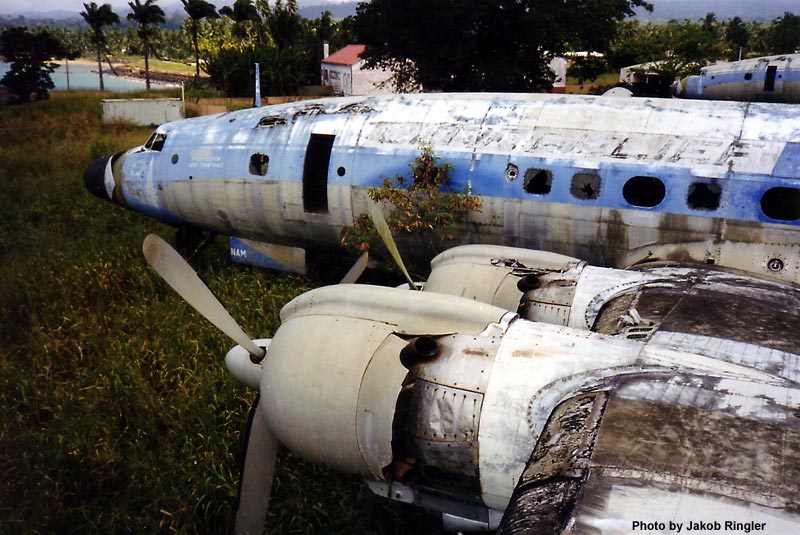
Today, the carcasses of those planes lie in a field on the island of Sao Tome – silent, metal monuments to bravery [dare-devilry if you will], compassion and all that is noble in our shared humanity.

Many of the people who took part in that airlift are still alive. One of them is David L. Koren, a former Peace Corps Volunteer, who organized the warehouses in Sao Tome, loaded and flew the cargo into Biafra, and sometimes evacuated vulnerable children. His account of his experiences will be the first in a new series – THE BIAFRAN AIRLIFT – starting on Saturday 27th January, 2018, on this blog and on mybiafranstory.org.

Music in a time of war – 2

Members of my family were saying, “Come back. Come back.’ And I asked them, “What am I going to be doing in Biafra? Fighting?” After a lot of pressure, I decided I would go back but I knew I had to earn money. So I left for Biafra with a group of musicians. There was Travis Oli – the Singer, Mike Obanye – the Drummer, Frank Onyezili – the Rhythm Guitarist, Terry Eze – the Assistant Manager, Sonny Okosuns and myself. Sonny Okosuns was the only non-Igbo but he was not afraid because he was born in Enugu and could speak Igbo. We were arrested at Onitsha Bridge because they said we were spies. Sonny Okosuns was sent back while the rest of us were taken to the police station at Ridge Way, Enugu. I had some contacts at Enugu so I started to press buttons. I sent a note from police detention to Chuddy Soky, the Commander of the Biafran Air Force telling him of our plight. He drove to the police station and asked them to release us, which they did.

When we left the station, we met a young man called Ikenna Odogbo, a Disc Jockey and show host in Radio Biafra. He took us to live with him from where the musicians started their rehearsals while I went into the field to look for business.

I knew we couldn’t do anything without equipment so I went with a letter to the Director-General of the Biafran Civil Defence. After reading it he looked at me and said, “We are fighting a war and you are talking about music. Will you get out of this place?” I was about nineteen years old but I was talking with a lot of confidence. I was not deterred at all and headed straight to Ojukwu’s office. I had met him when he was the Military Administrator of East Central State. That was when Chubby Chekker, the American musician who invented the Twist, was touring the East. I was part of the tour which was sponsored by Coca Cola and we had paid Ojukwu a courtesy visit. When I arrived he was in a meeting so I spent five hours waiting for him. I was convinced I had a good product. He remembered me and I gave him the letter I had written to the Civil Defence. After reading it he said in his very calm manner, “And what did he tell you?” I said, “He drove me out of his office. He said I was crazy to be talking about music when there’s a war.” Ojukwu dialled a number and asked him to come to the office. Then he told me, “Please sit down.” When the Director General entered the office he almost collapsed. Ojukwu gave him my letter and asked him to read. He was shaking as he was reading it. When he finished, Ojukwu said to him, “Now, take this young man. Anything he asks for, do it.” I asked for a bus and a Peugeot wagon to move our men and equipment, and I had two drivers assigned to me.

That was how The Fractions became the Biafran Armed Forces Entertainment Group. We were moving from camp to camp and even played three times for Ojukwu in his bunker at Umuahia. They knew that music is a vital tool in any military operation so whenever the soldiers were going to war, we would play our best music, they would smoke and become charged up. But in a few hours some would be dead. They were not paying us but they gave us a lot of support, food items, cigarettes and whatever we wanted.

We were also playing at International Club Enugu where we were charging a gate fee. We were copying the American soul sounds such as Wilson Picket, James Brown and Aretha Franklin. The turn-out was always huge because there was not much entertainment during the war – no Television, no football, no games, no cinemas.

We introduced pop music to the east and it was really big. We also started the Sunday Jump and people were coming even in the midst of hostilities.

I also had a column in the Biafran Outlook, a government paper. The editor, Gab Idigo, knew I was already writing in Lagos so gave me a column where I was writing about The Fractions and music generally.

We played throughout 1967, 1968 and 1969. Owerri was our base when it was not occupied by the Nigerian forces. We played our last formal gig at Nkwerre just after Christmas 1969. After the show a few of us remained in the hotel. It was called Central Hotel. Around 4 a.m. some soldiers in a truck came into the hotel, arrested us and took us to Bishop Shanahan School Orlu, where they shaved our hair. That same morning they took us to a garrison to start military training. We had been conscripted and we thought the end had come.

The next day I knew I had to do something. We were hearing shelling so I headed to the gate. I saw a bucket lying on the ground and I picked it as if I was going to fetch water. It was a well-fortified gate but nobody questioned me because they must have thought I had been sent by an officer. I ran into the bush and right there I saw Frank Zili. He had left the camp without telling me because it was a tense situation. We meandered our way out of the forest and got to a safe place.

I returned to Lagos just before the war ended and it was by God’s plan. I was returning to Owerri with a member of the group when we met a Nigerian soldier at Mbieri. He had dug himself into a trench and could have killed us. His gun was pointed at us so we raised our hands. When he came out of the trench I saw from his facial marks that he was Yoruba. Immediately, Yoruba started pouring from my mouth. He relaxed and lowered his gun. We became acquainted and he offered us cigarettes. Later, he made Garri and we ate it with canned Egusi soup. The Nigerian soldiers used to carry a lot of supplies in their kit but the Biafran soldiers didn’t have anything. After he entertained us he said, “Look, I cannot leave two of you on your own.” We trekked from Mbieri to Owerri prison where he handed us over to his superiors. We told them we were members of The Fractions Pop Group and they said, “Okay, you have to play for us not just for Ojukwu’s army.” They gave us a jeep to pick our equipment at Anara. From there we turned back to Owerri and continued to Port Harcourt.

We arrived Port Harcourt around 6.00 am and drove to the headquarters of the marine commandos headed by Obasanjo. He was already in the field doing drills with the soldiers. Then, I saw Roy Chicago, the musician, coming towards me. He recognised me. “Tony, what are you doing here?” Then he turned to Obasanjo. “Olu, ore mi niyen o. Mo mgbe wan lo si eko – this is my friend o. I’m taking him to Lagos.” Roy had come to entertain Nigerian troops and was heading to the airport to be flown to Lagos that morning. That was how I came into Lagos.

I slept in Roy’s house that night. It was No 9 Bishop Crowther Street, Surulere. In the morning I decided to go for a walk around the area. A Volkswagen pulled up beside me and I heard a voice shouting, “Driver, stop, stop, stop!” It was Eddy Adenirokun and we just grabbed each other in an embrace. He said, “How did you get here? I thought you were in Biafra.” I was looking so haggard but I followed him to Daily Times office on Lagos Island. Sam Amuka was there, producing the Sunday Times for the next day. He’s such a funny guy and he said, “So you just came from Biafra? Okay, go and write about your experiences.” Immediately, I went off to type my story. My picture was splashed on the front page and I was paid three shillings, my first income after Biafra.


MY PHOTO BOOK

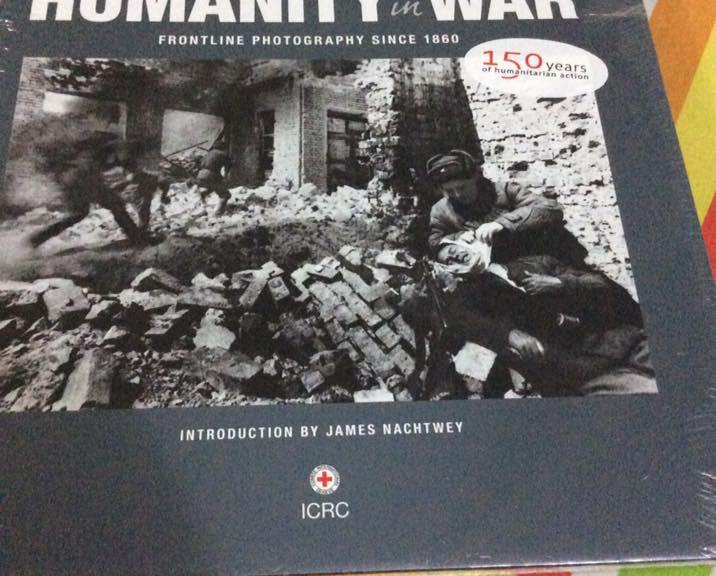
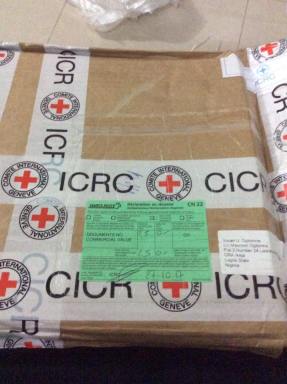
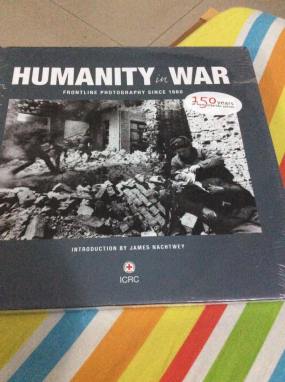
My book finally arrives, courtesy of the International Committee of the Red Cross.

On their October 4, during their ‘Ask An Archivist Day’ Facebook event, I had asked the ICRC about the Biafran children airlifted to Gabon, Ivory Coast, São Tomé, and even Europe, at different times during the war. I wanted to know about their journeys from Biafra, their lives in the host countries, and what became of them after they returned to Biafra. They referred me to the Chief Archivist who in turn suggested I visit the ICRC library in Geneva to get the information I wanted.

A few days later, I received a message saying I had won a book on account of my inquiries.

I didn’t go to Geneva, but since that day I have dug up a lot of information from the internet about the Biafran Airlift. I have found a couple of the airlifted ‘children’ and brave individuals who flew those dangerous missions that brought supplies into Biafra and, when necessary, evacuated vulnerable children to safety. Some of them have agreed to share their Biafran story with me.

The internet is truly an amazing place!

ICRC 1
MY BOOK, STILL BOXED UP
ICRC 2
VOILA!

Two Days in Athens

In the beginning.

In March 2017 I had seen a post on Facebook announcing a conference called ‘Biafra’s Children, A Gathering of Survivors.’ I sent a message to the convener telling him about the project I started to document eye witness accounts of the Nigeria-Biafra war. All I wanted was visibility for the project through their website and any related publications. But a couple of emails and days later, I was invited to participate at the conference. It was a memorable two days in Athens.

 Wednesday; 28th June, 2017.

I am sitting alone at the departure lounge waiting to board my flight to Istanbul. My feelings are wavering between excitement and apprehension. The flight is scheduled for 11.40 pm but we eventually leave an hour later.

There are no dramas on board, except that the seat next to me has been taken over by a pregnant woman with a different seat number. The rightful owner of the seat is not very happy but the Air Hostess settles it quickly and we are assigned new seats.

It is morning, and a different world, when we arrive in Turkey. While looking for my boarding gate, I get acquainted with three Nigerians travelling to Belarus. Afterwards, I look for a place where I can rest and observe my surroundings.

I’m captivated by the way Turkish women dress. There are many groups of children around and I wonder where they are all headed to. There are many Muslims too, all clothed in white. I think they are going to perform the Hajj. It’s a long wait and I find myself seated opposite a group of French Muslims – some black, others Arab – travelling together. They speak little English and I speak little French, but we make conversation, clumsily, with a lot of hand gestures. The young man beside me says he wants to marry me. We both laugh. I think he’s just teasing. We all talk some more and I eventually take my leave to locate my gate. I am glad I left  because my flight is almost boarding. I have been looking at my phone which is still indicating Nigerian time.


Thursday; June 29, 2017.

Two hours later we are in Athens.

A stocky man with a prominent nose is holding up a piece of white paper with my name on it. I flash a smile and he smiles back.

Are you George, I ask.

I already know his name from the mail I was sent with a list of contact and support persons for the conference. He loads my suitcase in his car and as we drive away he apologises about the weather. There’s a heat wave in Athens and temperatures are above 35 degrees today. We talk about their economy and the refugee crisis. I feel as though I’ve been here before – the roads, the plants and hedges, the ‘Okada’ and its rider at the traffic junction are all familiar.

I ask him about the island of Corfu, a magical place I had read about in ‘My Family and Other Animals,’ by Gerald Durrell. He says his father is from Corfu and he can take me there if I want. I want to but I can’t. The conference schedule is tight.

I want to know about Skopios, Aristotle Onassis’s island. He lets out a laugh. You know Onassis? Yes, I say, I have read a lot about him – his stupendous wealth, his famous yatch named after his daughter, Cristina and especially, his marriage to Jackie Kennedy. George’s smile grows wider as I speak.

He points out landmarks and even parks on the highway for me to take photographs of the city – a sea of white buildings with brown roofs. He drops me off at President Hotel, still smiling and waving.

The Greeks are warm and friendly.

****

I try to nap but I can’t. So I go down to the lobby where I recognize some of the other participants. We get acquainted.

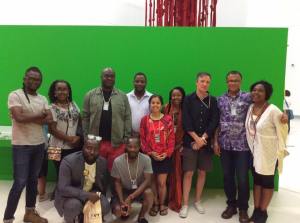
An event has been fixed for this evening. It’s a visit to the Museum of Contemporary Art to see Olu Oguibe’s Time Capsule of books and memorabilia from the Biafran war. He’s the convener of the Biafran Children’s Conference and one of the participating artists of documenta14.

I am tired and my ears are aching. But I’m glad I attended. There are jaw-dropping installations by other artists. It’s incredible what the human mind can conceive.

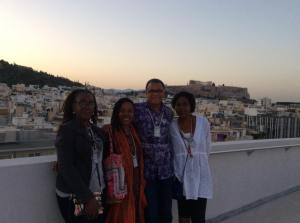
Afterwards we climb to the roof top. The sun is setting but we can see the city spread out before us. The Acropolis is in the distance and on the walls of a building somebody has written, ‘Welcome and Enjoy the ruins.’

Dinner turns out to be a spread of salads, bread, sardines, olive oil and other fare I barely recognize. There’s wine too. The Greeks love their salads and wines. Afterwards, the others want to go to a Nigerian restaurant. I even hear somebody mention Isi Ewu. It sounds interesting but all I want to do is nurse the ache in my left ear.

Faith and I take a taxi back to the hotel.

Sleep comes easily.

****

Friday; June 30, 2017.

Nigerians will say, ‘Traveling without sight-seeing, is that one traveling?’

I am determined to make the most of the two days, so after breakfast, I disappear. First, to documenta14 Press Office, to edit my presentation. And then to the tourist area around the Kidathineon and Adrianou. Tourists are milling about. The paved, narrow streets are lined on both sides by faded white buildings housing shops and cafes. There’s planting everywhere. Artefacts, clothes, books, jewellery, house hold items and much more are on sale. The ambience is traditional and modern all at once.

I hurry from shop to shop, taking in the sights, taking photos, asking questions. This particular shop keeper has a toothy smile. He’s tanned a dark brown and has an accent that sounds American. I am curious. He says the British think he’s American while the Americans thinks he’s British. We both laugh. English is my default language, perhaps that’s why you sound American to me, I say. He tells me he’s Greek, grew up in South Africa and lived in the US. He wraps my purchase while we chat some more.

The entire tour takes me about one hour. The conference starts in a couple of hours.

I head out to the taxi stand but first, something cold to drink. And a selfie.

The speakers at tonight’s event are Olu Oguibe, Okey Ndibe, EC Osondu, Faith Adiele, Phillip Effiong, Obi Okigbo.

****

Saturday; July 1, 2017.

Butterflies are fluttering in my stomach. I will them to stop.

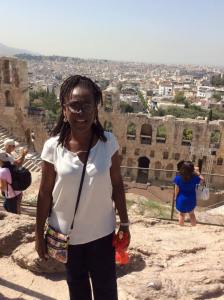
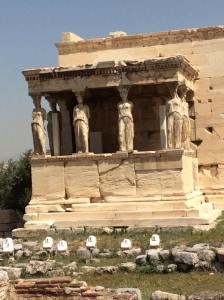
We have planned to see some of Greece’s cultural and historical sights, and after breakfast we set off for the Acropolis, an ancient citadel that sits above the city of Athens. It’s one of Athens’ most popular tourist attractions and houses the ruins of ancient temples some of which were built in 473 BC. The most popular is the Pathernon which is dedicated to Athena, the Greek goddess of wisdom, war and crafts.

The ruins are engineering and architectural wonders.

Tourists are warned to thread carefully because the path leading to the ruins are worn smooth by human traffic. The sun is scorching but the place is teeming with tourists.

I am in awe the whole time.

The day flies by. The butterflies in my stomach are quiet. I think the tour of the acropolis has helped to dispel my anxiety.

****

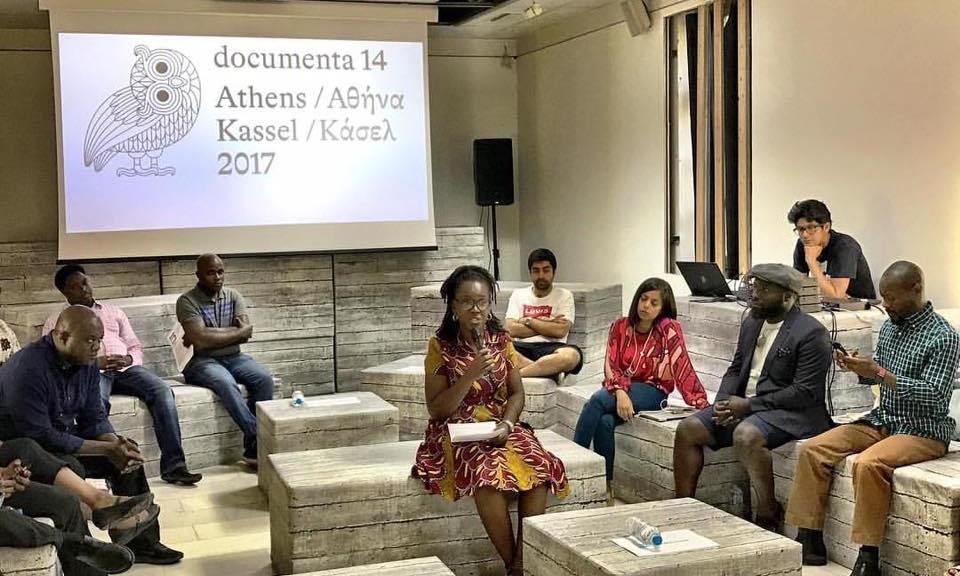
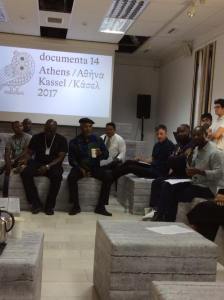
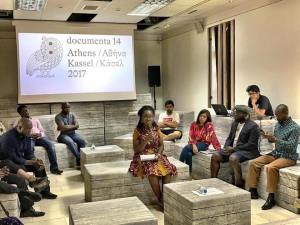
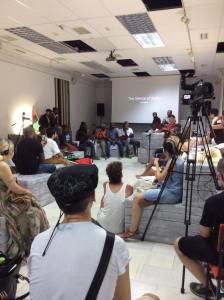
This evening, I and Emeka Kupenski Okereke, Berlin-based visual artist, photographer and film maker will talk about the work we are doing to preserve the memories of Biafra, mine through stories and his, through images and films. Our session is called ‘Generations and Legacies; Retrieving Biafra’s Memories.’

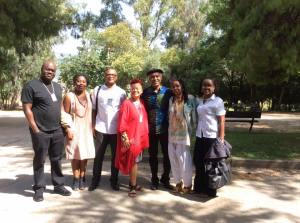
We arrive at Parko Eleftherias. Group photos are taken. Sound checks and everything else in order.

“Who is going first?” I ask.

“You,” Emeka says.

“No, you,” I say.

We both laugh.

I take my place, reluctant to make eye contact with the audience lest I see the disappointment on their faces. I start to speak, telling them how it all started in 2016 – the Facebook posts that ignited my interest and my resolve to look for survivors, to document their experiences, to help break the silence about Biafra.

I talk about some of the stories in the collection, about the brave men and women who embody them, who bear the emotional and physical scars of war, whose lives demonstrate the resilience of the human spirit.

When I finish, I hear applause. There are questions from the audience and Emeka takes his turn.

It wasn’t as scary as I thought.

Afterwards, as we interact with the audience, two ladies walk past me on their way out. I thank them for coming and give each of them a hug. A few minutes later, I see them back in the hall and walking towards me. One of them says they have something to tell me. We find a seat.

She tells me their family had lived in Lagos but when the war started they fled. They say their father is still alive and would be delighted to talk to me. I am leaving the next day but I ask if I can come over in the morning. They won’t be in, she says, so we exchange phone and Skype numbers. I thank them for reaching out and promise to call.

Dinner was a big deal – lots of food and laughter. Afterwards, those who had early flights to catch left. The rest of us strolled back to the hotel which was close by. The lobby was empty of guests so we sat there, gisting, till about 3.00 am. We were all tired and sleepy, but ‘goodbye’ is a difficult word.

****

Sunday; July 2, 2017.

My head is foggy but I drag myself to the bathroom.

My flight is by 3.35 pm.

Most of the others have left, so it’s just me and Faith. She’s a teacher and memoirist and the first day we arrived I told her about my journey into writing.

Breakfast is the usual spread – varieties of breads, cakes, cheese, butters, eggs, bacons, fruits, cold and warm beverages. I’m happy to see Faith at the restaurant and we agree to meet at the swimming pool in an hour’s time.

The pool is located on the 21st floor and a few people are lounging around on deck chairs. Others are in the water. Coming from the tropics, I am used to high temperatures, but this is extreme. In spite of it, I wonder why anybody would want to sit or swim under such intense heat. Then I remember they may be coming from places where sun is a luxury.

Faith and I chat a bit and I take photographs. The height is dizzying but the view is great – buildings look clustered, streets are barely-discernible, awnings provide dashes of color to a landscape of mostly-white houses and brown roofs.

We say our good byes.

****

Back in my room, my suitcase is packed. I have a few more hours on my hands and I contemplate dashing out to explore the neighborhood. But I realize I am still sleepy. I fall into bed fully clothed. Sometime later I jump up in a panic. It’s almost 1.00 pm and George will be here by 1.30pm.

A quick look around the room confirms that everything is packed. My travel documents are in a purse slung across my body.

I’m in the lobby sending a mail when the entrance door swings open and George bounds in. He’s beaming as he approaches me. Is this all, he asks, grabbing my suitcase. I say yes and he heads out to the car. A few minutes later, we’re racing to the airport.

Did you enjoy your trip, he asks. I said I did but it was too brief. We talk some more and 30 minutes later we drive up to the lot in front of Turkish Airlines. He brings out my luggage and we shake hands. Please come back another time, he says, and bring your children with you. I tell him I will.

He enters his car and pulls away, still smiling and waving.

****

Biafra’s Children, A Gathering of Survivors.

As Published by documenta 14’s Press Center.

The Parliament of Bodies: ‘Biafra’s Children: A Survivors’ Gathering.’

JUNE 30; 5.00-10.00 pm; Parko Eleftherias, Athens Municipality Arts Center and Museum of Anti-dictatorial and Democratic Resistance, Vassilissis Sofias, Athens.

JULY 1; 11.00–9.00pm; Parko Eleftherias, Athens Municipality Arts Center and Museum of Anti-dictatorial and Democratic Resistance, Vassilissis Sofias, Athens.

Life stream available.

Organized by Olu Oguibe, with Faith Adiele, Phillip U. Effiong, Okey Ndibe, Eddie Iroh, Vivian Ogbonna, Obiageli Okigbo, E.C.Osondu, Emeka Okereke.
Fifty years ago, in 1967, a bitter civil war broke out in the newly independent West African nation of Nigeria, a war that would create one of the greatest humanitarian disasters of the twentieth century. Lasting over thirty months, the Biafran War claimed an estimated three million lives, mostly children who died due to malnutrition and starvation after Nigeria imposed a global blockade on Biafrans, who were demanding a secure homeland. The previous year, tens of thousands of Biafrans had been murdered in waves of ethnic cleansing pogroms in different parts of Nigeria. This forced an estimated two million survivors to flee back to their ancestral homeland in then Eastern Nigeria, in search of a safe haven. The ensuing humanitarian crisis and continued violence against this population eventually led them to declare independence from Nigeria, upon which Nigeria declared war on the breakaway nation.

The death and carnage in Biafra caused global outrage. So did the collusion of global powers, especially Britain and the Soviet Union, in suppressing the Biafrans and their struggle for survival. In 1968, it was estimated that nearly 6,000 Biafrans were dying daily, most of them starving children. Photographs of Biafra’s malnourished children with their bloated bellies adorned the covers of news magazines and evening television news programs worldwide. John Lennon returned his knighthood to the Queen in protest, and Jean-Paul Sartre described Biafra as the conscience of the twentieth century. Even Winston Churchill, grandson of the British prime minister, wrote a series of newspaper columns deploring the situation in Biafra. Around the world students staged protests, sit-ins at embassies, and even a hunger strike in Norway. On May 29, 1969, Bruce Mayrock, a twenty-year old student of Columbia University in New York set himself on fire in front of the United Nations to protest Secretary General U Thant’s failure to take measures to stop the war of genocide against Biafra. Mayrock died the following day. Musicians like Jimi Hendrix and Joan Baez held concerts to raise awareness and generate relief aid for Biafra. A group of young French medics who volunteered in Biafra would go on to found the charity, Doctors without Borders (Médecins sans Frontières) in response to the human suffering that they witnessed there.

For two days this summer, June 30–July 1, 2017, child survivors from the Biafran War gather for the first time in Athens as part of documenta 14 to share their stories of living through the monumental tragedies and traumas of conflict, mass displacement, and separation from family as well as bereavement, famine, and hunger. They will also share stories of survival, which are indebted to the resilience of the human spirit and the humanitarian intervention of people around the world who sent relief aid to Biafra or opened their doors to Biafra’s refugee children.

Biafra is relevant today, not only because it represented the nearly impossible struggle of a persecuted people in their fight for self-determination and the establishment of a safe homeland, but also because the subsequent humanitarian disaster is mirrored in the plight of refugees fleeing similar crises in Syria and the Middle East today and their attempt to find safety in Europe and other parts of the world. The survivor testimonies of Biafra’s children reiterate the human cost of conflict. Alone the presence and the survival of these women and men, some of who now have children of their own, underline how humanitarian intervention can help save generations and preserve nations.

The event has been organized by Olu Oguibe, one of the child survivors, whose archival meditation on the war, Biafra Time Capsule, is on display at the National Museum of Contemporary Art (EMST) through July 16, 2017.
BIOS OF PARTICIPANTS

Faith Adiele is the author of The Nigerian-Nordic Girl’s Guide to Lady Problems and the PEN Award-winning memoir, Meeting Faith. She’s also the subject of the Public Broadcasting Service documentary My Journey Home, and co-editor of Coming of Age Around the World: A Multicultural Anthology. A professor at California College of the Arts, she is the founder of African Book Club.

Philip U. Effiong is Associate Professor of English at Michigan State University. He holds a PhD in Drama from the University of Wisconsin at Madison, and has taught Literature, Writing and History at various Nigerian, Ghanaian, and U.S. universities. In addition to his book on African American drama, his essays have appeared in several journals and encyclopedias. Effiong’s father, General Philip Effiong, was Biafra’s last head of state.

Eddie Iroh is a multimedia professional whose career has encompassed radio, television, print, and publishing, including a fairly recent post as Director General of Radio Nigeria. He is also the author of an acclaimed trilogy on the Nigeria-Biafra war, as well as the award-winning children’s novel Without a Silverspoon.

Okey Ndibe is the author of the novels Foreign Gods, Inc. and Arrows of Rain; the memoir Never Look an American in the Eye, Flying Turtles, Colonial Ghosts; and the Making of a Nigerian-American, as well as co-editor of Writers Writing on Conflicts and Wars in Africa. He has taught at several universities in the United States including Brown University.

Vivian Ogbonna is an interior decorator and writer. Since January 2017, she has been interviewing survivors of the Nigeria-Biafra war: men, women, and children who were direct victims of the conflict, most of whom do not have a platform to tell their stories. Vivian documents these stories on mybiafranstoryweb.wordpress.com, which she hopes will eventually become a database of memories, testimonies, experiences, and anecdotes about the war.

Olu Oguibe is a participating artist in documenta 14. He has written on his childhood experiences in Biafra, and his archival installation Biafra Time Capsule is currently on display at the National Museum of Contemporary Art (EMST), Athens.

Emeka Okereke is a visual artist and writer based in Lagos and Berlin. His current work explores the theme of “borders” through photography, time-based media, poetry, and performative interventions. He is also the artistic director of the Invisible Borders Trans-African Project.

Obiageli Okigbo is an artist based in Brussels. In 1967, her father, Christopher Okigbo, who is widely regarded as Africa’s greatest twentieth-century poet, died on the battlefront in Biafra. In 2005, she launched the Christopher Okigbo Foundation in his honor. She has exhibited in Brussels, London, Dubai, and Lagos, among others.

E.C.Osondu is author of the book of stories Voice of America and the novel, This House is Not For Sale. He was awarded the Caine Prize and the Pushcart Prize. His fiction has been translated into over half a dozen languages. Osondu is Associate Professor of English at Providence College, Rhode Island, USA.

nnp documenta 3
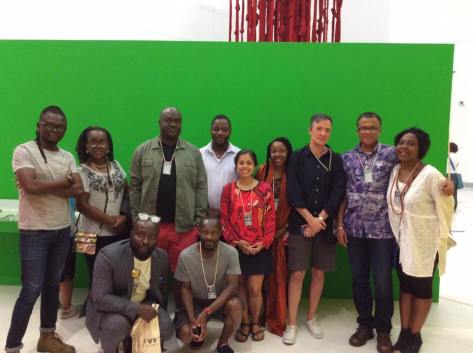
June 29; Visiting Olu Oguibe’s Time Capsule of Biafran Memorials.
nnp documenta
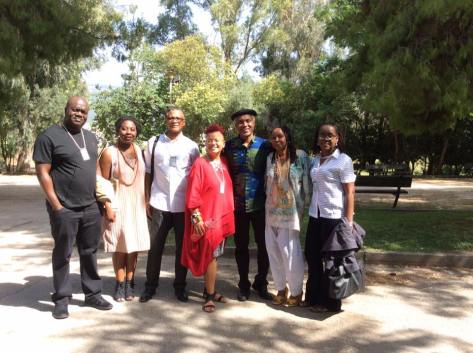
 June 30; First day of the conference; arriving at Parko Eleftherias.
nnp documnta 2
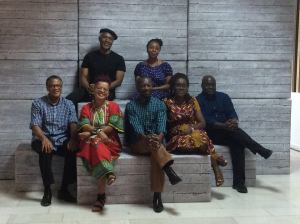
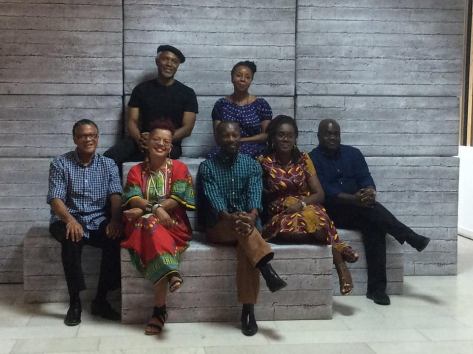
July 1; Second day of the conference; Posing for official photographs.


"…a data base of memories, testimonies, experiences and anecdotes."